Announcements

10 Year Anniverary & New Releases Winners: Carrie Fancett Pagels' Butterfly Cottage - Melanie B, Dogwood Plantation - Patty H R, Janet Grunst's winner is Connie S., Denise Weimer's Winner is Kay M., Naomi Musch's winner is Chappy Debbie, Angela Couch - Kathleen Maher, Pegg Thomas Beverly D. M. & Gracie Y., Christy Distler - Kailey B., Shannon McNear - Marilyn R.
Showing posts with label religion. Show all posts

Monday, July 20, 2020

In the Name of Religious Freedom

French Florida
Or, America's Earliest Colonial History, Part 2.

Right after my last post, a friend messaged me:
I saw your Colonial Quill post. You know how every time one thinks one has history down and then another obscure fact crops up that changes everything? Yeah, that. The first interest in colonizing America wasn't fueled by Queen Elizabeth, who was hoping to stop Spanish expansion. Before that, Jean Ribault landed on the shores of Florida hoping to set up a colony. For Huguenots, I believe.

https://jeanribault.org/
Take a peek at this beautiful website. You're welcome. Makes me long to write a story about this man and the people he sought to defend--although now, alas, I am under contract for a story featuring another, but maybe not so different, group.

That group would be the famed Lost Colonists of Roanoke Island.

These days, even the word "colonial" has a bad name. I've written about this before.

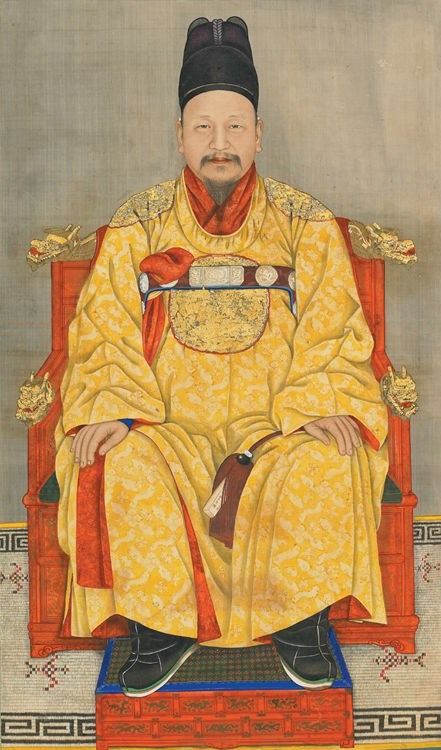
Emperor Gojong of Joseon (Korea)
Truth is, every empire down through history has sought to grow their holdings and increase their wealth by annexing other lands and peoples. I was recently reminded of this while watching, of all things, a Korean drama with my youngest girl, set during the early 1900's, a particularly turbulent time of Korean history. Joseon (Korea) was just beginning to open up to Western ways, just beginning to not immediately put Christians to death, and struggling to find her place between China, Russia, America, and Japan. The latter, that tiny but ridiculously ambitious island nation, made no secret of its desire to make Korea a colony of Japan. Ruthlessness and political maneuvering were the standard of the day, and corruption abounded.

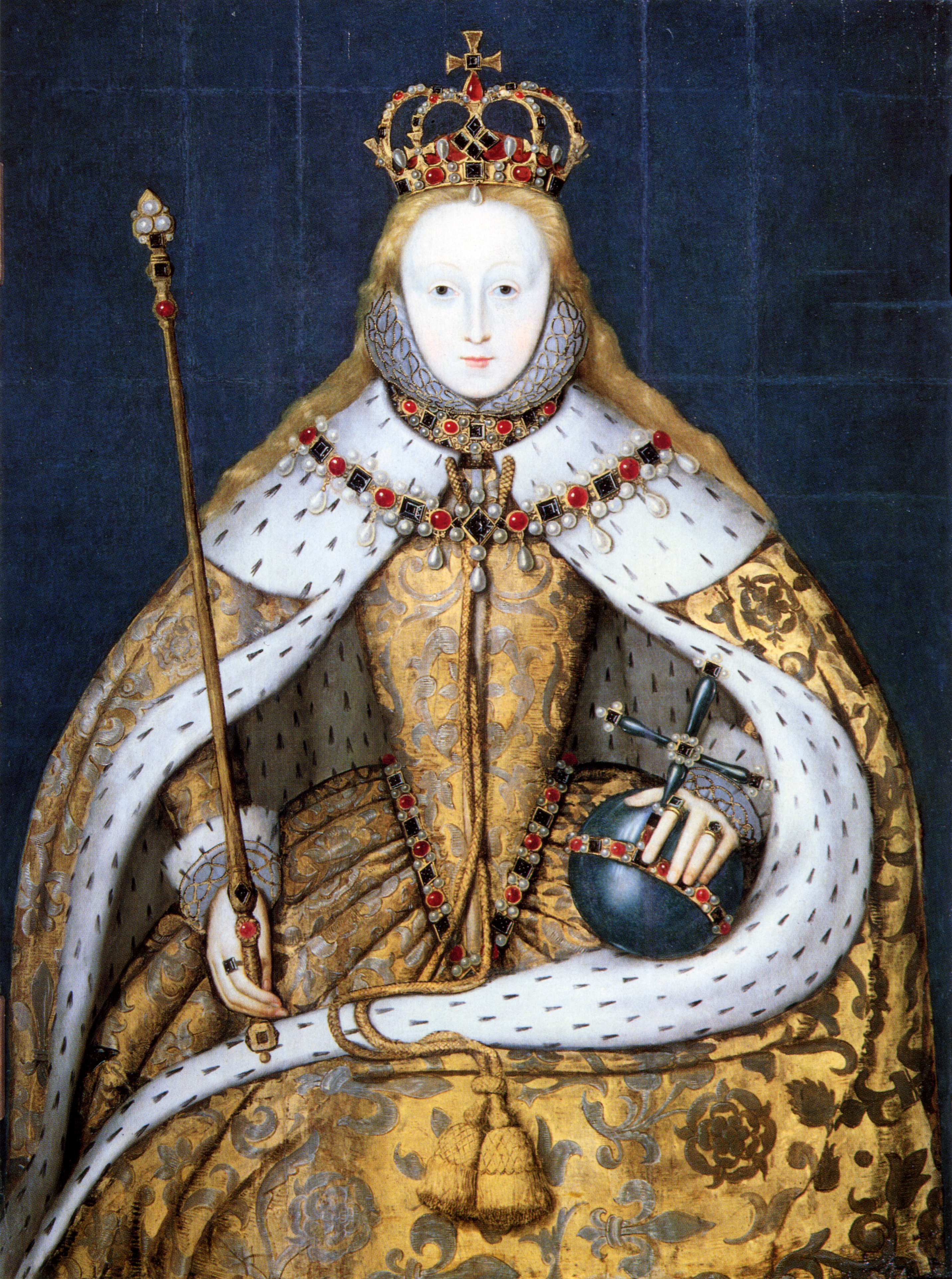
Good Queen Bess at her coronation
Not so very different from the time of Queen Elizabeth. "Good Queen Bess" furthered her father's move in breaking away from the Church of Rome by establishing the Church of England. Bloodshed between Catholics and Protestants abounded, and religious views were the standard by which political views were judged. Ireland suffered a harsh and bloody takeover by England, for reasons which I will not get into here, but doubtless that set the precedent for what later happened on American shores. When Elizabeth granted Sir Walter Raleigh his charter for a colony in the New World, however, she was very clear that it was at least in part for the purpose of furthering the Gospel to unreached peoples, but plenty of folk in England were unhappy enough with the way things were going in the newborn Anglican Church that they wished to either purify the Church (thus, Puritans) or create their own group entirely (Separatists).

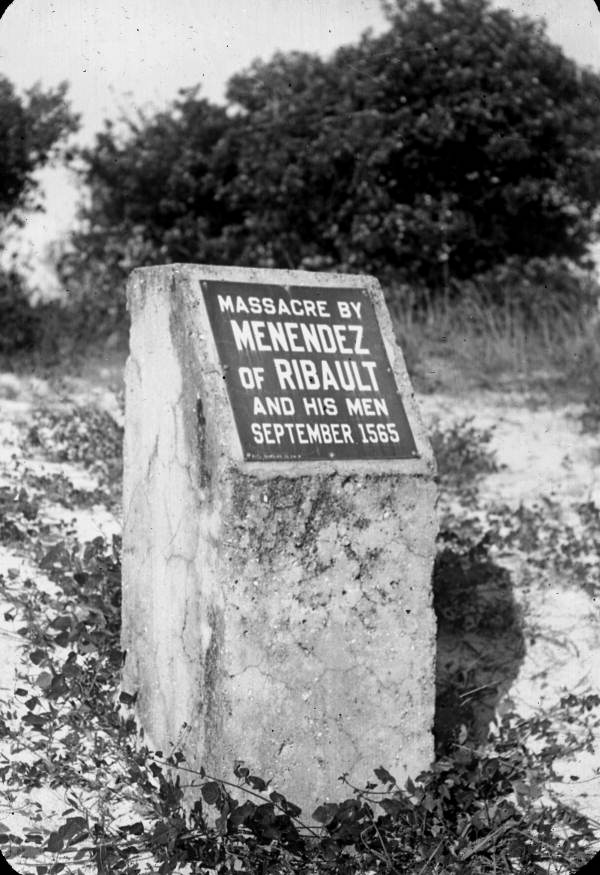
Most feared, however, were the Spanish. Spain already had holdings across South America, and their treasure galleons were the most coveted prize of English privateers. Staunchly Catholic to the point of meting out torture and death to those who disagreed (the Spanish Inquisition, anyone?), they were equally ruthless on the sea. The English were by far not the only ones to suffer at Spanish hands. As outlined in the website I shared above, French Huguenots sought refuge on what is now the Florida and South Carolina coast, but were seen as a threat to Spain's supremacy in the New World and met with death once their Protestant leanings were made known.

Marker at Fort Matanzas National Park
Lee Miller theorizes in her book Roanoke: Solving the Mystery of the Lost Colony that the group which set sail in 1587 under Governor John White, seeking to establish the first permanent English settlement in the New World, were Separatists. If so, the fate of French Huguenots would have been fairly fresh, and avoiding the Spanish at all costs would have been uppermost on their minds. Brandon Fullam makes the case in The Lost Colony of Roanoke: New Perspectives that this would have been a good reason why they settled on Roanoke Island rather than going north to the Chesapeake as originally planned. Maybe it's just my own firm Christian faith, but I find the Separatist theory quite compelling. It certainly wouldn't be the first time that a people group migrated in search of religious freedom, would it?


Monday, November 18, 2019

New Light Baptists (and other denominations of the colonial era)

Some time ago, while reading The Carolina Backcountry on the Eve of the Revolution, featuring the journal and sermons of traveling Anglican minister Charles Woodmason, I came across the term "New Light Baptist" and was curious to know more. Woodmason speaks of them in scathing terms, as he does of every other denomination and most people groups in general, but being raised in a Baptist church myself, I was curious to know.


Wikipedia (which tends to be better sourced these days than it once was) offers a good discussion on the subject, but I also found this snapshot of the religious landscape of the colonial era:

Early New Englanders generally practiced congregationalism, though by the 18th century they seldom thought of themselves as the spearhead of the Reformation. A wave of revivals known as the Great Awakening swept New England beginning in the 1720s, dividing churchgoers into New Light (evangelical Calvinists) and Old Light (more moderate) wings. An increasing minority were calling themselves Baptists.

Nearly all Europeans in these colonies were Protestants, but individual denominations were very different. There were Presbyterians, Lutherans, Baptists, Anglicans, Dutch Reformed, Mennonites and Quakers. While the Church of England was the established church (the official, government-supported church) in the Chesapeake colonies, German and Scottish non-Anglicans were migrating south from the middle colonies, and Baptists were making their first southern converts. Although most Chesapeake slaves were American-born by the late 18th century, they practiced what they remembered of African religions, while some became Christians in 18th-century revivals. [from New Light Schism]

The terms "Old Light" and "New Light" have been applied over the years to several denominational splits, but during the Great Awakening, the debate raged between those who argued that Christianity was more about right doctrine and theology and those who emphasized personal transformation as a result of one's theology. Old Lights were criticized for only caring about one's beliefs, while disregarding behavior such as drunkenness and greed; and New Lights were criticized for their focus on experience and emotion. What began as a split between Presbyterians and Congregationalists birthed the movement called New Light Baptists, when a group of folks influenced by George Whitefield's preaching decided they could find no evidence in Scripture of infant baptism.

John Smyth
But this was not the first time people dissented with such widely accepted theology. There is debate over whether the Baptist church finds its roots in the Anabaptist movement (many say not), or can trace its roots all the way back to the time of Christ, but many say that the movement which led to the modern Baptist church had its beginnings in 1609 Amsterdam, with a man named John Smyth, an English Separatist. These roots, then, cling to the history of the Puritans and Pilgrims, and led to a division between "General" and "Particular" Baptists, who argued whether Christ's atonement applied to all people, or just to God's elect. (Similar debates went on in the Presbyterian Church, famed for following the teachings of John Calvin.) Smyth was eventually imprisoned for his dissent with the Anglican church.

Another Baptist of note was Roger Williams, who founded the very first Baptist congregation in the American colonies (1638, Rhode Island). Not until the First Great Awakening, however, did the term "New Light" become associated with Baptists, when many of them broke away from their Calvinist leanings and it was not held as a complimentary term by those of more established denominations.

Woodhouse rails against New Lights as unlearned, unstable, overly emotional, given to fleshly impulse and vice. He bemoans their lack of Scriptural grounding, their quibbling over liturgical service elements while indulging in public indecency, and their exercise of spiritual gifts as a cloak for sinful indulgence. Doesn't sound so different from criticism between churches today, does it? His accounts tell of shenanigans ranging from a sensuality to rival any modern tabloid, to the cultish and downright criminal. Just the reading of it is enough to make one question one's entire upbringing.

It just goes to show that even the most august structures can have less than auspicious beginnings ... and human nature has certainly never changed, when left to itself.

Despite all that, the Baptist church as a whole found a home in the Carolinas, put down roots, spread across the colonies and into the frontier, becoming a solid, established expression of early American faith alongside more settled and staid denominations.

~*~*~*~

Additional sources:
New Lights (from NCpedia)
Old and New Light (from Wikipedia)
Baptists (from Wikipedia)


Wednesday, January 31, 2018

Pennsylvania: William Penn's Holy Experiment


The Peaceable Kingdom (Edward Hicks, c. 1834) exemplifies Quaker ideals.
William Penn, Pennsylvania’s founder, was an English Quaker who received the charter to Pennsylvania as the result of a debt owed to his father, Admiral Sir William Penn. The younger Penn, who grew up in English high society, began attending Friends meetings while living on a family estate in Cork, Ireland, and publicly joined the Society of Friends at the age of twenty-two. This soon got him arrested multiple times, as King Charles had placed stringent restrictions against religious groups other than the Anglican church. The Crown especially hated the Quakers, who believed all people (whether royalty or commoner) were created equal.

Despite persecutions, imprisonments, and being disowned by his family, William Penn’s Quaker faith burgeoned, getting him exiled from English society. He eventually ended up in Newgate Prison, and his dying father, who had gained respect for his son’s religious convictions, made peace with him and paid the fine to have him released. Sir Admiral Penn, knowing his son would face even worse persecution after his death, set the conditions for the founding of Pennsylvania. After the admiral’s death, young William Penn proposed to the Crown a partial solution to England’s religious strife: a mass emigration of English Quakers to America. To Penn’s surprise, the king granted him a large charter, giving him a large tract of land west of New Jersey and north of Maryland.

William Penn, a strong believer in religious tolerance and a man all too familiar with religious persecution, set forth to make his land (first called New Wales, then Sylvania, and finally Pennsylvania) a “Holy Experiment”—a haven for persecuted religious minorities. Within fifty years, the commonwealth had a quickly growing city (Philadelphia) and was home to people of several religious backgrounds.

The Society of Friends
Quakers began worshiping (silently, of course) at Upland in 1675. After Penn received his charter, Quakers emigrated in large numbers from England, Ireland, and Wales. They settled primarily in Philadelphia and the surrounding counties, and controlled Pennsylvania’s government until 1756, when their pacifism became unpopular with nonpacifistic Pennsylvanians during the French and Indian War. While Quaker dominance gradually diminished as people of other religious backgrounds made Pennsylvania their home, many Friends Meetings still exist today, often worshiping in the same meetinghouses used three hundred years ago.

The Pennsylvania Germans
Most Pennsylvania Germans belonged to the Lutheran and Reformed churches, but Pennsylvania also drew several smaller groups, primarily the Mennonites, Amish, Dunkers (German Baptist Brethren), Schwenkfelders, and Moravians. A small group of Mennonites and Quakers arrived in Pennsylvania in 1683 and settled Germantown (now part of Philadelphia), and by the 1730s, more Mennonites and the first Amish immigrants had arrived in Pennsylvania. The Schwenkfelders started arriving in 1731, and the Moravians in 1741. These smaller groups, all believers in nonresistance and baptism upon confession of faith in Christ, settled north and west of Philadelphia to farm the land. The Moravians soon became known for their mission work among the Native American tribes.

The Church of England
William Penn’s religious tolerance was so great that he allowed those who belonged to the Church of England, the same group that had persecuted him in England, to come to Pennsylvania. The Anglicans held services in Philadelphia as early as 1695, eventually building Christ Church, still one of Philadelphia’s most notable churches. With the addition of its spire in 1754, Christ Church became the tallest building in North America.

The Catholic Church
The first Catholic congregation was organized in 1720 in Philadelphia, and they built their first chapel in 1733. Pennsylvania had the second largest Catholic population during Colonial times, but their numbers were hardly large. Even in 1757, of Pennsylvania’s 200,000 residents, fewer than 1,400 were recorded as Catholic. This number is substantially higher today, with 28% of Pennsylvanians now characterizing themselves as Catholic.

The Presbyterian Church
The Scotch brought Presbyterianism to Pennsylvania, with the first congregation organized in 1698 in Philadelphia. Scotch-Irish immigration from 1710 till 1775 ushered in around 200,000 people to the Colonies, with most coming to Pennsylvania before spreading west and south. Presbyterians now make up approximately 4% of Pennsylvania’s population.

The Methodist Church
Methodists arrived in Philadelphia later in the colonial period. Their first church, St. George's Church, was built in 1769 and is the oldest Methodist building in America. Methodists now make up around 5% of Pennsylvania’s population.

The Jewish Community
Colonial Pennsylvania had a significant Jewish population. The first Jewish Philadelphian recorded was Jonas Aaron, in 1703, but sources show that Jews were in the area before then. Mikveh Israel, founded by Spanish and Portuguese Jews, was established in the city in 1740.

Nowadays, American states include a myriad of different religions. During Colonial times, however, Pennsylvania stood out. While other colonies restricted members of certain religious groups, William Penn opened Pennsylvania to all who worshiped God. Through this, he helped change the trajectory of an entire country.

Friday, February 20, 2015

Persecution in the Colonies


While many Christians escaped persecution by coming to America, some Christian groups faced persecution in the colonies as well. Here are some instances of that persecution.

In Jamestown, America's first permanent English settlement, people were required to attend the Anglican Church (the church of England) regularly. Later in Virginia, taxes were paid to the church and Sunday laws required attendance at least once a month.

Many denominations got around that law by meeting three times a month at their own church and going to the Anglican Church once a month, but some felt they were denying Christ by compromising their beliefs to go to a church they didn't agree with. The punishment was normally a hefty fine.

In 1643, Virginia enacted a law which stated that only those were permitted to preach and teach, publicly or privately, whose beliefs conformed to those of the Church of England. This meant that any church meetings held by Quakers, Baptists, or other denominations were considered illegal.

It was worse for those who were considered to have blasphemed the name of God. The punishment for that crime was imprisonment or death.

The Puritans who established settlements in Massachusetts also persecuted those who disagreed with them. Roger Williams and Anne Hutchinson were among those who were banished and formed settlements in other colonies.

Eventually Baptists, Episcopalians, Presbyterians, and Congregationalist Puritans formed colony and community churches throughout New England. Anyone who disagreed with the doctrine of the colony's church was banished, severely punished, or sometimes executed.

Quakers received the most severe persecution in the colonies. My ancestors, the Willis' and the Brinton's were among the Quakers who came to America to escape persecution only to have their lands ceased and be imprisoned in the colonies.

As more settlers of different denominations and religions came to America, tolerance of the different beliefs became more prevalent. By the Revolutionary War, many of our founding fathers believed in the principle of religious tolerance. Men like George Washington and Thomas Jefferson enacted laws and the first amendment of the Constitution to prevent an establishment of any religion so that all denominations and religions had freedom to practice their beliefs in the public area. Unfortunately, a false interpretation of that amendment is now being used to stop Christians from practicing their beliefs in public, and a new religious intolerance is sweeping America.

Friday, November 22, 2013

The Irish, The Scots and the Scotch-Irish


Throughout the 1600s, the English government encouraged the move of lowland Scots, Welsh and the northern English–Protestants all—to “Ulster Plantation” in the north of Ireland, in the hopes of some influence and balance over the independent, Catholic Irish. In Scotland, Highlanders and Lowland Scots were also leery of each other, separated by many cultural ideas as well as religion over multiple centuries. Indeed, all British history is spattered with the blood of religious animosity—quite obvious in the Tudor period.
 
From "Free Printable Maps.com"  here is today's United Kingdom.


Starting around 1718, large scale numbers of Scotch-Irish left northern Ireland for the new world. (At this time, they referred to themselves as Irish, but the term changed to Scotch-Irish when, a century later Catholic Irish Immigration began to surge, heightened during the famous Potato Famine in the 1840s.)  The Scotch-Irish Protestants settled well in North America, flourishing in their new freedoms and kept the traditions of strong work ethic and education. But few welcomed their Catholic peers from Scotland and Ireland with open arms. The Irish were one of the most poorly treated immigrant groups ‘welcomed’ to the new world, due in part to the earlier establishment of their Protestant countrymen.

Back home in 18th century Scotland, the north still held to its ways of clan society and the wearing of kilts until these practices were made illegal after the failed Jacobite Rebellion (the hope of putting a Catholic King back on the throne and disposing of the Protestant one) in 1745. Tartan was banned and families were forced off their own land, branded traitors to the English King. It wasn’t until 1782, almost 40 years later, that King George reinstated the right for Highlanders to wear Tartan—no doubt, a purely political move.   

Ironically, all Scots regiments serving in the British Army were outfitted in kilts throughout this time.

The Scotch Irish in America comprised 40% of the Continental Army. Not surprising, when their immigration numbers are estimated at 25-40,000 in the 18th century. Most welcomed the chance to fight against Britain, or more specifically the English King. Even so, many leaned toward the Tory side and moved to a more loyal Canada.

Around the turn of the 19th century, the continued policy of ‘The Scottish Clearances’ included both northern Catholics and lowland Protestants and flamed a surprising new alignment of nationalism between the two based on little more than hatred of the English.

Those early 19th century abuses sent a huge number of Gaelic speaking Catholics to the Cape Breton area of Nova Scotia, mid-Atlantic America, and North Carolina in particular. Many settled north of Lake Ontario and made up the Glengarry district whose men formed one of the toughest British regiments to fight in the War of 1812.

Many North Americans don’t understand the significant influence of these two Celtic countries on our histories, or the unsettled religious history. An estimated 27 million Americans are descendants of those Protestant Scotch-Irish alone! Thankfully, the "new world" eventually allowed old animosities to fade enough that Catholics and Protestants today prefer to celebrate a combined Celtic heritage.

The Scotland of today is more united under the ideal of the independent Scot--represented by the Highlander, the wearing of Tartans, the kilt, and renewed interest in the Gaelic language, and as always, their hesitance to be ruled from beyond their border. (Ironically, it was Queen Victoria and Prince Albert's love of the land and its wild history that prompted a resurgence in the use of the kilt and tartan!)

In Northern Ireland (remember it is part of the United Kingdom and not the same as the country of Ireland!) those referred to in North America as the Scotch-Irish are called Ulster Irish, or more loosely, ‘the Orange’. Unfortunately, the city of Belfast in Northern Ireland became synonymous with the animosity between Catholics and Protestants. Those same Scotch-Irish and Irish who left for the new world found its ‘melting-pot’ mindset brought them more easily to reconciliation.

So that's just a wee bit of the Celtic history shared by many of us in the 'new world. I hope you've enjoyed it or learned something new. What's your tie to this particular emigration? If none, what surprises you most about their history?

For myself, I have yet to find any ancestry outside of Great Britain. It's not a big place geographically but bursts with fascinating history.

Sunday, October 21, 2012

Rev. Isaac Backus: A Matter between God and Individuals

"...nothing is more evident, both in reason and the Holy Scriptures, than that religion is ever a matter between God and individuals; and, therefore no man or men can impose any religious test, without invading the essential prerogatives of our Lord Jesus." 
Rev. Isaac Backus, 1787, Constitution Debates

"Knowing that a man is not justified by the works of the law, but by the faith of Jesus Christ, even we have believed in Jesus Christ, that we might be justified by the faith of Christ, and not by the works of the law: for by the works of the law shall no flesh be justified." Galatians 2:16

When mere men impose upon other men works to be tests of their faith and of their religion, they demonstrate their own faith is in works and not in the grace of God given to us through the death, burial, and resurrection of His Son, Jesus Christ.

During the formation of our country many stood on the side of religious freedom. Even so, others worked to oppress the fundamental right to worship God according to their own conscience.

Paul warned the Galatians to not let others lead them to believe they must follow the traditions of the Judaisers. Jesus preached against the Pharisees who placed heavy religious burdens on the Jews. Christ desired followers to be people who loved him and chose to lay down their lives for Him.

God calls us individually to Him. No person can come to God except through faith, and true faith comes forth from the inner man not from another person imposing his views on an individual.

Faith that saves forms at the seat of one's affections, his inner most thoughts, his passions, the very essence of who he is--the very place no other can touch except God. From this place, faith, having been sparked by the conviction of the Holy Spirit, hears the Word of God, and comes to fruition when the individual, believing, calls upon the name of the Lord. This is the faith (or religion) Rev. Backus spoke of when he said, "religion is ever a matter between God and individuals; and, therefore no man or men can impose any religious test,..." 

Religion is man's attempt to reach God. When religion forces and tests it does so contrary to the very words of Jesus, "I am the way, the truth, and the life: no man cometh unto the Father, but by me." (John 14:6b) This is Christ's essential prerogative, that all man should come to God through Him, not through a priest, not through a religious leader, not through the faith of another man, but as an individual coming through faith in Jesus Christ who paid for that individual's sins.

What are the essential prerogatives of God, and how can we avoid invading them?

Jesus is God, the Son. He, as God, created all. He is our Holy, Righteous, and Just King, Ruler of All. As such, He has all authority to call individuals to Him and into what service He deems to place them. He lifts one up while bringing another down. He alone has the exclusive right to save the souls of men and to give them a measure of faith and grace. By His Divine Will He determines how a man shall serve Him. And in His Holy Word He lays out His plan for all mankind.

We cannnot force another to give his heart to God. The Holy Spirit does the convicting. The Holy Spirit reveals to each individual the glorious grace of God. Yes, we are to tell others. Yes, we are to disciple, but only the Holy Spirit can work in the heart of each person.

Jesus wants people who are willing to die to themselves and live for Him. Such sacrifice and commitment can only come when a person loves Him. A person's will must be passionately and wholly involved to make such a commitment. Another person cannot, by force or by fear, cause you to make such a commitment.

Jesus said that those who believed in Him would be saved. This is a personal belief. No man can impose it upon another. The essential prerogatives of God the Father, God the Son, and God the Holy Spirit--the triune God:
  • He is creator and thus has all authority over creation. He alone has exclusive rights to do with creation what He will.
  • His is King of Kings and Lord of Lords. He alone has exclusive rights to raise up a ruler or take down a ruler. By virtue of His rank He gives another authority.
  • He gave to all men the freedom to chose to believe then to leave their old lives behind to follow Him. He provided a way of salvation for all men, that none should perish, and by His Holy Spirit, He calls them unto Him, drawing them into the grace He so richly extends to all, desiring that none should perish. And as the all knowing God, who knows whose heart will be His, He pursues with the intent to win.
  • He, as creator, formed each of us in the womb, and determined a purpose for our lives, some for greatness and others for a more humble service. He alone determines this. 
At the time our country was formed, the livelihood and faith of the citizens of other nations were determined by the goverment and religious rulers. Grave consequences would come to those who opposed these rulers.

Rev. Backus stood for freedom of slaves, not only those forced to work for their masters, but also for those who were enslaved to a religion imposed upon them by church leaders and government. He spoke, knowing of those who were nearly drowned by church leaders who opposed adult baptism. He spoke, knowing of those who had suffered beatings for preaching the true Gospel: that faith alone in the death, burial and resurrection of Jesus Christ can save us and not by any works or righteousness we have done.

Today, we have the 'politically correct' telling us how to behave. While the desire to not offend another is honorable, it is flawed when it invades the 'essential prerogatives of our Lord Jesus.' We have the environmentalists testing our loyalties to Mother Nature by our efforts to minimize our carbon footprint. They neglect to acknowledge the Creator and His plan for the earth. While we are to be good stewards of what God has given us, we must never forget that we have no power over Him and His plans.

Today, we have as great a challenge as those who participated in the constitutional debates to remember the rights of the individual.

Jesus told His disciples, "...Thus it is written, and thus it behooved Christ to suffer, and to rise from the dead the third day: And that repentance and remission of sins should be preached in his name among all nations, beginning at Jerusalem" (Luke 24:46b-47).

Rev. Backus determined to ensure our country would all for this message to be preached, unhindered by the government. Who today will stand to ensure that freedom remains, unhindered by the government and by those who wish to destroy true Christianity?

Wednesday, August 15, 2012

Christendom in the American Colonies During 17th Century

I love the 17th century because of the tremendous changes that happened within the spiritual realm of our Western World.

In earlier centuries, most people relied on the leadership of State Churches (Church of England, Roman Catholic Church, Lutheran Church, etc.) to tell them what to believe.

The pivotal factor to the change both in Europe and trickling into the American colonies was the translation of the Bible into languages other than Latin. No longer did people need to rely on a priest or vicar to tell them what the Bible says. They could go to the source and form their own opinion.


Prior to the 17th century attempts made to translate the Bible into English were met with great opposition. However, by 1560 the Geneva Bible became the first English translation available to those not of the clergy and was used by William Shakespeare, Oliver Cromwell, John Knox, John Bunyan and many others. It was this version of the Bible that came with the Pilgrims on the Mayflower, and it was the version used by the Puritans in the Massachusetts Bay Colony.

The mass production of this Bible included study guides and aids, making the Geneva Bible the first study Bible. The “apparatus” (what the guides and aids were called) seemed to threaten those in the Church of England and in particular King James I, who was baptized a Catholic. This, in part, led to the king commissioning another version now known as the King James Version, which would be free of the “apparatus”.

I draw attention to the Geneva Bible because it is foundational to understanding what ensued in the American colonies. The Bible played an important role in determining how many of these people lived, their culture, and their decision making.

Because the Geneva Bible was made available to the general public, people who in the past would never have been allowed to read Scripture were finding truths kept from them by both the Catholic Church and the Church of England, and they were interpreting these truths for themselves.

If you examine the rise of the Puritans, especially those who came to New England, you’ll discover many differences in the application of the precepts and principles they found in Scripture, as well as a struggle to reconcile church traditions with God’s Word.

You’ll discover people within the Massachusetts Bay Colony excommunicated, banished, whipped, and even executed because they opposed some leader of the Congregational Church on some doctrine.

Many of these persecuted people became instrumental in bringing to formation our current religious liberties.

To say the Puritans believed ‘this’ or ‘that’ might be correct for a handful of people and not for others. For example, Anne Hutchinson followed Rev. Cotton to the colony because his discourse on the “covenant of grace” appealed to her. However, she discovered that other preachers in the colony held to a “covenant of works” that she could not agree with. Eventually her beliefs led to her banishment from the colony. She and a group of people, including Dr. John Clarke, left to establish the settlement of Portsmouth, RI.

In my research of the colonies, I have discovered that there is a great deal of misunderstanding of the different faiths under the umbrella of Christendom by historians, part of which I am sure is do to the fact these historians may not fully comprehend the faith of the people and the details of their doctrines because they are not of that faith.

An example of this is Historian Brydon G. MacLaren, in his book Religious Life of Virginia in the Seventh Century. MacLaren was the historiographer of Diocese of Virginia, and he wrote this book in 1957. His perspective, therefore, is from the Church of England viewpoint. This would explain why he tended to lump all opposition to the Church of England as Calvinists. Indeed, most Protestant dissenters were Calvinist, but not all held to the same doctrines, especially when it came to the doctrines surrounding baptism. When I read him (and other historians) mention the Calvinists when they were referring to dissenters in general, I began to question the specifics of the people of whom they spoke.

For example, MacLaren claimed that the Reverend Henry Jacob “founded the first Independent or Baptist congregation in London.” Further research shows that Reverend Jacob could not have formed a Baptist congregation because he apparently still held to the doctrine of infant baptism, something Baptists strongly opposed. He also claimed that the Church of England was a true church needing reformation. A true Baptist would not have made such a claim.

When I research I look at who authored the history book, who was in power (both politically and religiously) when the public record was written, and the faith or perspective of the person’s diary/journal I m reading. Then I approach each record with “who, what, where, WHY, when, and how.” WHY is of particular importance. Motivations for writing a record can change how that record is interpreted.