Announcements

10 Year Anniverary & New Releases Winners: Carrie Fancett Pagels' Butterfly Cottage - Melanie B, Dogwood Plantation - Patty H R, Janet Grunst's winner is Connie S., Denise Weimer's Winner is Kay M., Naomi Musch's winner is Chappy Debbie, Angela Couch - Kathleen Maher, Pegg Thomas Beverly D. M. & Gracie Y., Christy Distler - Kailey B., Shannon McNear - Marilyn R.
Showing posts with label religious freedom. Show all posts

Monday, July 20, 2020

In the Name of Religious Freedom

French Florida
Or, America's Earliest Colonial History, Part 2.

Right after my last post, a friend messaged me:
I saw your Colonial Quill post. You know how every time one thinks one has history down and then another obscure fact crops up that changes everything? Yeah, that. The first interest in colonizing America wasn't fueled by Queen Elizabeth, who was hoping to stop Spanish expansion. Before that, Jean Ribault landed on the shores of Florida hoping to set up a colony. For Huguenots, I believe.

https://jeanribault.org/
Take a peek at this beautiful website. You're welcome. Makes me long to write a story about this man and the people he sought to defend--although now, alas, I am under contract for a story featuring another, but maybe not so different, group.

That group would be the famed Lost Colonists of Roanoke Island.

These days, even the word "colonial" has a bad name. I've written about this before.

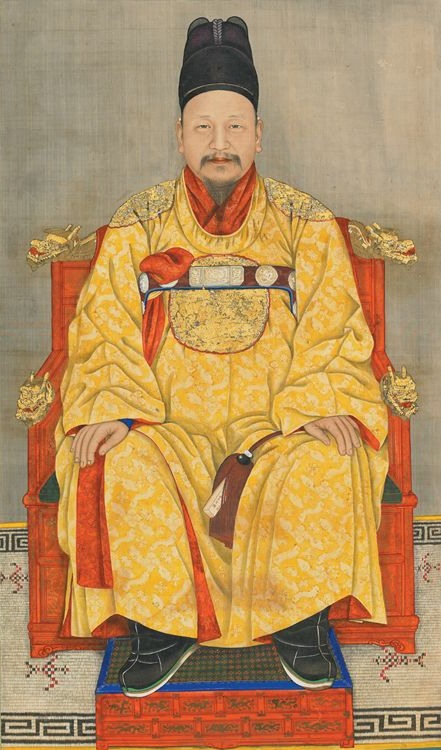
Emperor Gojong of Joseon (Korea)
Truth is, every empire down through history has sought to grow their holdings and increase their wealth by annexing other lands and peoples. I was recently reminded of this while watching, of all things, a Korean drama with my youngest girl, set during the early 1900's, a particularly turbulent time of Korean history. Joseon (Korea) was just beginning to open up to Western ways, just beginning to not immediately put Christians to death, and struggling to find her place between China, Russia, America, and Japan. The latter, that tiny but ridiculously ambitious island nation, made no secret of its desire to make Korea a colony of Japan. Ruthlessness and political maneuvering were the standard of the day, and corruption abounded.

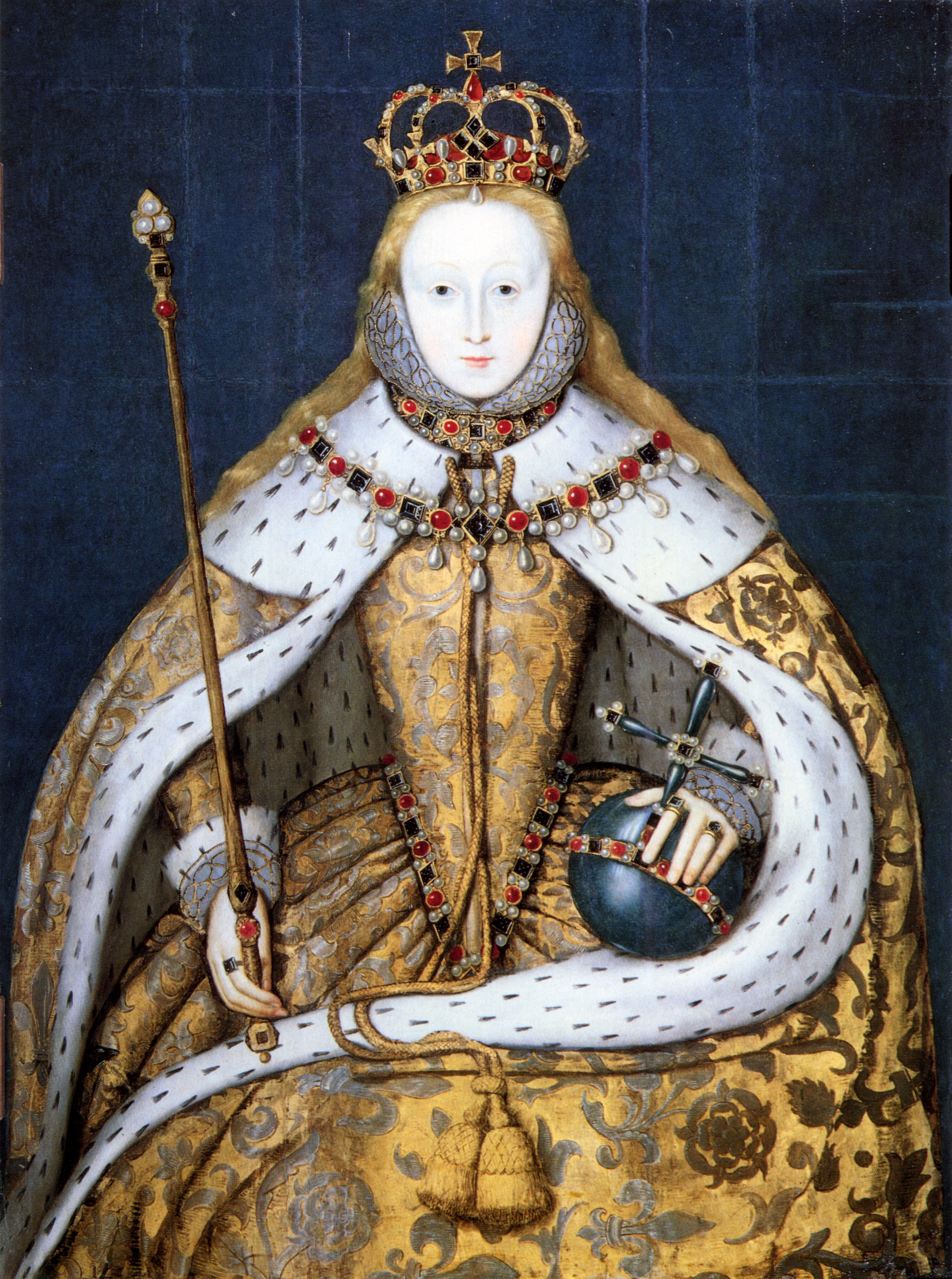
Good Queen Bess at her coronation
Not so very different from the time of Queen Elizabeth. "Good Queen Bess" furthered her father's move in breaking away from the Church of Rome by establishing the Church of England. Bloodshed between Catholics and Protestants abounded, and religious views were the standard by which political views were judged. Ireland suffered a harsh and bloody takeover by England, for reasons which I will not get into here, but doubtless that set the precedent for what later happened on American shores. When Elizabeth granted Sir Walter Raleigh his charter for a colony in the New World, however, she was very clear that it was at least in part for the purpose of furthering the Gospel to unreached peoples, but plenty of folk in England were unhappy enough with the way things were going in the newborn Anglican Church that they wished to either purify the Church (thus, Puritans) or create their own group entirely (Separatists).

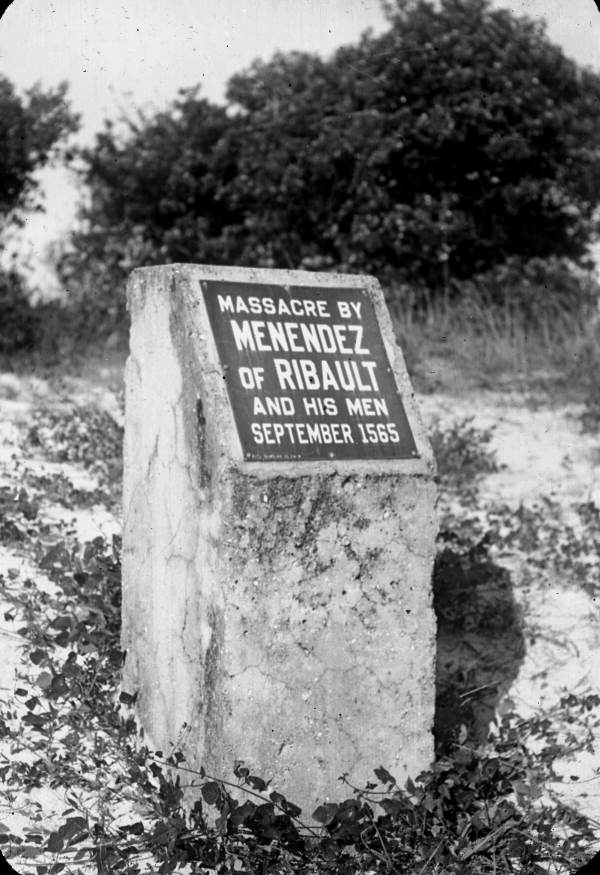
Most feared, however, were the Spanish. Spain already had holdings across South America, and their treasure galleons were the most coveted prize of English privateers. Staunchly Catholic to the point of meting out torture and death to those who disagreed (the Spanish Inquisition, anyone?), they were equally ruthless on the sea. The English were by far not the only ones to suffer at Spanish hands. As outlined in the website I shared above, French Huguenots sought refuge on what is now the Florida and South Carolina coast, but were seen as a threat to Spain's supremacy in the New World and met with death once their Protestant leanings were made known.

Marker at Fort Matanzas National Park
Lee Miller theorizes in her book Roanoke: Solving the Mystery of the Lost Colony that the group which set sail in 1587 under Governor John White, seeking to establish the first permanent English settlement in the New World, were Separatists. If so, the fate of French Huguenots would have been fairly fresh, and avoiding the Spanish at all costs would have been uppermost on their minds. Brandon Fullam makes the case in The Lost Colony of Roanoke: New Perspectives that this would have been a good reason why they settled on Roanoke Island rather than going north to the Chesapeake as originally planned. Maybe it's just my own firm Christian faith, but I find the Separatist theory quite compelling. It certainly wouldn't be the first time that a people group migrated in search of religious freedom, would it?


Monday, December 10, 2018

The Travelling Church

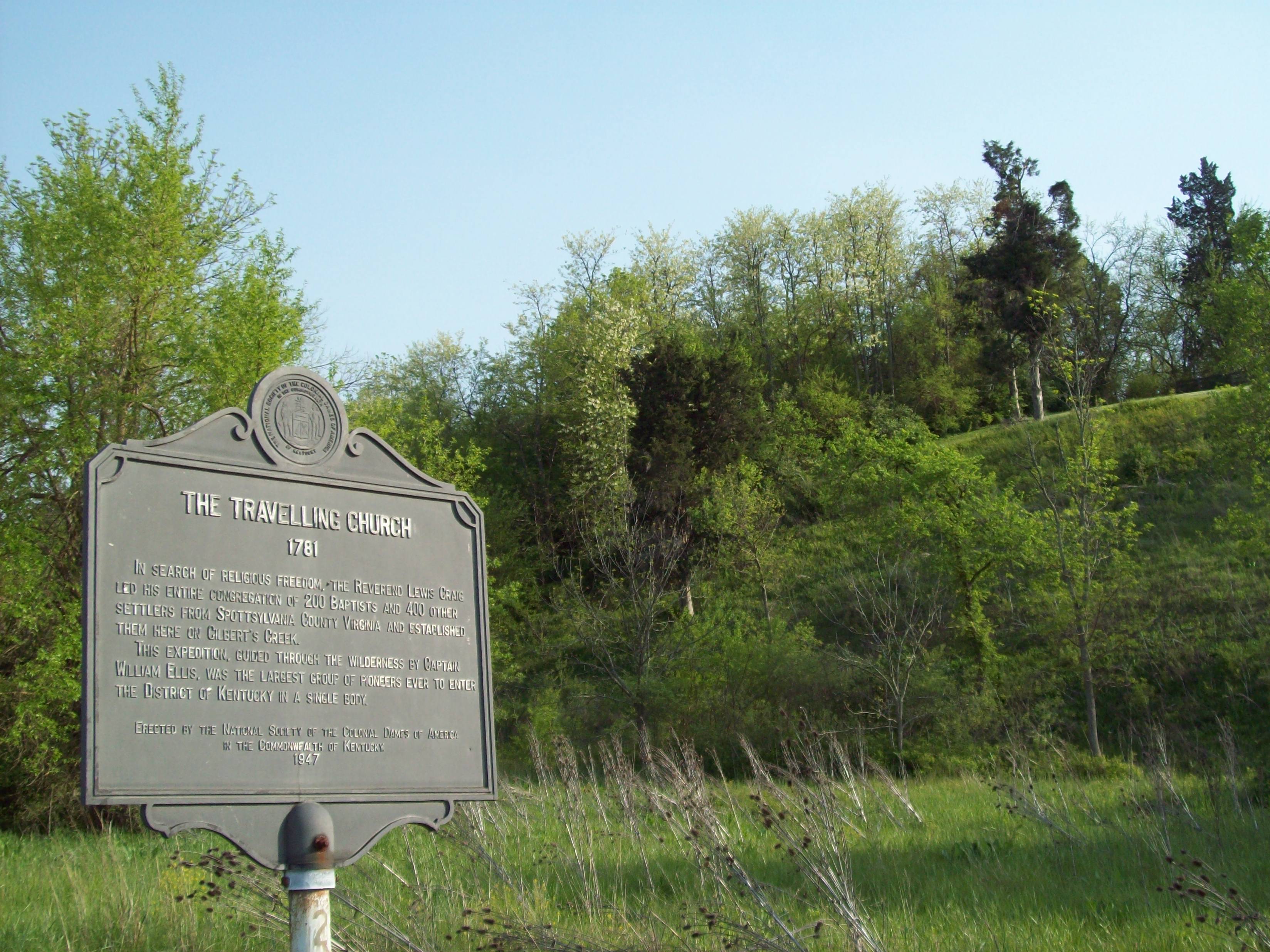
Kentucky State Marker #25
From Kentucky State historical marker #25:

In search of religious freedom, the Reverend Lewis Craig led his entire congregation of 200 Baptists and 400 other settlers from Spottsylvania County, Virginia, and established them here on Gilbert's Creek. This expedition, guided through the wilderness by Captain William Ellis, was the largest group of pioneers ever to enter the District of Kentucky in a single body.

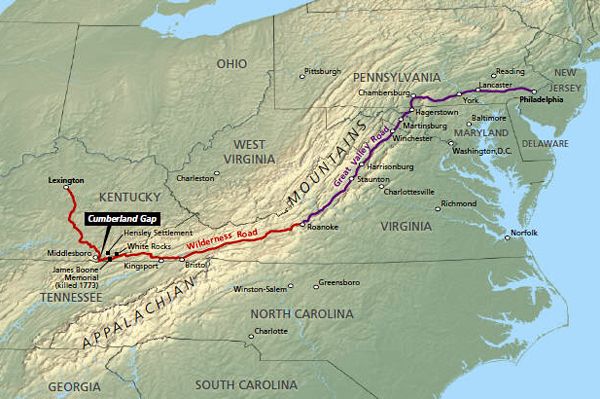
So we remember “The Travelling Church,” which set out from Virginia in 1781 for the purpose of exploring the “Canaan” of Kentucky while furthering their missionary endeavors. In October 1781, they arrived in Fort Chiswell in southwestern Virginia with a considerable-sized wagon train, only to find that a hundred miles further, the road would become impassable to anything but horse and foot traffic. They then sold or traded off their wagons and larger household goods, packed things up, and set on down the road. Robert L. Kincaid gives this colorful description in The Wilderness Road:

It was a crushing blow for Craig and his people to give up their wagons so early in their journey. The women and the children hated to leave the luxury of wheels for a hard and uncertain horseback ride. But it could not be helped. Huge baskets and bundles of clothing, bed furnishing and household articles were prepared and lashed upon packhorses. Children were crowded on top, or rode in front and behind their mothers and relatives. The men and older boys who did not have mounts trudged along on foot. Thus accoutered, the company strung out on the road to the dark wilderness with its unknown terrors.

The Great Road (purple) and the Wilderness Road (red)
The group met with delays because of unrest with the Cherokee, wet weather that turned into cold and ice as winter approached. They learned of Cornwallis’s surrender while still in eastern Tennessee and rejoiced greatly over the news. Then, through eastern Tennessee, up over Cumberland Gap and down into southeastern Kentucky, they forded icy rivers and slogged through knee-deep mud in sloughs and canebrakes. Finally the weather eased a bit as they approached Crab Orchard, Kentucky, and at Gilbert’s Creek, in December 1781, they chose a spot for their new church home. This would be the third Baptist church in Kentucky, as two others had been founded earlier the same year.

So why would they do this? Why would almost an entire church leave home and possibly family behind? Obviously the party was comprised of far more than church members—some just wanted the material opportunities Kentucky had to offer—but the biggest reason, for the church itself, was religious persecution. During the colonial era, any church besides the one established by Mother England often came under serious heat from Anglicans. The leader of this particular congregation saw the western frontier as their best solution to this.

Is it possible there could have been a calling from God involved, as well?

~*~*~*~

Filed under the category of historical tidbits I didn’t manage to shoehorn into my recent release The Cumberland Bride. Thanks to Kincaid for his excellent if sometimes embellished work on the Wilderness Road, and to Wikipedia, which has gotten far more reliable over the past few years. :-)

Wednesday, January 31, 2018

Pennsylvania: William Penn's Holy Experiment


The Peaceable Kingdom (Edward Hicks, c. 1834) exemplifies Quaker ideals.
William Penn, Pennsylvania’s founder, was an English Quaker who received the charter to Pennsylvania as the result of a debt owed to his father, Admiral Sir William Penn. The younger Penn, who grew up in English high society, began attending Friends meetings while living on a family estate in Cork, Ireland, and publicly joined the Society of Friends at the age of twenty-two. This soon got him arrested multiple times, as King Charles had placed stringent restrictions against religious groups other than the Anglican church. The Crown especially hated the Quakers, who believed all people (whether royalty or commoner) were created equal.

Despite persecutions, imprisonments, and being disowned by his family, William Penn’s Quaker faith burgeoned, getting him exiled from English society. He eventually ended up in Newgate Prison, and his dying father, who had gained respect for his son’s religious convictions, made peace with him and paid the fine to have him released. Sir Admiral Penn, knowing his son would face even worse persecution after his death, set the conditions for the founding of Pennsylvania. After the admiral’s death, young William Penn proposed to the Crown a partial solution to England’s religious strife: a mass emigration of English Quakers to America. To Penn’s surprise, the king granted him a large charter, giving him a large tract of land west of New Jersey and north of Maryland.

William Penn, a strong believer in religious tolerance and a man all too familiar with religious persecution, set forth to make his land (first called New Wales, then Sylvania, and finally Pennsylvania) a “Holy Experiment”—a haven for persecuted religious minorities. Within fifty years, the commonwealth had a quickly growing city (Philadelphia) and was home to people of several religious backgrounds.

The Society of Friends
Quakers began worshiping (silently, of course) at Upland in 1675. After Penn received his charter, Quakers emigrated in large numbers from England, Ireland, and Wales. They settled primarily in Philadelphia and the surrounding counties, and controlled Pennsylvania’s government until 1756, when their pacifism became unpopular with nonpacifistic Pennsylvanians during the French and Indian War. While Quaker dominance gradually diminished as people of other religious backgrounds made Pennsylvania their home, many Friends Meetings still exist today, often worshiping in the same meetinghouses used three hundred years ago.

The Pennsylvania Germans
Most Pennsylvania Germans belonged to the Lutheran and Reformed churches, but Pennsylvania also drew several smaller groups, primarily the Mennonites, Amish, Dunkers (German Baptist Brethren), Schwenkfelders, and Moravians. A small group of Mennonites and Quakers arrived in Pennsylvania in 1683 and settled Germantown (now part of Philadelphia), and by the 1730s, more Mennonites and the first Amish immigrants had arrived in Pennsylvania. The Schwenkfelders started arriving in 1731, and the Moravians in 1741. These smaller groups, all believers in nonresistance and baptism upon confession of faith in Christ, settled north and west of Philadelphia to farm the land. The Moravians soon became known for their mission work among the Native American tribes.

The Church of England
William Penn’s religious tolerance was so great that he allowed those who belonged to the Church of England, the same group that had persecuted him in England, to come to Pennsylvania. The Anglicans held services in Philadelphia as early as 1695, eventually building Christ Church, still one of Philadelphia’s most notable churches. With the addition of its spire in 1754, Christ Church became the tallest building in North America.

The Catholic Church
The first Catholic congregation was organized in 1720 in Philadelphia, and they built their first chapel in 1733. Pennsylvania had the second largest Catholic population during Colonial times, but their numbers were hardly large. Even in 1757, of Pennsylvania’s 200,000 residents, fewer than 1,400 were recorded as Catholic. This number is substantially higher today, with 28% of Pennsylvanians now characterizing themselves as Catholic.

The Presbyterian Church
The Scotch brought Presbyterianism to Pennsylvania, with the first congregation organized in 1698 in Philadelphia. Scotch-Irish immigration from 1710 till 1775 ushered in around 200,000 people to the Colonies, with most coming to Pennsylvania before spreading west and south. Presbyterians now make up approximately 4% of Pennsylvania’s population.

The Methodist Church
Methodists arrived in Philadelphia later in the colonial period. Their first church, St. George's Church, was built in 1769 and is the oldest Methodist building in America. Methodists now make up around 5% of Pennsylvania’s population.

The Jewish Community
Colonial Pennsylvania had a significant Jewish population. The first Jewish Philadelphian recorded was Jonas Aaron, in 1703, but sources show that Jews were in the area before then. Mikveh Israel, founded by Spanish and Portuguese Jews, was established in the city in 1740.

Nowadays, American states include a myriad of different religions. During Colonial times, however, Pennsylvania stood out. While other colonies restricted members of certain religious groups, William Penn opened Pennsylvania to all who worshiped God. Through this, he helped change the trajectory of an entire country.

Friday, June 19, 2015

Roger Williams - The Founder of Freedom of Religion in America

Roger Williams, the founder of Rhode Island, led the way for the United States to become a nation that allowed freedom of religion and was free from the tyranny of religious persecution.

Williams was born in London in 1603. While he was young, he saw numerous burning at the stake of Puritans and heretics which later influenced his freedom of religion views. In 1630, his controversial views became a source of contention, and he escaped to Massachusetts Bay Colony in 1631.

He preached first in Plymouth then in Salem, but his sermons went against Puritan doctrine. He preached that the king of England had no right to give away Native American land or to force people to hold certain religious beliefs. In the Bloody Tenet of Persecution, Williams argued against doctrines that permitted religious persecution.

The Puritans had decided to banish Williams and send him back to England. But he knew that persecution for his beliefs awaited him there. So he escaped the colony in the middle of one of the coldest winters in Massachusetts. He survived because he was befriended by local Native Americans near Narragansett Bay.


Williams purchased the land from the Narragansett Chiefs and named is settlement Providence in thanks to God. Later his settlement grew to encompass the colony of Rhode Island. To protect the land, he also gained a charter from England.

Providence and Rhode Island’s charters were the first to allow freedom of religion. Because of this, many Jews and Quakers made their way there. Later Williams founded the first Baptist church in North America.

Roger Williams died at Providence in 1684, but his descendants continued to establish Rhode Island as a colony and state that allowed people freedom of worship and religion that became a cornerstone for the United States of America.

Friday, February 20, 2015

Persecution in the Colonies


While many Christians escaped persecution by coming to America, some Christian groups faced persecution in the colonies as well. Here are some instances of that persecution.

In Jamestown, America's first permanent English settlement, people were required to attend the Anglican Church (the church of England) regularly. Later in Virginia, taxes were paid to the church and Sunday laws required attendance at least once a month.

Many denominations got around that law by meeting three times a month at their own church and going to the Anglican Church once a month, but some felt they were denying Christ by compromising their beliefs to go to a church they didn't agree with. The punishment was normally a hefty fine.

In 1643, Virginia enacted a law which stated that only those were permitted to preach and teach, publicly or privately, whose beliefs conformed to those of the Church of England. This meant that any church meetings held by Quakers, Baptists, or other denominations were considered illegal.

It was worse for those who were considered to have blasphemed the name of God. The punishment for that crime was imprisonment or death.

The Puritans who established settlements in Massachusetts also persecuted those who disagreed with them. Roger Williams and Anne Hutchinson were among those who were banished and formed settlements in other colonies.

Eventually Baptists, Episcopalians, Presbyterians, and Congregationalist Puritans formed colony and community churches throughout New England. Anyone who disagreed with the doctrine of the colony's church was banished, severely punished, or sometimes executed.

Quakers received the most severe persecution in the colonies. My ancestors, the Willis' and the Brinton's were among the Quakers who came to America to escape persecution only to have their lands ceased and be imprisoned in the colonies.

As more settlers of different denominations and religions came to America, tolerance of the different beliefs became more prevalent. By the Revolutionary War, many of our founding fathers believed in the principle of religious tolerance. Men like George Washington and Thomas Jefferson enacted laws and the first amendment of the Constitution to prevent an establishment of any religion so that all denominations and religions had freedom to practice their beliefs in the public area. Unfortunately, a false interpretation of that amendment is now being used to stop Christians from practicing their beliefs in public, and a new religious intolerance is sweeping America.

Sunday, March 3, 2013

The Battle for Freedom of Conscience

"Thomas Goold being presented by the Grand Jury held at Cambridge, April 7, 1657, for not bringing his child to the holy ordinance of baptism, the said Goold appearing in Court confessed his child to be unbaptized, the Court sollemly admonished him of his dangerous error." Middlesex Court Original Papers, Charlestown, Massachusetts p. 699.

"The Snake in the Grass or Satan Transform'd to an Angel of Light," title page by Richard Gaywood, paper, etching, 148 mm x 93 mm. At the sides are a Puritan and a Covenanter above an author writing.{{PD-1996}}
"But take heed to yourselves: for they shall deliver you up to councils; and in the synagogues ye shall be beaten: and ye shall be brought before rulers and kings for my sake, for a testimony against them." Mark 13:9

The colonists from the early 1600's through to the writing of the Constitution witnessed time and time again people willing to endure much persecution for their beliefs. Thus, many came to understand a person's conscience cannot be bent to the will of the government or other rulers. To change what a person believes at the core of their being requires an act of God, not of man. A battle for a person's freedom of conscience played a significant role in the war for human rights.

The anabaptist groups, like the Baptists and the Quakers, were demonized by the courts for not baptizing their infants. The Puritans, from which the Congregational Churches were formed, came out of the Church of England (many of the preachers having been trained by that church), held to the doctrine of infant baptism so strongly that they viewed anyone not baptizing their infant a messenger of Satan:
 "'Tis Satan's policy to plead for an indefinite and boundless toleration." Thomas Shepherd, "Election Sermon" (1672), p. 24
"The Lord keep us from being bewitched with the whore's cup, lest while we seem to detest and reject her with open face of profession, we do not bring her in by a back door of toleration." John Cotton, "Bloody Tenet Washed," p. 132, 192
"The Loud outcry of some is for liberty of conscience … I look upon an unbounded toleration as the first born of all abominations." Reverend Urian Oakes, president of Harvard in 1675. http://mises.org/daily/5966/The-Libertarian-Origins-of-Rhode-Island
 Reflecting upon this battle in Colonial times, I could not help but see the parallel in our own times. The cry of anger against evangelical, Bible-believing churches (indeed all who lay claim to the title: 'Christian') no longer comes from a state church but from secularists, atheists, and those in the government who have little regard for true freedom of conscience. They tote toleration while denying business owners liberty of conscience on how they run their business. There is little difference between the above quotes and the actions and words of those who wish to impose laws that are contrary to the conscience of the business owner or the individual.

The Anabaptist groups (like the Quakers and the Baptists and the Seekers) continued to stand for their beliefs, against all persecutions: from arrests, to whippings, to hangings. They did not waiver. Such conviction led others to embrace their freedoms and even their faith. People gave up their positions, their wealth, their homes in order to hold to their core beliefs. And by standing firm, drawing others to them, they eventually won for us religious freedom...which I fear we are losing, particularly if we (out of fear of losing our comforts and 'peace') refuse to stand firm on God's Word--on God's Truth, and not man's--no matter the cost.

The Bible does teach us to obey the laws of the land and live peaceably, but not to the extent of denying Christ or denying God's laws. God's laws must come first in our lives. God, our Creator, knows what is best for us. He gave us those laws, those instructions on how to live, because He knew that to work contrary to them would lead to destruction. He didn't want that for us. As an example to us, He gave Peter and the other apostles courage to say, "We ought to obey God rather than men." (Acts 5:29)

When  you are facing opposition to what you claim is your faith, are you willing to say as the apostles did, "We ought to obey God rather than men"?

"I have given them thy word; and the world hath hated them, because thy are not of the world, even as I am not of the world. 
I pray not that thou shouldest take them out of the world, but that thou shouldest keep them from evil."
John 17:14-15


Sunday, October 21, 2012

Rev. Isaac Backus: A Matter between God and Individuals

"...nothing is more evident, both in reason and the Holy Scriptures, than that religion is ever a matter between God and individuals; and, therefore no man or men can impose any religious test, without invading the essential prerogatives of our Lord Jesus." 
Rev. Isaac Backus, 1787, Constitution Debates

"Knowing that a man is not justified by the works of the law, but by the faith of Jesus Christ, even we have believed in Jesus Christ, that we might be justified by the faith of Christ, and not by the works of the law: for by the works of the law shall no flesh be justified." Galatians 2:16

When mere men impose upon other men works to be tests of their faith and of their religion, they demonstrate their own faith is in works and not in the grace of God given to us through the death, burial, and resurrection of His Son, Jesus Christ.

During the formation of our country many stood on the side of religious freedom. Even so, others worked to oppress the fundamental right to worship God according to their own conscience.

Paul warned the Galatians to not let others lead them to believe they must follow the traditions of the Judaisers. Jesus preached against the Pharisees who placed heavy religious burdens on the Jews. Christ desired followers to be people who loved him and chose to lay down their lives for Him.

God calls us individually to Him. No person can come to God except through faith, and true faith comes forth from the inner man not from another person imposing his views on an individual.

Faith that saves forms at the seat of one's affections, his inner most thoughts, his passions, the very essence of who he is--the very place no other can touch except God. From this place, faith, having been sparked by the conviction of the Holy Spirit, hears the Word of God, and comes to fruition when the individual, believing, calls upon the name of the Lord. This is the faith (or religion) Rev. Backus spoke of when he said, "religion is ever a matter between God and individuals; and, therefore no man or men can impose any religious test,..." 

Religion is man's attempt to reach God. When religion forces and tests it does so contrary to the very words of Jesus, "I am the way, the truth, and the life: no man cometh unto the Father, but by me." (John 14:6b) This is Christ's essential prerogative, that all man should come to God through Him, not through a priest, not through a religious leader, not through the faith of another man, but as an individual coming through faith in Jesus Christ who paid for that individual's sins.

What are the essential prerogatives of God, and how can we avoid invading them?

Jesus is God, the Son. He, as God, created all. He is our Holy, Righteous, and Just King, Ruler of All. As such, He has all authority to call individuals to Him and into what service He deems to place them. He lifts one up while bringing another down. He alone has the exclusive right to save the souls of men and to give them a measure of faith and grace. By His Divine Will He determines how a man shall serve Him. And in His Holy Word He lays out His plan for all mankind.

We cannnot force another to give his heart to God. The Holy Spirit does the convicting. The Holy Spirit reveals to each individual the glorious grace of God. Yes, we are to tell others. Yes, we are to disciple, but only the Holy Spirit can work in the heart of each person.

Jesus wants people who are willing to die to themselves and live for Him. Such sacrifice and commitment can only come when a person loves Him. A person's will must be passionately and wholly involved to make such a commitment. Another person cannot, by force or by fear, cause you to make such a commitment.

Jesus said that those who believed in Him would be saved. This is a personal belief. No man can impose it upon another. The essential prerogatives of God the Father, God the Son, and God the Holy Spirit--the triune God:
  • He is creator and thus has all authority over creation. He alone has exclusive rights to do with creation what He will.
  • His is King of Kings and Lord of Lords. He alone has exclusive rights to raise up a ruler or take down a ruler. By virtue of His rank He gives another authority.
  • He gave to all men the freedom to chose to believe then to leave their old lives behind to follow Him. He provided a way of salvation for all men, that none should perish, and by His Holy Spirit, He calls them unto Him, drawing them into the grace He so richly extends to all, desiring that none should perish. And as the all knowing God, who knows whose heart will be His, He pursues with the intent to win.
  • He, as creator, formed each of us in the womb, and determined a purpose for our lives, some for greatness and others for a more humble service. He alone determines this. 
At the time our country was formed, the livelihood and faith of the citizens of other nations were determined by the goverment and religious rulers. Grave consequences would come to those who opposed these rulers.

Rev. Backus stood for freedom of slaves, not only those forced to work for their masters, but also for those who were enslaved to a religion imposed upon them by church leaders and government. He spoke, knowing of those who were nearly drowned by church leaders who opposed adult baptism. He spoke, knowing of those who had suffered beatings for preaching the true Gospel: that faith alone in the death, burial and resurrection of Jesus Christ can save us and not by any works or righteousness we have done.

Today, we have the 'politically correct' telling us how to behave. While the desire to not offend another is honorable, it is flawed when it invades the 'essential prerogatives of our Lord Jesus.' We have the environmentalists testing our loyalties to Mother Nature by our efforts to minimize our carbon footprint. They neglect to acknowledge the Creator and His plan for the earth. While we are to be good stewards of what God has given us, we must never forget that we have no power over Him and His plans.

Today, we have as great a challenge as those who participated in the constitutional debates to remember the rights of the individual.

Jesus told His disciples, "...Thus it is written, and thus it behooved Christ to suffer, and to rise from the dead the third day: And that repentance and remission of sins should be preached in his name among all nations, beginning at Jerusalem" (Luke 24:46b-47).

Rev. Backus determined to ensure our country would all for this message to be preached, unhindered by the government. Who today will stand to ensure that freedom remains, unhindered by the government and by those who wish to destroy true Christianity?