Announcements

10 Year Anniverary & New Releases Winners: Carrie Fancett Pagels' Butterfly Cottage - Melanie B, Dogwood Plantation - Patty H R, Janet Grunst's winner is Connie S., Denise Weimer's Winner is Kay M., Naomi Musch's winner is Chappy Debbie, Angela Couch - Kathleen Maher, Pegg Thomas Beverly D. M. & Gracie Y., Christy Distler - Kailey B., Shannon McNear - Marilyn R.
Showing posts with label 16th century. Show all posts

Monday, March 8, 2021

John White: Artist For the New World and First Governor of Virginia

"The pictures of sondrye things," the inscription reads, "collected and counterfeited [copied] according to the truth in the voyage made by Sir Walter Raleigh knight for the discovery of La Virginea. In the 27th yeare of the most happie reigne of our Soveraigne lady Queene Elizabeth. And in the yeare of Lord God 1585."

These are the words and hand of John White, appointed first as professional artist and mapmaker to three separate voyages to the New World.


We know him best as first Governor of Virginia, the name given to territory claimed on behalf of the Virgin Queen, Elizabeth, but his first experience in the New World was in 1577, on an expedition led by Martin Frobisher to what is now known as Newfoundland. A single watercolor survives of that adventure, showing the English explorers under attack by Inuit warriors. One of those warriors, as well as an Inuit woman and child, were carried back to England and put on display. White sketched and later colored portraits of these unfortunate people, and I was delighted to find images of all in the online archives of the British Museum.

It has been commented that White not only portrayed the indigenous peoples of the New World with a realism uncharacteristic of the era, but with sensitivity and grace.

Don't you just love the face of the baby peeking out of his (her?) mother's hood?


In 1584 and 1585, White accompanied two other expeditions, both to Virginia. His map of the coast was remarkably accurate, by modern standards:


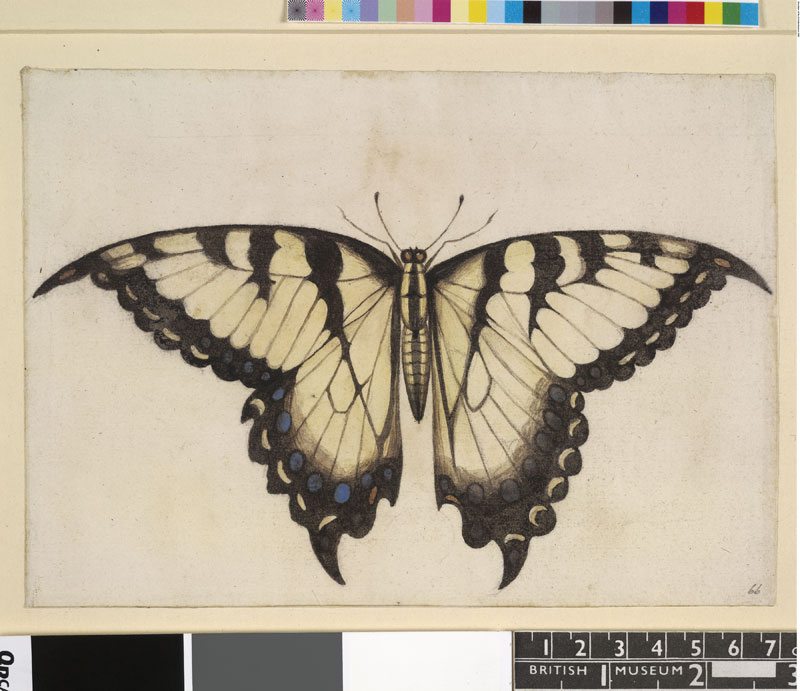
Dozens of his watercolor sketches also survive of various flora and fauna, presumably of England as well as the New World. The man had an amazing eye for detail, and the patience to reproduce it for the world to see.


Once again, however, it's his portraits of the people of the New World--of what would become North Carolina, here--that I find most arresting. Charged with "painting to life" the land and peoples, he did so, capturing faces and scenes from the Caribbean up through Florida as well as the dress and manners of the Carolina Algonquin peoples. In so doing, he provides the only view we have of this time and region.

He sketches and paints with so much realism, in fact, that it's somewhat problematic for modern sensibilities. This Algonquin woman, identified by White as "one of the wyves of Wyngyno," a weroance or chief of Secotan, stands in a pose that every woman ever will easily recognize. Thomas Harriot, a prominent scientist and mathematician who worked alongside White during the 1585 expedition, described it as "maydenlike modestye." Indigenous manner of dress accommodates the bare essentials of modesty, at least in summertime, but only barely. I can imagine what they must have thought of the English with their many layers! We know from their writings that the English regarded them to varying degrees as very much lesser peoples.

Interestingly, though, some--Harriot included--felt the Algonquin peoples had much to teach the English, not the least of all that they ate much more healthfully and without the excess the English were prone to. In his written account, A Briefe and True Report of the New Found Land of Virginia, first published in 1590 with woodcut prints of White's sketches, Harriot commented that the only area where they seemed deficient was their understanding of spiritual things, and told of his efforts to explain to them the basics of Christianity. He also speaks in scathing terms of those who went to the New World only to look for gold and silver and cared for nothing else, or who were of delicate upbringing and could not handle the primitive conditions of the New World.
For those who read my last post on our visit to Roanoke Island Festival Park, these next two prints illustrate what the park attempts to bring to life in their Algonquin life displays:

"The broyling of their fish over the flame of fier"


... and the town of Secotan, a coastal Algonquin community:


The complaint is made that Harriot's writings, and White's work as well, was only carried out with an eye to the economic feasibility of supporting an English colony in the New World, but both men could be credited with seeing the Algonquins as a people in their own right and worthy of respect and dignity, even when others did not.

For John White, this respect served him well as Governor of Virginia, however short-lived was his time there in 1587. We know from his own account how grieved he was to leave, and how intensely he desired his colonists to live with love and friendship with the Croatoan people and their neighbors.

For further study:


All images © The Trustees of the British Museum. Shared under a Creative Commons Attribution-NonCommercial-ShareAlike 4.0 International (CC BY-NC-SA 4.0) licence.

Monday, February 8, 2021

Researching the 16th Century: Roanoke Island Festival Park

 Another photo-heavy post, so be patient as they load ...


The morning of our second day on North Carolina's Outer Banks, on my quest for on-site research for my upcoming Lost Colony novel Elinor, my daughters and I visited the Roanoke Island Festival Park. Despite the indoor museum areas being closed due to COVID-19 restrictions, I found the open areas extremely interesting and helpful. A walking path leads visitors through a reconstructed indigenous Algonquin village, complete with a ton of informational placards and recordings of words spoken in the native language and native folk stories. I wanted to linger, of course, much longer than the time we actually had.

One of the things that made this so fun is having studied the work of John White, an English artist of some renown for having accompanied three of the first expeditions to the New World, whose illustrations and portraits of native life and people provide the only visual window we have of this time. They've done an amazing job of bringing White's watercolors to life, showing details such as how fish were broiled above large, open fires, to reproduction longhouses and various furnishings.

(And yes, this is the same John White who was later appointed Governor of the new colony, whose granddaughter was the first English child born on American shores.)


Above, my youngest daughter gets into the spirit of reenacting historical trade between Algonquins and the English, beckoning us into the longhouse while reading from one of the signs discussing the importance and details of trade. :-)

Below, I snapped probably a dozen photos of the inside of a longhouse and the details of its construction, but this will give you a good idea of what it looks like.


Sidetracking from the native town area, we walked down to the waterfront, where a beautiful 16th century reproduction ship lay at the dock. My attention was, predictably, torn between the ship and the scenery stretching on both sides.


A few shots of the Elizabeth II, which we enjoyed getting to explore as much as they would allow, again, given pandemic restrictions. (Better photos of the entire ship are are the park website and Facebook page.)


An intriguing little sign I found hanging inside the ship ... good advice for anyone!


We then returned to the Indian town, where my girls were intrigued by the model of a dugout canoe ...
 

A model of one of the fishing weirs commonly used by the Algonquin peoples out in the bay to trap and catch fish ...
And again my youngest literally gets into the fun by pretending to paddle away in the canoe. :-)

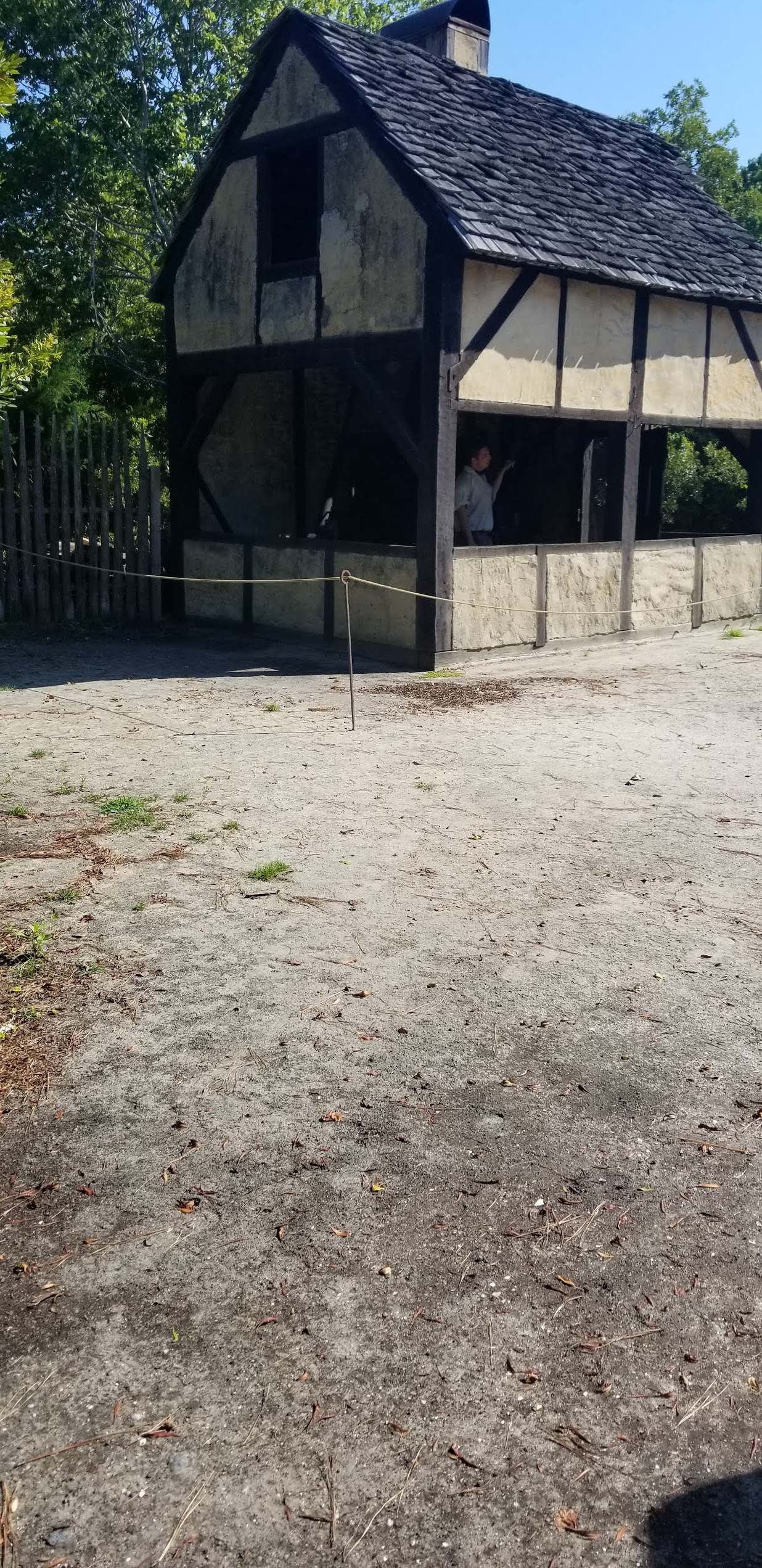
After that, we entered the English settlement area, where among other items of interest, we found a winsome young blacksmith plying his trade. I always find this sort of thing far too fascinating, but with a family meeting to make in another part of the state, we had to say our goodbyes and move on.


The display of a native garden and nearby platform was also interesting. The Algonquin would employ young boys to sit and keep watch over the garden, to make sure deer, raccoon, bears, and other critters wouldn't steal their livelihood. Cultivated crops included the usual corn, peas or beans, and squash, with parsnips, persimmons, strawberries, mulberries, grapes, prickly pear fruit, chestnuts, and acorns also gathered from the wild. Their diet was far more varied than one might expect!

This is definitely a site I'd like to return to when I have more time. In the meantime, they have a lot of interesting reading at both the main website and Facebook page, and it proved an extremely helpful resource, even on a very rushed research trip!


Monday, January 11, 2021

Researching the 16th Century: Fort Raleigh National Historic Site

In a year full of uncertainty and isolation, I was blessed to not only sign another book contract, but also do onsite research for the story. Daughters of the Lost Colony: Elinor is scheduled for a December 2021 release. This was not a story I expected to get to tell--but I am so excited to present it to y'all!

After writing already about the Lost Colony and where recent research indicates they went after leaving Roanoke Island, I'll be sharing more bits and pieces of the story: key players in the Lost Colony saga and maybe even some of the political aspects of the era.

But first, the setting itself.

An important part of research for me is to walk the ground where my characters walked, when possible. To get a taste of what a particular area might have looked, smelled, and felt like, especially in a historical context. So after my niece's wedding in July, near Boston, my daughters and I headed to the Outer Banks of North Carolina. My journey took me in reverse order from history, with Buxton on Hatteras Island being our first stop, but Fort Raleigh National Historic Site is properly the first location to be covered chronologically. It's where Ralph Lane of the disastrous 1585-86 expedition built an earthenworks fort, and where the 1587 expedition landed, originally just to check on the 15-some men left to hold an English presence in the New World but then temporarily settling there after being informed their navigator would take them no further. The actual site of the resulting village and its palisade fort is unknown, but archaeological research found the location of Lane's fort, and a reconstruction was commissioned in the 1950's.

Informational plackards at the site explain that it's obvious the fort would have been too small to shelter an entire settlement. The exact site of the village Lane and his men built then abandoned, and the 15 occupied for however long, is unknown, but that would be where the Lost Colony first took up residence, so I had fun imagining what this area might have looked like with a cluster of English cottages nearby. 


The ampitheater belonging to the modern-day Lost Colony drama production is also located here, so we poked about there as well. It provides a lovely view of the ocean, and the currently unused Elizabethan-inspired buildings added to the atmosphere of historical mystery. And of course the ever-gorgeous maritime forest of pine and oak possess a charm all their own!


Outside the entrance to the ampitheater lies the beginning of a walking trail, with paths leading down to the beach. We didn't have time for the whole route, but a side path led us to a spot where I wanted to linger and linger, overlooking Albemarle Sound. You can bet my imagination ran wild here!


It isn't hard to envision what those first English explorers might have seen when first setting foot here, how enchanted they must have been with the fragrance of the pines and the tallness of the trees, and how strange and yet a part of the forest the native people might have appeared . . .

And how those same people might have felt, seeing their first Europeans, with their equally strange clothing and armor . . .

To be continued!

Monday, July 20, 2020

In the Name of Religious Freedom

French Florida
Or, America's Earliest Colonial History, Part 2.

Right after my last post, a friend messaged me:
I saw your Colonial Quill post. You know how every time one thinks one has history down and then another obscure fact crops up that changes everything? Yeah, that. The first interest in colonizing America wasn't fueled by Queen Elizabeth, who was hoping to stop Spanish expansion. Before that, Jean Ribault landed on the shores of Florida hoping to set up a colony. For Huguenots, I believe.

https://jeanribault.org/
Take a peek at this beautiful website. You're welcome. Makes me long to write a story about this man and the people he sought to defend--although now, alas, I am under contract for a story featuring another, but maybe not so different, group.

That group would be the famed Lost Colonists of Roanoke Island.

These days, even the word "colonial" has a bad name. I've written about this before.

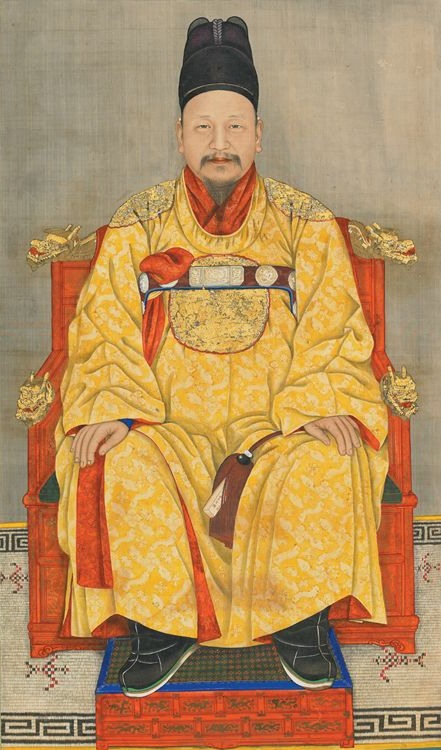
Emperor Gojong of Joseon (Korea)
Truth is, every empire down through history has sought to grow their holdings and increase their wealth by annexing other lands and peoples. I was recently reminded of this while watching, of all things, a Korean drama with my youngest girl, set during the early 1900's, a particularly turbulent time of Korean history. Joseon (Korea) was just beginning to open up to Western ways, just beginning to not immediately put Christians to death, and struggling to find her place between China, Russia, America, and Japan. The latter, that tiny but ridiculously ambitious island nation, made no secret of its desire to make Korea a colony of Japan. Ruthlessness and political maneuvering were the standard of the day, and corruption abounded.

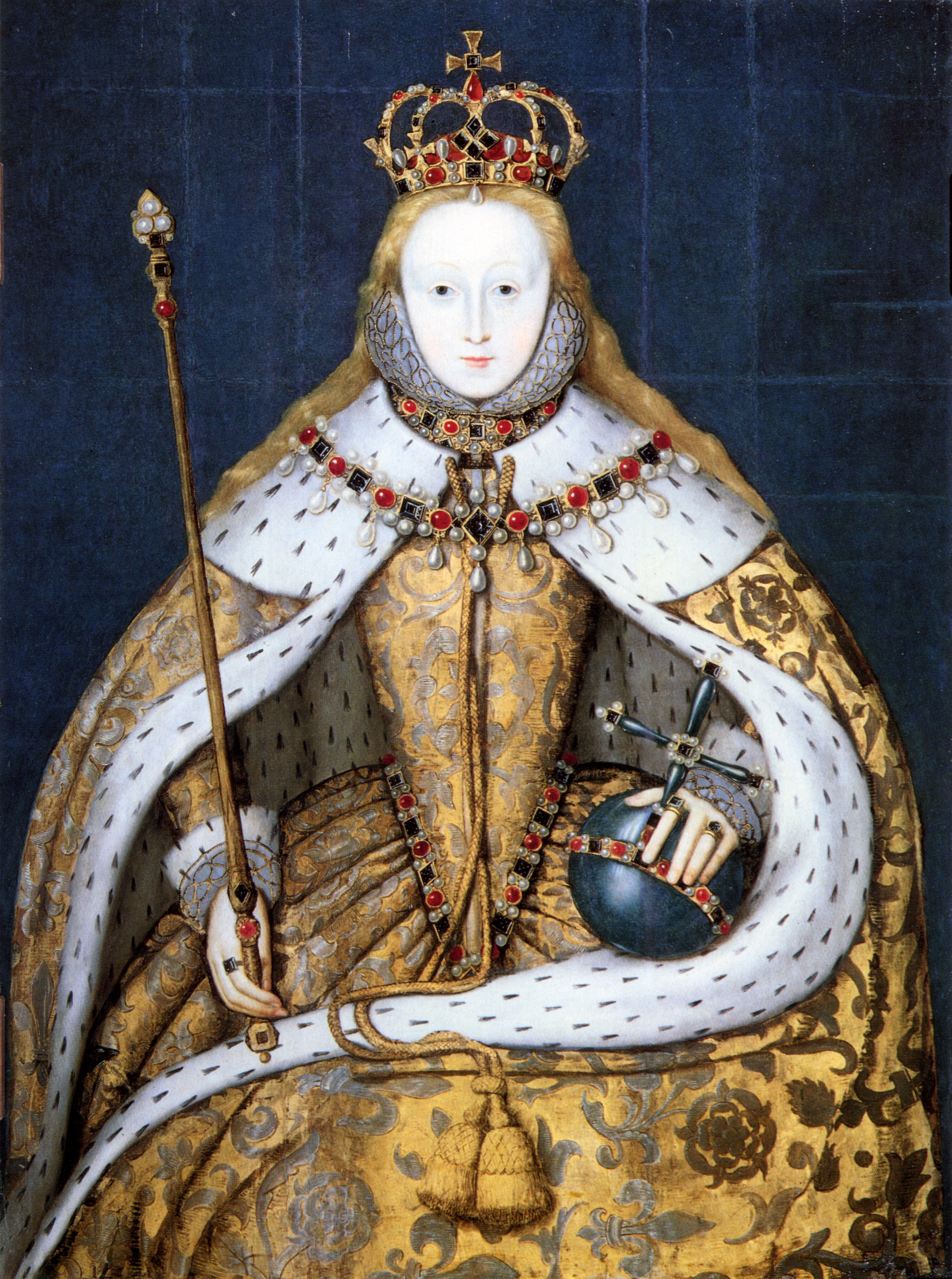
Good Queen Bess at her coronation
Not so very different from the time of Queen Elizabeth. "Good Queen Bess" furthered her father's move in breaking away from the Church of Rome by establishing the Church of England. Bloodshed between Catholics and Protestants abounded, and religious views were the standard by which political views were judged. Ireland suffered a harsh and bloody takeover by England, for reasons which I will not get into here, but doubtless that set the precedent for what later happened on American shores. When Elizabeth granted Sir Walter Raleigh his charter for a colony in the New World, however, she was very clear that it was at least in part for the purpose of furthering the Gospel to unreached peoples, but plenty of folk in England were unhappy enough with the way things were going in the newborn Anglican Church that they wished to either purify the Church (thus, Puritans) or create their own group entirely (Separatists).

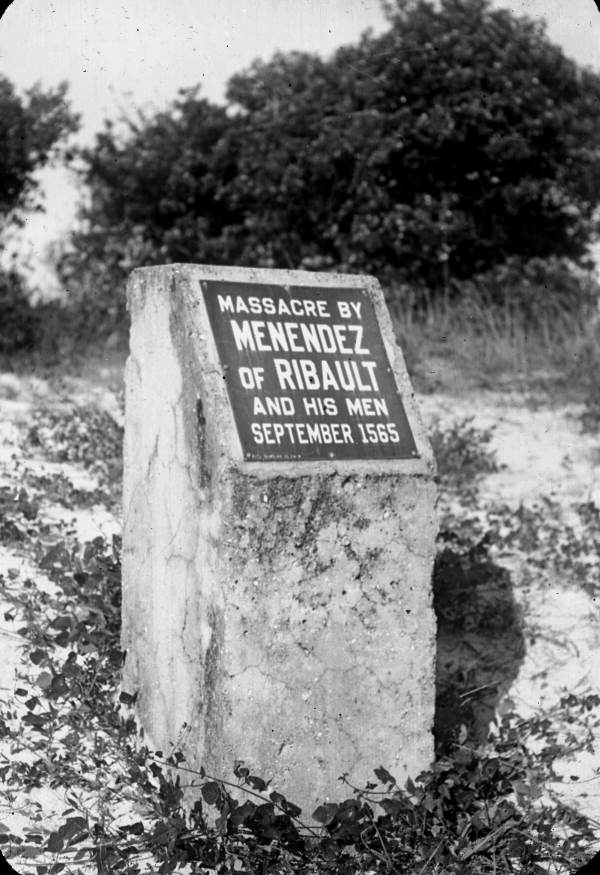
Most feared, however, were the Spanish. Spain already had holdings across South America, and their treasure galleons were the most coveted prize of English privateers. Staunchly Catholic to the point of meting out torture and death to those who disagreed (the Spanish Inquisition, anyone?), they were equally ruthless on the sea. The English were by far not the only ones to suffer at Spanish hands. As outlined in the website I shared above, French Huguenots sought refuge on what is now the Florida and South Carolina coast, but were seen as a threat to Spain's supremacy in the New World and met with death once their Protestant leanings were made known.

Marker at Fort Matanzas National Park
Lee Miller theorizes in her book Roanoke: Solving the Mystery of the Lost Colony that the group which set sail in 1587 under Governor John White, seeking to establish the first permanent English settlement in the New World, were Separatists. If so, the fate of French Huguenots would have been fairly fresh, and avoiding the Spanish at all costs would have been uppermost on their minds. Brandon Fullam makes the case in The Lost Colony of Roanoke: New Perspectives that this would have been a good reason why they settled on Roanoke Island rather than going north to the Chesapeake as originally planned. Maybe it's just my own firm Christian faith, but I find the Separatist theory quite compelling. It certainly wouldn't be the first time that a people group migrated in search of religious freedom, would it?