Announcements

10 Year Anniverary & New Releases Winners: Carrie Fancett Pagels' Butterfly Cottage - Melanie B, Dogwood Plantation - Patty H R, Janet Grunst's winner is Connie S., Denise Weimer's Winner is Kay M., Naomi Musch's winner is Chappy Debbie, Angela Couch - Kathleen Maher, Pegg Thomas Beverly D. M. & Gracie Y., Christy Distler - Kailey B., Shannon McNear - Marilyn R.
Showing posts with label Quakers. Show all posts

Friday, September 28, 2018

Were the Quakers Christian?


When I've talked with people about my Colonial-era trilogy involving the Quakers, I've found that many - perhaps most - believe that the Quakers were a religious sect, perhaps even a cult, but that they were not Christian.

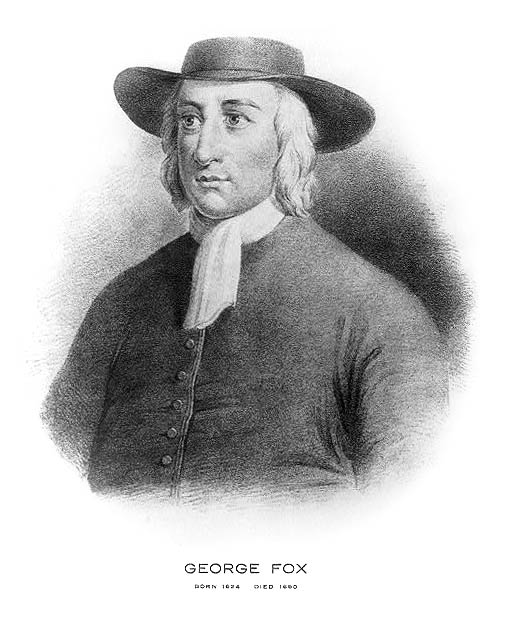
George Fox, the acknowledged founder of the Quaker movement, penned these words in a letter to the governor and assembly of the Barbados Islands in 1671:

"And we own and believe in Jesus Christ, his beloved and only begotten Son, in whom he is well pleased; who was conceived by the Holy Ghost, and born of the Virgin Mary; in whom we have redemption through his blood, even the forgiveness of sins; who is the express image of the Invisible God, the first-born of every creature, by whom were all things created that are in heaven, and that are in earth, visible and invisible, whether they be thrones, or dominions, principalities, or powers, all things were created by him. And we do own and believe that He was made a sacrifice for sin, who knew no sin, neither was guile found in his mouth; that he was crucified for us in the flesh, without the gates of Jerusalem; and that he was buried, and rose again the third day by the power of his Father, for our justification; and that he ascended up into heaven, and now sitteth at the right hand of God. This Jesus, who was the foundation of the holy prophets and apostles, is our foundation; and we believe that there is no other foundation to be laid than that which is laid, even Christ Jesus; who tasted death for every man, shed his blood for all men, and is the propitiation for our sins, and not for ours only, but also for the sins of the whole world; according as John the Baptist testified of him, when he said, ' Behold the Lamb of God, that taketh away the sin of the world.' John i. 29.

Now ... what say you?

Watch for The Great Lakes Lighthouse Brides collection, releasing November 1, 2018. "Seven romances set between 1883 and 1911 bring hope to these lonely keepers and love to weary hearts."
Pre-orders available on Amazon now.


Wednesday, June 27, 2018

Pennsylvania's Colonial Plain People: Quakers, Amish, and Mennonites


After my post last month, which touched on Quaker disownment, one reader mentioned how it seemed similar to shunning, a practice most commonly seen in Anabaptist (primarily Old Order Amish and some Mennonite) communities. So I thought this month I’d talk some about these plain communities, their similarities, and their differences during Pennsylvania’s colonial times.

BACKGROUND

Friends (Quakers) first came to America in 1655. The first two settlers were women, Mary Fisher and Ann Austin, from Barbados. The Puritans persecuted and imprisoned them, but a local man, Nicholas Upsall, was converted to Quakerism by them and helped establish the first Monthly Meeting of Friends in Massachusetts. Twenty years later, Quakers settled in New Jersey, and with William Penn’s holy experiment, throngs of Quakers who were being persecuted by the crown in England immigrated to America.

Like the Friends, the Amish and Mennonites also came to America fleeing persecution due to their religious beliefs. The first group, Northern German Mennonites, arrived in Germantown (now part of Philadelphia) in 1683, and a much larger migration (this time from Switzerland and Southern Germany) began in 1707, also with Pennsylvania as their destination. The Amish, a more conservative sect who broke away from the Mennonites in 1693, began coming to America in the early eighteenth century.

LANGUAGE

Friends came primarily from England, so they spoke English. That said, they employed “plain speech”—using thee, thou, thy, and thine, as well as some other speech differences, as a denial of any caste system in human interactions. While plain speech is used much less now, some Friends still speak it while interacting with other Quakers.

Amish and Mennonites generally spoke German, as well as a dialect of it called Pennsylvania Deitsch (commonly known as Pennsylvania Dutch now). Pennsylvania Dutch is still used by Old Order Amish people, as well as by many in the Old Order and conservative Mennonite communities.

DRESS

In colonial times, Quakers didn’t have a prescribed dress. However, they did clothe themselves differently from those around them. During the eighteenth century, they tended to wear clothing that had been in fashion ten to fifteen years prior, mainly due to their frugality. They dressed well (many were quite wealthy), took care of their clothing, and wore it for as long as it lasted. As well, adornments (of which there were many in high society) were discouraged. Some Friends were more “plain” than others, and in the nineteenth century the dress became more distinct. Plain dress among Quakers is fairly uncommon now, although there are some Friends in Pennsylvania, Ohio, and Virginia who have taken up dressing plainly again (as well as using plain speech regularly).

Not much description is given of colonial-era Amish and Mennonite clothing, although author Daniel Rupp, in his book on Lancaster County, reported that in 1727, “a number of Germans, peculiar in their dress” had settled in the county. Of course, no specifics on this peculiar dress are given. Clearly, they dressed differently from those around them, but that could mean several things. We know they eschewed adornments, like the Quakers, and that by the nineteenth century, dress became prescribed. Today, the Old Order Amish follow (fairly) strict dress codes that differ some by community, and the Old Order and more conservative Mennonite groups do as well.

RELIGIOUS BELIEFS

Christianity: Colonial Quakers were Christians. They believed in the deity of Christ, and that their salvation came only through Him. As well, they gave great attention to the “Inner Light” (God’s presence within a person), a belief that is unique to Friends. While not all Friends are Christians today, Quakers still hold fast to their belief in the Inner Light.

Amish and Mennonites were and are Christians as well. They believe in the deity of Christ, although some of the most conservative groups don’t believe in assurance of salvation. They definitely have never espoused the Inner Light, and some sects would consider it blasphemous.

Worship Services: The Inner Light resulted in Friends’ “meeting for worship,” which was quite different from Amish and Mennonite church services (or any other Christian service, really). During meeting, Friends sat in silence—praying, meditating on Scripture, and listening for the Inner Light—then stood up and speak if so led. These meetings often went on for hours during colonial times. While the earliest meetings were held in Friends’ homes, meetinghouses were generally built soon after families settled in an area.

Amish and Mennonites differ among themselves on worship. The Old Order Amish have never had meetinghouses, instead meeting in members’ homes. Historically and currently, Old Order and conservative Mennonites meet in meetinghouses, and hold services of up to three hours. (Side note: their wooden benches are equally as uncomfortable as Quaker wooden benches ).

Nonresistance: Drawing on Jesus’ Sermon on the Mount, the Friends, Amish, and Mennonites hold nonresistance as a stalwart tenet. This includes not fighting in or contributing to war in any way, turning the other cheek, and rejecting capital punishment, among other things. For this reason, Pennsylvania had no militia until the 1750s. Somewhat connected, all groups also contributed to the care of the less fortunate. The Amish have always tended to be more insular in this way, whereas Friends have been very generous in their care of others. Mennonites vary from more insular to very generous, depending on which group they belong to.

Discipline: Friends, Old Order Amish, and Old Order Mennonites (and some conservative Mennonite sects) have historically used some form of discipline on members who step out of bounds. Friends called it disownment, and while it rescinded membership, those who were disowned could still interact with family and friends, attend meeting, etc. The Old Order Amish called it shunning, and a shunned member’s relationship with the family and community was basically completely severed. The Old Order Mennonites called it excommunication, and while it was generally not as severe as shunning, it resulted in much distress.  Disownment is rare among Quakers today, but the Amish and Old Order Mennonites still practice shunning and excommunication respectively.


Three of Pennsylvania’s plain communities—all come to the state as a result of religious persecution—similar and yet different. If you have any other questions, I’d be happy to answer them.

Wednesday, May 23, 2018

A Colonial Quaker Wedding: What's Love Got to Do With It?


William Penn marries Hannah Callowhill, 1696
Centuries before Tina Turner belted out, “What’s love got to do with it?” members of the Society of Friends (Quakers) were, in a sense, asking the same question with regard to marriage. Their answer? Everything and nothing.

In colonial times, marriage in America looked quite different than it does now. Today, most people “marry for love” (romantic love), and there’s nothing wrong with that, as long as other forms of love accompany and bolster it. In the eighteenth century, however, while some couples certainly married for romantic reasons, many more built their marriage on a foundation based on necessity. Gender roles were generally prescribed, and many aspects of adult life required (or were at least easier) with a spouse or other family member of the opposite gender to carry their part of the workload.

Quakers were no different, with companionship and friendship being paramount in a marriage. Romance certainly played a part in relationships as well, but primarily in the milieu of shared devotion to the Lord. Many times, companionship and friendship coupled with shared devotion to God resulted in romantic love, creating a formidable bond.

Of course, that’s pretty much where the commonalities between colonial marriage and colonial Quaker marriage ended. As early as the seventeenth century, many Quakers embraced revolutionary ideas about marriage and gender roles. Leader George Fox wrote that for those living in the Light and perfected by Christ, husbands and wives could be equal “helpmeets.” This was quite radical considering that male leadership was implicit in American culture, and not all Quakers agreed with Fox. Even so, Quaker life was steeped in the spiritual equality of all; many women became traveling ministers, leaving behind their families to acclimate to periods without them—all with their Meeting’s blessing.

Some other facets of colonial Quaker marriage?

Men and women chose their own spouses (there were no arranged marriages), although to be married by the Meeting, parental consent was required. Without parental consent, the couple could not go to the Women’s Meeting (the women’s leadership for the Meeting, which handled vetting marriages as part of their responsibility) for its consent. And without the Meeting’s consent (Women’s Meeting and then the Men’s Meeting), there was no marriage—unless the couple decided to go to a minister of a non-Quaker church or to the justice of the peace. That was highly discouraged, however, and it always resulted in “disownment,” or expulsion from Meeting for “marrying out of order” or “contrary to discipline,” as Friends called it. (Not to worry. Once the expelled couple acknowledged their transgression and proved that they intended to be obedient Quakers going forward, the Meeting reinstated their membership.)

Marriage to non-Quakers was never condoned. Friends were expected to marry within their own religious community, and any Friend who married a non-Quaker (by a minister or justice of the peace) was automatically disowned. However, members who were disowned could still worship with Friends, and eventually, with acknowledgment and proven behavior, could regain membership. (Long before modern-day worship songs, Quakers were proclaiming that God is a God of not the “second chance” but the “another chance.”)

So what did love have to do with Quaker marriage in colonial times? Well, that depends on what kind of love you’re talking about. Love in a spirit of companionship, friendship, and shared devotion to Christ? Everything. Love in a spirit of romance and pleasure? Often nothing. Or perhaps nothing at first. But with God, all things are possible and love never fails.


Though I speak with the tongues of men and Angels, and have not love, I am as sounding brass, or a tinkling cymbal. And though I had the gift of prophecy, and knew all secrets and all knowledge, yea, if I had all faith, so that I could remove mountains, and had not love, I were nothing. And though I feed the poor with all my goods, and though I give my body, that I be burned, and have not love, it profiteth me nothing.

—1 Corinthians 1:1–3 (1599 Geneva Bible)


Wednesday, March 28, 2018

Colonial Quaker Holidays (or Lack Thereof)

An early Quaker meeting (courtesy of U.S. History)
We're just about halfway through what we call Easter Week, the commemoration of the days before Christ's resurrection. Nowadays Americans celebrate Easter in different ways—some with egg hunts, Easter baskets, and springy-looking outfits; others with an emphasis only on the events of the week in AD 30; others with a combination of the two; and others yet with no observation at all. Really, in that regard, not much has changed in the last two hundred and fifty to three hundred years.

Our colonial ancestors also had various ways of celebrating Easter, although there were certainly no plastic eggs, chocolate rabbits, or people in bunny costumes like we see today. For most Christian colonists, Easter was a holy time that brought additional church services during the week and a lamb dinner after the Resurrection Sunday service. However, some Christians, namely the Society of Friends—or Quakers—didn't celebrate it at all.

In the colonial Quaker community (and in the lives of some contemporary Quakers), days in general were handled differently from that of non-Quakers. The common names used for days of the week and months of the year were eschewed due to their original pagan origins; instead, January was First Month, February was Second Month, Sunday was First Day, Monday was Second Day, and so on. As well, holy days (or holidays) were not celebrated at all. This included birthdays, anniversaries, and religious and non-religious holidays. In the Quaker mind, every day of the year was considered holy unto God, not just special days and times. According to Philadelphia Yearly Meeting's 1806 Rules of Discipline, "the observation of public fasts, feasts, and what they term holy days; or such injunctions and forms as are devised in man's will for divine worship; the dispensation to which outward observations were peculiar, having long since given place to the spiritual dispensation of the gospel." For the colonial Quaker, every day was worthy of celebration.

While most of us would likely say we prefer celebrating holidays over not doing so, we probably would also agree that there's truth in considering all days holy unto God. Every day is indeed a gift from Him, and research has shown that people are happier when they embrace gratitude as a way of life.

This week we are especially thankful, as we celebrate Jesus' death on the cross to save us from our sins. "Thanks be to God for His indescribable gift" (2 Corinthians 9:15 NKJV).


Wednesday, January 31, 2018

Pennsylvania: William Penn's Holy Experiment


The Peaceable Kingdom (Edward Hicks, c. 1834) exemplifies Quaker ideals.
William Penn, Pennsylvania’s founder, was an English Quaker who received the charter to Pennsylvania as the result of a debt owed to his father, Admiral Sir William Penn. The younger Penn, who grew up in English high society, began attending Friends meetings while living on a family estate in Cork, Ireland, and publicly joined the Society of Friends at the age of twenty-two. This soon got him arrested multiple times, as King Charles had placed stringent restrictions against religious groups other than the Anglican church. The Crown especially hated the Quakers, who believed all people (whether royalty or commoner) were created equal.

Despite persecutions, imprisonments, and being disowned by his family, William Penn’s Quaker faith burgeoned, getting him exiled from English society. He eventually ended up in Newgate Prison, and his dying father, who had gained respect for his son’s religious convictions, made peace with him and paid the fine to have him released. Sir Admiral Penn, knowing his son would face even worse persecution after his death, set the conditions for the founding of Pennsylvania. After the admiral’s death, young William Penn proposed to the Crown a partial solution to England’s religious strife: a mass emigration of English Quakers to America. To Penn’s surprise, the king granted him a large charter, giving him a large tract of land west of New Jersey and north of Maryland.

William Penn, a strong believer in religious tolerance and a man all too familiar with religious persecution, set forth to make his land (first called New Wales, then Sylvania, and finally Pennsylvania) a “Holy Experiment”—a haven for persecuted religious minorities. Within fifty years, the commonwealth had a quickly growing city (Philadelphia) and was home to people of several religious backgrounds.

The Society of Friends
Quakers began worshiping (silently, of course) at Upland in 1675. After Penn received his charter, Quakers emigrated in large numbers from England, Ireland, and Wales. They settled primarily in Philadelphia and the surrounding counties, and controlled Pennsylvania’s government until 1756, when their pacifism became unpopular with nonpacifistic Pennsylvanians during the French and Indian War. While Quaker dominance gradually diminished as people of other religious backgrounds made Pennsylvania their home, many Friends Meetings still exist today, often worshiping in the same meetinghouses used three hundred years ago.

The Pennsylvania Germans
Most Pennsylvania Germans belonged to the Lutheran and Reformed churches, but Pennsylvania also drew several smaller groups, primarily the Mennonites, Amish, Dunkers (German Baptist Brethren), Schwenkfelders, and Moravians. A small group of Mennonites and Quakers arrived in Pennsylvania in 1683 and settled Germantown (now part of Philadelphia), and by the 1730s, more Mennonites and the first Amish immigrants had arrived in Pennsylvania. The Schwenkfelders started arriving in 1731, and the Moravians in 1741. These smaller groups, all believers in nonresistance and baptism upon confession of faith in Christ, settled north and west of Philadelphia to farm the land. The Moravians soon became known for their mission work among the Native American tribes.

The Church of England
William Penn’s religious tolerance was so great that he allowed those who belonged to the Church of England, the same group that had persecuted him in England, to come to Pennsylvania. The Anglicans held services in Philadelphia as early as 1695, eventually building Christ Church, still one of Philadelphia’s most notable churches. With the addition of its spire in 1754, Christ Church became the tallest building in North America.

The Catholic Church
The first Catholic congregation was organized in 1720 in Philadelphia, and they built their first chapel in 1733. Pennsylvania had the second largest Catholic population during Colonial times, but their numbers were hardly large. Even in 1757, of Pennsylvania’s 200,000 residents, fewer than 1,400 were recorded as Catholic. This number is substantially higher today, with 28% of Pennsylvanians now characterizing themselves as Catholic.

The Presbyterian Church
The Scotch brought Presbyterianism to Pennsylvania, with the first congregation organized in 1698 in Philadelphia. Scotch-Irish immigration from 1710 till 1775 ushered in around 200,000 people to the Colonies, with most coming to Pennsylvania before spreading west and south. Presbyterians now make up approximately 4% of Pennsylvania’s population.

The Methodist Church
Methodists arrived in Philadelphia later in the colonial period. Their first church, St. George's Church, was built in 1769 and is the oldest Methodist building in America. Methodists now make up around 5% of Pennsylvania’s population.

The Jewish Community
Colonial Pennsylvania had a significant Jewish population. The first Jewish Philadelphian recorded was Jonas Aaron, in 1703, but sources show that Jews were in the area before then. Mikveh Israel, founded by Spanish and Portuguese Jews, was established in the city in 1740.

Nowadays, American states include a myriad of different religions. During Colonial times, however, Pennsylvania stood out. While other colonies restricted members of certain religious groups, William Penn opened Pennsylvania to all who worshiped God. Through this, he helped change the trajectory of an entire country.

Wednesday, November 29, 2017

Quaker Worship: Listening in Silence

Horsham Friends Meeting – Horsham, Pennsylvania

Depending on where you live in the United States, you may know absolutely nothing about the Society of Friends (Quakers) or you may know quite a bit. I grew up in southeastern Pennsylvania, which has been a stronghold of Quakerism for more than three hundred years. Some of my earliest ancestors on this continent were Mennonites who became Friends, and I still live about five minutes from Horsham Friends Meeting, which they helped found in the early 1700s. While I don't agree with all the tenets of modern Quakerism, I’ve attended Horsham Meeting many times over the years.

The novel I recently finished is a fact-and-fiction narrative that takes place in Horsham, with some of my eighteenth-century Quaker ancestors as characters. Obviously, writing about people who lived almost three hundred years ago requires quite a bit of research on just about everything. However, I found one thing that hasn’t changed much in three centuries: how Friends worship. I’d like to share that with you today.

Before I continue, let me point out that Friends now have two types of worship—“programmed” (similar to Protestant church services, with a pastor who preaches a sermon, singing, etc.) and “unprogrammed” (silent worship). I’ll be describing an unprogrammed meeting since that is how Quakers traditionally worshiped and it is what I’m familiar with.

Upon entering a Friends meeting house, the first thing noticed is generally the simplicity. The aesthetics of many meetings have changed little over hundreds of years. Horsham Meeting has stark white walls and wide-plank wood flooring. Some of the benches were originally used in the previous meeting house, which was torn down when the current (much larger) meeting house was built in 1803. Dark wood stain abounds—on the floor, the benches, the balcony above, and the square pillars and the separators between them—and the scent of wood and varnish (which I’ve come to love) fills the air. The separators are now raised and worshipers can sit anywhere, but years ago men and women each had their own side and the separators provided individual spaces for the Men’s Meeting and Women’s Meeting (the two met separately once a month, either during or after worship, to discuss business).

Meeting for worship begins with silence. Friends General Conference describes well the reasoning behind this: “Quaker worship is based on silent waiting, where we expect to come into the presence of God. In this living silence, we listen for the still, small voice that comes from God through the Inward Light. Worshiping together in silence is a way for a community to be brought together in love and faithfulness."

During the meeting, anyone who feels inspired to speak will stand (or sometimes sit, in the case of elderly members) and say what's on their heart. They may quote Scripture, a poem, or text from a book; describe how the Lord is working in their life; offer a prayer; or speak about something important to them or to Friends as a whole (such as social justice issues). After the message is given, the speaker will sit and the silence again resumes. Other Friends then speak as they are led, changing the subject or building on (or refuting, occasionally) what others have said. And in the rare case that someone's message causes concern for any reason, a "weighty" Friend will stop them with a kind but firm, "Friend, thee has said enough." After about forty-five minutes to an hour, someone (usually an elder) will shake hands with another person, indicating that worship has ended, and everyone then shakes hands with those around them.

In Colonial times, Friends neither sang nor participated in any type of music at any time, but singing and playing musical instruments, as well as other creative arts, are now quite acceptable and encouraged in the Quaker community. I expect that some meetings sing more than others. At Horsham, I remember singing only during Christmas Eve worship. And while meetings generally last less than an hour now, they traditionally could go on for two or three hours (or more). Many meetings now also have what they call First Day School, or Sunday school for children.

While the Mennonite church is my home (sometimes what goes around comes around), I must admit that there is beauty and purpose in silent worship. We live in a busy, noisy world, and I daresay that the devices so popular in our current culture battle to make silence a thing of the past. “God gave us two ears and only one mouth,” an elderly Quaker woman told our meeting years ago. “He speaks with a still, small voice, and how are we to hear Him unless we’re silent?” How, indeed?

If you have any questions about an unprogrammed meeting, I’d be happy to answer them. 

Wednesday, August 30, 2017

Quaker Plain Speech

When most people hear the term plain people, they generally envision the Amish or conservative Mennonites. But other plain groups (those who dress modestly and with no unnecessary adornments) also exist. Historically, Friends (Quakers) were also plain, although their outward expression of plainness tended to vary, unlike in Amish and conservative Mennonite communities, where dress is usually prescribed.

In addition to manner of dress, plainness has also involved speech. While the Amish and many Mennonite groups speak Pennsylvania Dutch (a dialect of German), Friends have used what they call “plain speech.” Some sources claim that plain speech is now nearly extinct, but I’ve heard it used in Friends Meetings in southeastern Pennsylvania and in Ohio.

So what is plain speech? Unlike Pennsylvania Dutch, it’s not an actual language, but a refusal to employ speech that would be dishonest in any way, would capitulate to the vanity of the world, or would utilize words with a pagan origin.

The Honesty Factor
Years ago, an older Friend told me a story from his childhood. He and his father passed a herd of sheep in a field, and he pointed out that one sheep was black. His father responded that he shouldn’t call the sheep black (which would imply that the entire sheep was black) because they could only see the half of the sheep that was facing the road. Therefore, calling the sheep black could be untruthful, as the unseen side might be white (not likely, but possible). Now that’s taking honesty to an all new level.

The Vanity Factor
Traditionally, Friends refused to use titles with personal names. Instead they would use the person’s first and last name only; for example, Reverend Smith would become simply John Smith. This historically caused discord with nobility and other higher-ups in society who enjoyed lip service, as did Friends’ continued use of some aspects of seventeenth-century English (think King James Bible) long after it became antiquated. Old English used singular and plural forms of second-person pronouns (thee/thou and you), while modern English now employs you as both the singular and plural. Friends continued to use the singular forms (considered intimate) instead of the plural form (considered formal), unless addressing more than one person:

         Thee (used in place of objective you): May I help thee?
         Thou (used in place of subjective you): Thou should not do that.
         Thy (used for your when the word following it started with a consonant): Where is thy hat?
         Thine (used for your when it was the last word of the sentence or the word following it began with a vowel): Is this thine? Did thou see it with thine own eyes?
         You (used when speaking to more than one person): I will come with you.

Sometime in the eighteenth century, Friends’ use of thou died out, at least in speech (letters and other historical documents show it was still used in writing). Thee became the norm for both objective you as well. For example, Thou should not do that became Thee should not do that. 

The Anti-Pagan Factor
Many people don’t realize it, but the English names for days of the week and months of the year have pagan origins. For example, Sunday was in honor of the sun god, Monday was in honor of the moon god, and Saturday was in honor of the Roman god Saturn, while January was in honor of the Roman god Janus, March was in honor of the Roman god Mars, and May was in honor of the Greek god Maia. With this in mind, Friends have historically refused to use these names. In plain speech, days and months are numbered. Sunday is First Day, Monday is Second Day, Tuesday is Third Day, and so on. Months follow the same convention: January is First Month, February is Second Month, March is Third Month, and so on. While many Friends now use the typical names for days and months, the sign in front of every Friends Meeting I’ve passed by (both in Pennsylvania and Ohio) gives the times for First Day Meeting for Worship and First Day School (Sunday school). I don’t expect that will change anytime soon.


I hope you’ve enjoyed this primer in Quaker plain speech. 


Christy Distler writes cross-cultural contemporary and historical fiction about faith that overcomes and grace that restores. When not penning novels, she provides editorial services to publishing houses and independent authors through Aspire Editing Services. She lives with her husband and children in southeastern Pennsylvania, where her family has lived for over three hundred years.


Wednesday, March 29, 2017

Plain and Simple: A Colonial Quaker Funeral

Horsham Friends Meeting Burying Ground – Horsham, Pennsylvania


Teach me the measure of my days, Thou Maker of my frame;
I would survey life's narrow space, and learn how frail I am.
—Isaac Watts, "Teach Me the Measure of My Days"

Now colonial Friends (Quakers) neither sang nor participated in any type of music, but the words from this hymn played in my mind as I sat down to write this post. Friends may not have sung these words, but they certainly believed them. As a follow-up to my August 2016 post on marriage among Friends during colonial times, today I'm going to look at another ceremony—the funeral, or “memorial service,” as Friends call it.

Colonial Friends were, for the most part, a plain and simple people. They lived lives rife with modesty and practicality, and when death came, it was treated with the same pragmatism. Being followers of Christ, they believed that death was not an end but a beginning, and their funerals were considered celebrations of life. Unlike much of society during this period in history, Friends who had lost loved ones did not participate in the wearing of black clothing and had no prescribed mourning period.

When a Friend died, a memorial service was held, usually at the meeting house he or she attended. (In modern times, Friends funerals are often explained at the beginning of the service, as some attendees may not be familiar with Quaker silent worship. Perhaps this was common in colonial times as well if there were non-Quaker attendees.) Then the service would commence with the most beloved sound of Friends: silence.

Friends would sit in silence as they listened for the “Inner Light” (the voice of God within). If they felt led to speak about the deceased, they would stand and say their piece—often a testimony about his or her good character or an inspiring or funny anecdote about the person. Time would be given for all attendees to speak, should they wish to, then the elders would end the service by standing and shaking hands. In most cases, there was no viewing in the meeting house and no eulogy was given.

Gravestone of Peter Lukens (my 9th-great-grandfather)
Quaker burials were equally as simple. In fact, many Friends during colonial times were buried without gravestones, which were thought by some to be prideful. Other graves were graced with only a small natural stone (usually a fieldstone in southeastern Pennsylvania) or a crescent-shaped gravestone with merely the deceased’s initials or the initials and a year of death. Friends could be buried in private cemeteries on family land or in the cemetery kept by their meeting house. (As an aside, Friends often provided burial plots for those who were prohibited from being buried in other cemeteries or could not afford burial. For this reason, many Friends cemeteries include the graves of slaves, Indians, free blacks, and destitute non-Quakers.) Those buried in the meeting house cemetery were not buried in family sections, but usually in the next available plot.

Plain and simple in life, and plain and simple in death. And for good reason: They knew their treasures lay in heaven.


Wednesday, November 30, 2016

Pennsylvania, 1756: Quaker Strivings for Peace amidst the French and Indian War

Israel Pemberton Jr, caricatured as "King Wampum," in a political cartoon
 mocking the Quaker government of Pennsylvania. By H. Dawkins, 1764.
Bc 612 D32a, Historical Society of Pennsylvania.
The novel I’m currently finishing takes place in 1756, and delves into Pennsylvania’s greatly deteriorating relationship with the province’s Indian tribes, as well as the effort that Philadelphia Quakers put forth to bring about peace.

The French and Indian War (1754–1763), known as the Seven Years’ War in Europe, isn’t nearly as renowned as the Revolutionary War, but it was a pivotal point in American history. The French controlled Canada and had their sights set on what is now the U.S. Midwest. They hoped to thwart English expansion to the west, especially in Pennsylvania, and tried to prevent the English from buying land that belonged to the provinces tribes—primarily the Lenape (called the Delaware by European settlers), the Susquehannock, and the Shawanese.

The Lenape were already devastated by the loss of their lands in eastern Pennsylvania, particularly the infamous Walking Purchase in 1737. The tribe’s continued gross mistreatment by Pennsylvania’s government and settlers then impelled them to ally with the French and turn the frontier to the north and west of Philadelphia into “a theatre of bloodshed.”

While the non-Quaker population called for the raising of a militia for self-defense, the pacifistic Friends (Quakers) in the Pennsylvania Assembly refused. This political struggle finally ended in May 1756 when six prominent Friends resigned from the Assembly, allowing Pennsylvania to fully embrace military defenses.

To address the violence on the frontier in their own way, Friends in Philadelphia formed the Friendly Association for Regaining and Preserving Peace with the Indians by Pacific Measures, under the leadership of Israel Pemberton Jr., a former assemblyman. This group worked tirelessly to forge peace with the Lenape through treating them with respect and love, working to compensate them for their losses, and acting as a liaison between the tribe and the government. The Friendly Association continued to meet with the Lenape and the Six Nations (who controlled the Lenape) throughout the French and Indian War period, providing needed provisions and assisting with multiple peace treaties, some of which were more successful than others.

In 1758, Pennsylvania passed an act that created provincial stores to provide supplies to the Indians at reasonable prices. In addition, profit from the stores’ sales would go toward the cost of schoolmasters for the Indians and other tribal expenses. The Friendly Association offered its support, hoping that the stores would benefit the tribes, but various problems developed over the next few years. After the outbreak of Pontiac’s War (1763), the stores closed.

Quaker support of the Friendly Association dwindled in the early 1760s, and, after Pontiac’s War, so did Quaker influence in Indian affairs. The British Ministry now forbid those who had no official capacity to engage with the Indians, and while Israel Pemberton and other Friendly Association leaders were still quite concerned for the Lenape’s welfare, many Friends became discouraged by the group’s inadequate results and stopped contributing funds. Eventually the group was no longer able to carry out its mission and stopped meeting.

Over the years since, the Friendly Association has garnered both praise and criticism from historians, depending on their viewpoint. Many have concluded that whatever the outcome, the group no doubt had the tribes’ interests in mind and truly hoped to bring about peace during a very turbulent time. Amid a horrible war, they gave many Indians some renewed confidence in the English (who quite honestly didn’t deserve it), and their influence with the Lenape people helped pave the way for peace treaties with other tribes. 

Still, the Friendly Association couldn’t fix what the Pennsylvania government had destroyed and had no intention of mending. In spite of the group’s inability to accomplish all it hoped to, there is no doubt that the Friendly Association had its successes as well. The group did what it could to alleviate suffering, and one can only wonder how many other lives would have been claimed during the war—both Indian and white—had it not been for their dedication.


Wednesday, August 31, 2016

Plain and Simple: A Colonial Quaker Wedding

Horsham Friends Meeting – Horsham, Pennsylvania

If you’ve lived in the United States for any length of time, chances are you believe that all weddings in this country are officiated—either by a minister, a justice of the peace, or another qualified individual. It’s the law, right? Well . . . no.

Even today, after 360 years in the United States, the Society of Friends (also known as Quakers) has members who still choose the traditional Quaker route to married life. No minister. No bridesmaids or groomsmen. No walking down the aisle to Pachelbel’s Cannon. In fact, much of their ceremony reflects an interminable tenet of Quakerism: silence.

While some Quakers now choose to marry in a ceremony similar to that of other modern-day Americans, many still hold tight to tradition. So what does a traditional Quaker wedding look like? It actually starts about two months (occasionally more) before the actual wedding. Let’s take a trip back to 1750s Pennsylvania and have a look.

Our young Quaker couple—we’ll call them Isaac and Elisabeth—have been close friends all their life. While Quakers believe that friendship, respect, and companionship is a solid foundation on which to build a marriage, Isaac and Elisabeth’s love has grown into much more than friendship. They decide to marry, and to do so, they must follow prescribed steps to be “married under the care of Meeting” (quotation marks implies traditional Quaker speech, much of which has been used for centuries):
  •         “Parental consent”: The first step is to obtain consent to marry from both sets of parents. Without parental consent, the Meeting will rarely marry a couple. If the parents are in “agreement” with the marriage, the next step is taken.
  •          “Intention to marry”: The couple then writes a letter to their Friends Meeting (or Meetings, if they don’t belong to the same Meeting), declaring their intention to marry.
  •          Business meeting: The clerk of the Meeting(s) reads the letter at the next business meeting (Friends hold “meeting for worship with a concern for business” one First Day [Sunday] of each month), and a “clearness committee” (usually two men and two women) is “appointed.”
  •          Clearness committee: The committee visits with the couple individually and jointly to ascertain that nothing would interfere with the happiness and permanence of the marriage. (If two Meetings are involved, the overall process can take longer since both Meetings must “investigate” their attendee’s spouse-to-be.) If the committee fears that marriage would not work for one reason or another, it would deny the couple the ability to be married under the care of Meeting. The couple’s options are then to not marry, to work with the Meeting’s elders/overseers/clearness committee until it is agreed that the couple may to marry, or to marry “out of unity” or “contrary to discipline” (meaning be married in a non-Quaker church or by a justice of the peace, etc.—during this time period, the couple would then be disowned by the Meeting*).
  •          Business meeting: Assuming the clearness committee (or committees) agreed that the couple should be married, that would be reported to the Meeting at the next meeting for business, which would be the following month. The clerk of Meeting would grant the couple permission to marry, and the committee’s next responsibility would be to “see that the marriage is accomplished.”

Isaac and Elisabeth attend the same Meeting and have been cleared to marry, so the next step is the actual marriage. Traditionally, Quaker marriages were held either on First Day (Sunday) during meeting for worship or during “midweek meeting” (meeting for worship on a Wednesday or Thursday). Invitations would go out, and all would gather in the meeting house on the chosen day. Then the marriage ceremony would take place.

On the day of the wedding, those attending filed into the meeting house and took seats on the benches (during this time period, men and women sat on different sides of the room). Soon the wedding overseers entered the room, and they sat on the facing benches (benches at the front of the room that face the regular benches). Then the couple walked in together, proceeded to the front of the meeting house, and sat on the facing benches. Since Friends believe that each person has a relationship with God and therefore needs no intermediary, no minister marries the couple; they are instead married by God and witnessed by those in attendance.

The wedding would begin with “silent worship,” just like any other meeting for worship. When the couple felt led, they stood and took each other’s hand, simply stated their intentions, and signed the marriage certificate. They would sit down again, and the wedding overseers would read the certificate for all in attendance. Silent worship would continue, and during this time, guests could stand, as they felt led, to speak about the couple or about marriage. After it seemed that everyone who felt led to speak had done so, two of the wedding overseers would shake hands, indicating “the rise of meeting” (meaning that meeting for worship has concluded). Each guest then came forward to sign the marriage certificate.


Isaac and Elisabeth’s marriage has now been accomplished, and that will be reported to the Meeting at the next meeting for business. May they have many years of happiness together!


* Quaker disownment is not the same as Amish shunning. When disowned, Friends could still attend meeting for worship and interact with family and friends. They were just no longer "under the care of Meeting." Disownment was not punishment, but Friends' way of ensuring that those under the care of the Meeting followed rules that contributed to the community's best interests. In most cases, a written apology and changed behavior was all that was necessary to be reinstated in Meeting after disownment.


Bio: Christy Distler lives just outside Horsham, Pennsylvania, which was settled by her ancestors in the early 1700s. She is currently working on a fact-and-fiction novel involving her Quaker family in 1750s Horsham.

Friday, November 27, 2015

Quaker Thanksgiving

After the Pilgrims and the Puritans, the Society of Friends - more commonly called the Quakers - came to our Colonial shores. Despised and persecuted by the Puritans, some even executed in the Massachusetts Bay Colony, the Quakers nevertheless came in great numbers. They served vigorously in political offices for many years and shaped not only the state of Pennsylvania, but the entire country into being more accepting of different faiths, including the Native Americans.

But they did not recognize - or celebrate - any holy days, or as we call them now, holidays. The Quakers believed that Christ ruled in every day, and that they should not set one day ahead of any other. In essence, they believed that every day was Thanksgiving. Every day was Christmas. Every day was Easter. 

How would our lives be different if we looked at each day this way? How would we treat one another? What would our families look like? How would this strengthen our relationship with the Lord? Would it color how we saw the world around us?

The Quakers have been radically transformed over the years, especially in the late 19th and early 20th centuries. Now there are many form of Quakerism, the majority of which no longer profess to be Christian at all.

Let's remember that in their beginnings, Quakers were a devout and powerful influence for Christ here in Colonial America. And for this season, let's all strive to treat each day as if Christ rules in it. (Because - you know - He does!) Let's hold on to that while driving to the stores this Black Friday, while trying to find a parking spot, while standing in the checkout lines. Or maybe ... just stay home and enjoy this day the Lord has made!

~ Pegg Thomas
Trooper and Pegg cropped

Friday, September 18, 2015

How a Quaker Woman Saved a Ship


by Tamera Lynn Kraft


This is an incredible true story about how a Quaker Woman saved a ship full of people on their way to Colonial America.

Mary Prior was a simple Quaker woman living in England who loved God. When she was young, a rich man asked her to become his wife, she refused. Her nurse chided her saying, “You might have eaten gold!”

Mary said “But I could not have digested it.”

Riches didn’t matter to her because she had determined to do only what God wanted. In 1760, she found the man God had for her and married John Pryor, a fellow Quaker.

In her lifetime of serving God, she became a prophet and went on evangelistic tours throughout England and Wales. After the birth of her last child, she felt called to travel to America and preach the Gospel. After a few years, her husband agreed but couldn’t go with her. She was 60 years old when she finally made the voyage.

Mary found the ship she believed God had told her to book passage to America with. It was called Fame and was in need of repairs. Her son, who worked for Lloyds Insurance Company warned her not to sail on the ship, but she knew God had told her to go on this ship.

During the voyage, the ship sprang a leak. Sailors and passengers worked pumps day and night to keep it afloat for several weeks, but they finally gave up.

At this point, Mary came from her cabin and announced that God had shown her they would all be rescued if they would continue to pump for two more hours. She even told the name of the ship that would rescue them, the Archibald.

The crew threw everything overboard they didn’t need and continued to pump. Two hours later, the Archibald, a sixty-ton fishing boat, showed up and rescued them. They had to reduce water ration and cram aboard the crowded ship, but they made the 600 miles left to America safely.

On March 15, 1798, the Archibald docked in Philadelpia without a single member of the crew or passengers lost.

Upon departing the boat, Mary immediately fell to the ground to thanked God. A friend who was meeting her there thought she’d stumbled, but another passenger, stopped him from disturbing her prayers. The captain, crew, and passengers gathered around her, removing their hat, and joined her in thanking God.

Because of her unusual story of rescue, Mary was able to preach the Gospel in America in a way that attracted many crowds.

Friday, June 26, 2015

To Thee or Not to Thee


When we consider the everyday use of the Old English "thee" we are primarily thinking of the Middle Ages. The last remnants of common usage "thee" and "thou" had completely disappeared by the middle of the 1600s. At about that same time, the Quaker religion was founded by George Fox.

Research doesn't agree on exactly when the Quakers resurrected the pronoun "thee" and declared it the preferred term for plain speech, but certainly by the 1800s, it was commonplace.

Tweet this: Quakers used "thee" and "thou" but not like traditional Old English #history #amwriting

In the Old English, "thee" was the singular pronoun, equal to he or she. "Thou" was the plural pronoun, equal to they. Most research - but not all - supports the notion that the Quakers dropped the use of "thou" because they saw it as prideful. As modern day language recognizes "you" as both singular and plural, the Quakers used "thee" as both.

"Thee is well-read on this subject."

"Thee are a happy lot."

"Is that all thee has to do?"

"No matter what thee have, 'tis enough."

All are correct, if you're a Quaker in the 19th Century.


Pegg Thomas - Writing historical fiction with a touch of humor.


Friday, February 20, 2015

Persecution in the Colonies


While many Christians escaped persecution by coming to America, some Christian groups faced persecution in the colonies as well. Here are some instances of that persecution.

In Jamestown, America's first permanent English settlement, people were required to attend the Anglican Church (the church of England) regularly. Later in Virginia, taxes were paid to the church and Sunday laws required attendance at least once a month.

Many denominations got around that law by meeting three times a month at their own church and going to the Anglican Church once a month, but some felt they were denying Christ by compromising their beliefs to go to a church they didn't agree with. The punishment was normally a hefty fine.

In 1643, Virginia enacted a law which stated that only those were permitted to preach and teach, publicly or privately, whose beliefs conformed to those of the Church of England. This meant that any church meetings held by Quakers, Baptists, or other denominations were considered illegal.

It was worse for those who were considered to have blasphemed the name of God. The punishment for that crime was imprisonment or death.

The Puritans who established settlements in Massachusetts also persecuted those who disagreed with them. Roger Williams and Anne Hutchinson were among those who were banished and formed settlements in other colonies.

Eventually Baptists, Episcopalians, Presbyterians, and Congregationalist Puritans formed colony and community churches throughout New England. Anyone who disagreed with the doctrine of the colony's church was banished, severely punished, or sometimes executed.

Quakers received the most severe persecution in the colonies. My ancestors, the Willis' and the Brinton's were among the Quakers who came to America to escape persecution only to have their lands ceased and be imprisoned in the colonies.

As more settlers of different denominations and religions came to America, tolerance of the different beliefs became more prevalent. By the Revolutionary War, many of our founding fathers believed in the principle of religious tolerance. Men like George Washington and Thomas Jefferson enacted laws and the first amendment of the Constitution to prevent an establishment of any religion so that all denominations and religions had freedom to practice their beliefs in the public area. Unfortunately, a false interpretation of that amendment is now being used to stop Christians from practicing their beliefs in public, and a new religious intolerance is sweeping America.

Monday, June 9, 2014

Guest Post by Christy Distler--Historic Fallsington, Part 1

Sign for Fallsington

One of my favorite parts about writing fiction is the research involved. For my current novel, which takes place in 1756 in a small Quaker community north of Philadelphia, I've had to deepen my knowledge on the Society of Friends (or Quakers). This led me to "the village that time forgot"—Historic Fallsington, a small village north of Philadelphia on the Delaware River.

Settled by Quakers in 1683, Fallsington was a seat of Quaker life until the 1950s, when local communities were built to provide housing for soldiers returning from World War II and their families. Plans were discussed to raze Fallsington to build a Levittown, and local residents responded by incorporating the town to preserve its history. Now, the Village of Fallsington is on the National Register of Historic Places, and Historic Fallsington, Inc. (HFI) has either acquired or accepted stewardship of six of the historic buildings within the village. Other homes and buildings are privately owned, but local ordinance requires that their upkeep be in line with the town's architectural heritage.
Schoolmaster's House in Fallsington

When you turn on to South Main Street to head into the village, the first structure you see is the Schoolmaster's House. Built in 1758 by Falls Friends Meeting to attract a schoolmaster, it was later enlarged by means of wood construction. In the 1970s, the addition was removed and the building was restored to its original state. It is now one of the buildings owned by HFI.


William Penn Center


The next building you come to, on the opposite side of the road, is the third meetinghouse built by Falls Meeting, constructed in 1789. Following the schism within the Society of Friends in 1828, it served as the meetinghouse for the Hicksite branch of Friends. It is now known as William Penn Center and is used as a preschool and community center, still under the auspices of Falls Friends Meeting.

A few hundred feet down South Main Street, you come to Meetinghouse Square, the village center. Here, the second and fourth meetinghouses are situated. The second meetinghouse, built of fieldstone in 1728, later had a gambrel roof built around 1758 to allow room for the Women's Meeting to hold meetings for business (while men and women Friends worshiped together, men and women met separately at monthly meetings to address business that needed attending). It has since been a girls' boarding school, a private home, a dentist office, and has been used apartments for the last seventy years. It was acquired by HFI in 1969, but looks little like it did in past times (no picture).

Friends Meeting House in Fallsington

Also in Meetinghouse Square is the fourth and current meetinghouse of Falls Friends Meeting. Built in the 1840s to accommodate the Orthodox branch that resulted from the schism in the Society of Friends, stucco has now been applied over its fieldstone exterior. Also on its property are a long carriage shed, William Penn Center (the third meetinghouse), and one of the two cemeteries used to bury the Meeting's members. In the 1940s, the Hicksite and Orthodox Meetings put their differences aside and recombined into one meeting. They've met in the fourth meetinghouse since then.

Falls Friends Meeting House Cemetery 


One of the two cemeteries owned by Falls Friends Meeting (the other cemetery is situated next to the Schoolmaster's House). Notice the simplicity of the gravestones. Throughout the years, Friends have been intentional about keeping their lives simple, in life and in death. Many Friends burial grounds include grave markers from the eighteenth century (some nothing more than crude fieldstones) with no inscription or simply the buried's initials and the year of death. This cemetery is still in use by Falls Friends Meeting.

Christy Distler

BIO: Christy Distler is a fiction writer and freelance editor. She recently finished a contemporary novel and is now writing a historical romance involving some of her ancestors.


CQ Administrator: This is Part One and we'll have the second half of this post by Guest Author, Christy Distler, in the coming month!  Welcome, Christy, and thank you!