Announcements

10 Year Anniverary & New Releases Winners: Carrie Fancett Pagels' Butterfly Cottage - Melanie B, Dogwood Plantation - Patty H R, Janet Grunst's winner is Connie S., Denise Weimer's Winner is Kay M., Naomi Musch's winner is Chappy Debbie, Angela Couch - Kathleen Maher, Pegg Thomas Beverly D. M. & Gracie Y., Christy Distler - Kailey B., Shannon McNear - Marilyn R.
Showing posts with label devotional. Show all posts

Monday, June 13, 2016

Reflections on Colonialism and Independence

As a citizen of a country getting ready to celebrate the 240th anniversary of its independence, I think it bears stopping to reflect on exactly what that means ... and where we came from.
While researching for my piece on the famed Kentucky rifle, I was also reading a bit on the history of warfare, and the two converged in some strange ways in my brain.
                Here at Colonial Quills we celebrate not just the material history of the colonial American era, but also the spiritual legacy. Entangled with both is a political and sociological legacy that moderns are made to feel increasingly ashamed of because of the apparent social and cultural inequities of the time. Even the term “colonial” has been turned into a Bad Word, as the evils of European Colonialism are discussed everywhere.
                What is colonialism, and why did it happen? Since nearly every empire in history made a name for itself by claiming lands that weren’t originally theirs, it’s unfair to lay all the blame for modern woes at Europe’s door. And people groups in general have migrated here and there almost since time began.
                Over the centuries, people ventured here for diverse reasons. Some came seeking profit, but just as many came because they felt they had few other options, or were brought here against their will. Various efforts have been made, at least as we can extrapolate from our own recorded history (recorded in English, that is), by those who settled here to at least attempt to get along with native peoples. Sometimes the natives were amenable (even when they possibly shouldn’t have been) and sometimes they weren’t.
Athens and her fellow Greek city-states were constantly trying to annex each other
                It’s also noteworthy that all major European nations practiced colonialism from about the 17th century until at least the late 19th century. North America was the particular focus of Great Britain, the Netherlands, France, and Spain. When the dust of the Seven Years’ War settled (known on this side of the pond as the French and Indian War), Great Britain held most of the continent.
                By the time America declared its independence from Britain, the Crown was attempting to contain westward expansion. I’ve mentioned before how the overmountain settlements—anything west of the Appalachian Mountains—were essentially illegal under both the British and Continental governments. Jefferson is credited as the president who most aggressively pursued westward expansion, with the Lewis and Clark Expedition and the Louisiana Purchase, but it can be argued that settlement across the American continent was as much an individual endeavor, or that of family groups, as it was a governmental enterprise.
                Other issues that came out of America’s colonial heritage, such as the government’s treatment of the native peoples, and that of slavery, can be addressed as separate from any particular nation’s quest for supremacy, in my opinion. Others may disagree, but regardless, I feel it’s time that popular culture stopped flailing us as Americans for something that’s been a phenomenon of kings and governments since before Rome, Greece, and the Mongols.
                We may not have gotten here by superior military might (it was more that we wore out Great Britain), and we may or may not be here by the grace of God (although I’d argue we are), but ... we are here. And as a republic, we are one of the most unique nations ever. Do we have things to answer to God for as a nation? Of course. But we’ve also enjoyed a great deal of blessing, all things considered.
                And to quote a popular comic book series, With great power comes great responsibility. May we rise to that, again!

Sunday, August 25, 2013

Reverend John Peter Gabriel Muhlenberg

John Peter Gabriel Muhlenberg

One of the Black Robed Regiment

John Peter Mulenberg was the son of Pennsylvania Lutheran minister Henry Muhlenberg. Though not an avid student, John went on to be a successful clergyman, soldier, and statesman.

After dropping out of college in Pennsylvania, he went with his brothers to study at the University of Halle in Germany. His father, considered as the Patriarch of the Lutheran Church of America, hoped John would choose the ministry; however, John’s advisors encouraged him to pursue commerce. For three years he endured a miserable apprenticeship with a merchant, before finally deciding to follow his childhood aspirations of joining the military. He joined the Royal American Regiment of Foot in the British army.  In 1767 he returned to Philadelphia and was honorably discharged.

John Peter Muhlenberg began theology studies and was licensed as a Lutheran minister in 1769. He started in ministry by assisting his father in New Jersey. He married the following year and received a call to minister to a church in the Shenandoah Valley of Virginia. As the established church in Virginia was Anglican, he needed to first travel to England for ordination as an Anglican minister. He served that Lutheran church in Woodstock, Virginia from 1772-1775.

During his years in Virginia he became an admirer of Patrick Henry and began participating in the patriot cause. He served in the Virginia House of Burgesses and the Virginia Provincial Convention. What the Rev. Muhlenberg will probably be best known for was a sermon he is said to have delivered to his church January 21st, 1776, as reported in a biography by his great nephew.

The text of his sermon was from Ecclesiastes 3: 1-8:

To every thing there is a season, and a time to every purpose under the heaven:
A time to be born, and a time to die; a time to plant, and a time to pluck up that which is planted;
A time to kill, and a time to heal; a time to break down, and a time to build up;
A time to weep, and a time to laugh; a time to mourn, and a time to dance;
A time to cast away stones, and a time to gather stones together; a time to embrace,
        and a time to refrain from embracing;
A time to get, and a time to lose; a time to keep, and a time to cast away;
A time to rend, and a time to sew; a time to keep silence, and a time to speak;
A time to love, and a time to hate; a time of war, and a time of peace.

Muhlenberg stated, “And this is a time of war.” He then removed his clerical garb to reveal his Colonel’s uniform beneath it. His congregation and community must have been stirred by his word and actions because within a half hour 162 men enrolled, and the next day three hundred men from the county gathered to form the beginning of the 8th Virginia Regiment.
This statue of  Muhlenberg was given to
The National Statuary Hall by
Pennsylvania in 1889

"Brethren, we came to this country to practice our religious liberties, and if we don't get involved, we're going to lose them."   
John Peter Muhlenberg, (1777)

Muhlenberg fought at Charleston, Brandywine, Stony Point and Yorktown. When the war was over, he no longer felt he could return to the ministry. Eventually he returned to Pennsylvania and went on to serve as a member of the Pennsylvania Assembly, Lieutenant-Governor of Pennsylvania, and a member of the U.S. House of Representatives. Shortly after being elected to serve in the Senate he resigned to take a job for the newly formed U.S. Customs Service.  Muhlenberg died in 1807 and is buried in Trappe, Pennsylvania.


“When you go to war against your enemies and see horses and chariots and an army greater than yours, do not be afraid of them, because the LORD your God, who brought you up out of Egypt, will be with you. When you are about to go into battle, the priest shall come forward and address the army. He shall say: “Hear, Israel: Today you are going into battle against your enemies. Do not be fainthearted or afraid; do not panic or be terrified by them. For the LORD your God is the one who goes with you to fight for you against your enemies to give you victory.”  Deuteronomy 20:1-4

Wednesday, June 26, 2013

The Cross's Load Will Grace Renew

Seal of the Germantown Congregation
"Ah, precious soul, take courage new,
All this shall have an end;
The cross's load will grace renew;
Soon blissful rest thou'lt find.
The sorrow of this fleeting time
Is worthy of the joy divine,--
Patience."

Translated from a German hymn by Peter Becker, Germantown, Pennsylvania.

"Wherefore gird up the loins of your mind, be sober, and hope to the end for the grace that is to be brought unto you at the revelation of Jesus Christ;" I Peter 1:13

The German Baptist Brethren, otherwise known as the Dunkards or Dunkers, came to the American Colonies to escape persecution from the Lutheran church. They formed a congregation in Germantown, Pennsylvania.

Peter Becker had a reputation for living a pious and godly life, and for his even temper. I imagine he felt the sting of persecution in the form of mockery perhaps from those who thought him odd. At the end of each verse, the word "Patience" appears. How fitting a word for us all to hear when we'd love to scream, "Unjust!" Perhaps when he wrote this hymn he had specific men in mind:
"If upon the narrow way
Thou suffer scoffings here,
Just go on in path of right,
But shun the broad way's snare;
Though men may look at thee askance
And thou must often grieve perchance,--
Patience."
 How wonderful that God provides for us examples of men who have lived the way He wants us to live.

In a discussion with my daughter, the subject of gracious living came up. So often we hear on the radio or TV malicious talk. Expressed opinions given in a manner of ill-will leave us wondering what separates those who profess Christ from those who hate Him. From the pulpit, from time to time, we'll hear a fiery sermon expounding upon some seemingly unforgivable sin or ideology. Where is the grace in that?

The people to whom the Apostle Peter wrote were experiencing great persecution, some even having been thrown to the lions. Not once through his epistle did he say to speak out in anger against those whose ideologies were wrong or who despitefully used his readers. He did not want them to seek revenge through actions or words, for that was the Lord's to do. On the contrary, he exhorted them to do quite the opposite.

After reminding them the price Christ paid for them and the great salvation they received, Peter says:
"Wherefore laying aside all malice, and all guile, and hypocrisies, and envies, and all evil speakings," (I Peter 2:1)
Peter didn't launch into a bunch of dos and don'ts. He didn't say, "Wear this; don't wear that." He went first to the outward expression of the inward character.

We, who are saved by grace, must extend to the same grace God extended to us to those around us--even those who mistreat us or whose lifestyles and ideologies contrast what we believe to be right. Grace doesn't mean you condone what they do. It doesn't mean you excuse what they do. It simply means you extend to them the blessings they do not deserve, even as God extended to you the blessings you do not deserve. And remember, the Holy Spirit convicts and draws men to God...not you.

In my research of the preachers and the people of the colonial times, I find time and again the companions to Godly character are a kind heart, an even temper, and a generous spirit. I find the men and women who bore these traits were loved and esteemed even by their enemies.

My daughter often encounters 'trials' in school where her faith maybe tested. In this recent conversation, we agreed that grace must prevail in our conversations with others. Sure they are out to rile you. Don't give in. Turn and walk away, if you must. But look to the Holy Spirit to produce in you His fruit and lay aside any harsh words that would match the words and manner of the world.

"Finally, be ye all of one mind, having compassion one of another, love as brethren, be pitiful, be courteous;
Not rendering evil for evil, or railing for railing: but contrariwise blessing; knowing that ye are thereunto called, that ye should inherit a blessing.
For he that will love life, and see good days, let him refrain his tongue from evil, and his lips that they speak no guile: 
Let him eschew evil, and do good; let him seek peace, and ensue it."
I Peter 3:8-11

Sunday, June 23, 2013

CAN THE HEART OF A NATION BE CHANGED?

CAN THE HEART OF A NATION BE CHANGED?

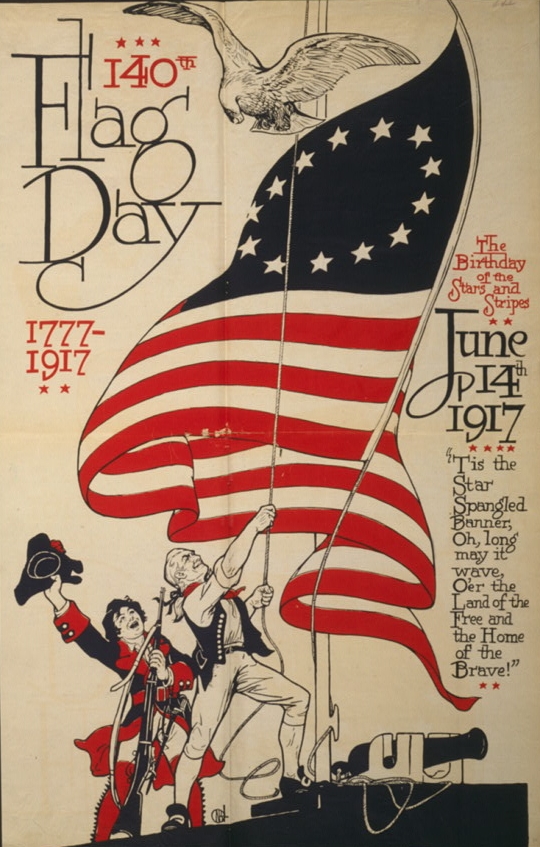
As I look around my neighborhood and town I see American flags everywhere. We just celebrated Flag Day and in less than two weeks we will celebrate Independence Day. Two hundred thirty-seven years ago we declared our independence, and many courageous patriots put it all on the line, to free us from an overreaching government.

Numerous wars have been fought since that time, when again men and women stepped up to defend the liberties our founders established as the bedrock of our nation. There are countless individuals throughout our nation’s history who also have also spent their lives working to protect us and pursue justice.

“We have staked the whole future of American civilization, not upon the power of government, far from it. We have staked the future of all of our political institutions upon the capacity of mankind of self-government; upon the capacity of each and all of us to govern ourselves, to control ourselves, to sustain ourselves according to the Ten Commandments of God.”
                                                                                                 Attributed to James Madison

"Since the general civilization of mankind, I believe there are more instances of the abridgment of the freedom of the people by gradual and silent encroachments of those in power, than by violent and sudden usurpations; but, on a candid examination of history, we shall find that turbulence, violence, and abuse of power, by the majority trampling on the rights of the minority, have produced factions and commotions, which, in republics, have, more frequently than any other cause, produced despotism. If we go over the whole history of ancient and modern republics, we shall find their destruction to have generally resulted from those causes."
    James Madison's Speech at the Virginia Convention to ratify the Federal Constitution June 6, 1788

"Of all the dispositions and habits, which lead to political prosperity, Religion and Morality are indispensable supports. In vain would that man claim the tribute of Patriotism, who should labor to subvert these great pillars of human happiness, these firmest props of the duties of Men and Citizens. The mere Politician, equally with the pious man, ought to respect and to cherish them. A volume could not trace all their connections with private and public felicity. Let it simply be asked, where is the security for property, for reputation, for life, if the sense of religious obligation desert the oaths, which are the instruments of investigation in Courts of Justice? And let us with caution indulge the supposition, that morality can be maintained without religion. Whatever may be conceded to the influence of refined education on minds of peculiar structure, reason and experience both forbid us to expect, that national morality can prevail in exclusion of religious principle."
                                                              George Washington's Farewell Address September 17, 1796

Much has changed in our country in the intervening years. Scandals, both personal and national, plague us. Many people have lost confidence in our resolve, and an increasing number of citizens distrust the various branches of our government. One cannot go to work, read a newspaper, run a business, or manage a household without being reminded about our growing debt, a poorly managed economy, corruption, deceit, immorality, over-regulation, over-taxation, and attempts to increase control over our citizenry. Our beleaguered nation seems to have lost the idea of who we were created to be, a people who were optimistic about the future and who proudly acknowledged that our nation was founded, and operated at its best, under Judeo-Christian principles.

We seem helpless to alter the direction America is headed, or are we?  While we may not be able to change others, we can repent of our sins, spend time in communion with the Lord, study His Word, and choose to live the Gospel. We can take responsibility for ourselves and our families, become informed about what is happening in our country and in the world and get involved, even if it is only to vote for godly leaders. We can also pray for revival in our nation, our churches and our families.   


"You are the light of the world. A city set on a hill cannot be hid. Nor do men light a lamp and put it under a bushel, but on a stand, and it gives light to all in the house. Let your light so shine before men, that they may see your good works and give glory to your Father who is in heaven."   —Jesus, from the Sermon on the Mount, Matthew 5:14-16.


"Unless the Lord builds the house, those who build it labor in vain. Unless the Lord watches over the city, the watchman stays awake in vain."   Psalm 127:1 ESV

Sunday, March 3, 2013

The Battle for Freedom of Conscience

"Thomas Goold being presented by the Grand Jury held at Cambridge, April 7, 1657, for not bringing his child to the holy ordinance of baptism, the said Goold appearing in Court confessed his child to be unbaptized, the Court sollemly admonished him of his dangerous error." Middlesex Court Original Papers, Charlestown, Massachusetts p. 699.

"The Snake in the Grass or Satan Transform'd to an Angel of Light," title page by Richard Gaywood, paper, etching, 148 mm x 93 mm. At the sides are a Puritan and a Covenanter above an author writing.{{PD-1996}}
"But take heed to yourselves: for they shall deliver you up to councils; and in the synagogues ye shall be beaten: and ye shall be brought before rulers and kings for my sake, for a testimony against them." Mark 13:9

The colonists from the early 1600's through to the writing of the Constitution witnessed time and time again people willing to endure much persecution for their beliefs. Thus, many came to understand a person's conscience cannot be bent to the will of the government or other rulers. To change what a person believes at the core of their being requires an act of God, not of man. A battle for a person's freedom of conscience played a significant role in the war for human rights.

The anabaptist groups, like the Baptists and the Quakers, were demonized by the courts for not baptizing their infants. The Puritans, from which the Congregational Churches were formed, came out of the Church of England (many of the preachers having been trained by that church), held to the doctrine of infant baptism so strongly that they viewed anyone not baptizing their infant a messenger of Satan:
 "'Tis Satan's policy to plead for an indefinite and boundless toleration." Thomas Shepherd, "Election Sermon" (1672), p. 24
"The Lord keep us from being bewitched with the whore's cup, lest while we seem to detest and reject her with open face of profession, we do not bring her in by a back door of toleration." John Cotton, "Bloody Tenet Washed," p. 132, 192
"The Loud outcry of some is for liberty of conscience … I look upon an unbounded toleration as the first born of all abominations." Reverend Urian Oakes, president of Harvard in 1675. http://mises.org/daily/5966/The-Libertarian-Origins-of-Rhode-Island
 Reflecting upon this battle in Colonial times, I could not help but see the parallel in our own times. The cry of anger against evangelical, Bible-believing churches (indeed all who lay claim to the title: 'Christian') no longer comes from a state church but from secularists, atheists, and those in the government who have little regard for true freedom of conscience. They tote toleration while denying business owners liberty of conscience on how they run their business. There is little difference between the above quotes and the actions and words of those who wish to impose laws that are contrary to the conscience of the business owner or the individual.

The Anabaptist groups (like the Quakers and the Baptists and the Seekers) continued to stand for their beliefs, against all persecutions: from arrests, to whippings, to hangings. They did not waiver. Such conviction led others to embrace their freedoms and even their faith. People gave up their positions, their wealth, their homes in order to hold to their core beliefs. And by standing firm, drawing others to them, they eventually won for us religious freedom...which I fear we are losing, particularly if we (out of fear of losing our comforts and 'peace') refuse to stand firm on God's Word--on God's Truth, and not man's--no matter the cost.

The Bible does teach us to obey the laws of the land and live peaceably, but not to the extent of denying Christ or denying God's laws. God's laws must come first in our lives. God, our Creator, knows what is best for us. He gave us those laws, those instructions on how to live, because He knew that to work contrary to them would lead to destruction. He didn't want that for us. As an example to us, He gave Peter and the other apostles courage to say, "We ought to obey God rather than men." (Acts 5:29)

When  you are facing opposition to what you claim is your faith, are you willing to say as the apostles did, "We ought to obey God rather than men"?

"I have given them thy word; and the world hath hated them, because thy are not of the world, even as I am not of the world. 
I pray not that thou shouldest take them out of the world, but that thou shouldest keep them from evil."
John 17:14-15


Sunday, February 24, 2013


Prayer

Prayer  ~ Webster’s defines it as a humble entreaty made to God. 


As Christians we learn from Jesus to make prayer a priority.

   He often withdrew to lonely places to pray. (Luke 5:16)
   He rose early in the morning and went to a solitary place to pray. 
                                                                               (Mark 1:35)
   He reminds us that we should always pray and not give up 
                                                                               (Luke 18:1) 
   He entreated believers to call out to Him day and night (Luke 18:7)
   He encourages us to not be anxious about anything, but in everything, by prayer and petition,    
        with thanksgiving present our requests to God. (Philippians 4:6)
   He assures us that He hears and answers our prayers.
                  (Matt 7:7,8  Matt 21:22  John 16:23,24   John  15:7   1st John 5:14,15)

Our response should be ~ to be joyful always; pray continually, give thanks in all circumstances for this is God’s will for us in Christ Jesus.  (1st Thessalonians 5:16-1)

Prayer can take a variety of forms; it might be done privately or with others, silent, or with words or song. Communication is essential for a healthy relationship with people and with God. Prayer is communicating with our Creator, Sustainer, Redeemer and Savior. Some prayers come spontaneously from deep within; others may be inspired by the Holy Spirit and others may be prayers that have been passed down over the millennia. 

While I love to pray conversationally with God, I also appreciate the prayers of others. One of my favorites is the Prayer of St. Francis of Assisi. Francis, a thirteenth century saint founded two religious orders; the Franciscan Order of monks and the Poor Clares, an order of nuns.   

Prayer of Saint Francis of Assisi

Lord, make me an instrument of your peace.
Where there is hatred, let me sow love;
where there is injury, pardon;
where there is doubt, faith;
where there is despair, hope;
where there is darkness, light;
and where there is sadness, joy.

O Divine Master, 
grant that I may not so much seek
to be consoled as to console;
to be understood as to understand;
to be loved as to love.
For it is in giving that we receive;
it is in pardoning that we are pardoned;
and it is in dying that we are born to eternal life. Amen

Michael Podesta print of
The Prayer of St. Francis of Assisi


Do you have any favorite prayers?

Sunday, February 17, 2013

Jacob Leisler, "I am ready. I am ready."

 Henry Sloughter signing Jacob Leisler's death warrant.
"I hope these my eyes shall see our Lord Jesus Christ in Heaven I am ready. I am ready." Jacob Leisler, May, 1691

"We are thoroughly wet with rain, but in a little while we shall be rained through with the Holy Spirit." Jacob Milborne, May 16, 1691 at his execution.

These two men died as traitors to the Crown of England. During the English Revolution of 1688, the people in New York were divided. Leisler befriended the Huguenots. And to keep them from being sold into slavery for being unable to pay their bills, he championed their cause in what would later be called Leisler's Rebellion. Jacob Leisler became the acting Lieutenant Governor in New York. A man truly before his time, Leisler summoned the first Intercolonial Congress in America in New York, May 1690. Their mission: to deal with the ongoing conflict with the Indians and the French.

When the rebellion ended, Leisler resigned his command to Governor Sloughter. The governor responded by arresting him along with others. After extensive trials, Leisler (along with Jacob Milborne and six other men) were convicted and sentenced to death.

Death will come. I know we don't want to think about it, but many will die today in accidents or from illness or from some other demise. We all have to face it. What a joy for those who have received salvation to be able to say, "I am ready. I am ready."

Our perspective tends to be limited to this present life, but God’s perspective encompasses all of eternity.
I've noticed that many of the Psalms open with the psalmist revealing sorrow and hurt in his life, but close with him determining to praise God. We should praise God always, for our hope lies not on the substance of this world but in our eternity in Heaven.

*What do you look forward to in Heaven?
  • Spending time with Jesus 
  • Worshiping God with the angels 
  • Not suffering anymore 
  • Getting rid of this ugly old body 
  • Not struggling against our flesh anymore 
  • Seeing people who have gone before us
  • And so much more. 
"Let not your heart be troubled: ye believe in God, believe also in me. In my Father's house are many mansions: if it were not so, I would have told you. I go to prepare a place for you. And if I go and prepare a place for you, I will come again, and receive you unto myself; that where I am, there ye may be also." John 14:1-3
What will be waiting for us in Heaven? A place just for you and a place just for me.
"And I saw a new heaven and a new earth: for the first heaven and the first earth were passed away; and there was no more sea. And I John saw the holy city, new Jerusalem, coming down from God out of heaven, prepared as a bride adorned for her husband. And I heard a great voice out of heaven saying, Behold, the tabernacle of God is with men, and he will dwell with them, and they shall be his people, and God himself shall be with them, and be their God." Revelations 21:1-3 
 Who will we be with? We will be with God. How do you feel about that? Excited and maybe a little awed?
"And God shall wipe away all tears from their eyes; and there shall be no more death, neither sorrow, nor crying, neither shall there be any more pain: for the former things are passed away. And he that sat upon the throne said, Behold, I make all things new. And he said unto me, Write: for these words are true and faithful." Revelations 21:4-5
What will you not find in heaven? Death, sorrow, crying, pain, the former things.

What does God say He will do? Wipe away our tears, Make all things new.

What does that mean with respect to our sorrows we experience here on earth? They will no longer affect us, because they will have passed away. 
"And he said unto me, It is done. I am Alpha and Omega, the beginning and the end. I will give unto him that is athirst of the fountain of the water of life freely. He that overcometh shall inherit all things; and I will be his God, and he shall be my son. But the fearful, and unbelieving, and the abominable, and murderers, and whoremongers, and sorcerers, and idolaters, and all liars, shall have their part in the lake which burneth with fire and brimstone: which is the second death." Revelations 21:6-8
Who will be in heaven? He that overcometh. That refers to those who are saved. We find the definition of this in Revelation 12:11 “And they overcame him by the blood of the Lamb, and by the word of their testimony, and they loved not their lives unto death.”

Who will not be in heaven? Sinners, those who are not saved—who are unbelieving. We have all lied. We’ve all been fearful and idolaters in some way. The difference between the two groups is that those who overcome go to heaven, and we see in Revelation 12:11 that it is through Christ that we overcome.
"And the devil that deceived them was cast into the lake of fire and brimstone, where the beast and the false prophet are, and shall be tormented day and night for ever and ever." Revelations 20:10
What happens to Satan? He is cast into the lake of fire and brimstone.

After that, will he ever be able to torment another again? No.

To God be all glory and honor and praise.

"And God shall wipe away all tears from their eyes; and there shall be no more death, neither sorrow, nor crying, neither shall there be any more pain: for the former things are passed away. We have a hope that we must cling to—a hope that will help us endure to the end. And that hope is eternal life in the new heaven and new earth." 
Revelations 21:4 

* The following is used with permission from https://sites.google.com/site/joabsfire/bible-study?offset=10

Sunday, January 27, 2013

O GOD, OUR HELP IN AGES PAST


O GOD, OUR HELP IN AGES PAST


1.  O God, our help in ages past,
     Our hope for years to come,
   Our shelter from the stormy blast,
  And our eternal home.

2.  Under the shadow of Thy throne
      Thy saints have dwelt secure;
   Sufficient is Thine arm alone,
     And our defense is sure.

3.  Before the hills in order stood,
      Or earth received her frame,
   From everlasting Thou art God,
     To endless years the same.


4.  A thousand ages in Thy sight
      Are like an evening gone;
   Short as the watch that ends the night
     Before the rising sun.

5.  Time, like an ever-rolling stream,
      Bears all its sons away;
   They fly forgotten, as a dream
     Dies at the opening day.

6.  O God, our help in ages past,
      Our hope for years to come,
    Be Thou our guard while life shall last,
      And our eternal home.


This ancient hymn, based on Psalm 90, has brought comfort and encouragement to many over the centuries. It’s a reminder that the same God who has been with us through earlier trials will continue to guide us through whatever sorrows and challenges life will bring in the future.

It has been said that “O God, Our Help in Ages Past” is one of Isaac Watts’ greatest works and one of the finest hymns in the whole arena of English hymnody.

Isaac Watts by unknown artist
at London's National Portrait Gallery
Isaac Watts, born in Southampton, England in 1674, was raised in a family that did not embrace the established Church of England. In his early childhood his genius for verse was identified, and he was later promised a financed university education by friends. He declined the generous offer because the donors assumed he would pursue ordination in the Church of England. Instead, in 1690 he attended a Nonconformist Academy at Stoke Newington under the tutelage of the pastor of the Independent congregation at Girdler’s Hall. He later joined the congregation in 1693.

After returning to Southampton for two years, where he wrote most of his hymns, he returned to Stoke Newington for five years as a tutor. In 1702 he became the pastor of an influential Independent Congregational Chapel in London, but resigned after only ten years due to health issues which would continue to plague him until his death in 1748.

He published his Hymns and Spiritual Songs between 1707 -1709. Over his lifetime he is credited with writing 750 hymns and numerous other works. He also authored: “When I survey The Wondrous Cross” and “Joy To The World”.

Isaac Watts poetry also earned him praise in the American colonies. John Wesley called him a genius and Benjamin Franklin published his hymnal.
                                   

Williams Croft, an English composer and organist, composed the music of this old hymn to the tune of “St. Anne”.

He served first as a chorister at the Chapel Royal as a boy and later as one of the organists. He was a composer for Queen Anne and is attributed to be the preeminent church musician of his time. In 1708 he became the organist for Westminster Abbey. He composed works for the funeral of Queen Anne and George Frideric Handel as well as for the coronation of King George I.

O God, our help in ages past,
      Our hope for years to come,
    Be Thou our guard while life shall last,
      And our eternal home.


Sunday, January 13, 2013

The Proof of Your Faith Is found in the Revelation of God's Hand

"God had so appointed it, to stop their fierce proceedings against me for a lie, which they sought to take me in." Thomas Goold quoted by Nathan Eusebius, The History of the First Baptist Church of Boston (1665-1899), p. 44.

"And when Peter was come to himself, he said, Now I know of a surety, that the Lord hath sent his angel, and hath delivered me out of the hand of Herod, and from all the expectation of the people of the Jews." Acts 12:11

Thomas Goold, a leading property owner in 17th century Charlestown, Massachusetts and a wagon maker by trade, created quite a stir. He, the writer of the Confession of Faith for the Charlestown Church began to openly espouse Anabaptist doctrines. Along with Mr. And Mrs Osborn, he caused such concern that the leaders were compelled to write the first records of discipline in the First Parish Church of Charlestown, April 6, 1658.
"...it was consented to by the brethren that his wife [Mrs. Osborn], leavened with principles of Anabaptisme and Quakerisme, should receive an admonition for her notorious neglect of the publique worship of God, denying our churches to be true churches, and denying her membership with us,..."
The end result: excommunication.

These people would be removed from the care and protection of the community. For taking a stand, Thomas Goold would lose not only his social standing but eventually be fined on many occasions, and when he refused to pay the fines, imprisoned.

But Mr. Goold did not focus on the bad. He saw God's hand. When messengers of the church came to argue that he had lied regarding a date for baptism of his child, he recognized God's protection. A friend, who had borrowed his breeches, found the letter confirming Goold's words in the pocket. He also recognized God's protection in having his friend there at the time of this confrontation.

Based on what I have read, I wonder if Mr. Goold still waivered in his convictions at this early date of his trials. I wonder if God saw fit to use this time of testing to help Mr. Goold see God's protection so that he would trust God in future events.

When Peter was arrested, James the brother of John had already been killed by Herod. No doubt Peter feared he'd meet the same end. Yet God spared him. Did that mean Peter would never again face dangers? Not at all. History tells us he was crucified upside down. But between this arrest and his death, Peter would have much work to do for the Lord and would require great faith and trust in God.

As a chapel speaker at a children's camp, I'd listen to girls tell stories of how they hid their Bible under their beds so as not to provoke the anger of their mothers. Or tell of threats by other children in their school yard because they profess the name of Jesus. They, even as young children, stood by their conviction of faith and endured.

Today we see many Christian businessmen and women facing a financial noose. Like Thomas Goold, because of their convictions they may lose all they have gained via fines, and others will suffer because of the stand they take. I wonder if they, like Thomas Goold  and Peter, see God's hand and are encouraged to persevere.

While I read through the documents of our past and rejoice at the battles for freedom fought and won, I marvel at how quickly we are giving up those freedoms. Can you not see the similarities between what Mr. Goold experienced and what those Christian businessmen today who are taking a stand on their convictions are enduring? Even if you do not agree, surely you can see how we are going backward instead of forward in freedom.

We must pray. We can pray for the troubles to be removed, but we must also recognize that God may have a plan higher and greater than our own. The persecution the church in Jerusalem experienced caused them to run to other locations. The apostles had been given a commission:
"But ye shall receive power, after that the Holy Ghost is come upon you: and ye shall be witnesses unto me both in Jerusalem, and in all Judaea, and in Samaria, and unto the uttermost part of the earth." Acts 1:8
 They had not yet gone to the uttermost part of the earth. Comfortable, enjoying the fellowship of others and the growth of the church, they stayed in Jerusalem until God scattered them by using persecution as a catalyst.

Every trial comes for a purpose. Whatever we endure can stand as a testimony of God's work in us and through us, if we chose to look for His hand. Thomas Goold, admonished and put away from the church, could well have been left alone, but God had another plan.
"Now after this, considering with myself what the Lord would have me to do;  not likely to join with any of the churches of New England any more, and so to be without the ordinances of Christ; in the meantime God sent out of Old England some who were Baptists;..."
Thomas Goold, quoted by Nathan Eusebius Wood, The History of the First Baptist Church of Boston (1665-1899) p. 50.
Again Goold saw God's hand. He gave God the glory for the relief and encouragement he received.

What about you? Is your faith proven by your ability to see God's hand in your circumstance? Does seeing His hand in your situation strengthen your resolve to stand by your convictions?

I am praying for our country and for those men and women who courageously remain resolute against those who seek to take away their freedom. I also pray that when the testing of my faith comes, I will be counted among the faithful and found to be without compromise.
"My breathren, count it all joy when ye fall into divers tempations;
Knowing this, that the trying of your faith worketh patience...
Blessed is the man that endureth temptation: for when he is tried, he shall receive the crown of life, which the Lord hath promised to them that love him."

James 1:3-4,12

Sunday, January 6, 2013

The Courage of Mrs. Leland

"The case was this: my wife, who was seated near the head of the bed, when she saw the Captain step from the bed with his sword drawn, and draw back his arm to give the thrust, like a female angel, sprang like the lightning of heaven, clasped her arms within his elbow, around his body, locked her hands together, and held him like a vice, till the men took away his sword. We then took a lantern and went into the road and carried on our meeting."
John Leland, The Writings of the Late Elder John Leland p. 27

"Be strong and of a good courage, fear not, nor be afraid of them: for the LORD thy God, he it is that doth go with thee; he will not fail thee, nor forsake thee." 
Deuteronomy 31:6

Elder John Leland preached the Gospel from Massachusetts to North Caroline. He started as a young man in 1774 and continued traveling and preaching the Good News of Jesus Christ through the War of Independence until his death in 1841. He faced many dangers and threats, but God provided for him a strong and courageous helpmeet in his wife.

When Mrs. Leland held back the captain from thrusting his sword through her husband, she did so to prevent the captain from stopping her husband's preaching. Invited to preach at a woman's house, they were stopped at the gate by the woman's son, the Captain. However, her husband let Elder Leland in and the people came to hear the preaching. When Elder Leland opened the meeting with singing, the Captain attacked. Mrs. Leland likely saved her husband's life.

Raised by an abusive step-father, Mrs. Leland endured hardships as a child, like her feet partly frozen off and an illness that left her speech impaired. Then, as a wife, she was often left alone to care for numerous children with little means and facing many dangers from soldiers, runaway slaves, and vagabonds during the war. 

Though she endured much affliction, from near shipwreck to evil spirits, she did not endure them alone.
"It has been remarked of Mrs. Leland, that her faith was strong. Indeed, on some occasions, it seemed to rest on grounds that partook of the character of revelations. An instance of  this kind occurred in the storm by which they were overtaken on their passage from Virginia to New England, in 1791. After twelve hours of incessant watching and agonizing prayer, expecting momentarily to go to the bottom, she appeared to sink into a slumber; but presently turning to her husband, she exclaimed, "We shall not be lost." She had received this assurance from a figure in white which seemed to stand before her, measuring off piece after piece of a long white cord, and which said to her, "The vessel cannot sink, I have undergirded it.""
The Writings of Elder John Leland, p. 45.
 Two things we can learn from her life:
  • Affliction and hardship bring strength to those who humble themselves in the Lord
  • Strength to endure hardship and affliction will come from the Lord when we look to Him.
When we have reached the end of our strength, God offers us more from His fountain, if only we would drink.

Hard times have come and passed, and yet we will see more in the future. How we face them reveals not only our character but our faith. In this new year, we may see attacks on our faith from our government, from the community, and from individuals, not to mention those leaders of other countries who hate the Kingdom of Heaven. Each moment we must chose between trusting God and walking in obedience or compromising our faith for the 'comforts and safety' this world feigns to offer. When we chose to trust God, He will not fail to provide us with the peace that passes all understanding. I wonder if perhaps we may have opportunities to see the 'figure in white' He sends to watch over us?

"...Who are kept by the power of God through faith...though now for a season, if need be, ye are in heaviness through manifold temptations: That the trial of your faith, being much more precious than of gold that perisheth, though it be tried with fire, might be found unto praise and honour and glory at the appearing of Jesus Christ:...
Wherefore gird up the loins of your mind, be sober, and hope to the end for the grace that is to be brought unto you at the revelation of Jesus Christ;..."
I Peter 1:5-7,13

Sunday, December 30, 2012

Resolute for the Kingdom of Heaven

"My heart was greatly attached to the Holy Scripture. I have not yet forgot the burning desire--the soul-longings that I had to know what was the mind of God, contained in his word. I would read--then pray--then read and pray again, . . . that I might know the truth as it is in Jesus." John Leland, The Writings of the Late Elder John Leland, p. 14)

"Again the kingdom of heaven is like unto treasure hid in a field; the which when a man hath found, he hideth, and for joy thereof goeth and selleth all that he hath, and buyeth that field." Matthew 13:44

"Again, the kingdom of heaven is like unto a merchant man, seeking goodly pearls: Who, when he had found one pearl of great price, went and sold all that he had, and bought it." Matthew 13:45-46

Like most people, come year end I begin to look to the next year and reflect on the past one. I love the work God has been doing in my life, though many times His lessons have been bitter pills to swallow. Rarely has there been a year in my adult life that I've looked back and said, "What a wonderful year I have had." I suppose that is partly due to my analytical mind, which always wants to 'fix the problem.' Such a mind tends to seek out problems in order to satisfy its compulsive desire to make things right.

However, this time I look back and give a solemn nod to the events of the year. I'm glad for what I've been through, what cutting away God has done of cancerous mindsets, sins, and what-not. I haven't yet "arrived," but I can see God's merciful and gracious hand at work to mold me into the person He would have me be for His glory and honor--and that is why I live.

I confess, I go into the new year recognizing a flaw in me I often point out is the problem with others: the desire for comfort and rest from all hardships. Aye, most people would not consider that a flaw. Nonetheless, I look to what weakens our society and those close to me, including myself, and I see the lust for recreation, entertainment, and comfort. I say lust because there is nothing wrong with enjoying life. But when it becomes a lust, it replaces what is good about 'enjoyment' with addictions, substituting what should be consuming our lives with what should not.

What does all this have to do with the kingdom of heaven? Like John Leland, the man finding the treasure in the field or the merchant man finding the pearl of great price, the burning desire for the kingdom of heaven has a two fold effect. First, all else in one's life seems of little value. Second, only one thing seems worth living for: the kingdom of heaven.

The coming of the kingdom of heaven was preached by John the Baptist, Jesus, and the disciples. It is not an earthly kingdom. When Christ died on the cross, was buried, and rose again, the entrance to this kingdom was opened to all who believe. One becomes a citizen of it by being born again. One is born again through faith in the death of Jesus Christ as payment for one's sins, in His burial, and in His resurrection. This faith changes one's life. Many claim this faith, but their lives haven't changed. If you measure the lack of change in their lives against what Jesus tells us the kingdom of heaven is like, then you will likely conclude they have not bought the field or the pearl.

Reflecting upon the 'selling' of ALL in order to obtain the kingdom of heaven, I asked myself, "What have I not yet sold?" I am already a citizen of the kingdom of heaven, but am I fulfilling the whole duty of a citizen? Can a stranger, when he encounters me, tell that I am a citizen of this great kingdom? If I am still carrying the baggage of this worldly kingdom then I cannot fully reflect the heavenly kingdom. Thus, I am resolute to know the mind of God and live a life worthy of His kingdom.

Reflecting upon the 'buying', I asked myself if there was anything hindering me from being fully committed (like when one purchases a valuable item is fully committed to ownership) to this kingdom of heaven. Like the patriots of our country during the War of Independence, am I willing to suffer great loss in order to help others, including my children and future grandchildren, to gain the freedom found in the kingdom of heaven?

Weariness tends to pull one's attention away from the plow and to the shade under the tree or the spring of fresh water. Sometimes we mistake entertainment or recreation for the only shade tree or the only source of fresh water. Yet the true source is found in Christ: in the studying of God's Word, the worship of our Lord Almighty, and the fellowship of the saints (meaning fellow believers).

I am weary right now, and yet in my heart beats a desire to not seek refreshment from movies or sports or the variety of entertainment the world provides. I know that when I am weary these things can often leave me feeling empty and even fill me with more anxiety. They are only momentary diversions, not true sources of help.

Looking to the new year, my resolutions may seem to some a bit backward. I look to endure hardships and to teach my children how to endure them. Not that I plan to seek out trouble, but that I be willing and ready to 'sell' those comforts or pleasures that draw me away from God. Most of all, I plan to get back to the basics of life: hard work.

My father was a hard worker. His notion of a relaxing Sunday afternoon was hoeing the trees or checking the cows or riding the fence line. I loved going with him. Such peace could be found riding beside him or sitting in the truck, and even in putting my hoe in the dirt.

We rarely ever watched sports or a movie on TV. Of course, we only had two or three channels. Our lives didn't halt when a football game or a hockey game came on TV. Dad put a full days work in on the farm, and then after the sun set, he would pull out his Bible and study with the same fervor with which he worked. What a wonderful example he was to me. I want to be like him and find my pleasure in both my work and in my walk with God.

What a change this resolution is this year from last year. Last year, I thought I needed to spend more time relaxing and enjoying life so I planned to spend more time playing games or seeking what others considered good fun. I found out I sought the enjoyment of life in the wrong places. I forgot the great pleasure work could bring. This year I want to 'sell' it all and 'buy' the field. Doing so will bring greater joy than any entertainment, any comfort, any pleasure the world can bring. I want to work that field for Christ, because in it is the greatest treasure of all, the kingdom of heaven.

What are your New Year's resolutions?

Then I commend mirth, because a man hath no better thing under the sun, tahn to eat, and to drink, and to be merry: for that shall abide with him of his labour the days of his life, which God giveth him under the sun.
Ecclesiastes 8:15 

Sunday, December 16, 2012

From Entrapment to Liberty

"There I stood upon a rock, and made my vows to God to forsake all sinful courses and seek the Lord, if he would direct me how." John Leland, The Writings of the Late Elder John Leland.

"The Spirit of the Lord GOD is upon me; because the LORD hath anointed me to preach good tidings unto the meek; he hath sent me to bind up the brokenhearted, to proclaim liberty to the captives, and the opening of the prison to them that are bound;..." Isaiah 61:1

Many of our country's forefathers held John Leland in high esteem. Yet in his journal we discover he often felt unworthy to preach and perhaps ashamed of his past prior to being saved. In my opinion, this humbleness enabled him to be used of God.

I fear, like John Leland, that many people live in shame and never learn to accept God's forgiveness.

In my years in the camping ministry, I listened to many stories from young women who had suffered at the hands of a man. Often such encounters would lead the girl into a life of entrapment. Feeling as though she were damaged goods, she'd allow herself to be in a position again to receive such abuse, perhaps even seeking it out thinking that was the only way to be 'loved.' Once a victim, she moves into engaging in sinful behavior and becomes trapped in a vicious circle, not able to discern between good love and brutal lust.


Elder Leland felt a great conviction against his former life. We don't know what that former life entailed, but we can see his great sorrow for it. We know that prior to God grasping his heart, he attended dances and other 'frivolities' and that he was ashamed of this. The above statement was a result of witnessing the baptism of a young lady he'd danced with. Her commitment to change and discovery of a new life obviously impacted him.

In Isaiah 61, we find hope for the victim of this vicious cycle of a sin committed against them thus leading them to engage in sin themselves.

The speaker in Isaiah 61 is the Messiah, Jesus Christ. After the Prophet Isaiah recorded what the Messiah would do with respect to Israel and the Gentiles, we see the Messiah focusing on the individual and on His plans for each person:
  • "To preach good tidings unto the meek." Note, it is to the meek. The meek are those who are poor, humble, and afflicted. Those who are proud will not look to God for help. They look to themselves for inner strength and power, or to their knowledge of science and humanities, but they do not look to God.
  • "He hath sent me to bind up the brokenhearted." When a person experiences the consequences of sin, it is heart-wrenching. When a person feels crushing shame for a sin, conviction to change can rise from the dust. Jesus was sent to be a cast or a splint for the injured heart, thus providing a way for that conviction to bring change.  As such, Jesus makes a way for healing to happen and to prevent or protect from further injury, IF the person is willing to humble herself and let Him work in her life. But like a broken bone, healing may take time.
  • "To proclaim liberty to the captives." Like the young ladies I mentioned above, many people are held captive by a sin they cannot gain victory over. But Christ was sent to proclaim liberty. Where does that liberty come from? When He was on earth, He met many people enslaved by sin, including the woman caught in adultery (John 8:1-11). When she expressed some faith by calling Him Lord, He didn't condemn her but told her to "go, and sin no more." He proclaimed to her liberty. Then He gave Himself to be the final offering for sin. Upon Him our sins were placed so that we too can "go, and sin no more."
  • "To proclaim...the opening of the prison to them that are bound." When sin shackles us to the walls of our wretched life, death holds the keys to our prison door. When Jesus died and was buried, He went into that prison and took those keys. And when He rose again, He conquered death and gave freedom to all who will believe, accept Him as their sin offering, and then follow Him out of that cell. For the young woman who abandoned her body and self-respect to the use of men or for the moment of ecstasy, He opened the prison. Will she trust Him and come out?
  • "To proclaim the acceptable year of the LORD, and the day of vengeance of our God." When we give ourselves over to Him, accepting the liberty He offers and walking through that opened prison door, we can have hope that God will prevail against our enemies. They cannot touch our soul. They cannot take away our Heavenly Home and the freedom we have in our heart and will someday have in Heaven. That hope enables us to hold up our heads and walk a straight path. What can man do unto us? We are safe and secure under the wings of our Saviour for eternity.
  • "To comfort all that mourn." Like John Leland, we at times look back and wish we'd not lived the life we did. We wish we'd made other choices or not allowed ourselves to be in a position of vulnerability or become a victim and slave to sin. But in Christ, we find comfort. We will not forever be under the dark cloud of the sins of our past. When we get to Heaven, we will remember them no more.
  • "To give beauty for ashes." The world around us is burning away in the lust of its eyes and the lust of its flesh and in its pride of life. It affects us. We experience the consequences of man's sin even as all creation does. But in our hearts, we find beauty in Christ. We find beauty in the hope of eternal life He gives us. And one day, we will stand in Heaven and be awed by the beauty of His presence and the place He has prepared for us.
  • "The oil of joy for mourning." Scarred, we mourn what might have been. Pain of sins deepen our sorrow, but when we look to Christ and what He has done for us, and what He has planned for us, we receive the healing balm of joy. How can you not have joy when you reflect on Him and the tremendous love He has for you?
  • "The garment of praise for the spirit of heaviness." When we focus on the entrapment of sin in our lives, we are weighed down. But, when we focus on the freedom we experience in Christ, we can do nothing more than praise Him, and that praise rests upon our shoulders like a delicate chiffon scarf.
  • "That they might be called trees of righteousness, the planting of the Lord, that he might be glorified." Did you notice? Trees of righteousness. You don't become that by staying in the captivity of sin. "Go, and sin no more." Victory over sin requires action on our part. We must leave the old life and plant ourselves in Christ and the life He wants us to live. Only when we live according to His ways will He be glorified. And honey, we are created for His glory.
"For we are his workmanship, created in Christ Jesus unto good works, which God hath before ordained that we should walk in them." 
Ephesians 2:8-9

Sunday, December 9, 2012

Henry Dunster and Freedom of Conscience

"The Lord gave me an attentive eare and heart to understand preaching. . . . The Lord showed me my sins, and reconciliation by Christ, . . . and this word was more sweet to me than any thing else in the world."
Henry Dunster, First President of Harvard College, 1653.

"Yet it pleased the LORD to bruise him; he hath put him to grief: when thou shalt make his soul an offering for sin, he shall see his seed, he shall prolong his days, and the pleasure of the LORD shall prosper in his hand." Isaiah 53:10

Harvard College
Henry Dunster was twelve years old when he found "reconciliation by Christ." This was the beginning of a life where the sweetness of that understanding would be tested by the temptations and trials of life. After studying at Cambridge University in England, he became a teacher. Then in 1640, civil war broke out in England, and Dunster emigrated to New England. While no doubt he experienced consternation over the Church of England before leaving to the New World, he would also find the religious leaders in Boston at odds with him. In 1654 Mr. Dunster was asked to resign from Harvard presidency for expressing beliefs the religious leaders of the time deemed heretical.

Currently, I am doing a study on the Messianic Prophecies, those passages in the Old Testament that foretell the first and second coming of Christ. The first coming happened approximately 2000 years ago. We anxiously await the second.

While studying Isaiah 51-53, I found myself pausing at Isaiah 53:10, "when thou shalt make his soul an offering for sin". What a thought. Jesus bore our griefs and carried our sorrows. He did not speak in protest when he was afflicted. He did not complain when he was unjustly sentenced to death, because He had a purpose in mind: to make Himself an offering for my sin. He poured out His Soul unto death in place of mine.

Reading through the Life of Henry Dunster, by Jeremiah Chaplin, Samuel Dunster, and Edward Swift Dunster, I reflected upon what needed to happen in Mr. Dunster's life before he would have the conviction of heart and spirit to stand against the religious leaders at that time who would suppress his freedom of conscience. His ability to be strong in the face of opposition began with a personal relationship with Jesus Christ.

Quite likely Dunster took his orders in the Church of England, like other Puritan ministers. However, in his Confession of Faith, we hear his angst over what was happening in that church:
"The Lord hath made me bid adieu to all worldly treasures; and as corruptions in the Church came, first I began to suspect them, then to hate them....So, after 10 years' trouble, I came hither [to New England]; and the Lord gives me peace to see the order of his people." (Life of Henry Dunster, p. 13)
Imagine the thrill he experienced when he found himself not only accepted but highly esteemed by those well-educated leaders of the New World. But in this New World a maelstrom was brewing. As people gained knowledge of God's Word and began to think for themselves, they began to oppose the present religious leadership, and Dunster would be caught in the middle.

Roger Williams, a man Dunster respected, would be banished. Anne Hutchinson would be banished. Lady Deborah Moody was excommunicated. Obadiah Holmes would be brutally whipped. Many others would take a stand and find the fury of the religious leaders either on their back or reaching into their pockets.

Then came Henry Dunster's turn. He would need to examine his convictions and take a stand.

Imagine the horror those esteemed men felt when the man they chose to lead in the education of their youth took a stand against a doctrine to which they clung. I can almost feel the thunder of their anger. And my own knees knock in empathy for the meek and gentle Mr. Dunster.

And then I am reminded what Christ had done for me. I imagine Mr. Dunster thought the same. For taking a stand on what his conscience told him was right, Mr. Dunster would be demonized and considered possessed by Satan.

Today the secular world would have me emotionally stripped, and their verbal whip laid upon my back for my convictions. The Atheists would gladly call me a fool for my faith in God, my belief in Heaven, and my determination to follow Jesus Christ, who is to them a dead man but to me alive and well and Whose Spirit is living in me. I believe in the grace of God which saved me through faith. And because I believe, I stand on His Word thus His laws, as absolute truth contrary to what society and the government would claim is true and to the laws they create that are in direct opposition to God's.

As a child, I remember being mocked for that faith, but I would lock my jaw and push forward. No one could take that faith from me. I remember as a young adult being mocked for my belief that anyone who is not saved will go to hell. I remember having someone scream in my face that I was cruel to tell another that hell existed and the only way to Heaven was through faith in Jesus Christ.

Even a little more than a year ago I made a decision (based on convictions that what God in His Word says God means) to step down from a position of leadership. I could not reconcile what I believed with a stand the organization made, which I believe supported a view contrary to God's Word. My heart pounded in my chest. My palms sweated, and my hands shook. But my spirit was strengthened by God's Spirit. It took courage to speak knowing the emotions stirred by my stance have caused many within the past few years to be the recipients of violence. While I could not imagine the group I spoke to acting in such a manner, I had no doubt if word got out to the general populous I could experience backlash. But then I remembered the Cross. In obedience to God I must walk. In faith that His precepts are truth I must continue.

Each confrontation I have faced regarding my faith stirred within me a strength of conviction I never thought I'd have. Was I wrong to have spoken truth? No. Often I have reflected on whether there could have been a better way, and maybe at times I did not speak with seasoning, but I cannot say that I was ever wrong to answer a question with the truth found in Scripture. Nor was I wrong to walk away from an association yielding itself to the pressures of the world or to stand on God's precepts as absolute truth for my life.

Two facts remain: I am a sinner, and Christ offered Himself for payment of my sin. How then can I not stand for God's laws that declare me a sinner, knowing the price Christ paid for me when I broke God's laws? Would I have Christ sacrificed again?

Each of us will face moments of truth when we will show in our words and actions whether we understand God's laws are above man's. What will that moment reveal about our faith and our understanding of the price paid for our sins?

"Wherefore let them that suffer according to the will of God commit the keeping of their souls to him in well doing, as unto a faithful Creator."
I Peter 4:19