Announcements

10 Year Anniverary & New Releases Winners: Carrie Fancett Pagels' Butterfly Cottage - Melanie B, Dogwood Plantation - Patty H R, Janet Grunst's winner is Connie S., Denise Weimer's Winner is Kay M., Naomi Musch's winner is Chappy Debbie, Angela Couch - Kathleen Maher, Pegg Thomas Beverly D. M. & Gracie Y., Christy Distler - Kailey B., Shannon McNear - Marilyn R.
Showing posts with label The Cumberland Bride. Show all posts

Monday, December 10, 2018

The Travelling Church

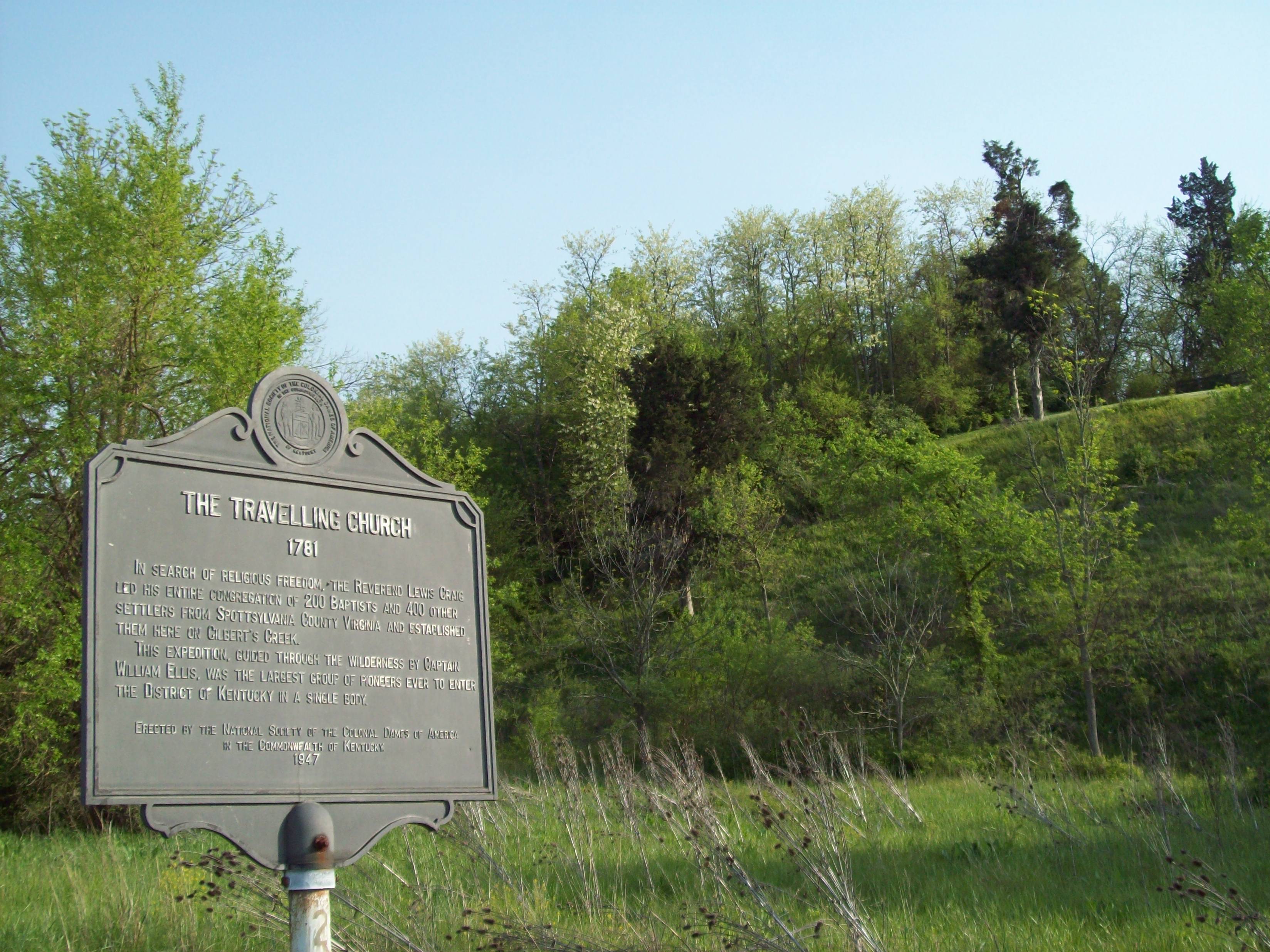
Kentucky State Marker #25
From Kentucky State historical marker #25:

In search of religious freedom, the Reverend Lewis Craig led his entire congregation of 200 Baptists and 400 other settlers from Spottsylvania County, Virginia, and established them here on Gilbert's Creek. This expedition, guided through the wilderness by Captain William Ellis, was the largest group of pioneers ever to enter the District of Kentucky in a single body.

So we remember “The Travelling Church,” which set out from Virginia in 1781 for the purpose of exploring the “Canaan” of Kentucky while furthering their missionary endeavors. In October 1781, they arrived in Fort Chiswell in southwestern Virginia with a considerable-sized wagon train, only to find that a hundred miles further, the road would become impassable to anything but horse and foot traffic. They then sold or traded off their wagons and larger household goods, packed things up, and set on down the road. Robert L. Kincaid gives this colorful description in The Wilderness Road:

It was a crushing blow for Craig and his people to give up their wagons so early in their journey. The women and the children hated to leave the luxury of wheels for a hard and uncertain horseback ride. But it could not be helped. Huge baskets and bundles of clothing, bed furnishing and household articles were prepared and lashed upon packhorses. Children were crowded on top, or rode in front and behind their mothers and relatives. The men and older boys who did not have mounts trudged along on foot. Thus accoutered, the company strung out on the road to the dark wilderness with its unknown terrors.
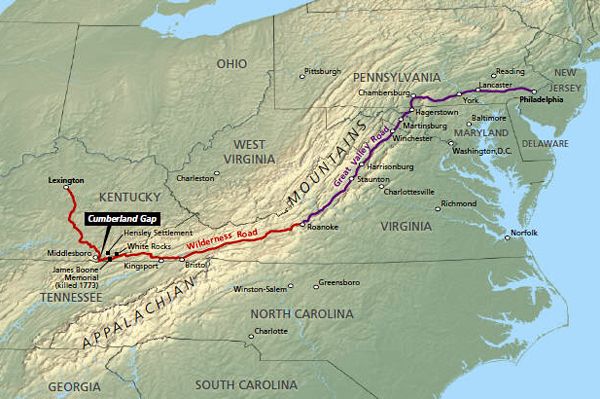
The Great Road (purple) and the Wilderness Road (red)
The group met with delays because of unrest with the Cherokee, wet weather that turned into cold and ice as winter approached. They learned of Cornwallis’s surrender while still in eastern Tennessee and rejoiced greatly over the news. Then, through eastern Tennessee, up over Cumberland Gap and down into southeastern Kentucky, they forded icy rivers and slogged through knee-deep mud in sloughs and canebrakes. Finally the weather eased a bit as they approached Crab Orchard, Kentucky, and at Gilbert’s Creek, in December 1781, they chose a spot for their new church home. This would be the third Baptist church in Kentucky, as two others had been founded earlier the same year.

So why would they do this? Why would almost an entire church leave home and possibly family behind? Obviously the party was comprised of far more than church members—some just wanted the material opportunities Kentucky had to offer—but the biggest reason, for the church itself, was religious persecution. During the colonial era, any church besides the one established by Mother England often came under serious heat from Anglicans. The leader of this particular congregation saw the western frontier as their best solution to this.

Is it possible there could have been a calling from God involved, as well?

~*~*~*~

Filed under the category of historical tidbits I didn’t manage to shoehorn into my recent release The Cumberland Bride. Thanks to Kincaid for his excellent if sometimes embellished work on the Wilderness Road, and to Wikipedia, which has gotten far more reliable over the past few years. :-)

Monday, November 12, 2018

The Whiskey Rebellion of 1794


In my recent release, TheCumberland Bride, I reference some unrest taking place in the Ohio Valley at the same time, related to a tax that had been levied on the sale of whiskey.

Farmers in the westernmost states had discovered that due to the high cost of shipping things back east (there were no wagon roads west of the Appalachian Mountains, yet, so they had to use pack horses or mules), they could make more money selling whiskey (distilled from grain grown west of the mountains) than from shipping the grain itself east. Alexander Hamilton, looking for ways to fund the newly formed American government and to defray the lingering cost of the war for independence from Britain, decided to levy a tax on the whiskey.

The farmers didn’t appreciate this new tax and felt they’d just fought for independence from that kind of heavyhandedness, that government was ultimately up to the people and if the people didn’t approve of the tax, well then, they shouldn’t have to pay it. Violence broke out all along the Ohio Valley, from northeastern Kentucky up into western Pennsylvania. Protesters threatened to burn Pittsburg to the ground.

President Washington felt the supremacy of the United States government, and the Constitution itself, was at stake, and so in the face of some vigorous protests, rode out to western Pennsylvania himself with a strong show of force. General Daniel Morgan, the tough, hard-bitten hero of the Battle of Cowpens almost 14 years before (during the Southern Campaign of the Revolution), was chosen to lead one wing of that army, and the Whiskey Rebellion subsided without a shot being fired. (Interestingly, one member of his force, which stayed in western Pennsylvania through 1795, was Meriwether Lewis.)

Several of those who had led the violence were arrested, but only two men were tried and sentenced to hangings. Washington eventually pardoned even those two. He was apparently satisfied that he’d upheld the Constitution, but many farmers still felt the government had looked out more for its own interests than those of its citizens.

The excise tax remained difficult to collect, and many just plain refused to pay it. Hamilton was disappointed that his plan to help fund the new government had failed. Many feel that the events surrounding the Whiskey Rebellion directly led to the formation of two political parties, the Federalists who believed more power should lie with the government to protect and serve, and the Republicans who believed more power should lie with the people. A few years later, when Jefferson was elected president, he repealed the Whiskey Tax, despite the popular view of the day that Washington’s actions against the Whiskey Rebellion were necessary and successful.

Has anything really changed since then? It’s an interesting commentary on the history of our country’s politics, to be sure.

Monday, August 13, 2018

Who Were the Shawnee?


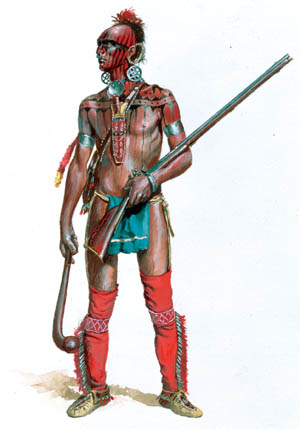
Artist's concept of a Shawnee warrior in the 1700's
Students of the colonial era are probably most familiar with the Iroquois Nation or the Cherokee, but the Shawnee were certainly a force to be reckoned with as well, especially when it came to settling the Ohio Valley. They have a bit of a reputation for fierceness, but—who exactly were they?

To begin with, the name “Shawnee” roots from a word that means “southerner” in many native languages. In the various migrations that occurred over North America, the tribe known as Shawnee were pushed southward by the Iroquois and settled for a while in South Carolina, eventually winding up as far south as Florida and Alabama. I found it interesting that there’s even a linguistic tie between Shawnee (Shaawanowi, from shawunogi—and understand that native spellings were as fluid as English ones in the time, mostly existing for the sake of capturing pronunciation) and the name Savannah, since according to at least one source that’s what the colonists of South Carolina called them. (Which is easy to see, if you soften the modern pronunciation and accent from emphasis on that hard short A in the second syllable, and consider how the Germanic V and W were often interchangeable.)

So who were the Shawnee, in the midst of other native tribes? Not only were they known as the “restless” people, with a loose social structure that probably evolved as a result of their wanderings, but they were known as proud, thoughtful, fiercely independent, in some cases shutting down the efforts of Christian missionaries before they could even get a good start. They regarded their own spirituality as superior to everyone else’s—including other native tribes, which is nothing new to human nature. William Penn, however, who took great care to treat native peoples with as much consideration and dignity as he would want shown himself, suggested that the Shawnee and others descended from some of the lost tribes of Israel. In addition to citing similarities to Hebrew in their language, he wrote:

“For their original, I am ready to believe them of the Jewish race; I mean of the stock of the ten tribes, and that for the following reasons: First, they were to go to a land not planted or known, which to be sure, Asia and Africa were, if not Europe, and he that intended that extraordinary judgment upon them, might make the passage not uneasy to them, as it is not impossible in itself, from the easternmost part of Asia, to the westernmost part of America. In the next place, I find them of like countenance, and their children of so lively resemblance, that a man would think himself in Dukes’ Palace, or in Berry Street, in London, when he seeth them; but this not all: they agree in rites; they reckon by moons; they offer their first fruits; they have a kind of feast of tabernacles; they are said to lay their altar upon twelve stones; their mourning a year; customs of women, with many other things that do not now occur.” (History of the Shawnee Indians from the year 1681, to the year 1701, as cited by Henry Harvey)

Whether we also believe this could be true, or not, they were a remarkable people, a study as many native tribes were in contradictions but with their own code of honor that in some ways could be considered amazingly biblical. Flaws and admirable qualities alike, they are definitely a fascinating people!

~*~*~

For my upcoming release, The Cumberland Bride, set on the Wilderness Road into Kentucky in 1794, I did as much research on the Shawnee people as on the Wilderness Road itself, and found some great resources:

History of the Shawnee Indians, From the Year 1681 to 1854, Inclusive by Henry Harvey.

The Shawnees and the War for America, Colin G. Calloway.

Native American Tribes: The History and Culture of the Shawnee, by Charles River Editors

The Magic Moccasins: Life Among Ohio's Six Indian Tribes, Volume One, Delaware/Shawnee/Mingo, by Jane Barks Ross.


Monday, June 18, 2018

The Longhunters


One cannot read colonial-era stories for long without finding mention of the longhunters—or long hunters, depending upon the writer. But just who were these people?

Only known portrait of Daniel Boone during his lifetime (1820)
The era of the longhunter probably starts with the expedition led by Dr. Thomas Walker in 1750 along the frontier of Virginia, into what is now Tennessee and Kentucky by way of Cumberland Gap, who reported on a land of unbelievable richness, with buffalo and beaver and all kinds of other game whose hides and pelts brought a great deal of money out East, and in trade to England. It wasn’t long before various parties of men followed, venturing into the wilderness for “long hunts”—expeditions that, like Walker’s, could last from several months to more than a year. The most famous of the hardy (some might say foolhardy) men who set out on these hunts was Daniel Boone, but he was by no means the only one.

The era reached its peak during the 1760’s. Up until that time, politics between France and England, and resistance from native tribes, kept most from venturing west. Tensions were bad enough during the French and Indian War, and at the close of that conflict in 1763, King George made it essentially illegal to hunt west of the Appalachians without a trading license. The vast majority of hunters ignored his proclamation. One accounts says that Daniel Boone himself did not make his first trip west until 1769, after a visit by English trader John Finley, but others say his first long hunt was in 1750. I'm inclined to believe the latter. Boone’s adventures included capture by the Cherokee and Shawnee, having his pelts confiscated, probable adoption as a native, returning home after so long that his wife had given him up for dead, and the later loss of a son to Indian attack. None of this deterred him from making the hunting grounds his eventual home, and persuading others to join him there.

Other notable longhunters included James Harrod (for whom Harrodsburg, KY is named), Simon Kenton, Elisha Walden (also called Wallen/Walling, for whom Wallen’s Ridge at Cumberland Gap is named), Abraham and Isaac Bledsoe (yes, from the same real-life family I used in both Defending Truth and The Cumberland Bride), and Benjamin Cutbirth (almost certainly a mispronunciation and subsequent mispelling of Cuthbert).

1852 painting of Squire Boone Crossing the mountains
By the time the American Revolution ended, the heyday of the longhunter had passed. The unbelievable abundance of game across Kentucky and Tennessee had thinned considerably, probably less by hunting than pushed westward by the rising tide of settlers. And so the explorers and adventurers went further west, as well. In the process, the Boones and Bledsoes left a trail across Tennessee and into central Missouri of both place names and descendants.

More reading:

William Blevins, Long Hunter
Daniel Boone (and at Wiki)
Simon Kenton
Longhunters (at Wiki)
Bledsoe's Station in Tennessee


Monday, May 14, 2018

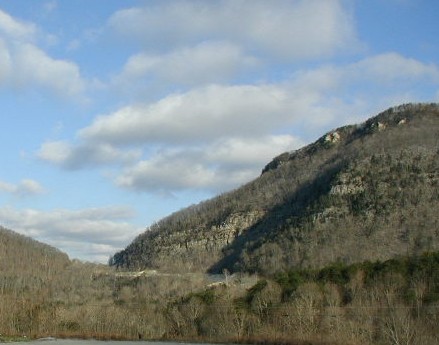
The Wilderness Road and Cumberland Gap

Travel during colonial times was notoriously slow and arduous. I've written before about the Great Wagon Road stretching from Philadelphia down through western Virginia and into North Carolina, which had its origins as the Warrior’s Path, a highway of sorts between the northern and southern native tribes. The Wilderness Road, stretching from western Virginia, down into east Tennessee and up into Kentucky, had similar origins. Traffic between the upper Ohio Valley and the lower Appalachians traced a path down through the heart of the region famed as a favored native hunting ground, converging with the Warrior’s Path at the great Cherokee town of Chota, in southern Tennessee. Interestingly enough, that western trail was called Athawominee, “Path of the Armed Ones,” essentially a variation of Warrior’s Path like the one up through the Shenandoah Valley.

The first European recorded as having seen Kentucky and the Ohio Valley is Gabriel Arthur, a white indentured servant taken captive after an expedition gone badly during 1673. Directed by the Shawnee down the well-marked path that took him south to the Cumberland Mountains and eventually through Cumberland Gap then back northeast to Fort Henry (near present-day Petersburg, Virginia). No one at that time realized the significance of what Arthur had been shown, the best route over the Appalachian Mountains to the western frontier.

The area remained unexplored until 1750, when Dr. Thomas Walker mounted an expedition into what was then western Virginia, which in colonial times extended all the way to the Mississippi River. Others followed, including Daniel Boone and James Harrod, initially traveling companions but separating after a difference of opinion, and both with Kentucky towns named after them. Employed by the Transylvania Company to blaze the way for a road northward from Cumberland Gap, Boone led a company of thirty-some mounted and armed axmen in 1775. He and other longhunters had already been exploring this region for a decade and more, but he’s the one credited with first leading settlers over the pass called Cave Gap in the early days, and up into the lush, wild country called Kentucky.

Many early explorers wrote of their journeys, describing herds of bison, elk, and deer, flocks of turkeys and geese, rivers full of fish, canebrakes taller than a mounted man’s head, and tangled thickets of holly and laurel that afforded little grazing for the horses that carried them and their provisions. Bear and wolves ranged freely, drawn by the plentiful game. While hunting was easier than they’d ever dreamed possible, the land itself was poor for farming on the eastern side of the region. They wrote of the mountains and caves, of stream crossings complicated by sand and mud flats. More fearsome were Indian warriors, who often struck parties of explorers and later settlers without warning, taking captives and scalps and leaving terror in their wake.

And still, the settlers came, pouring over the Cumberland Gap on foot and by horseback long before the way was fit for wagon traffic. Some went north to the lower Ohio River Valley, via Boone’s Trace, as it was called, since travel down the Ohio was still too hazardous, made so by native tribes and white outlaws. Others went westward along Harrod’s Trace. In 1796, work was completed on an actual wagon road, commissioned a year or so before by the newly formed Kentucky legislature. There’s evidence that improvements began about 1780, with completion not taking place until after Kentucky gained statehood, but other sources say most improvements happened around 1792, with official work and opening in 1796. The latter is the timeline I used in my upcoming novel, The Cumberland Bride.

By the end of the colonial era, Westward Expansion was already well in motion, thanks to the Wilderness Road. Today, modern highways and interstates roughly trace the route, and a mountain tunnel eases traffic across the Cumberland Gap. The forests still look as wild, though, in between scattered towns that dimly recall their origins, and historic markers and sites bearing witness of the amazing journeys of those explorers, hunters, and settlers.