Announcements

10 Year Anniverary & New Releases Winners: Carrie Fancett Pagels' Butterfly Cottage - Melanie B, Dogwood Plantation - Patty H R, Janet Grunst's winner is Connie S., Denise Weimer's Winner is Kay M., Naomi Musch's winner is Chappy Debbie, Angela Couch - Kathleen Maher, Pegg Thomas Beverly D. M. & Gracie Y., Christy Distler - Kailey B., Shannon McNear - Marilyn R.
Showing posts with label 1700s. Show all posts

Monday, October 11, 2021

Colonial History in the Caribbean: St. Croix

This summer, the opportunity arose for me to accompany my husband on a military trip to St. Croix, US Virgin Islands--my first time ever out of the country! Although St. Croix was never on my wishlist of places to visit, I am so glad I went!

Beyond the expected tourist vibe, this Caribbean island boasts an interesting slice of colonial history. It was, in fact, a colony of Denmark during the 1700's. St. Croix's two towns, Christiansted and Frederiksted, were named after Danish kings. We stayed in Christiansted, just steps away from the first Lutheran church built on the island (unfortunately not open to the public), and about a block further lay the Danish outpost of Fort Christiansvaern. Of course I went exploring ...

The old church is now called, simply, "The Steeple Building." A bronze plaque reports that construction began in 1750 and that this first Danish Lutheran Church was consecrated in 1753 as the Church of Our Lord of Sabaoth and served until the move to a new sanctuary in 1831. (Which I also saw and admired--and is still in use!) The church building was then used as a military bakery, storehouse, town hall, hospital, and school. It still, says the inscription, bears the aspect of 1796.

Coming from drought-stricken North Dakota, which usually has a vivid beauty of its own even in August, I found myself continually amazed at the fresh greens and striking blues of the island and the waters around it. There's a reason why "Caribbean blue" is a thing!

It's funny, too, how a history nerd like myself gets excited just over an 8th century fort and cannons. I mean, really, how many can you see before they all start looking alike? But there was something about the cheerful yellow of Fort Christianvaern, and the weight of history lurking in its halls ...


There were too many rooms of the fort to share, but some of the more interesting ones included the aresenal, still containing various artillery equipment, gear, and firearms:


Of course, like so many other places, the 18th century history of St. Croix was entangled with the practice of slavery. Sugar plantations comprised a large portion of the island's industry, and old sugar mills still stand scattered about--like this one on the boardwalk in Christiansted, now converted to a shop and restaurant by day.


In all, it felt a little like being on a "Pirates of the Caribbean" set, except for reminders that we remained firmly in the 21st century. (Among other things, the sanitizer dispensers literally in every nook and cranny!)


I also discovered two connections to American colonial history, right there on St. Croix ... but those will have to wait until next time!

(If you think you know at least one of them, do go ahead and post in the comments!)


Friday, June 5, 2020

A Craft for Your Inner Colonist ~ How to Make a Feather Quill Pen

Today, we're going to have some fun with your inner colonist as we learn to make a quill pen. 

As a kid, didn't you ever want to make a feather quill pen to use? I bet you did. I bet you took apart your Bic, found a big ol' feather somewhere, and stuffed the ink tube from the pen inside to write with. I know I did. If you somehow missed doing that, how about as an adult? Now, of course, you know that stuffing pen parts inside a feather is not authentic. You want a real nibbed quill and an ink bottle on your desk. Seriously, I've found myself researching feather pens on Amazon. I have this one with interchangeable nibs (for style) on my wishlist:


Making Your Own

If you're feeling crafty, though, here's how to make a real feather quill pen. First, you need a likely feather. If you don't have access to someone's farm where you can get a pretty chicken or goose feather,  or you don't have any turkeys roaming around dropping the occasional feather, you can buy some nice turkey feathers online or in a craft store. Note how wing feathers curve. Whether or not you're left or right handed, the way they curve will feel better in one hand or the other. Back in the day, right-handed folks generally chose feathers from the left wing, and vice-versa for left-handed writers. They chose feathers from a bird's right wing. (Note: if you're going to chase down Granny's pet goose to nab a feather, keep this left-hand-right-wing, or right-hand-left-wing info in mind. Haha!)

Once you have your chosen feather, you need to prep it a bit. First clip off any of those soft, fluffy little feathers near the tip, and trim off any of the lower feathers that might get in the way of your holding the shaft. After that, it's time to strip the membrane. This part isn't 100% necessary, but it makes for a nicer "barrel". Just take a paring knife, and scrape the shaft along the barrel. You'll see the membrane coming off.

Good. Now it's time to cut the point on the end. You'll want to trim it at a nice angle, and make sure that you're cutting in the direction you want to be able to hold the quill to write most comfortably. Inside the end of the barrel is the "quick", kind of a like a plug. You'll need to remove that. Then you'll make a second cut to create the point. If you have trouble picturing this, think of the shape of tip on a fountain pen. If you want to make broader strokes, say for calligraphy, then you'll blunt the end a bit squarer. 


You have one more cut to make. After you've fashioned the tip, cut a slit in the middle of it so that the ink can run properly. Again, picture that fountain pen nib.

And that's it! You're ready to write. You'll need ink of course. You can order some, or you can squash up a few berries like some of those colonists would have had to do. I have a character doing that in my WIP, a sequel to Mist O'er the Voyageur. If you live in an area where you have black walnuts, those work good too.


Writing with Your Quill


Dip the tip of your quill in the ink of your choice, and give it a gentle tap to avoid drips. Make slow, easy strokes as you write, realizing that you'll have to re-load your quill every few words. Imagine how long it took Benjamin Franklin, Patrick Henry, Tom Jefferson, and so many of our other founding fathers to pen their lengthy documents! And if you lived in the mountains of North Carolina, there was only a small likelihood that you knew how to write at all. You would probably be just as mesmerized watching someone with that skill as we would be today--watching them write with a quill pen.

Send me a picture if you do this!

In the meantime...what are you reading? I hope you'll add my newly re-released, popular Empire in Pine series to your TBR, Goodreads, and BookBub lists. 

The Green Veil ~ The Red Fury ~ The Black Rose
by Naomi Musch


Here's to History,
Naomi

P.S. As I completed this post, I discovered that this topic has been discussed before, in 2012, here on the CQ blog. If you'd like to see some step-by-step pictures and results from another crafty perspective, you can find that post here: Making Pens from Quills

Monday, December 11, 2017

This Month in Colonial History: December


This is my last month bringing you the theme of “this month in colonial (and Federal) history.” Next month I have the joy and privilege of starting posts relevant to my upcoming release, The Counterfeit Tory in CQ’s long-awaited all-colonial novella collection, The Backcountry Bride (May 2018, Barbour Publishing). So, this month I’m going to do something a little different and add in events specific to the Southern Campaign of the American Revolution, particularly in South Carolina—some of which are featured in my novella, and one of which figures into my first full-length release coming in October.

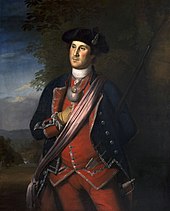
Washington's Portrait, by Stuart
1 – Spanish garrisons driven out of Portugal in a nationalist revolution that will lead to Portugal’s independence. (1640)

1-19 – Continuation of “the Bloody Scout,” a six-week reign of terror by loyalist officer William “Bloody Bill” Cunningham and his men across the South Carolina backcountry, in retribution for the treatment of family and friends by the patriots. (1780) (This event forms the backdrop of my story The Counterfeit Tory.)

2 - Napoleon Bonaparte crowned Emperor of France. (Because that was an improvement on the French Revolution?) (1804)

3 - Birth of Gilbert Charles Stuart (1755-1828) near Narragansett, Rhode Island. Best known for portraits of George Washington, James Madison, James Monroe, and Thomas Jefferson.

4 - The Observer, now the oldest Sunday newspaper in the world, first published in Britain. (1791)

5 - Wolfgang Amadeus Mozart dies in poverty at age 35 in Vienna, Austria. (1791)

5 – Birth of Martin van Buren (1782-1862), the 8th U.S. President and first born a U.S. citizen, in Kinderhook, New York.

7 – Birth of Marie Tussaud (1761-1850) in Bern, Switzerland. Later famous for Madame Tussaud’s Wax Museum.

8 – Birth of Eli Whitney (1765-1825) in Westboro, Massachusetts. Assisted in his invention of the cotton gin by Caty Greene, widow of General Nathanael Greene.

9 – Birth of John Milton (1608-1674) in London.

10 – Birth of Thomas Gallaudet (1787-1851) in Philadelphia, Pennsylvania. Co-founded the American School for the Deaf in Hartford, Connecticut, in 1817.

12 – Birth of John Jay (1745-1829) in New York City. Diplomat and the first Chief Justice of the U.S. Supreme Court. With Alexander Hamilton and James Madison, he co-wrote the Federalist Papers.

13 - The Council of Trent, summoned by Pope Paul III, met to discuss doctrinal matters, including the rise of Protestantism. (1545)

13 - Francis Drake departed Plymouth, England, on his voyage around the world. (1577)

13 - New Zealand discovered by Dutch navigator Abel Tasman of the Dutch East India Company. (1642)

13 – Birth of Heinrich Heine (1797-1856) in Dusseldorf. “Best known for his statement made a hundred years before the advent of book-burning Nazis in Germany – ‘Where books are burned, human beings are destined to be burned too.’”

14 – The evacuation of the British from Charleston, South Carolina, after occupying the city for more than a year and a half. (1782)

14 - George Washington dies at Mount Vernon. (1799)

15 - The Bill of Rights takes effect following ratification by Virginia. (1791)

16 - Following the defeat of King Charles I in the English Civil War, Oliver Cromwell, leader of the Parliamentary forces, is declared Lord Protector of England. (1653)

16 - The Boston Tea Party! Colonial activists disguised as Mohawk Indians board British ships anchored in Boston Harbor and dump 342 containers of expensive tea into the water. (1773)

16 – Birth of Ludwig van Beethoven (1770-1827) in Bonn, Germany.

16 – Birth of Jane Austen (1775-1817) in Hampshire, England.

17 – Excommunication of King Henry VIII after he declares himself supreme head of the Church in England. (1538)

17 - The Continental Army, led by General George Washington, settles in for the winter at Valley Forge in Pennsylvania. (1777)

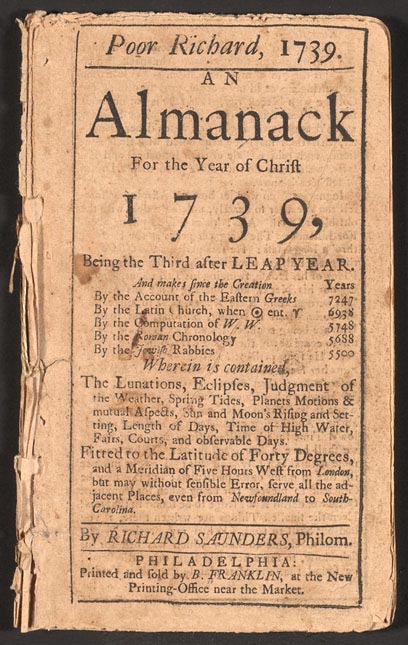
Poor Richard's Almanac
19 - Benjamin Franklin first published Poor Richard's Almanac containing weather predictions, humor, proverbs and epigrams, eventually selling nearly 10,000 copies per year. (1732)

19 – Birth of William Perry (1790-1855) in Bath, England. Famous for his Arctic expeditions and three attempts to find a Northwest Passage.

20 - The Virginia Company expedition to America began as three small ships, the Susan Constant, Godspeed and Discovery, departed London under the command of Captain Christopher Newport. (1606)

20 - Czar Peter the Great changes the Russian New Year from September 1 to January 1 as part of his reorganization of the Russian calendar. (1699)

20 – Attack on “Bloody Bill” Cunningham by General Andrew Pickens on the Edisto River, effectively ending “the Bloody Scout.” (1780)

22 – “Following a triumphant journey from New York to Annapolis, Maryland, George Washington, victorious Commander-in-Chief of the American Revolutionary Army, appeared before Congress and voluntarily resigned his commission.” (1783)

24 - Franz Joseph Gruber composed “Silent Night.” (1818)

24 – Birth of Benjamin Rush (1745-1813) on a plantation in Byberry, Pennsylvania. A signer of the Declaration of Independence, doctor, and humanitarian, whose writings on mental illness earned him the title “Father of Psychiatry.”

24 – Birth of Christopher "Kit" Carson (1809-1868) in Madison County, Kentucky.

25 - George Washington takes 2,400 of his men across the Delaware River for a surprise raid on 1,500 Hessians (German mercenaries) at Trenton, New Jersey. The Hessians surrendered after an hour, with nearly 1,000 taken prisoner by Washington, who suffered only six wounded. The victory provided a much-needed boost to American morale. (1776) (This incident figures into the backstory of my heroine’s father in The Cumberland Bride, releasing October 2018 from Barbour.)

25 – Birth of Isaac Newton (1642-1727) in Woolsthorpe, Lincolnshire, England.
Overlay of the Louisiana Purchase

27 – Birth of Johannes Kepler (1571-1630) in Wurttemberg, Germany. Considered the father of modern astronomy.

29 – Birth of Andrew Johnson (1808-1875), the 17th U.S. President, in Raleigh, North Carolina. Abraham Lincoln's vice president and President upon Lincoln's assassination in 1865.

30 - The Stars and Stripes flag raised over New Orleans as a sign of formal possession of the territory of Louisiana by the United States. (1803)

My thanks to The History Place, Holiday Insights, and the invaluable printed resource of Nothing But Blood and Slaughter: The Revolutionary War in the Carolinas by Patrick O'Kelley.

Monday, November 13, 2017

This Month In Colonial History ~ November

Welcome to this month's edition! Just one more month to go and then I'll be on to other interesting things ...

1 - Charles II of Spain dies and is succeeded by Philip V, kicking off the War of Spanish Succession. (1700)

1 - Mission San Juan Capistrano founded in California. (1776)

2 - Peter I proclaimed Emperor of all Russia. (1721)

Daniel Boone at age 84
2 - Birth of Daniel Boone (1734-1820) in Berks County, Pennsylvania.

2 – Birth of James K. Polk (1795-1849), 11th U.S. President, in Mecklenburg County, North Carolina. After serving from March 4, 1845 to March 3, 1849, he “declined to be a candidate for a second term, saying he was ‘exceedingly relieved’ at the completion of his presidency.”

3 - King Henry VIII is made Supreme Head over the Church of England. (1534)

5 - Guy Fawkes Day in Britain:  the anniversary of the failed "Gunpowder Plot" to blow up the Houses of Parliament and King James I in 1605.

5 - First issue of the New York Weekly Journal published by American printer and journalist John Peter Zenger. (1733)

8 - Cortes captures Aztec emperor Montezuma and thus conquers Mexico. (1519)

8 - Birth of astronomer and mathematician Edmund Halley (1656-1742) in London, who “sighted the Great Comet of 1682 (now named Halley's Comet) and foretold its reappearance in 1758. Halley's Comet appears once each generation with the average time between appearances being 76 years. It is expected to be visible again in 2061.”

10 - The U.S. Marine Corps is born in 1775! Established as part of the U.S. Navy, it became a separate unit on July 11, 1789.
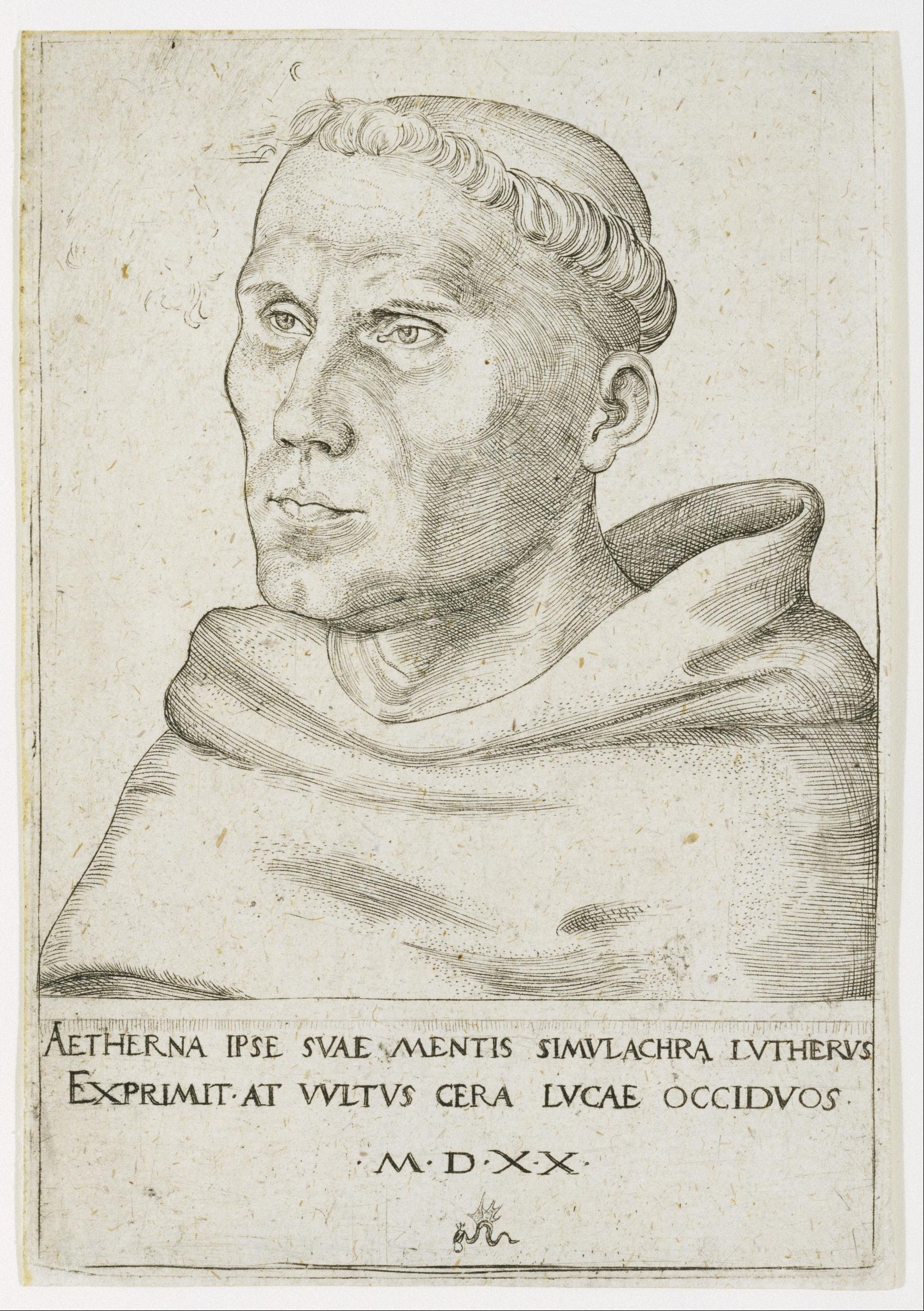
10 – Birth of Martin Luther (1483-1546) in Eisleben, Saxony.

11 - Birth of Abigail Adams (1744-1818) in Weymouth, Massachusetts.

11 – The signing of the Mayflower Compact by 41 Pilgrims, onboard the Mayflower, just off the Massachusetts coast. (1620)

14 - The first experimental blood transfusion takes place in Britain, utilizing two dogs. (...winning the weird science of the month award!) (1666)

14 - Scottish explorer James Bruce discovers the source of the Blue Nile on Lake Tana in northwest Ethiopia. (1770)

14 – Birth of Robert Fulton (1765-1815), inventor of the steamboat, in rural Pennsylvania.

15 - The Articles of Confederation were adopted by Continental Congress. (1777)

17 - Elizabeth I crowned Queen of England at the age of 25, “reigning until 1603 when she was 69. Under her leadership, England became a world power, defeating the Spanish Armada, and witnessed a golden age of literature featuring works by William Shakespeare, Edmund Spenser and others.” She defined the Colonial Era in ways few others have. (1558)

17 - New York Weekly Journal publisher John Peter Zenger is arrested and charged with libeling the colonial governor of New York, a year after the newspaper was established. (1734)

17 - The U.S. Congress meets for the first time in the new capital at Washington, D.C.; and President John Adams becomes the first occupant of the Executive Mansion, later renamed the White House. (1800)

17 - Birth of German mathematician August Mobius (1790-1868) in Schulpforte, Germany.

18 - First book in the English language, The Dictes and Sayengis of the Phylosophers, printed by William Caxton. (1477)

18 – Birth of German composer Carl Maria von Weber (1786-1826) in Eutin, Germany.

18 – Birth of Photography inventor Louis Daguerre (1789-1851) in Cormeilles, near Paris. Inventor of the daguerreotype, the first practical photographic process to produce lasting pictures.

19 - Puerto Rico discovered by Columbus during the second voyage to the New World. (1493)

19, 1703 – Death of the "Man in the Iron Mask," a prisoner of Louis XIV in the Bastille in Paris. Speculation abounds on this man’s identity:  was it Count Matthioli, who double-crossed Louis XIV, or possibly the brother of Louis XIV? (1703)

20 - New Jersey is the first state to ratify the Bill of Rights. (1789)

21 - The first free balloon flight takes place in Paris as Jean Francois Pilatre de Rozier and Marquis Francois Laurent d'Arlandes ascended in a Montgolfier hot air balloon. The flight lasts about 25 minutes and travels nearly six miles at a height of about 300 feet over Paris. Witnessed by Benjamin Franklin, among others. (1783)

22 - Portuguese navigator Vasco Da Gama, leading a fleet of four ships, is the first to sail round the Cape of Good Hope, searching for a sea route to India. (1497)

22 - Death of Edward Teach, AKA Blackbeard the pirate, off the coast of North Carolina after a long and prosperous career. (1718)

24 – Birth of Zachary Taylor (1784-1850) 12th U.S. President, in Orange County, Virginia. Only served as President from March 4, 1849 to July 9, 1850, when he died in the White House from illness.

25 – The last British troops leave New York City at the end of the Revolutionary War. (1783)

26 – Observance of the first American holiday, proclaimed by President George Washington to be Thanksgiving Day, a day of prayer and public thanksgiving in gratitude for the successful establishment of the new American republic. (1789)

26 - The first lion exhibited in America (1716)

26 – Birth of Harvard College founder John Harvard (1607-1638) in London.

27 – Birth of Anders Celsius (1701-1744) in Sweden. Inventor of the centigrade (Celsius) temperature scale commonly used in Europe.

28 - Portuguese explorer Ferdinand Magellan passed through the strait later named for him, located at the southern tip of South America, thus crossing from the Atlantic Ocean into the Pacific. (1520)
John Bunyan's magnum opus

28 - Panama declares independence from Spain and joins the fledgling nation of Gran Colombia. (1821)

28 – Birth of British artist and poet William Blake (1757-1827) in London.

28 - Birth of John Bunyan (1628-1688) in Elstow, Bedfordshire.

30 - The Battle of Narva takes place, where 8,000 Swedish troops under King Charles XII invade Norway, defeating a force of 50,000 Russians. (1700)

30 - Provisional peace treaty between Great Britain and the United States is signed, ending America's War of Independence. (The final treaty was signed in Paris on September 3, 1783.) It declared the U.S. "...to be free, sovereign and independent states..." and that the British Crown "...relinquishes all claims to the government, propriety and territorial rights of the same, and every part thereof." (1782)

My thanks as always to The History Place, Holiday Insights, Marine Corps University, and Wikipedia. :)

Monday, October 9, 2017

This Month in Colonial History: October

So what tidbits do we find in colonial and Federal history for this month? Every single month has held some surprises for me ... what are yours?

4 - "The Gregorian Calendar took effect in Catholic countries as Pope Gregory XIII issued a decree stating the day following Thursday, October 4, 1582, would be Friday, October 15, 1582, correcting a 10-day error accumulated by the Julian Calendar. Britain and the American colonies adopted the Gregorian Calendar in 1752."

4 - Belgium gained its independence in 1830, after having been a part of the Netherlands since 1815.

Jonathan Edwards
5 - Birth of theologian Jonathan Edwards (1703-1758) in East Windsor, Connecticut.

5 - "Meeting in Philadelphia, Pennsylvania, the 2d Continental Congress used the word 'Marines' on one of the earliest known occasions, when it directed General George Washington to secure two vessels on 'Continental risque and pay,' and to give orders for the 'proper encouragement to the Marines and seamen' to serve on the two armed ships." (usmcu.edu) (1775)

5 - Shawnee Indian Chief Tecumseh defeated and killed (1813).

7 - The Stamp Act Congress convenes in New York City, attended by representatives from nine colonies meeting in protest to the British Stamp Act, the first direct tax by the Crown upon the American colonies. (1765)

11 - King Henry VIII of England is given the title "Defender of the Faith" by Pope Leo X following the publication of the King's book against Martin Luther. (1521)

12 - After a 33-day voyage in 1492, Christopher Columbus makes first landfall in the New World in the Bahamas. Also, Paraguay declared its independence from Spain and Argentina in 1811. And in 1822, Brazil became independent of Portugal.

13 - The U.S. Continental Navy is created. (1775)

13 - The cornerstone of the White House is laid in 1792 by George Washington.

14 – Birth of Quaker founder of Pennsylvania, William Penn (1644-1718) in London.

15 - Napoleon Bonaparte arrived on the Island of St. Helena beginning a British-imposed exile following his defeat at the Battle of Waterloo.  (1815)

16 - Yale University founded in Killingworth, Connecticut, as the Collegiate School of Connecticut. (1701) The name later changed to Yale College to honor Elihu Yale, a philanthropist.

Marie Antoinette by Elisabeth Vigee Le Brun
16 - Queen Marie Antoinette beheaded during the Reign of Terror following the French Revolution. (1793)

16 - Birth of teacher and journalist Noah Webster (1758-1843) in West Hartford, Connecticut.

17 - The first major victory of the American Revolutionary War, the Battle of Saratoga, where British General John Burgoyne and his entire army of 5,700 men surrendered to American General Horatio Gates. (1777)

18 – In 1685, the Edict of Nantes is revoked by King Louis XIV of France, thus depriving Protestant Huguenots of all religious and civil liberties previously granted to them by Henry IV in 1598.

19 - The Revolutionary War ended with the surrender of Cornwallis to Washington at Yorktown. (1781) The final treaty would not be signed until September 3, 1783.

20 - The U.S. and Britain agreed to set the U.S.- Canadian border at the 49th parallel. (1818)

20 - Birth of British architect Christopher Wren (1632-1723) in Wiltshire, in southwestern England. “Considered one of the greatest minds of his time, he designed St. Paul's Cathedral and 52 churches for the City of London. His secular buildings included the ‘new’ wing of Hampton Court near London and Greenwich Hospital, now the Royal Naval College.”

21 - The Battle of Trafalgar takes place between the British Royal Navy and the combined French and Spanish fleets. Britain’s victory ends the threat of Napoleon's invasion of England, but British naval hero Admiral Horatio Nelson is mortally wounded aboard his ship Victory. (1805)

26 - The Erie Canal opens, connecting Lake Erie to the Hudson River. (1825)

27 - The first of 85 Federalist Papers, written by Alexander Hamilton, James Madison, and John Jay, appeared in print in a New York City newspaper, arguing for the adoption of the new U.S. Constitution. (1787)

28 - Harvard University, the oldest institution of higher learning in America, is founded in Cambridge, Massachusetts, named after John Harvard, a Puritan who donated his library and half of his estate. (1636)

29 - British explorer Sir Walter Raleigh is executed in London for treason on orders from King James I. (1618)

Luther's 1534 Bible
30 - Birth of John Adams (1735-1826) the 2nd U.S. President, in Braintree, Massachusetts.

31 - Martin Luther nailed his 95 Theses to the door of Wittenberg's palace church, denouncing the selling of papal indulgences, questioning various ecclesiastical practices, and marking the beginning of the Protestant Reformation in Germany. (1517)

As always, my thanks to The History Place, Holiday Insights, Marine Corps University, and Wikipedia. :)

Friday, June 16, 2017

The Most Popular Man in Colonial America

by Tamera Lynn Kraft

There were many men of great achievement in Colonial America in the years before the Revolutionary War. Benjamin Franklin, Thomas Paine, and the Adams brothers were becoming known for their criticism of taxes. The Wesley brothers preached throughout America and had a great following. Even George Washington had made a name for himself during the French and Indian War. But the most popular man in 1700s America was George Whitefield, the fiery Great Awakening revivalist that changed the colonies forever.

Well known actor of the time, David Garrick said, "I would give a hundred guineas, if I could say 'Oh' like Mr. Whitefield." Newspapers called him the "marvel of the age".  When he preached for the first time in Philadelphia, even the largest churches couldn't hold the crowds of 8,000 people every night. Every city he preached in would bring out crowds larger than the population of the city. He was also one of the first to allow slaves to attend his meetings. It is estimated in his lifetime he preached 18,000 sermons to over ten million people.

Benjamin Franklin was one of the crowd who attended the services in Philadelphia and was greatly impressed. Franklin was a deist and believed God didn't personally interfere in the lives of men. Even though he never converted, he became a lifelong friend of Whitefield's and even handled the publicity for the evangelistic crusades. After one of Whitefield's messages, Franklin wrote, "wonderful... change soon made in the manners of our inhabitants. From being thoughtless or indifferent about religion, it seem'd as if all the world were growing religious, so that one could not walk thro' the town in an evening without hearing psalms sung in different families of every street."

Even though he was popular, Whitefield did face opposition. Some complained about him allowing slaves at his meetings. Some Calvinists were angry with his close relationship with the Wesley Brothers, strong Armenians. Others felt his emotionalism and appeal for everyone to have a personal relationship with Christ was over the top. When he first started preaching in England, the leaders of the Anglican Church wouldn't even assign him a pulpit. That's when he began preaching in open fields and parks. Through it all, the great response to the Gospel every time Whitefield preached drown out any backlash. Of the opposition, he said, “the more I am opposed, the more joy I feel.”

He was in no way an ordinary Anglican preacher. His messages were powerful. He was said to portray Bible characters in a realistic way. Jonathan Edwards's wife, Sarah, remarked, "He makes less of the doctrines than our American preachers generally do and aims more at affecting the heart. He is a born orator." During the revival service. Once while preaching about eternity, he stopped and said, "Hark! Methinks I hear [the saints] chanting their everlasting hallelujahs, and spending an eternal day in echoing forth triumphant songs of joy. And do you not long, my brethren, to join this heavenly choir?"

The spiritual revival Whitefield ignited, the Great Awakening, became one of the most formative events in American history and forged the spiritual character and unity or the soon to be nation. His last sermon, in 1770 shortly before his death, was given at Boston Commons before 23,000 people, the largest gathering in American history to that point.

Monday, February 13, 2017

This Month In Colonial History: February

Tadeusz Kosciuszko
Second month of my overview of colonial history! Enjoy!

February 4, 1746 - Thaddeus Kosciusko was born in Poland. Engineer who not only built the first fortifications at West Point but managed the siege of Ninety Six, South Carolina, during the summer of 1780. After the American Revolution, he returned to his homeland and fought against a Russian invasion.

February 6, 1788 – The U.S. Constitution was ratified by a sixth state ... Massachusetts!

Aaron Burr
February 6, 1756Aaron Burr
was born in Newark, New Jersey. Most famous for the death of Alexander Hamilton in 1804, but have you heard of the Burr Conspiracy? Or that he's the great-grandson of Jonathan Edwards? Neither had I!

February 13, 1635 – The first public (taxpayer supported) school in America, Boston Latin School.

February 22, 1732 - George Washington born. Commander of the Continental Army during the American Revolution and first U.S. President.

George Washington, age 40
A few additions! “This month in Revolutionary War history,” with a catch-up for January ...

January-February 1779 – After taking Savannah, Georgia, the British prepare to move on Charles Towne.

January 17, 1781 – The Battle of Cowpens: definitive defeat of British and loyalist forces under Tarleton by Continental regulars and militia under Daniel Morgan in upstate South Carolina. The most important win of the Southern Campaign after King’s Mountain.

February 1-14, 1781 - Race for the Dan: literal race between the Continental army (under Greene) and British army (under Cornwallis) to get through North Carolina into Virginia, which would give either army a strategical advantage.

January-February 1782 – The Siege of Charleston in reverse: after more than a year of thoroughly wearing out the British army, Greene’s forces press in on Charles Towne to effect a complete pull-out (not accomplished until Dec 1782).

With thanks to The History Place for their excellent lists, and Patrick O'Kelley's Nothing but Blood and Slaughter, Vols. 1-4.

Monday, January 9, 2017

This Month In Colonial History: January

This year, I thought it would be fun to do a feature highlighting various events important to, and parallel with, the American colonial era, and a few from the Federal era. Assisting me in this endeavor is a site titled The History Place™.

For purposes of NOT plagiarizing, I'll attempt to summarize each event ... enjoy!!

Grand Union Flag of America, 1776
January 1, 1776 - the unveiling of America's first national flag, the Grand Union, by George Washington.

January 1, 1735 - Paul Revere born in Boston, Massachusetts. Does anyone not know about his ride on the night of April 18, 1775?

January 1, 1752 - Betsy Ross born in Philadelphia, Pennsylvania.

January 3, 1777 - During the Revolutionary War, the British are defeated at Princeton and driven back toward New Brunswick. American winter quarters established at Morristown, New Jersey. During the long, harsh winter, the American army shrinks to about a thousand men as enlistments expired and deserters fled

January 4, 1790 - The first State of the Union address, delivered by President Washington.

January 7, 1714 - A patent was issued for the first typewriter designed by British inventor Henry Mill "for the impressing or transcribing of letters singly or progressively one after another, as in writing." Thank you, Mr. Mill, from writers everywhere!

January 7, 1782 - The Bank of North America, our first commercial bank, opens in Philadelphia.

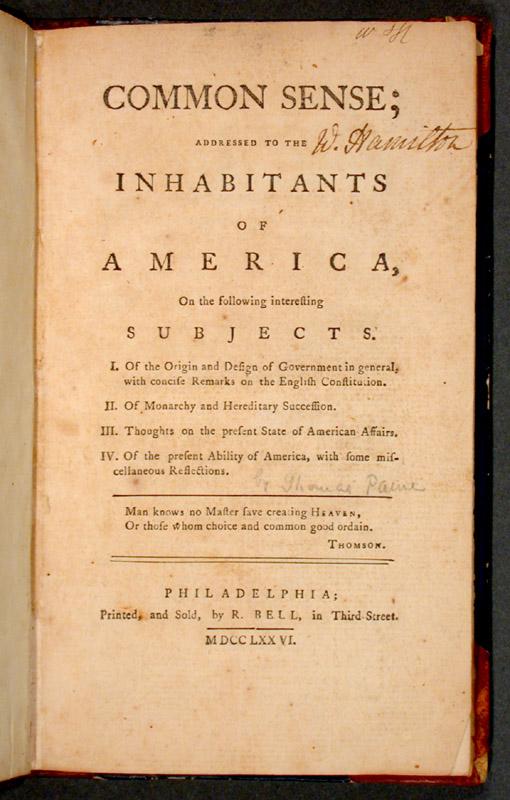
January 10, 1776 - The publication of Common Sense, a fifty page pamphlet by Thomas Paine, which served as a great influence to many, including the authors of the Declaration of Independence.

January 11, 1755 - Alexander Hamilton born in the British West Indies.

January 12, 1588 - John Winthrop born in Suffolk, England. Joined a group of Puritans emigrating to America in 1630 and "became the first governor of Massachusetts Bay Colony, establishing a colony on the peninsula of Shawmut, which became Boston."

January 12, 1737 - John Hancock born in Braintree, Massachusetts.

January 14, 1741 - Benedict Arnold born in Norwich, Connecticut.

January 17, 1773 - "The ship Resolution, sailing under Captain James Cook, became the first vessel to cross the Antarctic Circle."

January 17, 1706 - Benjamin Franklin born in Boston, Massachusetts.

January 21, 1793 - "In the aftermath of the French Revolution, King Louis XVI of France was guillotined on the charge of conspiring with foreign countries for the invasion of France. During the Revolution, the King had attempted to flee to Austria for assistance. Ten months later, his wife, Queen Marie Antoinette, was also guillotined."

January 26, 1788 - The establishment of Sydney Harbor in Australia to accommodate 11 ships with 778 convicts, "setting up a penal colony to relieve overcrowded prisons in England."

January 27, 1756 - Wolfgang Amadeus Mozart born in Salzburg, Austria. "From the age of five, through his untimely death at age 35, this musical genius created over 600 compositions including 16 operas, 41 symphonies, 27 piano and five violin concerti, 25 string quartets, 19 masses, and many other works." One could say he wrote the soundtrack to the colonial era ....

January 29, 1737 - Thomas Paine born in Thetford, England. "His pamphlet, published in 1776, provided inspiration to undecided Americans that a new nation, independent from Britain, might eventually become '...an asylum for mankind!' He served in the Continental Army and observed the hardships of American troops fighting the world's most powerful army. He then published The Crisis series pamphlets which began by stating, 'These are the times that try men's souls.' He refused to accept the profits from his writings and wound up destitute after the Revolution."


Wednesday, August 31, 2016

Plain and Simple: A Colonial Quaker Wedding

Horsham Friends Meeting – Horsham, Pennsylvania

If you’ve lived in the United States for any length of time, chances are you believe that all weddings in this country are officiated—either by a minister, a justice of the peace, or another qualified individual. It’s the law, right? Well . . . no.

Even today, after 360 years in the United States, the Society of Friends (also known as Quakers) has members who still choose the traditional Quaker route to married life. No minister. No bridesmaids or groomsmen. No walking down the aisle to Pachelbel’s Cannon. In fact, much of their ceremony reflects an interminable tenet of Quakerism: silence.

While some Quakers now choose to marry in a ceremony similar to that of other modern-day Americans, many still hold tight to tradition. So what does a traditional Quaker wedding look like? It actually starts about two months (occasionally more) before the actual wedding. Let’s take a trip back to 1750s Pennsylvania and have a look.

Our young Quaker couple—we’ll call them Isaac and Elisabeth—have been close friends all their life. While Quakers believe that friendship, respect, and companionship is a solid foundation on which to build a marriage, Isaac and Elisabeth’s love has grown into much more than friendship. They decide to marry, and to do so, they must follow prescribed steps to be “married under the care of Meeting” (quotation marks implies traditional Quaker speech, much of which has been used for centuries):
  •         “Parental consent”: The first step is to obtain consent to marry from both sets of parents. Without parental consent, the Meeting will rarely marry a couple. If the parents are in “agreement” with the marriage, the next step is taken.
  •          “Intention to marry”: The couple then writes a letter to their Friends Meeting (or Meetings, if they don’t belong to the same Meeting), declaring their intention to marry.
  •          Business meeting: The clerk of the Meeting(s) reads the letter at the next business meeting (Friends hold “meeting for worship with a concern for business” one First Day [Sunday] of each month), and a “clearness committee” (usually two men and two women) is “appointed.”
  •          Clearness committee: The committee visits with the couple individually and jointly to ascertain that nothing would interfere with the happiness and permanence of the marriage. (If two Meetings are involved, the overall process can take longer since both Meetings must “investigate” their attendee’s spouse-to-be.) If the committee fears that marriage would not work for one reason or another, it would deny the couple the ability to be married under the care of Meeting. The couple’s options are then to not marry, to work with the Meeting’s elders/overseers/clearness committee until it is agreed that the couple may to marry, or to marry “out of unity” or “contrary to discipline” (meaning be married in a non-Quaker church or by a justice of the peace, etc.—during this time period, the couple would then be disowned by the Meeting*).
  •          Business meeting: Assuming the clearness committee (or committees) agreed that the couple should be married, that would be reported to the Meeting at the next meeting for business, which would be the following month. The clerk of Meeting would grant the couple permission to marry, and the committee’s next responsibility would be to “see that the marriage is accomplished.”

Isaac and Elisabeth attend the same Meeting and have been cleared to marry, so the next step is the actual marriage. Traditionally, Quaker marriages were held either on First Day (Sunday) during meeting for worship or during “midweek meeting” (meeting for worship on a Wednesday or Thursday). Invitations would go out, and all would gather in the meeting house on the chosen day. Then the marriage ceremony would take place.

On the day of the wedding, those attending filed into the meeting house and took seats on the benches (during this time period, men and women sat on different sides of the room). Soon the wedding overseers entered the room, and they sat on the facing benches (benches at the front of the room that face the regular benches). Then the couple walked in together, proceeded to the front of the meeting house, and sat on the facing benches. Since Friends believe that each person has a relationship with God and therefore needs no intermediary, no minister marries the couple; they are instead married by God and witnessed by those in attendance.

The wedding would begin with “silent worship,” just like any other meeting for worship. When the couple felt led, they stood and took each other’s hand, simply stated their intentions, and signed the marriage certificate. They would sit down again, and the wedding overseers would read the certificate for all in attendance. Silent worship would continue, and during this time, guests could stand, as they felt led, to speak about the couple or about marriage. After it seemed that everyone who felt led to speak had done so, two of the wedding overseers would shake hands, indicating “the rise of meeting” (meaning that meeting for worship has concluded). Each guest then came forward to sign the marriage certificate.


Isaac and Elisabeth’s marriage has now been accomplished, and that will be reported to the Meeting at the next meeting for business. May they have many years of happiness together!


* Quaker disownment is not the same as Amish shunning. When disowned, Friends could still attend meeting for worship and interact with family and friends. They were just no longer "under the care of Meeting." Disownment was not punishment, but Friends' way of ensuring that those under the care of the Meeting followed rules that contributed to the community's best interests. In most cases, a written apology and changed behavior was all that was necessary to be reinstated in Meeting after disownment.


Bio: Christy Distler lives just outside Horsham, Pennsylvania, which was settled by her ancestors in the early 1700s. She is currently working on a fact-and-fiction novel involving her Quaker family in 1750s Horsham.

Wednesday, June 29, 2016

Graeme Park – A Colonial Governor's Estate

Graeme Park, located about twenty miles north of Philadelphia, in Horsham, Pennsylvania, was originally named Fountain Low due to the many springs on the property. The manor house’s construction began in 1722 under the direction of Sir William Keith, the lieutenant provincial governor under Hannah Callowhill Penn (widow of Pennsylvania’s founder, William Penn). The original estate, which became Governor Keith’s summer home to escape the heat and diseases of Philadelphia, included the house, the barn, a “long house” for servants, a malthouse, and other outbuildings.

Unfortunately, Sir William Keith did not exude the honesty and integrity of Pennsylvania’s founder, and in 1726 Hannah Callowhill Penn removed him as governor. Keith remained in the province for two years but then returned to England, probably to escape creditors in the Colonies, leaving behind his wife, Lady Anne Keith.

Lady Ann remained at Fountain Low, though she lived in much less extravagance. She gradually sold off the 1,700+-acre property to pay her husband’s debts, but the estate came back into the family in 1739, when Dr. Thomas Graeme bought Fountain Low and its remaining 834 acres. (Dr. Graeme was the husband of Ann Diggs Graeme, Lady Ann’s daughter by her first husband.) Despite this, Lady Ann returned to Philadelphia and lived in “penury” until she died in 1749, two years after Sir William Keith’s death in a debtor’s prison in England.

Dr. Graeme, a port physician in Philadelphia, renamed the estate Graeme Park and began using it as a summer home for his family. From 1739 until his death in 1772, the estate was a popular vacation of luxury for many British officials and members of Philadelphia’s high society. (An interesting contrast, since Horsham was a primarily Quaker community.)

The Manor House
Upon Dr. Graeme’s death, the estate was granted to his daughter Elizabeth, who was at the time considered the most learned woman in America. Sadly, she experienced many difficulties in life as well due to health issues and her marriage to a Tory by the name of Henry Hugh Fergusson. She lost Graeme Park when it was confiscated as a result of her husband’s convicted treason during the Revolutionary War, but then the property was restored to her in 1781. Financial troubles then led her to eventually sell off Graeme Park, but she stayed in Horsham, where she was much loved by the neighbors, and eventually died in 1801 in the home of Seneca Lukens (one of my ancestors).

The Summer Kitchen and Physic Garden
The estate then remained in the hands of the Penrose family and later the Strawbridge family, until it was bought by Horsham Township in 1997. Fortunately, Graeme Park’s buildings have remained mostly intact since the late eighteenth century. Currently the estate contains the manor house, the barn, a pond and stream, a summer kitchen that was reconstructed by the Pennsylvania Historical and Museum Commission on the original summer kitchen foundation, a physic garden, and walking trails. Photography is discouraged within the manor house, so I couldn’t take inside pictures, but I can describe the interior.

The Barn
The first floor contains Dr. Graeme’s office, the dining room (this room was the kitchen until Dr. Graeme had the summer kitchen built), and the formal parlor, which boasts eighteenth-century paint and many period paintings of the home’s original owners. A staircase (which replaced the original winder staircase) leads to the upper two floors, which include bedchambers (both for the family and some of their staff) and storage rooms. From the third floor, a ladder leads to the roof, and this access was used to douse any roof fires started by embers expelled from the chimneys. Period furniture and décor grace most rooms, and Dr. Graeme’s Port of Philadelphia logbooks are exhibited in the barn along with other educational displays.

Today Graeme Park is a historical site dedicated to continuing the legacy of its owning families and the history of Horsham. It offers educational programs throughout the year, and is also a popular venue for weddings and family photography (as its grounds are truly lovely) and ghost hunts (as long-held local lore claims that Elizabeth Graeme Fergusson still walks the wide-width floorboards of the house and the site’s grounds). Tours are available from 10:00 a.m. to 4:00 p.m. on Fridays and Saturdays, and from 12:00 p.m. to 4:00 p.m. on Sundays.


Friday, March 18, 2016

Sarah Edwards - Pastor's Wife and Mother of Legacy

by Tamera Lynn Kraft

Sarah Edwards is often overlooked when the First Great Awakening of the 1700s is mentioned, but her legacy and contribution to her husband's ministry are enormous.  Over fourteen hundred descendants of Jonathan and Sarah Edwards have been traced in 1900 by A.E. Winship. Of these, fourteen became college presidents, roughly one hundred became professors, another one hundred ministers, and about the same number became lawyers or judges. Nearly sixty became doctors, and others were authors or editors.

Sarah Pierpont was born in 1710. Her father, James Pierpont, was one of the founders of Yale University. Sarah was known for her love of God at an early age. When she was 13, Jonathan was attending Yale at age 16. He would often wait outside Pierpont's church to catch a glimpse of her. He had this to say about her.

"They say there is a young lady in New Haven who is loved of that Great Being, who made and rules the world, and that there are certain seasons in which this Great Being, in some way or other invisible, comes to her and fills her mind with exceeding sweet delight; and that she hardly cares for anything, except to meditate on Him…You could not persuade her to do any thing wrong or sinful, if you would give her all the world, lest she should offend this Great Being. She is of a wonderful sweetness, calmness, and universal benevolence of mind; especially after this Great God has manifested himself to her mind. She will sometimes go about from place to place, singing sweetly; and seems to be always full of joy and pleasure…She loves to be alone... and seems to have some one invisible always conversing with her.”

Sarah Pierrepont married Jonathan Edwards on July 28, 1727 at the age of 17. Jonathan was serious and scholarly. Sarah was beautiful and enjoyed conversation. As far as their personalities, they couldn't be further apart, but what attracted them to each other is their love for God.

Jonathan and Sarah had 11 children, 3 sons and 8 daughters. She prayed consistently for her children and was known for her parenting skills. She treated her children with gentleness and firmness. Although Jonathan contributed with child-rearing making sure he spent at least one hour with the child every day when he wasn't traveling, most of the parenting was done by Sarah. All of their children became pastors or married pastors.

Jonathan was also known as being absent-minded, spending as much as 13 hours a day in study, so Sarah was responsible for maintaining the household and keeping things going.One remarkable thing for that time period was Jonathan's attitude toward Sarah. He valued her intelligence and not only relied on her to manage his personal affairs, but she also helped him with the ministry.

In 1734-1735, an outpouring of the Holy Spirit in Northampton and the surrounding ares erupted. Jonathan was at the center of that outpouring, but Sarah experienced it too. Jonathan asked his wife to write a testimony about her experience, and she wrote a long one. One phrased she used to describe it was being "swallowed up in God".

When George Whitefield, Great Awakening preacher, visited Jonathan and Sarah Edwards in 1730, he said, "A sweeter couple I have not yet seen" and wrote about the peaceful home Sarah had created and how she freely talked about the things of God. He called her a perfect helpmeet for her husband and determined to get married himself.

In 1750, Sarah was by Jonathan's side when he struggled with the congregation at Northampton Church. He would not allow the members of his church to take communion unless they had a salvation experience. This angered many of them because the town council had to be communicants of the Congregational Church to hold on to their government positions. The last pastor, Solomon Stoddard who was Jonathan Edwards' grandfather, had allowed anyone to take communion regardless of their salvation.

Many in the church came against Jonathan when he asked for a raise in his stipend due to rising costs. The church said they would only consent after investigating the Edwards' material affairs. Some were outraged that their extravagant minister had two wigs and two teapots! Jonathan denied possessing even one wig although he did admit they had several teapots. The congregation used this excuse to fire him.

Edwards was still in high demand and in 1751, became pastor of the church in Stockbridge, Massachusetts and a missionary to the Housatonic Indians. In 1757, Jonathan became President of the College of New Jersey now known as Princeton. 

Jonathan died on March 22, 1758 when he contracted smallpox. He was out of town, so Sarah couldn't be with him when he died. He did leave a deathbed message for her. Sarah became ill during an epidemic in September 1759 and died at the age of 49.

Sarah was a woman who loved God, her husband, and her children. In many ways, she was a woman who was ahead of her time. She left a legacy that is still alive today.