Announcements

10 Year Anniverary & New Releases Winners: Carrie Fancett Pagels' Butterfly Cottage - Melanie B, Dogwood Plantation - Patty H R, Janet Grunst's winner is Connie S., Denise Weimer's Winner is Kay M., Naomi Musch's winner is Chappy Debbie, Angela Couch - Kathleen Maher, Pegg Thomas Beverly D. M. & Gracie Y., Christy Distler - Kailey B., Shannon McNear - Marilyn R.
Showing posts with label Native Americans. Show all posts

Friday, October 23, 2020

History I Shouldn't Write - Vol. VI


I've been having a discussion on the History I Shouldn't Write - Vol IHistory I Shouldn't Write - Vol II, History I Shouldn't Write - Vol III, History I Shouldn't Write - Vol IV, and History I Shouldn't Write - Vol V. I've talked about how research unveils truths that may not be popular or palatable in our modern culture.
"So, Pegg, why do you hate Native Americans?"
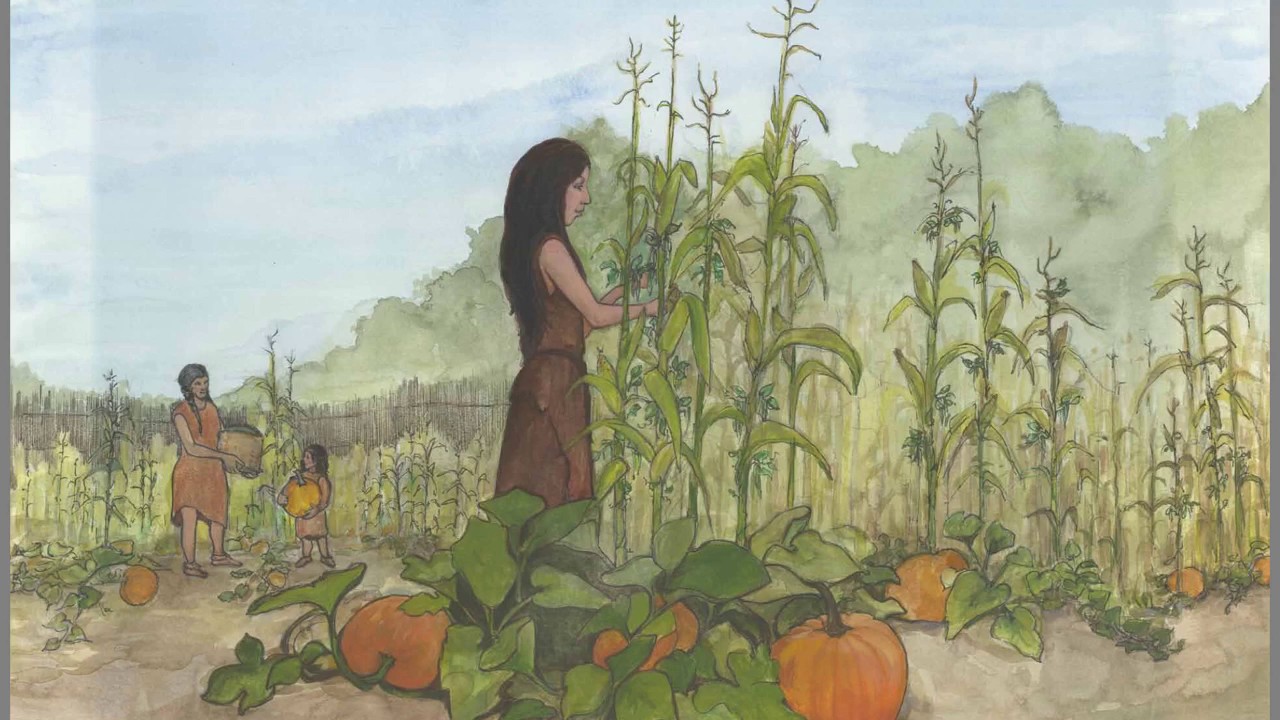

D8 Lesson 6 Native Americans of the Northeast - YouTube

I can almost hear that question shouted from those who have followed this series to this, its final installment. Many of you are finding yourselves uncomfortable because it is an uncomfortable topic. It's hard to face what "everyone knows" about history and try to see it in a more balanced and realistic light. It's hard to let go of misconceptions that we've nourished for most of our lives.

I don't hate Native Americans. Not at all. There is much about their culture to admire. Historically, many of their people were as noble and good as people in any culture around the globe. Contemporarily, many of their people are adding to the advances and innovations that will keep our country moving forward into the next century.

But the presentation of "The Noble Redman" as some sort of a stereotypical victim of the European invaders is more fiction than truth. Were they treated badly by the British in the mid-1700s? It depends. The answer is too long for this blog post. Both sides did their share of wrong, and both sides had leaders who worked hard to bring the two cultures together. As with all of history, there are more shades of gray than black and white. It's not my job to defend or condemn either side.

So I'm not hating on, or picking on, or otherwise demeaning this people group. I am studying it for purposes of learning the truth and writing better books. What I don't like is history colored with a modern-day bias.


History is what it is.

It's not something you can change. It's not something you should try to justify or excuse or promote for any reason other than the truth. Our ancestors made a lot of mistakes - in every culture. We can either learn from those mistakes, or we can bury them and create a more palatable version of the "truth." If we do the latter, it leaves us with a "truth" we can't trust. A "truth" we can't learn from. And a "truth" that may cause us to repeat mistakes we should have learned from.

During this research journey, I've decided to pick my battles with the truth in my books carefully. While it's allowable - even expected - for the author to beat up on the Europeans when writing about this time period, I feel like it skews the history - and therefore the story - if the reader only sees the evil or the good of one side.

Some things I've written about in this series will get mentioned, or be known to have happened off-screen, even though they'll make some people uncomfortable. They have to be to strike the balance of truth. But I will not use such things in a gratuitous way to gin up controversy in the hopes of creating shock value for selling more books. For me, that would also be an abuse of history. 


Friday, September 25, 2020

History I Shouldn't Write - Vol. V


I've been having a discussion on the History I Shouldn't Write - Vol IHistory I Shouldn't Write - Vol II, History I Shouldn't Write - Vol III, and History I Shouldn't Write - Vol IV. I've talked about how research unveils truths that may not be popular or palatable in our modern culture.

As I discussed in Vol. IV, the British stopped the practice of supplying the native tribes with all the guns, ammunition, and rum that they were accustomed to getting from the French. Why was that so infuriating to the Native Americans? They'd survived for thousands of years without such things, proof that they didn't really need them, right?


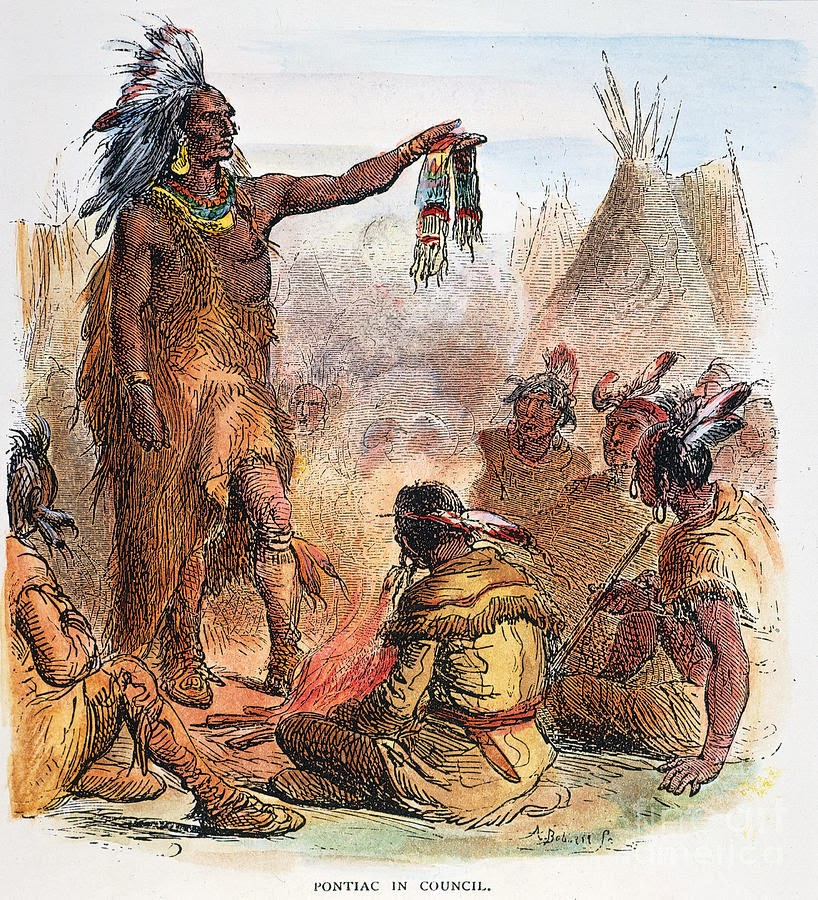
Pontiac's RebellionI thought that was a good question, so I went looking for answers.

What I found was more conjecture than solid fact, but it also made sense. Think of where the Native Americans were when the first Europeans landed on these shores. Their tools were stone, bone, clay, and maybe some soft metals that didn't need a forge. They had arrows, lances, clubs, and slings for weapons. Their clothing was almost all animal hides, although some had learned to spin and weave a bit of cloth from plants. For all intents and purposes, they were still in the stone age.

Along come the Europeans with metal cooking pots, steel knives, wool blankets, and guns. Guns! Can you imagine what those must have looked like to the first Native Americans who saw them fired? Like Alice through the looking glass, these things transported the native tribes into a whole new era. And make no mistake - they wanted it.

Pontiac wasn't about to let that go.

Who can blame him? Don't most of us want the latest technology? How many homes these days don't have a dishwasher? Or a microwave oven? Or even the new Instant Pot? Don't even get me started on the latest and greatest thousand-dollar smartphone. Or cars that drive themselves. See what I mean? It's human nature that was driving Pontiac and his followers. They didn't want to go backward.

Yet this once again falls short of the history "everybody knows." We haven't been taught that the Native Americans were the same as everyone else. That they wanted the new stuff of their era. That they liked cooking in metal pots and cutting meat with steel knives and wearing soft cloth. Or having the firepower of a gun that gave them the advantage over warring tribes as well as brought down a deer for supper.

The truth is - as I've hit upon throughout this series - that the Native Americans were just like people everywhere. That's neither good or bad ... it's just human nature. The challenge in writing about this era and these people is showing them in a balanced and historically accurate way.


Friday, August 28, 2020

History I Shouldn't Write - Vol. IV


This is the fourth installment in my series and probably the most difficult to write. I honestly don't like thinking about - much less researching - the evil actions of people. That's why I don't read or write horror or suspense or anything of that nature. It's not my thing.

I've been having a discussion on the History I Shouldn't Write - Vol IHistory I Shouldn't Write - Vol II, and History I Shouldn't Write - Vol III. I've talked about how research unveils truths that may not be popular or palatable in our modern culture.

However, one can't write history with their head in the sand. Evil happened. In the mid-1700s, it happened a lot. The era I'm researching follows the French and Indian War. The French were defeated, leaving their Indian allies to deal with the incoming British rule. And they didn't like it. The French had been generous with gifts to the Indians, including plenty of guns, ammunition, and rum. The British thought it was a dangerous combination and costly, so they stopped the practice. They completely missed the significance of gifts to the Native Americans.

In retaliation, Pontiac, a chief of the Ottawa tribe, rose to power. He was like so many charismatic leaders throughout history. What he couldn't achieve by his charm, he achieved by intimidation. He wasn't opposed to threatening lesser tribes. He wanted a huge force of combined tribes to wipe the British off the frontier. He got it. And then he sent them out to do their worse.

The accounts are horrific, not just in the numbers of British - and even some French - who were killed, but the manner in which they were killed. Women were raped. Children were slaughtered. Men were tortured. It was, very plainly, a reign of terror. One first-hand account stated that the author could not put pen to paper to describe what had happened to the women of one attack. Considering all the other gruesome details in that account of other things that happened ... I'm glad he left it out.

It wasn't one-sided. Some British also did terrible things. Life was beyond hard during this time. Beyond dangerous. It was a bloody, nasty, terror-filled time in our history.

But from it arose a nation that would one day lead the world. From great tragedy would arise a great people. A united people. Many of the Native Americas would - in about 150 years - rise to the challenges of WWI and WWII to help the very Europeans they fought on our frontier. Imagine that.


Friday, July 24, 2020

History I Shouldn't Write - Vol. III

I've been having a discussion on the History I Shouldn't Write - Vol I and History I Shouldn't Write - Vol II. I've talked about how research unveils truths that may not be popular or palatable in our modern culture.

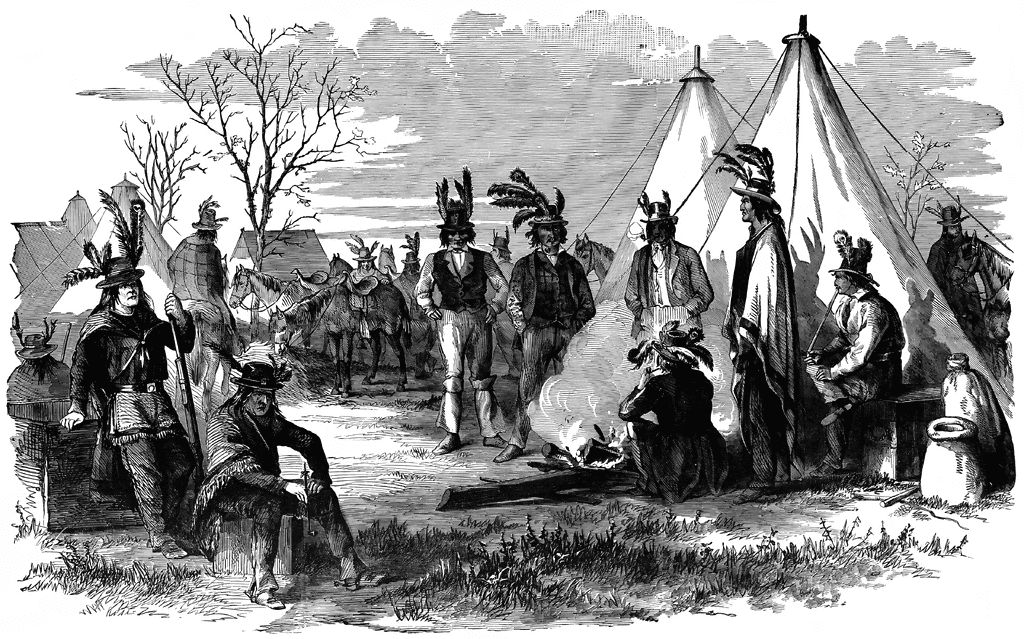
Delaware Indians | ClipArt ETCI'm still researching and writing a series of books set during Pontiac's Rebellion in 1763. This was a brutal time in our history - no doubt - and parts of it fly in the face of what "everyone knows" about the Native Americans.

One subject that's always expressed in terms of the European invaders is slavery. But did you realize that Native Americans also practiced it? Not in the exact same way, since they didn't own or operate large plantations, but in one of the first-hand accounts I read, the journal of a young man taken captive by a Native American, he clearly is put to work as a slave. His freedom is gone, he's tied in the wigwam at night so that he can't escape, and he's made to work long hours at backbreaking labor with no compensation or hope of release. He is - in every way - a slave, so much so that he is sold to a French trader before being stolen by another Native American and returned to slavery.

This is another subject I can't write about in my novels, at least, not without repercussions. "Everyone knows" that slavery was black Africans owned by white Europeans. That is true. It happened. It was a detestable practice. That Native Americans also practiced it shouldn't really surprise the reader, because pretty much every culture on earth practiced slavery in some form. Native Americans were as human as the rest of us and as capable of doing the unthinkable to their fellow human beings. The fact that slavery was practiced by many, many cultures neither excuses or legitimizes the practice. It simply is how the world worked at that time.

But I fear that it will not be accepted as part of my stories. At least, not a large part. Maybe a subtle mention, but no more. It's a truth today's reader with our modern prejudices doesn't want to see.


Wednesday, July 15, 2020

Panis at Fort Michilimackinac--The Forgotten Native American Slaves

Interpretive Assistant LeeAnn Ewer at Colonial Michilimackinac

Colonial Michilimackinac is operating during the Pandemic and is offering new programs this year. I love to visit this colonial-era fort when I am up North researching my books. On one of my visits, I looked through a record of the people baptized by the French priest. There were places where the person was referred to as a "Panis" which I learned was a captured Native American slave from a different tribe. And I was, I admit it, shocked to read of the baptism of babies born to Panis (enslaved) women and the father's name being listed (their owner). We don't think too much about the enslaved Native Americans when we think of slavery in our county.

This year, there is a specific program about the Panis in colonial Northern America, from the early days before European arrivals, to the French, English and finally Americans. We were able to hear LeeAnn Ewer, Interpretive Assistant for the Mackinac State Parks, give a presentation July 1, 2020, at Fort Michilimackinac. We've been privileged to hear her before, and she does an outstanding job. (She has an amazing Pinterest page, too, with Boards of all kinds of colonial-era goodies.)

Some touchpoint about the Panis:

  • They were called Panis based on the Pawnees captives taken in as slaves but later referred to any Native American captive who was from "away" from the area to where they were taken.
  • They are often the forgotten Indian slaves because there are few records of them.
  • Church records of baptisms have been helpful in learning a little of their stories.
  • The way in which they were introduced into households changed over time.
  • Modern people don't know much about the history of the enslavement of captured Native American slaves but it was widespread and led to later legislation.
Ms. Ewer recommended the book Bonds of Alliance by Brett Rushforth, which has won multiple awards, as a great resource for more information on Native American slave trade. 
Fort Michilimackinac

If you're planning a trip up North, be sure to plan to visit Fort Michilimackinac and all of the parks in the Mackinac State Historic Parks. If you're fortunate, you'll get to hear Ms. Ewer's wonderful presentation. You can also check the schedule ahead of time to see what topics are covered that day.


Friday, June 26, 2020

History I Shouldn't Write - Vol. II

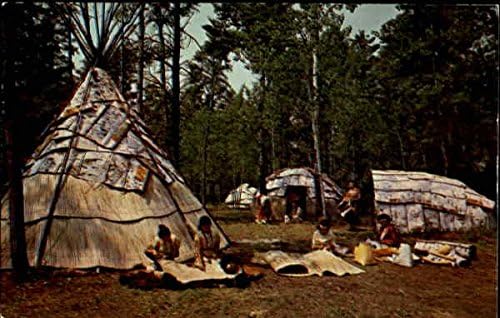
Chippewa Indian Village Hayward, Wisconsin WI Original Vintage ...
Last month, I started a discussion on the History I Shouldn't Write - Vol I. I talked about how research unveils truths that may not be popular in our modern culture.

Today I'm going to take that to a deeper level. A disturbing level.


In my research into first-hand accounts penned during Pontiac's Rebellion in 1763, I uncovered two separate accounts of the practice of cannibalism among the Native American tribes. I'll spare you the details, which were well laid out in the journals, and suffice it to say that it was not an uncommon practice.

I've known for a long time that this was true among the native tribes, but I thought it was more of a ritualistic type of behavior stemming from a belief system of some tribes. That narrative doesn't fit with my current research. And again, this is from reading two separate first-hand accounts involving two distinct tribes. In a third journal, it was also reported from second-hand accounts.

Because I have no wish to shock the reader, no wish to make my books into something dark and controversial, I will not include these findings in my books. But it's good in the research phase to look at history as it was - and not as how we wished it had been. Even when looking at it hurts. That's true of Native American cannibalism as much as it's true of European slave trading.

We should avoid - at all costs - comparing and contrasting the evils of different people or people groups in the past. That's an exercise in futility. People group A's evil doesn't enhance or diminish people group B's evil. That type of Monday-morning quarterbacking serves no purpose.

Not even in fiction.

Friday, May 22, 2020

History I Shouldn't Write - Vol. I

Chippewa men Bad River.jpg
I love to do research. In fact, sometimes I get so wrapped up in the research for a book that I have to set a timer so that I'll stop and get back to writing!

One of my favorite finds while researching is first-hand accounts, generally in the form of journals. In researching for my current projects set in Colonial America during the mid-1700s, I've read four of these journals - so far.

But I can't write about some of what I learned.

Some of what I've learned while researching is that the history "everyone knows" is often not the truth. For instance, the idea that the Native Americans never lied, never cheated, never mistreated anyone, that it was the European invaders who brought all that to these shores ... is not true.

In my research into Pontiac's Rebellion, reading from first-hand accounts, it is glaringly obvious that Pontiac lied to the British, lied to the French, lied to the other native tribes, and even lied to his own tribesmen. He was a driven and ambitious man. He bullied, threatened, stole, and killed whenever it suited his purposes. His goal was to annihilate the British any way he could. By hook or by crook, as my grandmother used to say.

We've been conditioned to think of the Native Americans of yesteryear as somehow above the fault and foibles of the rest of the human race. They weren't. They were as severely flawed as the rest of us. That shouldn't be a surprise to anyone since we all fell from grace with the same bite of that piece of fruit, right?

Yet from grade school on I was taught - and I'm assuming many of you were too - that it was the European invaders who were always at fault for everything bad that happened in Colonial America. They were evil, greedy, dishonest ... oh, wait. That sounds like Pontiac! 

People are people no matter the color of their skin. They come short & tall, skinny & fat, sweet & mean, happy & bitter, honest & cheats ... the whole spectrum of humanity in every color there is. To think that any people could be otherwise is to think them not fully human. Let that sink in a moment. By lionizing one race of people above the rest, you run the risk of dehumanizing them.

How does this relate to my writing the truth of history in my books? Because of what we've been taught to accept as "truth" ... I can't write about the Pontiac who lied and cheated and stole without poking the literary bear of political correctness. Without risking being raked over the coals of Amazon's reviewers. So the choice for me is:

Do I honor the history - warts and all - and face the consequences? Or do I play it safe?

I guess we'll all have to stay tuned!


Monday, March 23, 2020

Native American Arrowheads

St. Charles
Dovetail
I grew up in central Indiana on my grandfather Jacob Bontrager’s farm in northeastern Howard Township in Howard County. Over the years my father collected a number of Native American arrowheads that were turned up as he plowed the fields. I got them after my parents died and for a long time they sat on a bookshelf in a box. After spending years doing research on 18th century Woodland Indians for both my American Patriot and Northkill Amish series, one day I finally decided to display them in a shadow box. It occurred to me that it would be nice to label them, and so I began researching the different types of Native American arrowheads.

That turned out to be more of a challenge than I hoped. For one thing, several are broken off at the base. Others have additional damage that makes identification difficult. Even more confusing, there are multiple variations of each type. However, early on I was able to identify the arrowhead on the left above—my favorite—as a St. Charles dovetail from a chart on this website that has pictures and detailed descriptions of many different kinds of projectile points. For the specific page, go here. At least I’m fairly confident that’s what it is because this type appears to have been widely distributed throughout Indiana, and that would date it to as old as 7,000 years.  Pretty impressive. The one at the right may also be a St. Charles. Its top fits the profile of the longer, skinnier variants, though with the base missing it’s impossible to be certain.

I’m guessing the three arrowheads below probably also fit into the Dovetail category, but I need to study the other charts of Indiana points more closely. The one on the left is the smallest in my collection—about half the size of the other two and closer to a third of the first one.


I also found a lot of helpful information about Indian Weapons and Tools here, including a simplified chart of arrowhead types though it doesn’t include information about the artifacts’ distribution as the first one does. There’s a wealth of additional information on Native Americans and on the process of making arrowheads on this site as well.

Here’s the rest of my collection, which I intend to research as I have time while writing the last book of my American Patriot series, Forge of Freedom. The last, which is missing a base, is the second smallest I have. Expert opinions as to which type each of these is will be greatly appreciated! 


Do you have a historical collection of some sort—arrowheads or other Native American artifacts or objects from your heritage? Please share a description of some things you treasure!
~~~
J. M. Hochstetler is the daughter of Mennonite farmers and a lifelong student of history. She is a professional editor, a publisher, and the author of award-winning historical fiction whose books have been endorsed by bestselling authors such as Lori Benton, Laura Frantz, and Jocelyn Green. Her American Patriot Series is the only comprehensive historical fiction series on the American Revolution. Book 6, Refiner’s Fire, released in 2019, and one more volume, Forge of Freedom, will complete the series. She is also the author of One Holy Night, the Christian Small Publishers 2009 Book of the Year, and co-authored the award-winning Northkill Amish Series with Bob Hostetler.

Friday, July 12, 2019

Fiction and the Trope of the "Noble Savage"

Have you heard of it--the concept of the noble savage? I wondered about this, as so many of my stories involve Native Americans in historical settings. Nowadays, when our culture is at odds against itself in so many ways, when we are leery of stepping on nearly anyone's toes, when many of us really do want to "get it right" when it comes to history, I had to look deeper into this idea and determine whether what I am reading and--more importantly--what I am writing, is accurate regarding Native Americans in history, even in fiction.


Image by OpenClipart-Vectors from Pixabay


The "myth of the noble savage", as it's been referred to, is a literary concept that came about in romantic writings long ago, during the 17th and 18th centuries. Some say earlier, in fact. Some pin the idea on Jean-Jacques Rousseau, a Swiss-born philosopher and writer. In fact, Rousseau was so influential, his writings and ideas are credited for marking the end of the Age of Reason. Others say he is not to blame for painting an ideological picture of natives that is far from reality.

So what, exactly, is this ideology of the "Noble Savage"? It is the presupposition that native peoples left alone in a primitive state are basically good, as long as civilization doesn't come along and corrupt them. It paints a picture of natives that is romanticized, idealized, and sentimentalized. The Noble Savage concept for Americans is the notion that most Native Americans would have lived forever in peace and harmony had European invaders not turned their culture on its head by inciting greed, lust, corruption, and so on. 

Of course, I would disagree with this philosophy. All mankind is in a sin-fallen state, and we are easily given to "the lust of the flesh, the lust of the eyes, and the pride of life" (I John 2:16) regardless of outside influence. Be that as it may, the concept of the Indian in an unsullied society supposedly would not struggle with those things. Don't we all know better?

Nevertheless, it causes me to wonder about how we, as writers and readers of romantic or historical literature, view some of the heroes and heroines of Native American culture. Do we write them honestly? Do we understand them to be fully human, capable of all the goodness and the evil that lurks within the heart of every man and woman? 

History bears out the brutality of all civilizations and cultures on the globe, if we choose to look at it. Men and women of all colors: red, yellow, black, and white, have murdered, robbed, pillaged, and done every form of evil to their fellow human beings. They have also offered love, compassion, and mercy. I only bring this up because, even now, as I am working on upcoming books, I want to do so with an honest view of mankind in all his states. 

God did the same in His Word. Some of Scripture relates stories fraught with horrors told very plainly. Through them, we get a greater understanding of God's overwhelming and undeserved Grace. 

Whenever I sit down to write a story or read someone else's, I want to enjoy my heroes and heroines in light of truth. Everyone is broken. We're all a little or a lot messed up. I love a dashing hero as much as the next reader, be he warrior, highlander, farmer, cowboy, soldier, or tailor, but I like him even more when he's also written as a conflicted sinner coming to terms with a God greater than himself. 

Don't you? 

Naomi
https://naomimusch.com/

I am thrilled to announce the conclusion of my Echoes of the Heart series. The Brightest Hope, a post WWI romance, releases on August 1st. I hope you'll enjoy this story of an anti-hero whose complexity, personal demons, hopes and triumphs--I believe--are some of the best I've written. I think you'll enjoy a few surprises also.


The Brightest Hope is available for $2.99 pre-order and the first two novels in the series are also on special sale (ebook) during July for just $2.99 each. Say what? 1000 pages of historical romance for under $10! 

Monday, February 11, 2019

Slavery in Colonial America: the Impact on Native Tribes

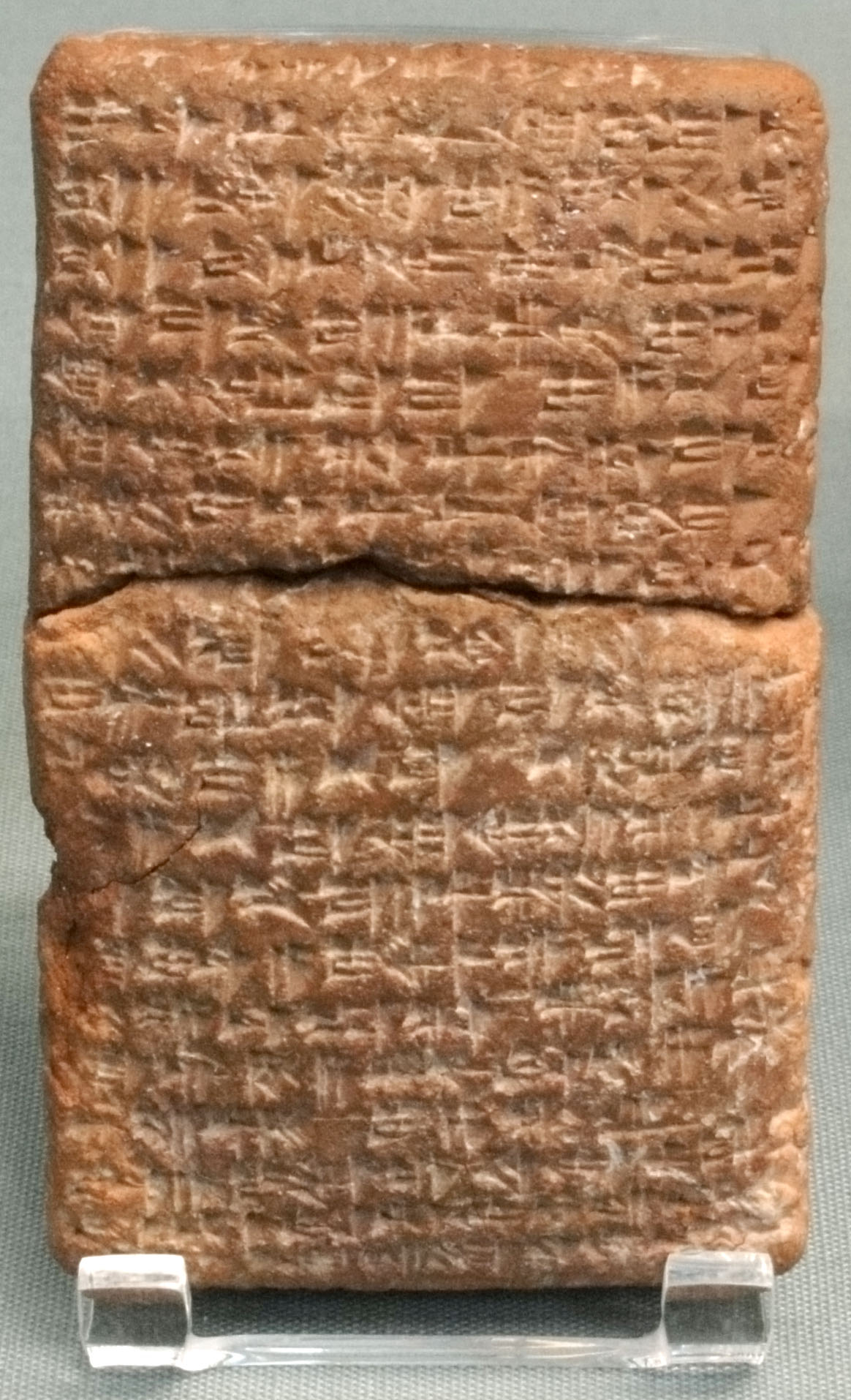
Fugitive slave treaty from 1480 BC
In my last post, I discussed the very difficult topic of slavery, an institution one cannot avoid in any study of our country’s history—indeed, of serious study of nearly any civilization. Though modern, reductionist history would blame the evils of chattel slavery (i.e., treating human beings as moveable property) solely on European colonization, beginning with Christopher Columbus, the institution existed as a fixture in Sumerian, Babylonian, and Egyptian cultures, as well as early South American and African societies.

So how does the practice of slavery touch the native peoples of North America, beyond the obvious influence of Columbus?

First, slavery was definitely practiced between native tribes, but not so much as an official institution as we understand from, say, the Civil War era. This excellent summary by author Christina Snyder explains it better than I could:

The history of American slavery began long before the first Africans arrived at Jamestown in 1619. Evidence from archaeology and oral tradition indicates that for hundreds, perhaps thousands, of years prior, Native Americans had developed their own forms of bondage. This fact should not be surprising, for most societies throughout history have practiced slavery. In her cross-cultural and historical research on comparative captivity, Catherine Cameron found that bondspeople composed 10 percent to 70 percent of the population of most societies, lending credence to Seymour Drescher’s assertion that “freedom, not slavery, was the peculiar institution.” If slavery is ubiquitous, however, it is also highly variable. Indigenous American slavery, rooted in warfare and diplomacy, was flexible, often offering its victims escape through adoption or intermarriage, and it was divorced from racial ideology, deeming all foreigners—men, women, and children, of whatever color or nation—potential slaves. Thus, Europeans did not introduce slavery to North America. Rather, colonialism brought distinct and evolving notions of bondage into contact with one another. At times, these slaveries clashed, but they also reinforced and influenced one another. Colonists, who had a voracious demand for labor and export commodities, exploited indigenous networks of captive exchange, producing a massive global commerce in Indian slaves. This began with the second voyage of Christopher Columbus in 1495 and extended in some parts of the Americas through the twentieth century. During this period, between 2 and 4 million Indians were enslaved. Elsewhere in the Americas, Indigenous people adapted Euro-American forms of bondage. In the Southeast, an elite class of Indians began to hold African Americans in transgenerational slavery and, by 1800, developed plantations that rivaled those of their white neighbors. The story of Native Americans and slavery is complicated: millions were victims, some were masters, and the nature of slavery changed over time and varied from one place to another. A significant and long overlooked aspect of American history, Indian slavery shaped colonialism, exacerbated Native population losses, figured prominently in warfare and politics, and influenced Native and colonial ideas about race and identity. [Indian Slavery, emphasis mine.]

Early in my study of the colonial era, I received the impression that the practice of enslaving Native Americans died out as the African slave trade gained momentum, but there is increasing evidence to the contrary.  One author’s study reveals that the slave trade among the Indians of the West was alive and well during the settlement and annexation of California. He also reveals how the Mormons found the same upon their arrival in Utah, and how attempts to “rescue” the victims of slavery only fed racial prejudice within Mormonism.

Cherokee delegation to Washington in 1866
A particularly startling aspect of the dynamics of slavery on native peoples surfaced in connection with the Cherokee and Seminoles, both of which were removed to Oklahoma Territory over the Trail of Tears. Apparently it was well known and accepted that many wealthy, landholding Cherokee owned black slaves, and took them along during the removal (see the quote above). Some Seminoles re-enslaved blacks who escaped to Florida, although it’s reported that their interpretation of slavery was more “fair” than that practiced to the north.

Time fails me to go deeply into any of these aspects, and I want to make it clear that as a historian and storyteller, I’m merely making observations, not offering a defense or pointing fingers in any way. In our own times, however, we must understand as much of the entire picture as possible. It is, after all, our mission here at Colonial Quills to educate about little-known aspects of our chosen span of history.

For more reading:
The Untold History of American Native Slavery (interesting site, with a ton of supporting and related articles)
America's Other Original Sin
... and just for fun, FACT CHECK: 9 Facts About Slavery


Friday, January 25, 2019

Surviving Winter - the Native Americans

I'm sitting at my computer in front of the window and watching the snow pile up in our barnyard. It's gorgeous. Pristine with not a hint of wind to cause drifts. And it made me wonder how people survived winters in centuries past.
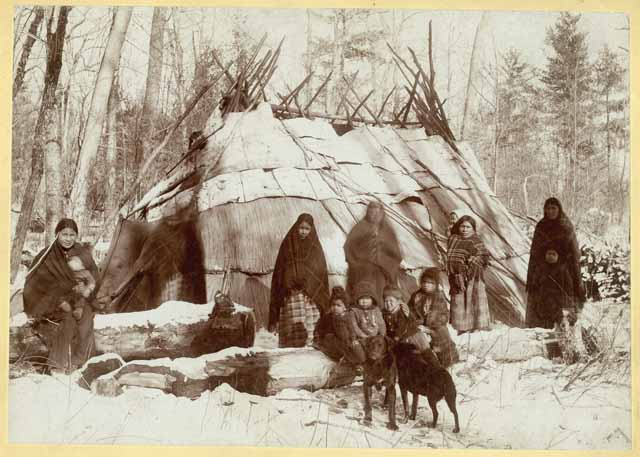
The Native Americans were very diverse in their survival means. I live in Northern Michigan and most of the tribes native to this area headed away from the lake to their inland winter camps, most of them farther south in the state. They built winter lodges of birch bark that were up to twenty feet long and ten feet wide. As many as three generations of a family would live in the lodge all winter. Typically there would be a firepit at each end, one to cook over and one for warmth.

The Native Americans in this area were farmers. They collected the wild rice in season, but also cultivated and grew corn, beans, squash, and other vegetables they stored for winter survival. These weren't small patches, but acres of fields tended by the women all summer long. It was enough - at least in the good years - to see them through the winter.

Keeping warm was a full-time occupation. They coated their skin with bear and goose grease. This both repelled moisture and retained heat. They also wore animal skins tanned with the fur on, but unlike fur coats of today, they wore them with the fur against their skin for added insulation and warmth. Huge blankets were made of rabbit skins sewn together and used to cover several people, thus keeping in more body heat on cold nights.
Image result for ojibwe winter wigwam images
As well as keeping warm, they needed to keep busy. During the summers they were tending their crops, gathering wild edibles, hunting, and fishing. During the winters, men still hunted, fished through the ice, and trapped animals for their warmest furs. The women did the handwork needed for the next summer, including making clothing and decorating it, making baskets, carving bowls, and - of course - tending to the children.

It wasn't an easy existence. It makes me appreciate my snug house with its wood heat and insulated windows.


Pegg Thomas writes "History with a Touch of Humor."

Monday, January 14, 2019

The Problem of Slavery

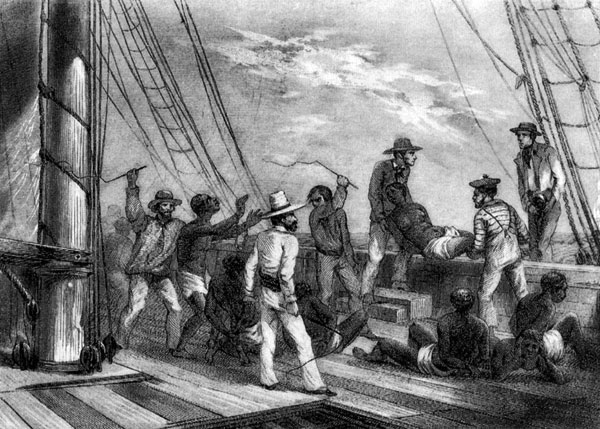
"Overboard," courtesy of the Bristol Radical History Group

Slavery. Just the word makes us cringe. Moderns very nearly lose their minds in the simplest of discussions over the subject, because of recent resurgence of racial tensions in our country. But for any student of colonial history—really, of any history at all—it’s absolutely unavoidable.

The first thing that comes to mind in relation to slavery is, of course, the American Civil War. I’m currently neck-deep in writing a story set right in the middle of the Civil War—which is still somewhat of a shock to me, since colonial America is still my favorite—but this means I’m having to grapple with the issue of slavery as never before. In considering how it relates to the colonial era, and all the problems we moderns tend to have even in merely discussing it, I’ve made some interesting observations about this terrible fixture of history.

To begin with, like many other aspects of history, slavery isn’t always taught in schools with the best of accuracy. Some are even under the impression that slavery actually originated with the European “invasion” of America. Well, not so. Slavery—the practice of forcibly taking and keeping human beings for profit, subjugation, or sacrifice—has been around nearly as long as humans themselves. The exact nature of slavery, or the purposes behind it, might have varied, but the practice most definitely did not start here in our country, or even with Europeans. Almost every major civilization practiced slavery of some kind of another, from the Romans to the Greeks and all the way back to the Egyptians and beyond, and then forward to our time, perpetrated as human trafficking or an act of war by extremist groups such as ISIS or Boko Haram.

Another problem of discussing such awful realities is a moral one, because we never want to appear that we’re condoning or justifying slavery in any form, but as historians we are obligated to acknowledge it as a very real cultural and societal force.

It was a strongly defining force in American history, for sure, as it was for many other nations. The case could be made that chattel slavery, the term simply used to refer to treating people as property, was first introduced to the Americas by Europeans, but slavery in various forms was certainly not a new thing to the native populations.

Christian slaves in Algiers, 1706
Slavery did, however, mean different things to different peoples. We tend to think of it in terms of permanence, with no way of escape or recourse in case of wrong, as was mostly the case of the American colonies (and later, specifically the South). But as I mentioned in previous posts, native customs of taking captives fell mostly into one of two categories: one, for vengeance, where many of these were killed as sacrifices, or two, in bereavement, where captives were adopted in place of deceased family members. It’s well documented, however, that both blacks and natives did practice chattel slavery, and at least one article discusses how many wealthy Cherokee took their black slaves along on the Trail of Tears. I uncovered so much on the various aspects of slavery during the colonial era that I’d like to take the next couple months to explore both its impact on native tribes, and abolitionist attitudes specific to the Revolutionary War. So—please stay tuned!

Monday, September 10, 2018

Myths and Facts Surrounding Indian Captivity

When I started researching the experiences of white captives among native tribes, I’m not sure what I expected. Most of what I knew already was drawn from Calico Captive, a story based on real-life people during the French & Indian War, which painted a not-entirely-unflattering picture of native (and French-Canadian) life. Over the years I did gather that motivations for taking captive varied both depending upon the tribe, the times, and the individual. Some were taken captive as slaves (more on this in a later post), some for adoption into the tribe, and some for revenge and/or human sacrifice. And the treatment of captives varied dramatically depending upon the intended purpose for that captive.

Some myths I ran across as I researched:

Native Americans (“Indians”) were all brutal, ignorant heathens. Research has revealed that while their code of honor was different from ours, and seemingly random brutality often took place alongside seemingly random kindness, a sense of honor and high standard of behavior did indeed exist among native peoples.

Native Americans were all honorable, noble people whom whites of the time greatly misunderstood. Plenty of misunderstanding happened from both sides, but make no mistake, the code of honor and morality among native tribes clashed with Christian sensibilities in many ways. Greed, pride, pettiness, abuse, and all other human vices flourished among native peoples as surely as they did among European settlers.

White (or other) captives were always treated badly. Eyewitness accounts prove otherwise. When natives took captives intended for adoption, they treated said captives with remarkable kindness. Captives intended for slavery or sacrifice were a different matter entirely. The contradiction inherent in the kindness extended one or more captives in a group while brutality was dealt others still boggles the modern mind, but it happened often. One account I read told of a woman taken captive, heavy with child and a toddler in tow, after her older children had been killed and scalped before her eyes. While on the journey back to her captors’ home, the toddler was considered a liability at some point and also killed, but when the woman went into labor, accommodations were made for her delivery and recovery. Jonathan Alder witnessed the death of his older brother, but he himself was spared and eventually adopted by a Shawnee and Mingo couple. Jemima Boone (daughter of Daniel Boone) and her friend spoke after their recovery of the kindness of their captors, as well, which leads me to the next myth ...

Indians always rape female captives. Patently untrue. I’m sure there were exceptions, but in nearly all accounts I’ve read, there were strict rules about how and when native men took white captive women as their wives, in a culture where courtship and marriage seemed to be handled much more casually than in ours.

A couple of facts I learned:

While native peoples seemed to consider the killing of an enemy a light matter indeed, when they chose to adopt a captive, they usually accepted that one into their tribe and family with a whole heart. Once the adoption ceremony was complete—which often involved a protracted scrubbing-down and change of clothing—the captive was considered family, with no difference between him and a blood-born child.

Some captives returned to their old lives, but some did not, and were happy in that choice. (Whether such behavior constitutes Stockholm Syndrome, as some would suggest, is up for debate, and I won't get into that here. I'm only recording observations.) Alder lived some 20 years with the native peoples, after his capture at age 9. He did eventually return to white society, in a process that can only be described as a slow drift, for reasons that he never fully explains. His Indian wife grew unhappy with the changes and eventually left him, and a few years later he courted and married a white woman, and raised a family with her.

I’ve only scratched the surface here, but I’d love to hear more myths and facts as you think of them!

~*~*~*~
A pair of sources I've found helpful and/or interesting:

http://sites.rootsweb.com/~varussel/indian/index.html (Emory L. Hamilton’s unpublished manuscript Indian Atrocities Along The Clinch, Powell and Holston Rivers of Southwest Virginia, 1773-1794)

A History of JonathanAlder: His Captivity and Life with the Indians, edited by Larry L. Nelson, which I drew heavily from while researching for my upcoming release, The Cumberland Bride.

Monday, August 13, 2018

Who Were the Shawnee?


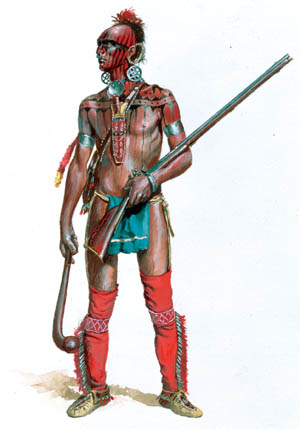
Artist's concept of a Shawnee warrior in the 1700's
Students of the colonial era are probably most familiar with the Iroquois Nation or the Cherokee, but the Shawnee were certainly a force to be reckoned with as well, especially when it came to settling the Ohio Valley. They have a bit of a reputation for fierceness, but—who exactly were they?

To begin with, the name “Shawnee” roots from a word that means “southerner” in many native languages. In the various migrations that occurred over North America, the tribe known as Shawnee were pushed southward by the Iroquois and settled for a while in South Carolina, eventually winding up as far south as Florida and Alabama. I found it interesting that there’s even a linguistic tie between Shawnee (Shaawanowi, from shawunogi—and understand that native spellings were as fluid as English ones in the time, mostly existing for the sake of capturing pronunciation) and the name Savannah, since according to at least one source that’s what the colonists of South Carolina called them. (Which is easy to see, if you soften the modern pronunciation and accent from emphasis on that hard short A in the second syllable, and consider how the Germanic V and W were often interchangeable.)
So who were the Shawnee, in the midst of other native tribes? Not only were they known as the “restless” people, with a loose social structure that probably evolved as a result of their wanderings, but they were known as proud, thoughtful, fiercely independent, in some cases shutting down the efforts of Christian missionaries before they could even get a good start. They regarded their own spirituality as superior to everyone else’s—including other native tribes, which is nothing new to human nature. William Penn, however, who took great care to treat native peoples with as much consideration and dignity as he would want shown himself, suggested that the Shawnee and others descended from some of the lost tribes of Israel. In addition to citing similarities to Hebrew in their language, he wrote:

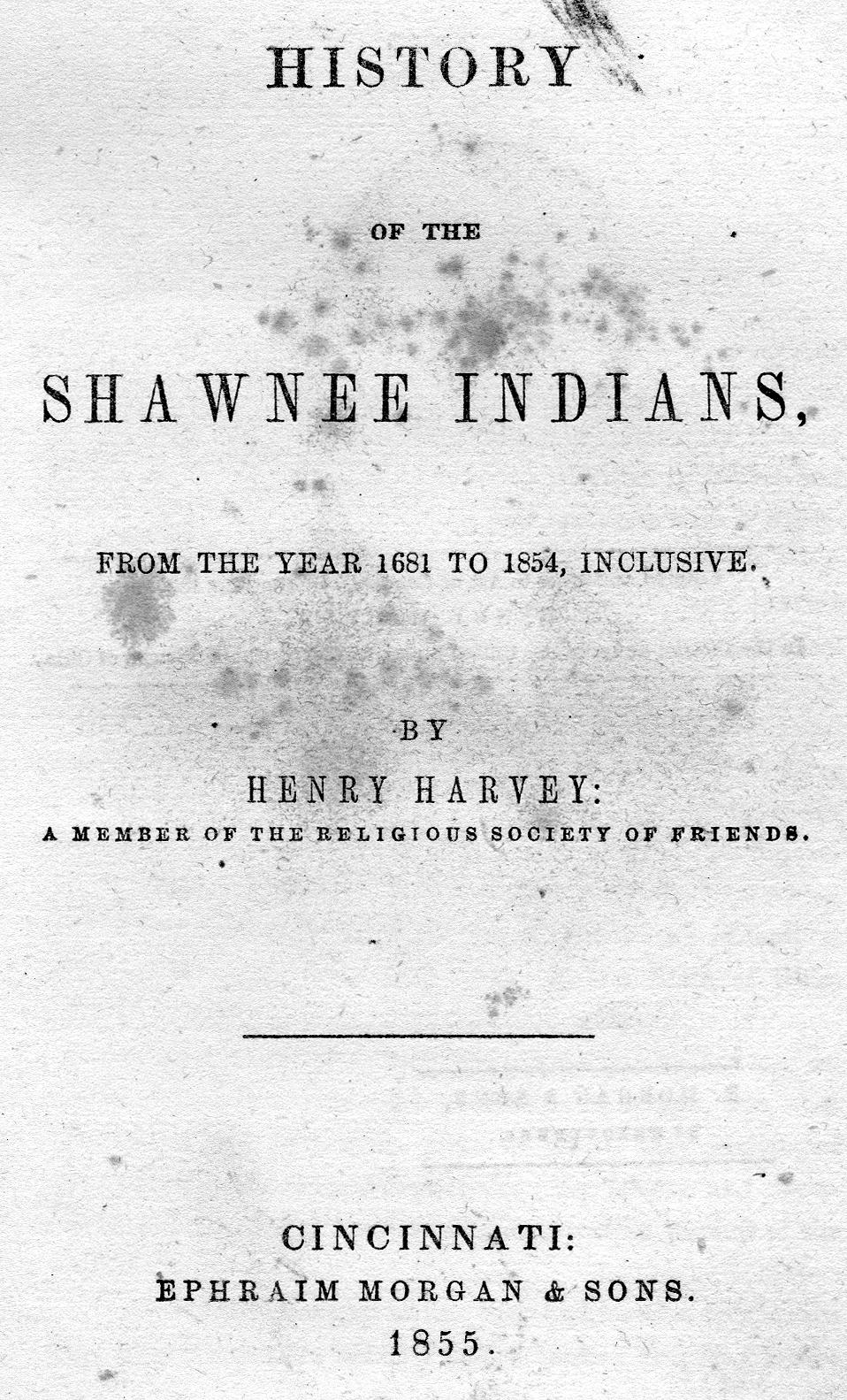
“For their original, I am ready to believe them of the Jewish race; I mean of the stock of the ten tribes, and that for the following reasons: First, they were to go to a land not planted or known, which to be sure, Asia and Africa were, if not Europe, and he that intended that extraordinary judgment upon them, might make the passage not uneasy to them, as it is not impossible in itself, from the easternmost part of Asia, to the westernmost part of America. In the next place, I find them of like countenance, and their children of so lively resemblance, that a man would think himself in Dukes’ Palace, or in Berry Street, in London, when he seeth them; but this not all: they agree in rites; they reckon by moons; they offer their first fruits; they have a kind of feast of tabernacles; they are said to lay their altar upon twelve stones; their mourning a year; customs of women, with many other things that do not now occur.” (History of the Shawnee Indians from the year 1681, to the year 1701, as cited by Henry Harvey)

Whether we also believe this could be true, or not, they were a remarkable people, a study as many native tribes were in contradictions but with their own code of honor that in some ways could be considered amazingly biblical. Flaws and admirable qualities alike, they are definitely a fascinating people!

~*~*~

For my upcoming release, The Cumberland Bride, set on the Wilderness Road into Kentucky in 1794, I did as much research on the Shawnee people as on the Wilderness Road itself, and found some great resources:

History of the Shawnee Indians, From the Year 1681 to 1854, Inclusive by Henry Harvey.

The Shawnees and the War for America, Colin G. Calloway.

Native American Tribes: The History and Culture of the Shawnee, by Charles River Editors

The Magic Moccasins: Life Among Ohio's Six Indian Tribes, Volume One, Delaware/Shawnee/Mingo, by Jane Barks Ross.