Announcements

10 Year Anniverary & New Releases Winners: Carrie Fancett Pagels' Butterfly Cottage - Melanie B, Dogwood Plantation - Patty H R, Janet Grunst's winner is Connie S., Denise Weimer's Winner is Kay M., Naomi Musch's winner is Chappy Debbie, Angela Couch - Kathleen Maher, Pegg Thomas Beverly D. M. & Gracie Y., Christy Distler - Kailey B., Shannon McNear - Marilyn R.
Showing posts with label writing on hard topics. Show all posts

Friday, October 23, 2020

History I Shouldn't Write - Vol. VI


I've been having a discussion on the History I Shouldn't Write - Vol IHistory I Shouldn't Write - Vol II, History I Shouldn't Write - Vol III, History I Shouldn't Write - Vol IV, and History I Shouldn't Write - Vol V. I've talked about how research unveils truths that may not be popular or palatable in our modern culture.
"So, Pegg, why do you hate Native Americans?"
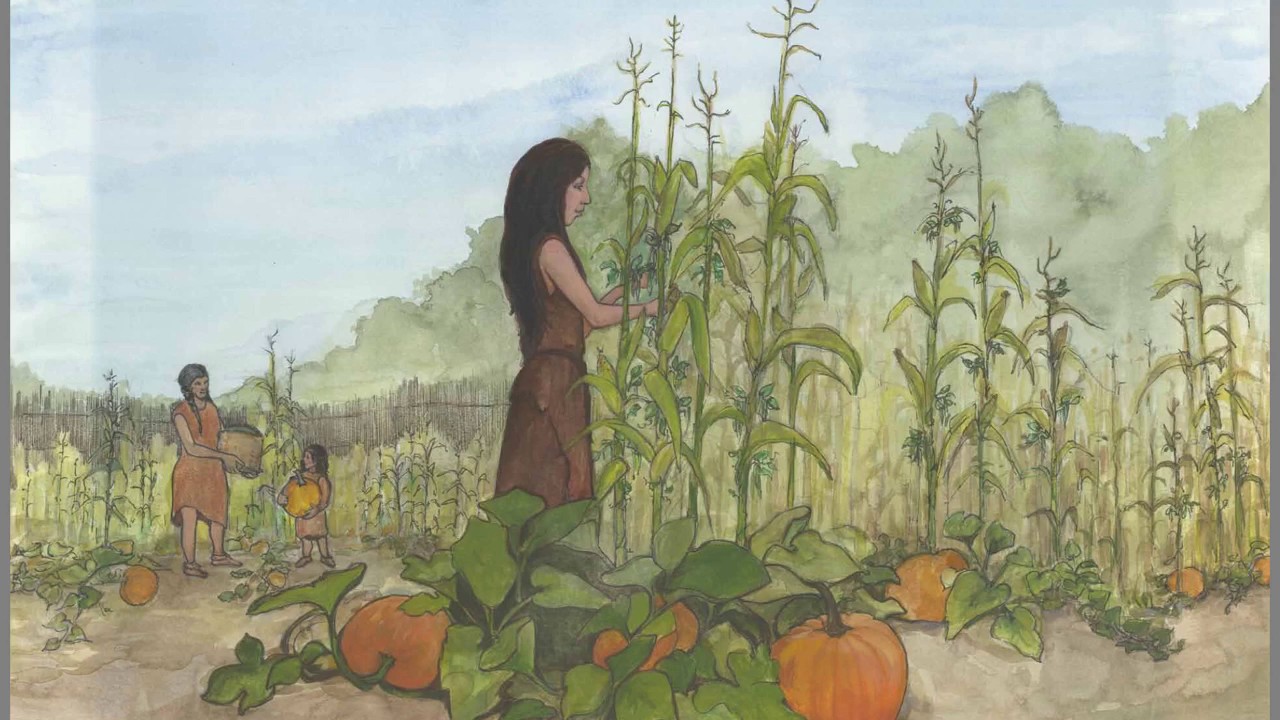

D8 Lesson 6 Native Americans of the Northeast - YouTube

I can almost hear that question shouted from those who have followed this series to this, its final installment. Many of you are finding yourselves uncomfortable because it is an uncomfortable topic. It's hard to face what "everyone knows" about history and try to see it in a more balanced and realistic light. It's hard to let go of misconceptions that we've nourished for most of our lives.

I don't hate Native Americans. Not at all. There is much about their culture to admire. Historically, many of their people were as noble and good as people in any culture around the globe. Contemporarily, many of their people are adding to the advances and innovations that will keep our country moving forward into the next century.

But the presentation of "The Noble Redman" as some sort of a stereotypical victim of the European invaders is more fiction than truth. Were they treated badly by the British in the mid-1700s? It depends. The answer is too long for this blog post. Both sides did their share of wrong, and both sides had leaders who worked hard to bring the two cultures together. As with all of history, there are more shades of gray than black and white. It's not my job to defend or condemn either side.

So I'm not hating on, or picking on, or otherwise demeaning this people group. I am studying it for purposes of learning the truth and writing better books. What I don't like is history colored with a modern-day bias.


History is what it is.

It's not something you can change. It's not something you should try to justify or excuse or promote for any reason other than the truth. Our ancestors made a lot of mistakes - in every culture. We can either learn from those mistakes, or we can bury them and create a more palatable version of the "truth." If we do the latter, it leaves us with a "truth" we can't trust. A "truth" we can't learn from. And a "truth" that may cause us to repeat mistakes we should have learned from.

During this research journey, I've decided to pick my battles with the truth in my books carefully. While it's allowable - even expected - for the author to beat up on the Europeans when writing about this time period, I feel like it skews the history - and therefore the story - if the reader only sees the evil or the good of one side.

Some things I've written about in this series will get mentioned, or be known to have happened off-screen, even though they'll make some people uncomfortable. They have to be to strike the balance of truth. But I will not use such things in a gratuitous way to gin up controversy in the hopes of creating shock value for selling more books. For me, that would also be an abuse of history. 


Friday, September 25, 2020

History I Shouldn't Write - Vol. V


I've been having a discussion on the History I Shouldn't Write - Vol IHistory I Shouldn't Write - Vol II, History I Shouldn't Write - Vol III, and History I Shouldn't Write - Vol IV. I've talked about how research unveils truths that may not be popular or palatable in our modern culture.

As I discussed in Vol. IV, the British stopped the practice of supplying the native tribes with all the guns, ammunition, and rum that they were accustomed to getting from the French. Why was that so infuriating to the Native Americans? They'd survived for thousands of years without such things, proof that they didn't really need them, right?


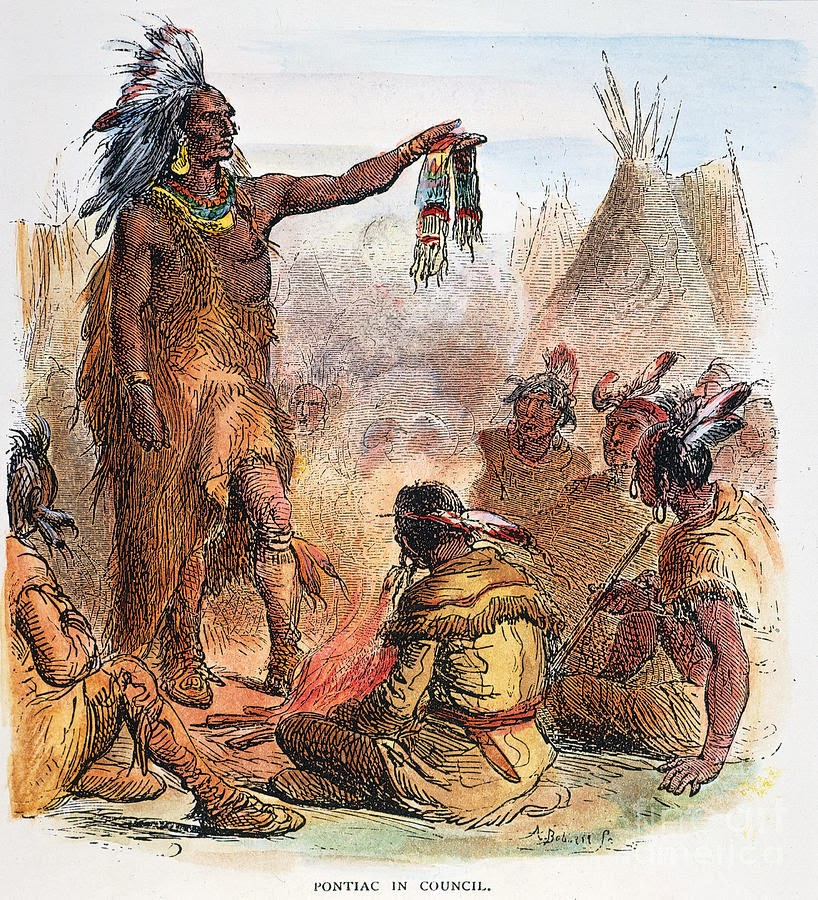
Pontiac's RebellionI thought that was a good question, so I went looking for answers.

What I found was more conjecture than solid fact, but it also made sense. Think of where the Native Americans were when the first Europeans landed on these shores. Their tools were stone, bone, clay, and maybe some soft metals that didn't need a forge. They had arrows, lances, clubs, and slings for weapons. Their clothing was almost all animal hides, although some had learned to spin and weave a bit of cloth from plants. For all intents and purposes, they were still in the stone age.

Along come the Europeans with metal cooking pots, steel knives, wool blankets, and guns. Guns! Can you imagine what those must have looked like to the first Native Americans who saw them fired? Like Alice through the looking glass, these things transported the native tribes into a whole new era. And make no mistake - they wanted it.

Pontiac wasn't about to let that go.

Who can blame him? Don't most of us want the latest technology? How many homes these days don't have a dishwasher? Or a microwave oven? Or even the new Instant Pot? Don't even get me started on the latest and greatest thousand-dollar smartphone. Or cars that drive themselves. See what I mean? It's human nature that was driving Pontiac and his followers. They didn't want to go backward.

Yet this once again falls short of the history "everybody knows." We haven't been taught that the Native Americans were the same as everyone else. That they wanted the new stuff of their era. That they liked cooking in metal pots and cutting meat with steel knives and wearing soft cloth. Or having the firepower of a gun that gave them the advantage over warring tribes as well as brought down a deer for supper.

The truth is - as I've hit upon throughout this series - that the Native Americans were just like people everywhere. That's neither good or bad ... it's just human nature. The challenge in writing about this era and these people is showing them in a balanced and historically accurate way.


Friday, August 28, 2020

History I Shouldn't Write - Vol. IV


This is the fourth installment in my series and probably the most difficult to write. I honestly don't like thinking about - much less researching - the evil actions of people. That's why I don't read or write horror or suspense or anything of that nature. It's not my thing.

I've been having a discussion on the History I Shouldn't Write - Vol IHistory I Shouldn't Write - Vol II, and History I Shouldn't Write - Vol III. I've talked about how research unveils truths that may not be popular or palatable in our modern culture.

However, one can't write history with their head in the sand. Evil happened. In the mid-1700s, it happened a lot. The era I'm researching follows the French and Indian War. The French were defeated, leaving their Indian allies to deal with the incoming British rule. And they didn't like it. The French had been generous with gifts to the Indians, including plenty of guns, ammunition, and rum. The British thought it was a dangerous combination and costly, so they stopped the practice. They completely missed the significance of gifts to the Native Americans.

In retaliation, Pontiac, a chief of the Ottawa tribe, rose to power. He was like so many charismatic leaders throughout history. What he couldn't achieve by his charm, he achieved by intimidation. He wasn't opposed to threatening lesser tribes. He wanted a huge force of combined tribes to wipe the British off the frontier. He got it. And then he sent them out to do their worse.

The accounts are horrific, not just in the numbers of British - and even some French - who were killed, but the manner in which they were killed. Women were raped. Children were slaughtered. Men were tortured. It was, very plainly, a reign of terror. One first-hand account stated that the author could not put pen to paper to describe what had happened to the women of one attack. Considering all the other gruesome details in that account of other things that happened ... I'm glad he left it out.

It wasn't one-sided. Some British also did terrible things. Life was beyond hard during this time. Beyond dangerous. It was a bloody, nasty, terror-filled time in our history.

But from it arose a nation that would one day lead the world. From great tragedy would arise a great people. A united people. Many of the Native Americas would - in about 150 years - rise to the challenges of WWI and WWII to help the very Europeans they fought on our frontier. Imagine that.


Friday, July 24, 2020

History I Shouldn't Write - Vol. III

I've been having a discussion on the History I Shouldn't Write - Vol I and History I Shouldn't Write - Vol II. I've talked about how research unveils truths that may not be popular or palatable in our modern culture.

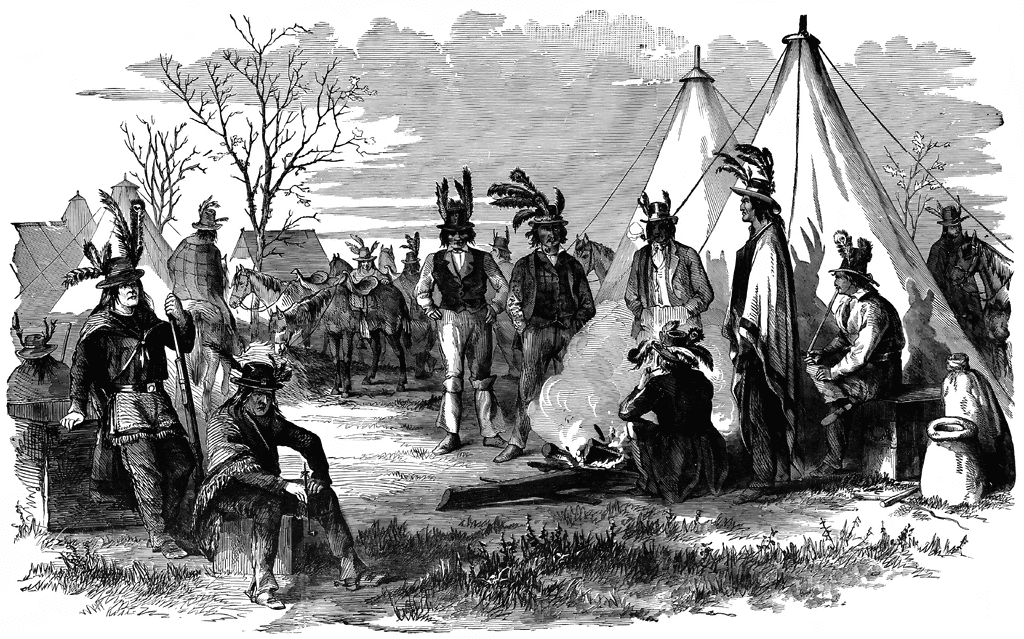
Delaware Indians | ClipArt ETCI'm still researching and writing a series of books set during Pontiac's Rebellion in 1763. This was a brutal time in our history - no doubt - and parts of it fly in the face of what "everyone knows" about the Native Americans.

One subject that's always expressed in terms of the European invaders is slavery. But did you realize that Native Americans also practiced it? Not in the exact same way, since they didn't own or operate large plantations, but in one of the first-hand accounts I read, the journal of a young man taken captive by a Native American, he clearly is put to work as a slave. His freedom is gone, he's tied in the wigwam at night so that he can't escape, and he's made to work long hours at backbreaking labor with no compensation or hope of release. He is - in every way - a slave, so much so that he is sold to a French trader before being stolen by another Native American and returned to slavery.

This is another subject I can't write about in my novels, at least, not without repercussions. "Everyone knows" that slavery was black Africans owned by white Europeans. That is true. It happened. It was a detestable practice. That Native Americans also practiced it shouldn't really surprise the reader, because pretty much every culture on earth practiced slavery in some form. Native Americans were as human as the rest of us and as capable of doing the unthinkable to their fellow human beings. The fact that slavery was practiced by many, many cultures neither excuses or legitimizes the practice. It simply is how the world worked at that time.

But I fear that it will not be accepted as part of my stories. At least, not a large part. Maybe a subtle mention, but no more. It's a truth today's reader with our modern prejudices doesn't want to see.


Friday, June 26, 2020

History I Shouldn't Write - Vol. II

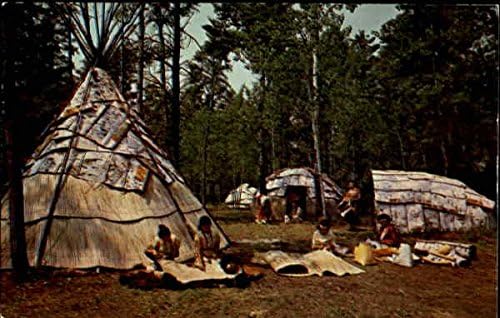
Chippewa Indian Village Hayward, Wisconsin WI Original Vintage ...
Last month, I started a discussion on the History I Shouldn't Write - Vol I. I talked about how research unveils truths that may not be popular in our modern culture.

Today I'm going to take that to a deeper level. A disturbing level.


In my research into first-hand accounts penned during Pontiac's Rebellion in 1763, I uncovered two separate accounts of the practice of cannibalism among the Native American tribes. I'll spare you the details, which were well laid out in the journals, and suffice it to say that it was not an uncommon practice.

I've known for a long time that this was true among the native tribes, but I thought it was more of a ritualistic type of behavior stemming from a belief system of some tribes. That narrative doesn't fit with my current research. And again, this is from reading two separate first-hand accounts involving two distinct tribes. In a third journal, it was also reported from second-hand accounts.

Because I have no wish to shock the reader, no wish to make my books into something dark and controversial, I will not include these findings in my books. But it's good in the research phase to look at history as it was - and not as how we wished it had been. Even when looking at it hurts. That's true of Native American cannibalism as much as it's true of European slave trading.

We should avoid - at all costs - comparing and contrasting the evils of different people or people groups in the past. That's an exercise in futility. People group A's evil doesn't enhance or diminish people group B's evil. That type of Monday-morning quarterbacking serves no purpose.

Not even in fiction.

Friday, May 22, 2020

History I Shouldn't Write - Vol. I

Chippewa men Bad River.jpg
I love to do research. In fact, sometimes I get so wrapped up in the research for a book that I have to set a timer so that I'll stop and get back to writing!

One of my favorite finds while researching is first-hand accounts, generally in the form of journals. In researching for my current projects set in Colonial America during the mid-1700s, I've read four of these journals - so far.

But I can't write about some of what I learned.

Some of what I've learned while researching is that the history "everyone knows" is often not the truth. For instance, the idea that the Native Americans never lied, never cheated, never mistreated anyone, that it was the European invaders who brought all that to these shores ... is not true.

In my research into Pontiac's Rebellion, reading from first-hand accounts, it is glaringly obvious that Pontiac lied to the British, lied to the French, lied to the other native tribes, and even lied to his own tribesmen. He was a driven and ambitious man. He bullied, threatened, stole, and killed whenever it suited his purposes. His goal was to annihilate the British any way he could. By hook or by crook, as my grandmother used to say.

We've been conditioned to think of the Native Americans of yesteryear as somehow above the fault and foibles of the rest of the human race. They weren't. They were as severely flawed as the rest of us. That shouldn't be a surprise to anyone since we all fell from grace with the same bite of that piece of fruit, right?

Yet from grade school on I was taught - and I'm assuming many of you were too - that it was the European invaders who were always at fault for everything bad that happened in Colonial America. They were evil, greedy, dishonest ... oh, wait. That sounds like Pontiac! 

People are people no matter the color of their skin. They come short & tall, skinny & fat, sweet & mean, happy & bitter, honest & cheats ... the whole spectrum of humanity in every color there is. To think that any people could be otherwise is to think them not fully human. Let that sink in a moment. By lionizing one race of people above the rest, you run the risk of dehumanizing them.

How does this relate to my writing the truth of history in my books? Because of what we've been taught to accept as "truth" ... I can't write about the Pontiac who lied and cheated and stole without poking the literary bear of political correctness. Without risking being raked over the coals of Amazon's reviewers. So the choice for me is:

Do I honor the history - warts and all - and face the consequences? Or do I play it safe?

I guess we'll all have to stay tuned!