Announcements

10 Year Anniverary & New Releases Winners: Carrie Fancett Pagels' Butterfly Cottage - Melanie B, Dogwood Plantation - Patty H R, Janet Grunst's winner is Connie S., Denise Weimer's Winner is Kay M., Naomi Musch's winner is Chappy Debbie, Angela Couch - Kathleen Maher, Pegg Thomas Beverly D. M. & Gracie Y., Christy Distler - Kailey B., Shannon McNear - Marilyn R.
Showing posts with label surviving winter. Show all posts

Friday, February 22, 2019

Surviving Winter - the American Colonists

Last month I wrote about how the Native Americans in my part of the country survived the winter months. Now let's look at how the American Colonists managed.
As most of us remember from our school history classes, almost half the original Pilgrims died during the first year of hardships exacerbated by the severe winter and inadequate housing. The people who followed them also had to learn to deal with the winters on these shores, especially the northern shores.

On 21 December 1797, John Innes Clark of Providence, Rhode Island, described this first month of winter as follows: “This month has been more pleasant. It is however, exceeding cold, the thermometer in our dining room with a good fire being about 48 degrees.”

That's not a typo. A good fire warmed the room to only 48 degrees. Today, most of us keep our thermostats between 68 and 76. 

Anything that needed to be kept from freezing was kept on the mantle above the fireplace. Things like ink and milk. Not that the fireplaces were much like we have today. They were constructed with a straight chimney and no dampers, so that heat escaped up and cold downdrafts were common.
Related image
Still, the hearth was the center of the home during winter. It was the only source of heat and the best source of light. Families sat near the fire, the women with spinning wheels, knitting needles, or sewing projects, the men with harness or tools that needed mending. It was said that a person's front and back were never warm at the same time.

Bedchambers were generally not heated. People slept in layers of wool clothing, with caps on their heads, and under piles of warm blankets. Beds were much narrower then than what we have today, which also helped to keep and retain body heat.

Many colonists adapted clothing from the tribes around them, making coats and leggings from deer hides, hats from various animal skins, and women's muffs from rabbit furs. 

One historical note that fascinated me was that taverns on the roads leading to Boston were spaced at eight-mile intervals. The reason was that a man and horse could go that far before needing to seek warmth and shelter during the brutal winter months.


Pegg Thomas writes "History with a Touch of Humor."


Friday, January 25, 2019

Surviving Winter - the Native Americans

I'm sitting at my computer in front of the window and watching the snow pile up in our barnyard. It's gorgeous. Pristine with not a hint of wind to cause drifts. And it made me wonder how people survived winters in centuries past.
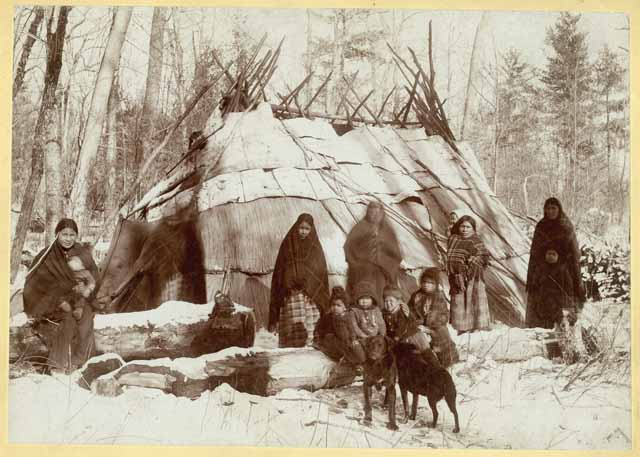
The Native Americans were very diverse in their survival means. I live in Northern Michigan and most of the tribes native to this area headed away from the lake to their inland winter camps, most of them farther south in the state. They built winter lodges of birch bark that were up to twenty feet long and ten feet wide. As many as three generations of a family would live in the lodge all winter. Typically there would be a firepit at each end, one to cook over and one for warmth.

The Native Americans in this area were farmers. They collected the wild rice in season, but also cultivated and grew corn, beans, squash, and other vegetables they stored for winter survival. These weren't small patches, but acres of fields tended by the women all summer long. It was enough - at least in the good years - to see them through the winter.

Keeping warm was a full-time occupation. They coated their skin with bear and goose grease. This both repelled moisture and retained heat. They also wore animal skins tanned with the fur on, but unlike fur coats of today, they wore them with the fur against their skin for added insulation and warmth. Huge blankets were made of rabbit skins sewn together and used to cover several people, thus keeping in more body heat on cold nights.
Image result for ojibwe winter wigwam images
As well as keeping warm, they needed to keep busy. During the summers they were tending their crops, gathering wild edibles, hunting, and fishing. During the winters, men still hunted, fished through the ice, and trapped animals for their warmest furs. The women did the handwork needed for the next summer, including making clothing and decorating it, making baskets, carving bowls, and - of course - tending to the children.

It wasn't an easy existence. It makes me appreciate my snug house with its wood heat and insulated windows.


Pegg Thomas writes "History with a Touch of Humor."