Announcements

10 Year Anniverary & New Releases Winners: Carrie Fancett Pagels' Butterfly Cottage - Melanie B, Dogwood Plantation - Patty H R, Janet Grunst's winner is Connie S., Denise Weimer's Winner is Kay M., Naomi Musch's winner is Chappy Debbie, Angela Couch - Kathleen Maher, Pegg Thomas Beverly D. M. & Gracie Y., Christy Distler - Kailey B., Shannon McNear - Marilyn R.
Showing posts with label fur trade. Show all posts

Thursday, January 20, 2022

The History Behind "Song for the Hunter" ~ Author's Note


With two new books releasing at the beginning of this year, I hope you'll indulge me today as I share a bit from my author's note about my novel Song for the Hunter, a romantic and adventurous story set mostly on Lake Superior's Madeline Island (in the story called by it's earlier name, St. Michel's) in 1808.


Tragedy brought them together, but learning the truth might tear them apart.

Métis hunter Bemidii Marchal has never played his flute to court a maiden, but he considers the possibility at Fort William’s Great Rendezvous. However, when rescuing his sister causes an influential man’s death, the hunter becomes the hunted. Bemidii flees for refuge to Lake Superior’s Madeline Island and takes the name his French father called him, Benjamin.

Carrying a secret, Camilla Bonnet travels with her husband into the wilderness where tragedy awaits. Left alone, she fears “Benjamin” but is forced to trust him. As she does, their friendship grows and turns to deeper feelings. Then Bemidii discovers more about the man he killed. Now the secret he hides might turn Camilla’s heart away—and demand his life.


I appreciate everyone who has entered the world of the Lake Superior fur trade with me through my posts on CQ, via the world created in my previous novel Mist O'er the Voyageur, and now in the sequel Song for the Hunter. While the story of my hero Bemidii Marchal and heroine Camilla Bonnet is completely fictitious, there are a number of people mentioned in the story who did forge history, at least somewhat similarly to the way I showed them doing so in the story.

Michel and Madeleine (Equasayway) Cadotte, indeed, headed the most renowned fur trade family of the Apostle Islands and in northern Wisconsin, and their sons carried on in their stead. The largest of the Apostle Islands where their trading post was built is now called Madeline Island—named in her honor. The La Pointe post was built near the ruins of an old military fort that had been occupied at the southern end of the island during the French and Indian Wars. Today, visiting La Pointe by ferry, you are not only afforded the joy of basking in the windswept beauty of the island, still sitting like a gem in sparkling Lake Superior among the archipelago of the Apostle Islands National Lakeshore, but you can also take in the lovely setting of historic Bayfield, Wisconsin, on the distant hills of the mainland.


Michel’s great-grandfather, Mathurin Cadot (changed later to Cadotte), was the first family member to arrive at Lake Superior in the 1600s. It was Michel’s father, Jean-Baptiste Sr. who, most critically, established fur-trading posts along the southern shore of the lake, all the way to Chequamegon Bay where this story takes place. Three of Michel and Madeleine’s sons continued the tradition, serving important roles in both the fur trade and the War of 1812. It was their son-in-law, Lyman Warren, who took over the post on Madeline Island after Michel retired. Under Lyman’s direction, the post became the American Fur Company’s primary trading post in the region.

Around the middle of the novel, Michel mentions that his stores at Lac Courte Oreille had been robbed the year before. That was an event that took place when the famed Indian called the Prophet, brother to the great Tecumseh, began preaching his religion that advocated banning the trade of whiskey. He also taught that the Indians should not furnish meat to the white traders unless it was boned. As his religion spread, some Indians took to harassing traders wherever they could, including breaking in and destroying stores, as happened to Cadotte at Lac Courte Oreilles, some seventy-five miles south of Chequamegon Bay. The Prophet was defeated in 1811 by Mad Anthony Wayne at Tippecanoe, and the death of Tecumseh followed in 1813.

The novel also mentions that the Americans would be coming soon to take over French trade in the area. As a matter of fact, there were plenty of American fur traders already in Wisconsin. In 1787, Congress passed the Northwest Ordinance, in which territories and states were formed around the Great Lakes. While Wisconsin was part of Indiana Territory, it was not much affected by United States laws until Jay’s Treaty of 1795, which contained a provision for British withdrawal from the region. If you read Brigitte and René’s story in my novel Mist O’er the Voyageur, you might recall how the French had withdrawn from Grand Portage, leaving it to the British, and now that, too, would fall under American jurisdiction.

Michel Cadotte, though a Frenchman, was an independent trader who plied his trade in whichever direction his interests were best served. He transitioned his work from Canada’s North West Company to John Jacob Astor’s American Fur Company shortly after the conclusion of this novel.


As to the presence of my heroine, Camilla Bonnet, history tells us that—but for the occasional company partner’s wife taking a summer trip with her husband into the Upper Country—there were only two white women who permanently resided in Wisconsin at this time. They were Mrs. Charles de Langlade at La Saye and Mrs. Jean Marie Cardinal at Prairie du Chien. Nevertheless, I felt it plausible that someone like Camilla might have arrived with her bourgeois husband Ambroise, and … let’s just say my imagination took over from there. Perhaps there actually was someone like Camilla living here in this vast Great Lakes country, and history simply lost track of her.

I hope you’ll read Song for the Hunter, and enjoy this glimpse into the rich history of America’s fur trading past as much as I did. Please leave an online review for Bemidii and Camilla’s story if you enjoy it!

Available at: Amazon, ChristianBook, Barnes&Noble, and direct from the publisher: ISM

Add it to your wish list on Goodreads and Bookbub.

Blessings,
Naomi

Friday, July 2, 2021

The Ship You Probably Haven’t Heard of That Had the Impact of the Mayflower

I’m going to share with you a tich of history that some Canadians are probably more familiar with than most Americans are, but given what it led to, the impact was felt across the North American continent—and in Europe as a whole.

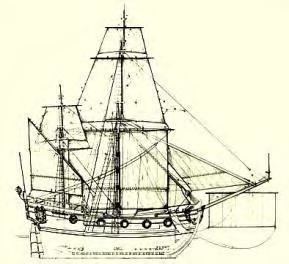
In 1650, in Wivenhoe in Essex England, a small ship was built christened Nonsuch (Other such battle ships were given the name later on.) The original Nonsuch, a ketch, which is a two-masted ship carrying square sails, was commissioned by the Navy as HMS Nonsuch, meaning “unequaled”. During it's time in the navy, the ship was captured by the Dutch, but eventually it was put on the market and sold to Sir William Warren in 1667 for 298 Pounds (that’s 71,000 British Pounds today, or $98,000 USD). This is when its story takes an interesting turn.

Sketch of a replica of the Nonsuch. Photo credit: Alchetron, the Free Social Encyclopedia

Sir William purchased the ship on behalf of a group of men, including England's Prince Rupert, who were interested in exploring Hudson’s Bay for the possibility of establishing trade. They specifically selected the Nonsuch because of its small size, capable of traversing the Atlantic while also being easier to navigate on Hudson Bay and James Bay. It's size also made it possible to be removed from the water in winter to avoid being crushed by ice.

The ship was captained by Zachariah Gillam, a man from Virginia who belonged to a family of New England sea captains. He later became infamously involved in trade in a number of ways, both legally and illegally. He was probably involved in the incident known as Culpeper’s Rebellion, though it was unable to be proven in court, and he was in Virginia at the time of Bacon’s Rebellion and reported the burning of Jamestown. But I digress.

The Nonsuch began its new epoch at a critical moment in history. Two storied explorers I’ve written about before, Pierre Esprit-Radisson and his brother-in-law Medard Chouart, Sieur Des Groseilliers, had already scoured the best routes to get into the region. In the process, they hauled back a profitable cache of furs for France. Though they had probably saved the infant French colony from financial ruin, they were fined, and Des Groseilliers was tossed into jail. Go figure. Upon his release, the pair decided to abandon France and head to England for support of their discoveries instead.

King George II was intrigued by their proposition to outfox France to delve deeper into the area for trade via the Hudson Bay route. This, at the very moment when the financiers of the Nonsuch, who included the king’s cousin Prince Rupert, were preparing their plans. 

The ship was captained by Zachariah Gillam, a man from Virginia who belonged to a family of New England sea captains. He later became infamously involved in trade in a number of ways, both legally and illegally. He was probably involved in the incident known as Culpeper’s Rebellion, though it was unable to be proven in court, and he was in Virginia at the time of Bacon’s Rebellion and reported the burning of Jamestown. But I digress.

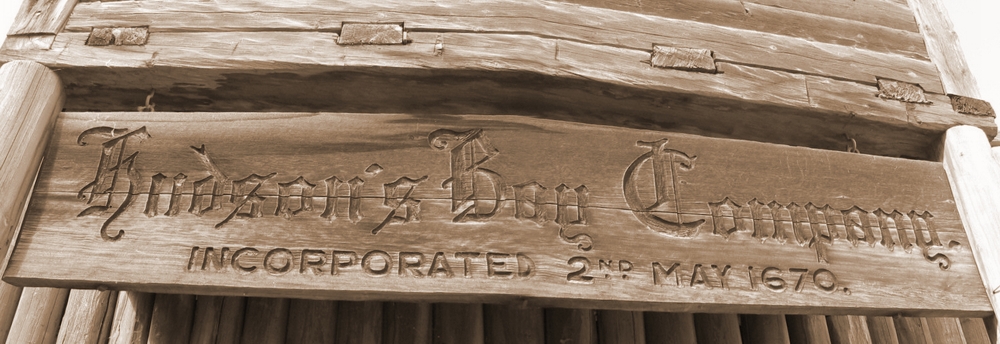
Captain Gillam was given orders by Prince Rupert to follow the succinct instruction of Radisson and Groseillier for the journey, and the ship set sail from Gravesend on June 3, 1668. 118 days later, September 29th, Captain Gillam dropped anchor in the southern end of James Bay near the mouth of the river he promptly named for Rupert. There, the crew built a cabin and weathered a long Canadian winter, but during that time they were discovered by Cree Indians who came to trade. By the following year, they returned to England with enough beaver pelts to prompt the formation of the Hudson Bay Company—which has been in operation ever since—and which led to the formation of other competing companies such as the Northwest Company, the XY Company, and John Jacob Astor’s American Fur Company.

The battle for conquest of the New World's resources was heavily underway, and it all began with the Nonsuch and men who envisioned an empire.


To reflect the history and heroic efforts of the fur traders, the Hudson's Bay Company commemorated those events in 1970 by building a replica of the Nonsuch. To tour the rebuild and see it's contribution to the Manitoba History, and to get a glimpse of replica Nonsuch in action, watch the video.

P.S. If you'd like to know even more history about the Nonsuch, here's an even more in-depth video: https://www.youtube.com/watch?v=2n_83JqlgI4

Friday, March 5, 2021

American Colonial History and the Rest of the World in 1620

I've always enjoyed looking back at one aspect or period of history and reminding myself of all the other things happening at that same time. You know...taking a look at the bigger picture going on around the world. 

Take for instance the year 1620, the date which generally marks the beginning of the American colonial period. In that year 102 pilgrims embarked from Plymouth, England on the Mayflower along with 30 crew bound for the new world. Later that same year those pilgrims signed the Mayflower Compact and established Plymouth Colony. We tend to look at most of the world's happenings back then through the lens of what the pilgrims were doing. That's the way we learned it as kids.

Plymouth Rock

When I was a child trying to grasp history, I had the unfounded notion that the pilgrims were the only Europeans in North America at the time. The "New World" was really new! I relegated the Spaniards to explorations in Central America far, far way (another thing I had wrong). The rest of the world ceased turning in light of the colony being established in Massachusetts. 

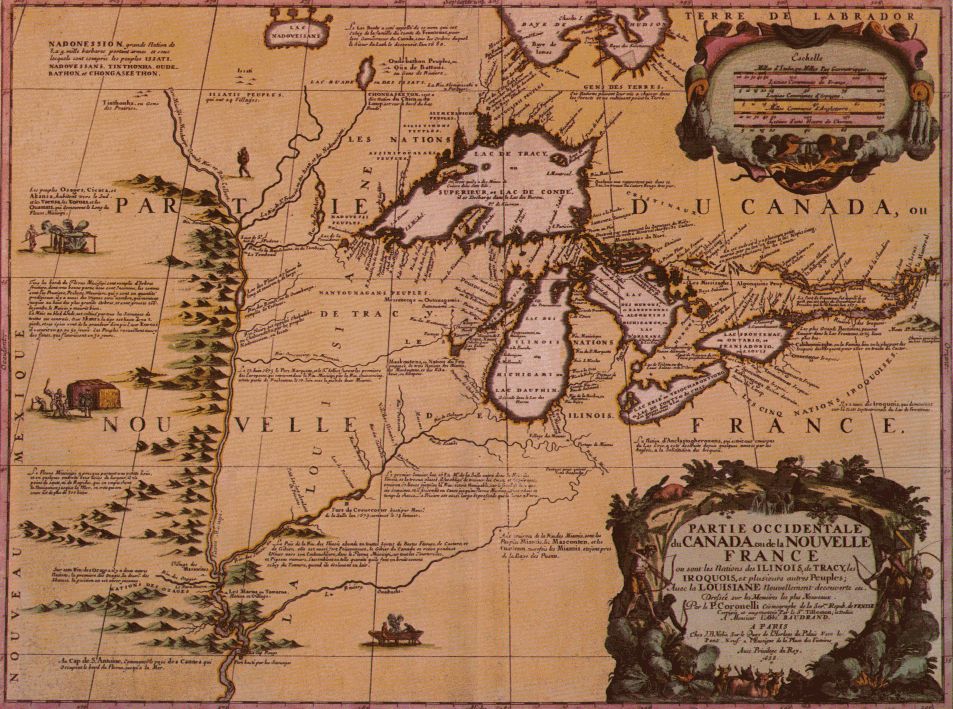
But in fact, by the time the Pilgrims landed, there had already been a lot of exploration going on just to the north (in Canada), across the Great Lakes, and down the Mississippi to the Gulf. The French had been working at establishing themselves on the North American continent for many years before the pilgrims arrived. In 1620, whilst our intrepid pilgrims were setting sail away from Europe, Henri II, Duc de Montmorency was named Viceroy of New France. With Samuel de Champlain as his lieutenant, he began construction of Fort Saint Louis on the cliffs of Quebec. He then formed a company that was granted an 11-year fur trade monopoly in the New World.

If you remember my earlier posts, you'll recall that fur was the cornerstone on which the entire North American economy was built, so France definitely had the first foothold.

Meanwhile, King James I got it in his mind to commission William Alexander to reclaim New France and Acadia, and the coureur des bois (the free fur traders) founded the trading post called Palace Royal in present-day Montreal. 

All while the Pilgrims were just trying to survive their first year on North American shores.

I mention all this because of of how very important it is to understand our developing nation as a whole. While the arrival of the pilgrims was a huge event that we look to when we consider the colonial period, North America was already being shaped by others, some indigenous, and others as explorers, businessmen, priests, soldiers, and adventurers.   


Just for fun and further insight, here are a handful of other important events that took place around the world in 1620:

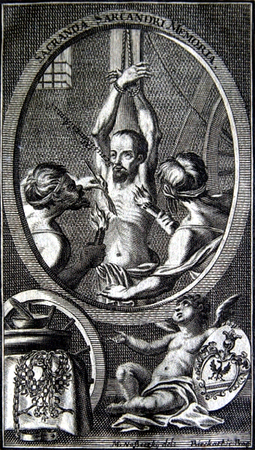
A 1715 etching depicting the torture of John Sarkander

*St. John Sarkander, a Polish-Moravian priest, died of injuries sustained by prolonged torture. It's a long story, connected by ongoing conflicts between Catholics and Protestants in Europe's Thirty Years War, which had begun only two years earlier.*The first merry-go-round was seen at a fair in Turkey.

*The mother of Johannes Kepler, German astronomer, mathematician, and astrologer, was arrested for witchcraft.

*Witch hunts also begin in Scotland.

*The modern violin was developed.

*An navigable undersea boat (type of submarine) was  demonstrated in the Thames River, England.

*A sign alphabet was developed by Juan Pablo Bonet, a teacher of deaf children in Spain.

~~~~~

Are there periods of history or specific historical events that you enjoy studying within the larger context of what was taking place in the world at that time?

Naomi Musch

https://naomimusch.com/


Friday, February 5, 2021

Marriage Á La Façon Du Pays -- the Custom of the Country -- and One Such Famous Union

Since February is the month when we turn to thoughts of love and romance, could there be a more appropriate time to discuss a well-established practice of the fur traders in the American wilderness? I'm talking about marriage à la façon du pays--or in English terms, marriage "in the custom of the country". Those of us who indulge in reading or writing historical, romantic fiction are well-tuned to novels featuring a marriage of convenience, but those canny trappers and traders of old took their convenience to a whole 'nother level, and it was even more common than you might imagine.

Marriage à la façon du pays was the practice of European fur traders entering into common law marriages with native women. The marriages, though not taken lightly, didn't usually involve a great deal of ceremony, merely the offering of goods to the bride's family of whatever they seemed most desirous (and almost always included rum). If the trade seemed favorable to all, the bride would go with the trader. If she was to dwell with him at a fort, she would also be given European clothing to wear.

An entire population explosion was the result of these unions, establishing a culture of blended Indigenous with mostly French or Scottish known as the Métis. (See my post on them.) But, about the marriages...

The Trapper's Bride 1858-1859, by Alfred Jacob Miller

Men were not at first allowed by the fur companies like the North West Company and later the Hudson Bay Company to take wives with them into the upper country, hence many men took up with indigenous women instead. This was encouraged by the NWC. Not so much by the HBC, though economic and social pressures soon caused the rules to bend. Indigenous woman were a huge asset to the fur trade, and company partners knew it. Such unions with traders worked much the same way international unions have worked since the days of King David to secure mutual trade relations and establish aid.

Without these women, many early traders might not have survived their forays into the wilderness, what with the natives' understanding of the available food sources, hunting and trapping knowledge, and relations with other tribes in the area. In return, the families of these brides hoped that such unions would provide generously from the trader's wares, as well as secure their own standing among these new Europeans. All in all, the idea of mutual aid whenever necessary was appealing to both sides.

The native wives did a lot of the work around the trading posts too. From lacing snowshoes to making pemmican, from drying meat to patching clothing, their usefulness and productivity was invaluable. Many products of the fur trade came directly at the hands of women who gathered wild rice, harvested maple syrup and refined it to sugar, wove mats and tanned hides.

Then there were the more carnal reasons for the union. Winters were long and lonely in the the wilderness. Many men found great pleasure and comfort in establishing homes and families far from the reaches of Montreal, Quebec, and the American colonies.

The unfortunate aspect in all of this is that the marriages were not considered legal by European standards. Even though the couples might have lived lives of total commitment toward one another, they weren't acknowledged as real marriages by European standards. On top of this, it wasn't entirely unusual for these women and their children to be cut adrift when the trader retired and decided to return to the east. They could take their native wives with them, but sometimes the women and children might be sent back to their families or even offered to a new trader coming into the region. Others though, built on their early foundations and continued to love and care for one another into old age.

One such famous fur trade family were Michel and Equaysayway (or Ikwese) Cadotte. The Cadotte's were fur trade royalty in the Lake Superior region. Their influence stretched from present-day northern Wisconsin, down to the Chippewa River valley, and west into present-day Minnesota as far as Fond du Lac and Red Lake. Their most prominent fur trade post, and the one where Michel Cadotte's family eventually settled and lived was at La Point on Madeline Island, the predominant island among Lake Superior's Apostle Islands (though that island is not included as part of the National Lakeshore as much of it is privately owned). In fact, Equasayway was born near that place. Her father White Crane was an important hereditary chief of the Ojibwe who called the island and area around it home. After Equaysayway was baptized with the new name Madeleine, White Crane commanded that the island, formerly called Mooningwanekaaning (home of the golden-breasted woodpecker) and also called Michel's Island, be renamed in her honor, and so it was. She really was royalty!

And in a sense, so was Michel. Having married the Ojibwe princess, his line established heredity. Also, his grandfather Jean Baptiste Sr. was one of the first fur traders to establish in the Lake Superior region, and his father continued the family business with the companionship of his common law wife, Owaazsii who was also said to be of high status among her Anishinaabe (Ojibwe) clan. After being sent to Montreal for a Catholic education, Michel and his brother Jean Baptiste carried on the trade, and with them it flourished and grew. 

Historical marker located along Hwy. 13 shoreline between Washburn and Bayfield, Wisconsin

Everyone came to the islands to trade with Gitchimichene, or Great Michel, as he was called. There, he and Madeleine ran a farm and raised a large family. Two of their sons-in-law also became well-known. 

It is said that Michel and Madeleine were not married in the church until 1830, some forty years after they'd been married in the Ojibwe custom. Why then? First of all, the record shows that when their children were born, Michel took them to Mackinac Island to be baptized in the Catholic church. He and Madeleine could have married in the European fashion on any of those occasions, but they did not. They did, however, travel there in their sixties to have their marriage made record. This was probably less for romantic reasons than practical.

Historians suggest that changing world circumstances might have been the strongest influence to come into play. European and American court cases and land treaties were not favorable toward those whose marriages were formed à la façon du pays. A new territorial judge, James Doty, presiding in what would become present-day Green Bay, pronounced that these marriages were not legal. He held one of the first grand juries, wherein thirty-six men in Green Bay were indicted on charges of fornication and two more on adultery. Most of them, to avoid a fine, married their common law wives in the duly authorized fashion. 

At the same time, more protestant missionaries were coming to the region and gaining influence where Catholicism had long been established. It was only six months after a visit from protestant missionary Jedidiah Stevens, who was unable to convert them, that Michel and Madeleine were married in the Catholic church. Though no one can say for sure, it's possible that Michel and Madeleine saw the handwriting on the wall as to these coming changes across the country, and how they could affect their business and their family. Perhaps even their adult children had some influence in this regard, as the "legitimizing" of their marriage could affect all their descendants. Whatever their reasons, it is true that Michel and Madeleine established a life-long relationship begun in the custom of the country.

My novel Mist O'er the Voyageur refers to these marriage customs, and the sequel, Song for the Hunter, releasing in January 2022, is set on Madeline Island at the time Michel Cadotte was the fur trader there. Michel and Madeleine both play a large role in the story as well, though of course in a largely fictionalized fashion. Still, I try to keep as true as the historical record allows to life there at the time. I hope you'll consider adding both books to your TBR list. 

Also, in March, my newsletter subscribers are receiving a free novelette that takes place between the two books. The Long-Awaited Spring is an extended epilogue to Mist O'er the Voyageur and a prologue to Song for the Hunter. Sign up for my newsletter on my website, if you'd like to receive the March free read.


Happy Valentine's Month! Historically Yours,

Naomi

https://naomimusch.com/


Friday, December 4, 2020

How the Beaver Wars Aided European Conquest of North America (PLUS a Free Novel Download)

Last month, I began a series about the historic fur trade on the American continent, introducing it as the trade that shaped the colonies. To our modern way of thinking, it may seem strange that trapping was such a powerful force on the developing continent, but for many decades, the rush for fur drove the North American economy and pushed nations that had colonized along the ocean shore ever deeper into the interior.

The fur trade began among the indigenous people of America themselves. Native American tribes had been trading among themselves for untold numbers of generations, and often the currency was furs. Meanwhile, the Europeans source for fur was often Russia or Scandinavia. After Europeans began expanding their interests here on this continent, it wasn't long before war broke out between Indian nations seeking to establish alliances that would help them monopolize their own powers of trade. These wars that went on intermittently throughout the 17th century, but principally from 1650-1655, became known as the Beaver Wars.

The Beaver Wars are a study in themselves. It was a period of time when the powerful Iroquois confederation sought to expand territory and control the fur trade. They established a pact among themselves that they called "the Great Peace"; however, against their enemies, the Iroquois--led by the powerful Mohawk--carried on their own form of genocide. They either brutally killed their enemies or else took them captive, absorbing them into their tribes. The Iroquois were supplied with firearms by their allies, the Dutch (and later on, the English). 


Meanwhile, the Iroquois' Algonquin enemies--remnants from tribes like the Neutrals, Tobacco (Tionontati) Erie, Susquehannock, and others who were allied with the French--had no guns, only missionaries who lived among them, attempting to convert them to Catholicism. To flee massacre, they were pushed further inland, seeking refuge along the shores of the western Great Lakes. Even there, however, the Iroquois nations sought their destruction. The Mohawks, in particular, were known for the ferocity of their raids. (The Dutch used the Mohawks as weapons of terror against the French and Hurons, while at the same time keeping a wary, untrusting eye on these so-called allies.) There is more that can be said about the Mohawks. They were the last tribe to negotiate peace, as they held out the longest in trying to hold the reins of the fur trade with the Dutch. But the Mohawk's power grab ultimately led to fractures in the Iroquois confederacy. (This after further wars and manipulations.)

While the Mohawks achieved a monopoly on trade with the Dutch, they were unable to gain control of any of the trade with the French in Montreal. The French had turned their attentions further west toward the Ojibwa nations. These included the Chippewas, Missisaugas, Ottawas, and Potawatomis. These people, along with the Miami, gave the French access to lands still rich with furs, so much so that the French government was highly motivated to support them in their confrontations against the campaigns of the Iroquois. 

With French support of the Ojibwe and Miami, the Iroquois went on to suffer heavy defeats in present-day Michigan and Wisconsin. Meanwhile, English warships sailed up the Hudson to claim New Netherland in 1664. The Dutch surrendered New Netherland along with Fort Amsterdam and the town of New Amsterdam on the island of Manhattan. With their political collapse on the continent, the Mohawks lost their special powers of alliance. This further weakened the Iroquois league, though it didn't break it completely. Nevertheless, as a consequence, both England and French conquest in North America was strengthened.

At the end of the Beaver Wars, the internal struggles between Indigenous nations to secure the power of trade only weakened them and served the ends of the Europeans rather than they themselves. 

~~~~~~~~~~

Have you been attending this 3-day party, happening now? If not, come join me and a host of authors (40 in total!) for a Christmas Extravaganza, December 3rd, 4th, 5th.

AND Saturday through Monday, December 5th-7th, you can download my historical novel The Green Veil FREE!


I wish you a Merry Christmas, and pray God's peace and blessings upon you in 2021!

Naomi

https://naomimusch.com/


Friday, November 6, 2020

In Search of Riches - the Trade that Shaped the Colonies (and New Fiction!)

It began with gold, silver, and...fur!

From the early days of Europe's exploration and conquest in the New World, there was expectation of awaiting riches for those willing to search out and plunder them. Precious metals like gold and silver discovered in the Aztec and Incan empires fed that notion, so when Jacque Cartier headed up the St. Lawrence River between 1534 and 1542, he anticipated finding similar treasure. Of course he hoped to uncover a water route to Asia too, where there was wealth to be had in silk and spices, but in the end, he discovered none of those things. 

Jacques Cartier

He did, however, find another valuable item. He found furs being trades among the native tribes in vast quantities. Back in Europe, certain fur-bearing animals like the beaver had gone nearly extinct, yet the demand for fur coats, collars, and hats was on the rise. 

Beaver Fur Top Hat

Often when we think of the Colonial period of American history, we think only life within the bounds of those first thirteen colonies and the obvious birth pains that brought about Colonial independence. But without the fur trade that was pressing exploration further into the continent, many of those birth pains might not have existed for many more generations.

Early on, the British were content to control the land east of the Appalatians, and France remained to the north, while Spain was more concerned with the Gulf Coast. But as the desire grew back in Europe for more fur, those countries began to expand their horizons beyond their small settlements and to push against one another. This is just the beginning of the fur trade story that led to the final settling of North America.

The era of the fur trade is one that resonates deeply with me, and it's part of the reason I wrote Mist O'er the Voyageur, my 2019 Selah Award finalist and 2-time Book-of-the-Year nominee. Now I have cause to celebrate that I've signed a contract for the sequel that will be published in a little over a year. Song for the Hunter will continue the story begun in Mist O'er the Voyageur, and it will further explore the people and practice of the fur trade in the Lake Superior region in 1807.

In the months ahead, as I work on edits and rewrites for my publisher, I'll also share more history of the fur trade that helped shape Colonial America and beyond, and I'll cover some aspects that I didn't during the writing and production of Mist O'er the Voyageur.

Stay tuned...

And while I have you here, please share my further joy as I celebrate my post-WWII farm girl romance THE LOVE COWARD that releases TODAY.


I wish you a full heart and many reasons to be grateful this Thanksgiving season.
Naomi
https://naomimusch.com/


Friday, February 1, 2019

The Lovelorn Explorer Who Broadened France's Empire in North America

Love can change the world. We know that's true of God's love, but we all like to think the same is true of affairs of the heart. Here in the month when love is most celebrated, we can certainly say that love--of at least the heartbroken variety--did indeed change the colonial world in the late 1670s.


Studying North America in the 1600s is to learn of the great explorers and the claiming of land for European empires, as well as the founding of colonies across the landscape. One such explorer was Daniel Greysolon Sieur du Lhut (or in the Quebec archival rendering: Daniel de Gresolon du Luth and Americanized as Daniel Greysolon Duluth). In late June, 1679, he planted a banner for France, "His Majesty's Arms" on the location of present day Duluth Minnesota, at the very head of Lake Superior, "in the great village of the Nadouecioux (Sioux), called Izatys, where never had a Frenchman been..." That was what Duluth penned in a letter to the French Minister of Marine, to quell allegations made against him that he had deserted Montreal to engage in the fur trade without the proper licensing to do so. He was not quite accurate in his proclamation that no other Frenchman had been in this part of the world. Groseilliers and Radison had arrived in Sioux country some years prior. However, I digress.

Let's back up.

Duluth was born in Saint-Germaine-en-Laye near Paris in or around 1654. At that time, Saint Germaine was something of a resort area for the French court. Duluth's own family had some noble lineage along with a degree of wealth from his mother's side which qualified him as a "gentleman". Being among the "petit noblesse" (similar to being a gentleman of lower lineage in England) he decided to join the army.  

Now fast-forward a little bit.

Duluth served as a "Gendarme de la Guard du roi", military guardsmen who were only recruited from among the nobility. He boasted about this appointment for years to come, even though he eventually found the slow advancement and days spent around a somewhat effeminate court life unsatisfactory for a young man of his energetic and ambitious nature. Rather, life in New France sounded exciting. He resigned from his position with the Guard and soon made his way to Montreal where friends and family, as well as his previous commission, gave him ready entry into Montreal society. In those esteemed circles he met the old Boucher family, who had several daughters, one in particular who caught his eye and then his heart.

Within a year or two, however, Duluth had to return to France to settle some family matters. While he was there, he became caught up in the Franco-Dutch war and took part in the bloody battle of Seneffe, serving as a squire to the young Marquis de Lassay. 

Finally, at war's end, he returned again to Canada and leased a small home. His amore for Madamoiselle Boucher had not lessened during his time away, and a year or two later he built a much more elegant and somewhat palatial estate on the shores of the majestic St. Lawrence River. He no doubt hoped to bring his lady-love to his expansive, well-appointed home as his bride. In the meantime, he also developed aspirations to trade in the growing fur market.

Meanwhile, the Bouchers had risen to even higher prominence in Montreal society. With their advancement in social circles, the young lady in question, for whom Duluth had long pined, disapproved of his plans to enter trade. The couple's differing opinions rose to surface in quarrels again and again, apparently heatedly at times. Caught in this stalemate, it eventually became clear to Duluth that he had lost at love, so the two parted company. Duluth then did what any lovelorn, heart-broken individual might do. He got out of there. 

Being still a man in his twenties, the call of the Far West beckoned. Duluth quickly sold his fine home and invested his money in everything he would need to venture west, from canoes to trade goods. He also worked at cultivating friendly relations with the natives, and as a result, they offered him three slaves as guides for his journey. With his guides and eight Frenchman, including his brother Claude, the brigade embarked westward, and the rest, as they say, is history.


Duluth spent the following winter at the Falls of Saint Mary's (the Sault), an important village set neatly on the Saint Mary River connecting lakes Superior and Huron. During that time, Duluth's head probably cleared some after his heartbreak, for he seemed to recall that he'd departed Montreal without a proper license to trade from Governor Frontenac. In an attempt to set things right, he wrote the afformentioned letter, assuring the French Minister of his loyalties to France and of his intent to open up the west in such a way meant to expand the King's interests. He pointed out his purpose to bring peace between the Sioux and Ojibwe, and to secure the natives' trade away from the English by currying their favor so that they might promise to bring all their pelts to Montreal and Quebec.

It seems that Duluth all along did intend to reach the mouth of the St. Louis River at the head of Lake Superior, and once he did, he crossed what was called the "Little Portage" and planted His Majesty's colors, laying all claim to the region south and west of Lake Superior for France. 


Duluth went on to meet with the Indians, spreading feasts, summoning councils, and doing all in his power to show good will and establish firm relations. He ventured deep into the northern forests and down the rivers to the south all the way to the Mississippi. Far and above his own interests in fur trading, he was patriotic. Many more adventures came his way, although it appears he never again sought to take a French wife. He died in in Montreal in 1720 with his valet LaRoche in attendance to the end.

My belief is that once burned was all it took for monsieur Duluth to give up matrimonial notions. He had more illustrious endeavors to attend to for his true mistress--France. That's my theory, and I'm sticking to it. I'll share a bit more about Daniel Greysolon Sieur du Lhut next month, when I write about the infamous scourge of fur traders known as the courier du bois. 

Until then, here's to love and adventure.
Naomi Musch

Stone marker near the site where Daniel Greysolon Sieur du Luth landed and planted the French flag
in present Canal Park, Duluth, Minnesota.


Friday, October 5, 2018

Fur Trade History Comes Alive at the Lester River Rendezvous! (Enter a Rafflecopter Giveaway!)

Rats! I missed the firing of the cannon. Three times! Every time the reenactors prepared to fire the cannon last weekend at the annual Lester River Rendezvous, I was engrossed in some other amazing learning experience and didn't get to watch. I sure heard it though! I had been anticipating the rendezvous most of the summer, not unlike the northerners of a bygone era.

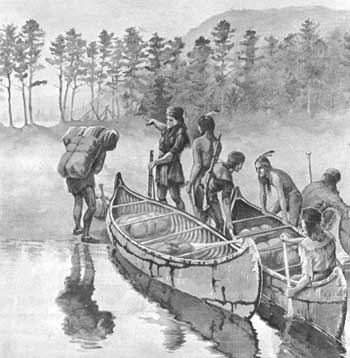
For nearly a century, primarily in the 1700s and early 1800s, trappers, traders, Native Americans, Métis, Frenchmen and Scots, British and American -- among them the flamboyant voyageurs -- arrived from points scattered throughout the wilderness for the yearly festivities called the rendezvous. Rendezvous took place at important forts all throughout the Great Lakes region. At these locations, men who'd lived a rugged existence in the wilderness harvesting furs, company clerks, or bourgeois company men arriving from the east, came together to engage in the exchange of pelts for goods. In the process a fortune was made for the North West, XY, and Hudson's Bay companies. But the rendezvous was also a time when all these wilderness folk enjoyed revelry, feasting, gaming, and occasionally brawling. The event would last for several weeks in summer, then just as quickly when it ended, everyone would disperse. The hunters and trappers returned to the forest and native villages, the clerks to their posts, the voyageurs to winter in the Upper Country or back to Montreal with canoes mounded with bales of pelts, eager to satisfy the European hunger for fur.

This last week I attended a re-enactment of one of those events just north of Duluth, Minnesota on the Lester River where it twists and tumbles over rocks and down the hill. There it spills into magnificent Lake Superior. I couldn't absorb the experience any more eagerly! Here are some highlights.


This fellow went by the rendezvous name of Jacques LeChristian. I asked him right off if he was a bourgeois trader, and his eyes brightened. "Why, yes I am!" he said. Later in the day I purchased a CD of voyageur legends told by my new friend Monsieur LeChristian.

The  Lester River Rendezvous is set up mostly as an educational village open for two days to school groups, and then one day for the general public. Thousands of visitors enjoy free entrance onto the site where they can partake in food and music, and most excitingly, a visit to the Voyageurs' Village.

Here I am on the river, experiencing the excitement of the rendezvous which has so much to do with the time and setting my new novel Mist O'er the Voyageur coming out next Wednesday.                                                                                                         
             
I enjoyed a number of demonstrations of how people used to live during those times while I strolled through Voyageur Village at the rendezvous. In future posts, I'll give some of the "how to" details I learned for everything from rendering bear fat to starting a fire with char cloth and flint.


The lady above was of Métis heritage. I enjoyed hearing her talk about her ancestors and the vital role of the Métis in the fur trade and voyageur era. She also sewed all these beautiful costumes!


This lady was busy tanning hides. She described various processes to do it, depending on the type of finished product. Here, she is softening a rabbit hide. She also had a large number of other interesting items on display including this box of glass beads. Beads were a popular trade item during for many years.


The lady in the photograph above is making sour dough cinnamon rolls. Not so unusual in itself. However; she's also teaching about the process of making and keeping sour dough, and she's baking them over the fire in a "Dutch oven". More on that in a future post!


This red-hatted fellow was so engaging! He had the children and adults enraptured as he demonstrated the method used to build fires back in a time when matchsticks hadn't been invented. He had to take special precautions with that beard! 


Above we have the tinsmith selling his wares, and below is the blacksmith. I wish I could have invested in the beautiful ax or some of the gorgeous knives he created. I settled for a lovely little robe hook for $2. Now that's an affordable souvenir!


Talk about a pot of soup! This big kettle was called the chaudier by the French voyageurs. Brigitte Marchal, the heroine in my tale, becomes very familiar with that piece of equipment! (I could use one of these for family gatherings.)


Though this was not a real birch bark canoe (this one was "disguised" as a real canoe so that the kids could get inside and learn to paddle) I had to get a picture standing next to the North West Company emblem.

Have you attended any rendezvous re-enactments? Next on my schedule are the Forts Folle Avione Rendezvous on the Yellow River in Northwest Wisconsin, and the Great Grand Portage Rendezvous in Grand Portage, Northeastern Minnesota. Living History provides a learning environment of discovery and engagement in a way that reading a history book can't provide. Whatever part of history you're curious about, from the French and Indian wars, to the Civil War, to visiting an historical speakeasy -- it's a vivid way to dig deeper into history that you don't want to miss!

Now it's time for a drawing!
With my novel, Mist O'er the Voyageur coming out in less than a week, I'm celebrating with 3 chances to win an e-book and the opportunity to win the Grand Prize Drawing at month's end. Use the Rafflecopter below to enter. (The book is also available for pre-order until it releases.)

Catch you again in the pages of history~
Naomi Musch
a Rafflecopter giveaway

Friday, September 7, 2018

Meet the Métis


Hi there! I’m Naomi Musch, a new member of the Colonial Quills blog team. I can’t tell you how thrilled I am to be here. I write in a variety of time periods, but the American colonial period is where my heart beats strongest, especially when that story is set on the frontier. In light of that, I have a new book coming out next month titled Mist O’er the Voyageur. In it, the heroine, Brigitte Marchal, is a Métis girl from Montreal who sets out traveling west by voyageurs brigade into the Lake Superior wilderness where dangers, mysteries, and romance await. With her in mind, I’d like to introduce you to the Métis.

WHO ARE THE MÉTIS?

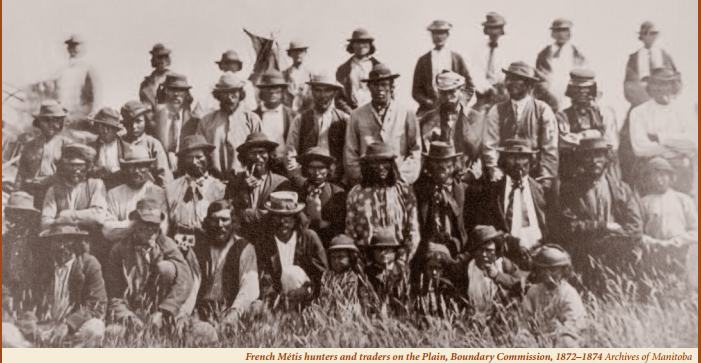
The Métis are an aboriginal people group who emerged during the North American fur trade that took off in the 1700s when French and, sometimes, Scottish freemen (those without a company contract, also referred to as coureur des bois) began to travel into the unsettled interior of the continent via the Great Lakes waterways in search of better furs. Many of these men, who learned the practices and habits of the Native people, soon established families with First Nations tribes around the lakes. As they began to intermarry, they grew into a distinct people with their own established culture, history, territory, and language known as Michif.

Woodcut of a French Coureur des Bois
by Arthur Heming
From their beginnings, it wasn’t long until the Métis no longer saw themselves as extensions of either their maternal (First Nations) or paternal (French/Scottish) ancestry, but rather as a separate, distinguished nation. The Métis were some of the first settlers of Winnipeg, Canada, though they were eventually forced from their lands during the War of 1812 and for many years strove with Canada for their home lands and rights. The Métis have spread throughout the upper Midwest and Northwest since, making their settlements along the waterways around the Great Lakes, Ontario, and in other areas known as the historic Northwest including parts of the northern United States. Historically, many of the Métis remained involved in the fur trade as trappers, traders, and were often employed as voyageurs on the Great Lakes.

There have been many notable people among the Métis, from activists and politicians, to frontiersmen, authors, film-makers, and poets -- even body-builders and hockey players! The Métis were responsible for breaking the fur trade monopoly held by the Hudson’s Bay Company, who had been behind a lot of their early troubles. One Métis man, Louis Riel, became known as the father of Manitoba.
Louis Riel


In Mist O’er the Voyageur, my heroine Brigitte Marchal is born of this unique Métis heritage. She was born to an Ojibwe mother and a French fur-trader father. After the age of six, when her mother passed away, she was taken to Montreal to be raised by her French aunt and uncle and educated by the Sisters of Notre Dame. During her adventure paddling with the voyageurs into the western regions of Lake Superior to find her father, Brigitte has ample opportunity to meet other Métis people and learn more about her heritage and traditions along the way – as well as discovering some long-kept secrets.


Join me again next month, when I share some interesting bits about the Great Lakes Voyageurs and what it was like when they all gathered for the annual fur trade Rendezous.

NaomiMusch.com


Friday, June 23, 2017

Who are the Métis?

Image result for metis photos

The term Métis is not new, it's been around for hundreds of years, but its meaning can be a bit murky still.

When the first European men, mostly French involved in the fur trade, came to what is now Canada and the northern fringe of the United States, some settled with the native tribes. They blended in with the tribes, mainly Ojibwe and Cree, and took wives. The offspring of these couples were considered half-breeds, half-castes, or in French, Métis. (Pronounced May-tees') Over time, these bi-cultural people developed a culture of their own.

Some claim that Métis with a capital M refers only to those people who originated in the Red River Valley area who more fully developed their own unique culture and language, a blend of French and Native words called Michif. They hold that métis with a lower-case m refers to any persons of mixed Native and European ancestry. Canada has recognized Métis as a First Nation for more than 100 years.

The United States has never formally acknowledged them, even though the Métis have been here since the first European men landed on our shores. Well, nine months after, anyway.

In my work-in-progress, set around the Straits of Mackinac, the heroine is Métis. Researching this little-known - at least in the United States - culture has been interesting. As with any bi-cultural group, they faced prejudice and persecution from those who deemed themselves superior ... on both sides of the Métis family tree.


ponyexpressbookcover

Friday, May 6, 2016

Minnesota and Early American History

When people think of early American history, Minnesota probably doesn't come to mind. On the east coast, there are a wealth of historical events and people that we think of, pushing their way from the Atlantic Ocean, over the Appalachian Mountains, onward toward the Mississippi.

But, Minnesota? What was happening there?

For me, when I think of early American history, I almost always think of Minnesota first. Why? Because I've been studying my state's history since I was a teenager, and there are a surprising number of important historical events and people who impacted not only early Minnesota history, but also a broader scope of American history.

The five biggest influences in early Minnesota history were explorers, fur traders, missionaries, warring Native American tribes, and the military presence.

Father Hennepin discovering St. Anthony Falls on the
Mississippi (present-day Minneapolis), in 1680

Minnesota is blessed with two significant bodies of water that impacted early American history. Lake Superior and the Mississippi River. The first European to find Lake Superior is Etienne Brule in 1623. He was a French fur trader and explorer. Some believe he made it all the way to present day Duluth, MN. In 1659, two more French fur traders and explorers made it to what is present day Minnesota. They were Medart Chouart des Groseilliers and Pierre Esprit Radisson. On their heels were French explorers and missionaries, Louis Joliet and Father Jacques Marquette, who found and mapped the upper portion of the Mississippi River from Minnesota to what is now Arkansas.

French explorers and fur traders on Lake Superior.
With the discovery of those significant bodies of water, other explorers, missionaries, and fur traders soon followed.

One notable explorer was Zebulon Pike, for whom Pike's Peak is named in Colorado. In 1805, he was sent by the United States government to find the source of the Mississippi and to locate an ideal spot for a military fort. He met with some success, as he acquired over 100,000 acres of land where Fort Snelling (near present-day St. Paul) was built in 1819. While traversing up the Mississippi, an early winter set in and he built a fort and stockade near present-day Little Falls, MN (my hometown). His men wintered there while Pike continued north. He thought he had found the source of the Mississippi, however, he was proven wrong in later years.

Zebulon Pike
Fur trading and missionary work make up the bulk of European involvement in early Minnesota history. But Native American history is also an important aspect of that time period.

Ojibwe Chiefs in the early 1800's.
Around the time of European entrance into Minnesota, the Ojibwe Indians, who had been occupying parts of Canada and Michigan, and working with the French fur traders, acquired weapons and moved into the Upper Mississippi region, pushing their enemies, the Sioux, to southern Minnesota. For over two centuries, the Ojibwe and Sioux fought, and the area where I live in central Minnesota was a contested zone that both tribes claimed. Another military presence was needed in this area, so in 1849, Fort Ripley (then called Fort Gaines) was built.

This is just a tiny glimpse into Minnesota history and all the people and events that helped shape this beautiful and diverse state. Maybe, just maybe, Minnesota will come to mind the next time you think of early American history.

Your Turn: Are you surprised at how early Europeans discovered Minnesota? Did you realize so much was happening in this Midwest state at such an early date? Do you have any questions about Minnesota history?

Gabrielle Meyer lives in central Minnesota on the banks of the Mississippi River with her husband and four young children. As an employee of the Minnesota Historical Society, she fell in love with the rich history of her state and enjoys writing fictional stories inspired by real people and events. Gabrielle's next release, A Mother in the Making, will be available in September from Love Inspired Historical. She can be found at www.gabriellemeyer.com where she writes about her passion for history, Minnesota, and her faith.              

Find her on Facebook
Find her on Pinterest
Find her on Twitter
Find her on Amazon
Find her on Goodreads
Find her on My Website

Friday, October 23, 2015

Michigan's First Jewish Settler

Sometimes it's easy to fall into the rut of thinking all colonial people were British, Protestant, and poor. We remember the Pilgrims barely surviving their first winter, or the Puritans coming in droves to back-breaking labor in an untamed land. But, in fact, people came to our new shores for many different reasons.

Ezekiel Solomon was born in Germany during the Enlightenment Period. He arrived in Montreal, Canada, in the late 1750s. Quite likely he came from a prosperous family, since he had the money to relocate to Canada and the knowledge to run a successful business. He partnered with several other Jewish men and set out for Fort Michilimackinac, where he established his mercantile in 1761.

It was a rough time to live on the northern frontier. This was the end of the French and Indian War, when the British gained control of Fort Michilimackinac and other previously French strongholds in the Great Lakes area. The native tribes, used receiving many gifts from the French, were not happy with the British in power. Pontiac's Rebellion, a coordinated war by Ottawa Chief Pontiac and warriors from many other tribes, came north to Fort Michilimackinac in 1763. During the attack, Ezekiel Solomon and a few others were taken hostage and eventually ransomed in Montreal. Exactly why Solomon was spared when so many others died is unknown.

Returning to Fort Michilimackinac, Solomon restarted his business, making many trips back and forth to Montreal. At some point, he married Louise Dubois, also known as Okimabinesikwe, a practicing Roman Catholic. Their marriage was both inter-racial and inter-faith.

Solomon moved his business several times after the Revolutionary War to avoid living on American soil. He moved first to Mackinac Island, then St. Joseph's Island, and sometime later to Dummond Island.

Ezekiel Solomon was a partner of the Mackinaw Company, organized in 1779 by traders and companies. It is believed to be the first example of a department store operated in the United States.

Trooper and Pegg cropped