Announcements

10 Year Anniverary & New Releases Winners: Carrie Fancett Pagels' Butterfly Cottage - Melanie B, Dogwood Plantation - Patty H R, Janet Grunst's winner is Connie S., Denise Weimer's Winner is Kay M., Naomi Musch's winner is Chappy Debbie, Angela Couch - Kathleen Maher, Pegg Thomas Beverly D. M. & Gracie Y., Christy Distler - Kailey B., Shannon McNear - Marilyn R.
Showing posts with label Pilgrims. Show all posts

Friday, March 5, 2021

American Colonial History and the Rest of the World in 1620

I've always enjoyed looking back at one aspect or period of history and reminding myself of all the other things happening at that same time. You know...taking a look at the bigger picture going on around the world. 

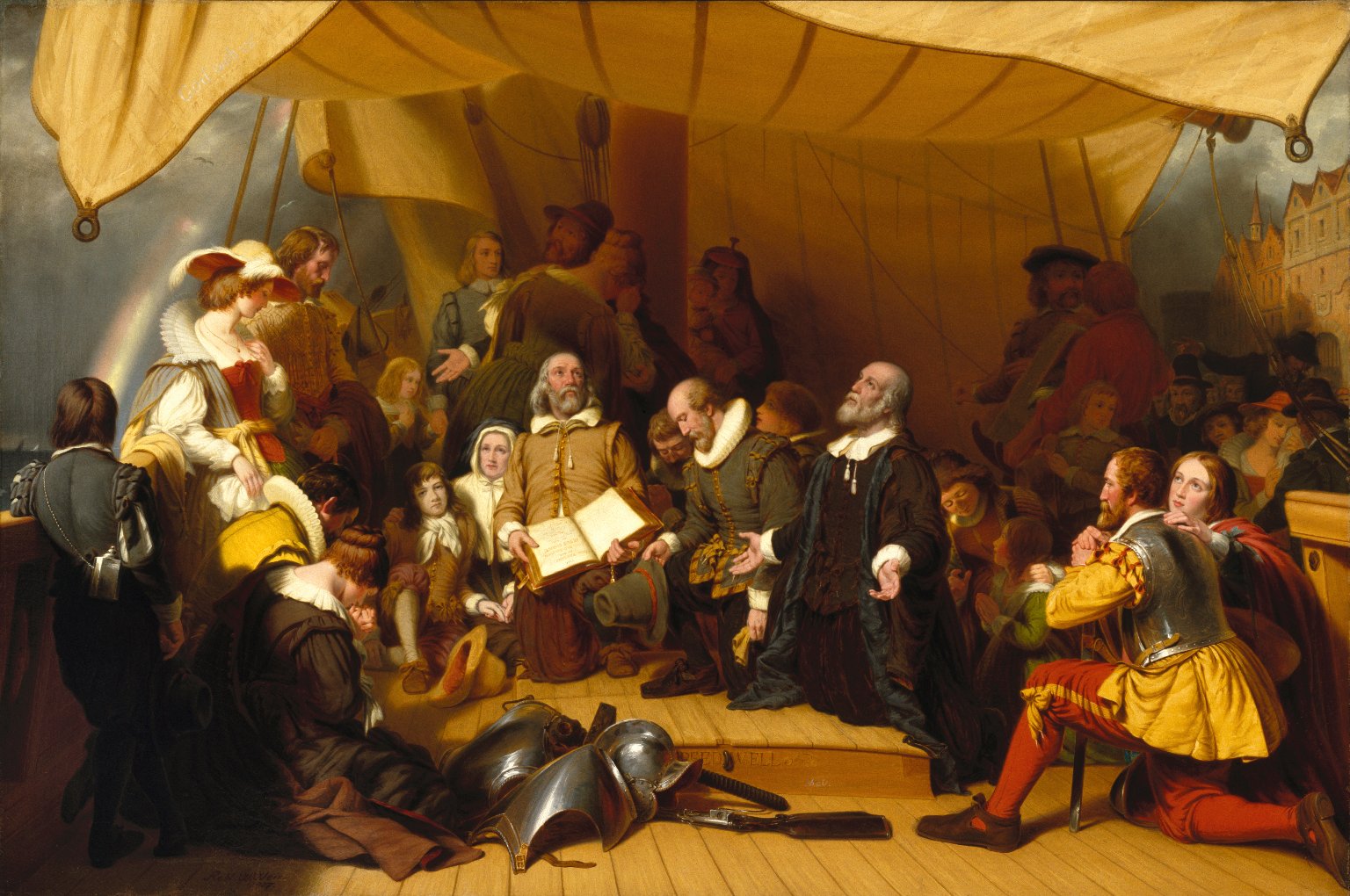
Take for instance the year 1620, the date which generally marks the beginning of the American colonial period. In that year 102 pilgrims embarked from Plymouth, England on the Mayflower along with 30 crew bound for the new world. Later that same year those pilgrims signed the Mayflower Compact and established Plymouth Colony. We tend to look at most of the world's happenings back then through the lens of what the pilgrims were doing. That's the way we learned it as kids.

Plymouth Rock

When I was a child trying to grasp history, I had the unfounded notion that the pilgrims were the only Europeans in North America at the time. The "New World" was really new! I relegated the Spaniards to explorations in Central America far, far way (another thing I had wrong). The rest of the world ceased turning in light of the colony being established in Massachusetts. 

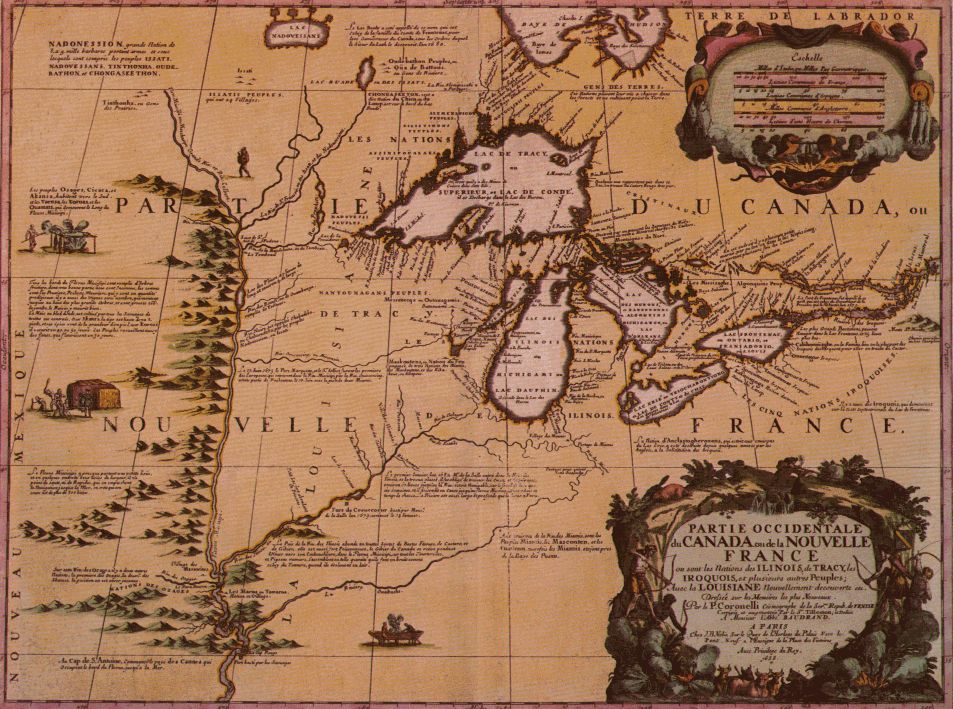
But in fact, by the time the Pilgrims landed, there had already been a lot of exploration going on just to the north (in Canada), across the Great Lakes, and down the Mississippi to the Gulf. The French had been working at establishing themselves on the North American continent for many years before the pilgrims arrived. In 1620, whilst our intrepid pilgrims were setting sail away from Europe, Henri II, Duc de Montmorency was named Viceroy of New France. With Samuel de Champlain as his lieutenant, he began construction of Fort Saint Louis on the cliffs of Quebec. He then formed a company that was granted an 11-year fur trade monopoly in the New World.

If you remember my earlier posts, you'll recall that fur was the cornerstone on which the entire North American economy was built, so France definitely had the first foothold.

Meanwhile, King James I got it in his mind to commission William Alexander to reclaim New France and Acadia, and the coureur des bois (the free fur traders) founded the trading post called Palace Royal in present-day Montreal. 

All while the Pilgrims were just trying to survive their first year on North American shores.

I mention all this because of of how very important it is to understand our developing nation as a whole. While the arrival of the pilgrims was a huge event that we look to when we consider the colonial period, North America was already being shaped by others, some indigenous, and others as explorers, businessmen, priests, soldiers, and adventurers.   

Just for fun and further insight, here are a handful of other important events that took place around the world in 1620:
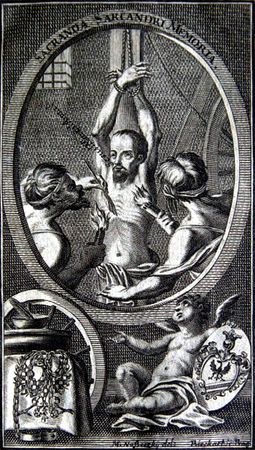
A 1715 etching depicting the torture of John Sarkander

*St. John Sarkander, a Polish-Moravian priest, died of injuries sustained by prolonged torture. It's a long story, connected by ongoing conflicts between Catholics and Protestants in Europe's Thirty Years War, which had begun only two years earlier.*The first merry-go-round was seen at a fair in Turkey.

*The mother of Johannes Kepler, German astronomer, mathematician, and astrologer, was arrested for witchcraft.

*Witch hunts also begin in Scotland.

*The modern violin was developed.

*An navigable undersea boat (type of submarine) was  demonstrated in the Thames River, England.

*A sign alphabet was developed by Juan Pablo Bonet, a teacher of deaf children in Spain.

~~~~~

Are there periods of history or specific historical events that you enjoy studying within the larger context of what was taking place in the world at that time?

Naomi Musch

https://naomimusch.com/


Friday, November 20, 2015

The Real History of the Pilgrims


by Tamera Lynn Kraft

Since next week is Thanksgiving, I thought you might be interested in the history of the pilgrims that isn’t taught in school. Most of us were taught that pilgrims came to America to flee religious persecution. That’s not exactly true. Puritans were persecuted for believing that Christians could have a personal relationship with Jesus separate from the Church of England. But they traveled to Holland to flee the persecution, not America. Pilgrims applied for immigration to Holland in 1607. Holland allow religious freedom that England did not. Although England didn't allow people to flee, Holland approved the immigration. Bands of Pilgrims moved to Holland in 1607 through 1608.

So why did they travel to America? There were many reasons, but the main reason is they felt compelled by God to come to America and establish a colony of people that honored God. Many called this colony, New Jerusalem, believing that God had established this new land to spread the gospel to the world. William Bradford wrote in his journal that the motivation came from “a great hope for advancing the kingdom of Christ.”

Pilgrims and Puritans were not the same. Pilgrims were Puritans who were also separatists. They believed they should separate themselves for the Church of England and the world systems and set up their own churches. Puritans believed in working within the system. Pilgrims are the ones who came to America on the Mayflower to set up a government that honored God. Puritans soon followed Pilgrims on the journey to America. Once they came to America, Puritans wanted to set up a theocracy according to their beliefs. Pilgrims were more democratic and created a covenant that everyone signed and agreed to live by called the Mayflower Compact. Because of this, Pilgrims were more likely to extend the freedom of religion they wanted to others. Pilgrims wanted freedom of religion to protect the church from the government, not to protect the government from the church.

Many schools teach that Thanksgiving was a secular celebration, but letters written by the Pilgrims tell a different story. God was such a part of their everyday life that they included God in everything. One such letter states that Thanksgiving was a celebration called so that “God be praised” for what He had brought them through. They invite the Patuxet tribe of Native Americans to join them because they had a good relationship with this tribe. The tribe helped them plant their crops and defend themselves from other more hostile tribes.

John Winthrop called New England a City on a Hill in one of his sermon. He, as well as many other Puritans and Pilgrims, believed they had made a covenant with God to be a new nation that was a model of Christianity to the world. William Bradford believed that America was called to spread the gospel to the world. Since the Pilgrims and Puritans came to America, the United States of America has sent missionaries to more nations and more remote places in the world than any other nation on Earth. Could it be they were right?

Friday, August 28, 2015

Early American Music

Music came to this country with the Pilgrims. They sang from the Book of Psalms by Henry Ainsworth, 1612 edition. One of the hymns they sang was Old One Hundred, but it wasn't the Doxology we know today. 

Shout to Jehovah, all the earth.
Serve ye Jehovah with gladness;
before Him come with singing-merth.
Know, that Jehovah, He God is.
(Try it to the tune of the Doxology - it works!)

The Pilgrims also brought instruments with them. As did the Puritans. While the Puritans didn't allow instruments to be used in their church services, they placed great importance on singing. Cotton Mather wrote in his Direction for a Candidate of the Ministry "for I would not have a day pass without singing." He also did not discourage instruments in general, only in the church services. Instrumental music outside of the church was allowed and ... dare I speculate ... enjoyed!

The Puritans set about to make their music better. The third publication of any kind printed in the colonies was the Bay Psalm Book in 1640. This book included the lyrics only, no music. In 1698 they put out Ninth Addition of the Bay Psalm Book and included music for two voices. In between the first and ninth printings, many revisions were made to make the music better and easier to sing. The Puritans very much cared about their music.

So the next time you read a story about our dour and grim colonial ancestors who never cracked a smile or sang a tune ... you'll know better.


Wednesday, December 17, 2014

Saving Plymouth Rock


Plymouth Rock
With the first day of winter nigh upon us, let's look back upon the first day of winter nearly four hundred years ago, December 21, 1620, when weary voyagers from the Mayflower chose their first permanent dwelling place in North America. Landing on the frigid coast just above Cape Cod, the Pilgrims embarked on the shores of Plymouth, Massachusetts. And stepped onto a huge rock.


"Plymouth Rock" has since become an American icon as a symbol of discovery and liberty. A quest for religious freedom and pursuit of a better life. It cannot be verified that the rock that exists today is actually the rock that the Pilgrims stepped onto, or if they stepped onto such a rock at all. Yet tradition has firmly held through verbal transmission that the large piece of granite provided a steady landing for the sojourners, as sure as their convictions.

One Thomas Faunce was the son of John, who came to Plymouth in the Ann in 1623. John was considered one of the "First Comers"along with the original Mayflower passengers and raised his son, Thomas, contemporaneously with other second generation settlers. From his childhood, Thomas was told by his father and others about coming to America including the report about the rock. Thomas, who became the last elder of the First Church of Plymouth, brought his own children and grandchildren there to continue transmitting the story on each anniversary of the Pilgrim's landing.

Then in 1741 a wharf was to be built over the rock and 95 year old Elder Faunce was taken by chair to see the rock for one last time. At Founder's Day in 1817 a Mrs. White and Deacon Spoon transmitted their testimony that Elder Faunce had publicly proclaimed the history of the consecrated rock with tear filled eyes.


In 1775 inhabitants of the town decided to consecrate the rock as a shrine of liberty. Twenty yoke of oxen attempted to move it only to have it split in two when a team attempted to raise it. The upper portion, however, was placed at the foot of the Liberty Pole as a reminder of the values that first brought the Pilgrims to their beloved country.
Piece of Plymouth Rock taken by Lewis Bradford.
18th and 19th century souvenir hunters have chipped at the rock through the years to take a piece of its legend and legacy. A piece was taken in 1850 by a descendant of Gov. William Bradford and is inscribed "Broken from the Mother Rock by Mr. Lewis Bradford on Tues. 28th of Dec. 1850 4 1/2 o’clock p.m.”. But since 1921, Plymouth Rock has been protected by a monumental enclosure which stands in Massachusetts' Plymouth Rock State Park on the shore of Plymouth harbor. It's current size is believed to be only 1/3 to 1/2 the size of the original piece of granite.


Plymouth Rock in 1867
On the Fourth of July in 1834 the rock was moved to a position in front of Pilgrim Hall where it remained enclosed by a fancy iron fence for forty six years. In 1867 a canopy was errected which sheltered the original piece of the rock. In 1880 the the two fragments were reunited after a separation of over a century. It was that the inscription "1620" was carved into Plymouth Rock.


"We have come to this Rock, to record here our homage for our Pilgrim Fathers; our sympathy in their sufferings; our gratitude for their labours; our admiration of their virtues; our veneration for their piety; and our attachment to those principles of civil and religious liberty, which they encountered the dangers of the ocean, the storms of heaven, the violence of savages, disease, exile, and famine, to enjoy and establish. – And we would leave here, also, for the generations which are rising up rapidly to fill our places, some proof, that we have endeavored to transmit the great inheritance unimpaired; that in our estimate of public principles, and private virtue; in our veneration of religion and piety; in our devotion to civil and religious liberty; in our regard to whatever advances human knowledge, or improves human happiness, we are not altogether unworthy of our origin…"  ~ Daniel Webster, 1820

Plymouth Rock's current enclosure.
  This link will take you to a panoramic view of Plymouth Rock.


Wednesday, November 26, 2014

Our Five Kernels of Thanksgiving

by Roseanna M. White

We all know the story of the first Thanksgiving, and it's one I've enjoyed reading to my kids again this year. All those old familiar tales of Squanto and the Pilgrims, of neighborliness and sharing.

But even more stirring was when I read about the Second Thanksgiving the Pilgrims celebrated.

After that first harvest we've all read about, the Pilgrims wisely stored food to see them through the winter. And they had plenty. Certain that it wouldn't be a repeat of the previous winter, where so many had died of hunger and illness, they settled in to their settlement to await spring.

But another ship came, bearing more settlers...and with no food supplies. Suddenly they had far more mouths to feed than they had stores with which to feed them. But it wasn't their way to turn anyone away. Instead, they accepted these newcomers and divided their rations again. They adjusted as best they could.

And they grew hungry. At one point, each person's daily ration was five kernels of corn a day. Five kernels!

The Pilgrims knew they couldn't survive on this meager allotment. But they had nothing to trade for food, no other ships were due with supplies. And they, unlike those in the Virginia Colony to the south, weren't about to steal and kill for it. Instead, they prayed. They humbled themselves. They searched their hearts for any sin and appealed to God for salvation.

He provided it. A ship unexpectedly entered Plymouth harbor, on its way from the southern colonies to England. Though they didn't have extra food, they did have goods that they traded for the Pilgrims' beaver pelts. And with those goods, the Plymouth colony could trade with the Native Americans for more food.

They survived the winter without one death. When spring came, they planted. In summer, they tended. In the fall, they reaped in an admirable harvest.

Again, they declared a feast of Thanksgiving. Again, they invited the natives that played such a vital role in their survival. But there was something different at this feast.

This time, around each plate, they put five kernels of dried corn. A reminder of all they had been through...and of all the Lord had done to save them.

As we reflect on Thanksgiving this year, let's put our kernels before the Lord. They don't just represent the blessings He heaps on us...they represent the hardships He sees us through. They represent His faithfulness.

What are your kernels this year?

Monday, November 24, 2014

What's for Dinner, Pilgrim?


The First Thanksgiving 1621, oil on canvas by Jean Leon Gerome Ferris (1899). The painting shows common misconceptions about the event that persist to modern times: Pilgrims did not wear such outfits, and the Wampanoag are dressed in the style of Native Americans from the Great Plains
        The Thanksgiving food we know today is nothing like what the 53 Pilgrims and 90 Native Americans hunted, harvested, prepared, and served at the famous meal 391 years ago.
        No one knows the complete dinner menu, but historians are certain that the participants enjoyed the following:

• Wildfowl (goose, duck, swan, passenger pigeons)
• Wild turkey
• Venison
• Porridge
• Corn bread
       
        Instead of turkey, goose or duck was the main course. Historians suspect that some birds were boiled first, and then roasted, and others were roasted first, and then boiled. Also, the birds were stuffed with shelled chestnuts or onions and herbs.
        Historians, although uncertain, believe that the following was also served:

• Eels
• Lobster
• Clams
• Mussels
• Chestnuts
• Walnuts
• Beechnuts
• Hickory nuts
• Multi-colored Indian corn
• Pumpkins
• Squashes
• Onions
• Dried beans and peas
• Lettuces
• Spinach
• Radishes
       
        Seasonings included salt, pepper, cinnamon, ginger, liverwort, leeks, and nutmeg.

        Here are some recipes adapted from Plimoth Plantation’s recipe page featuring original colonial recipes www.plimoth.org

Onion Sauce for Roast Turkey
        In the 17th century “gravy” was the drippings from the meat that were often transformed into a sauce.
6 medium onions, sliced thinly
2 cups of water
2 teaspoons of coarsely ground pepper
1 teaspoon salt
1 tablespoon sugar
¼ cup red wine vinegar
¼ cup bread crumbs (optional)
        Follow your favorite recipe for roast turkey. Remove the turkey to a platter reserving the pan juices. Place thinly sliced onions in a pot with water and salt. Bring to a boil over medium high heat and cook until the onions are tender but not mushy. A good deal of the water should have boiled away. Set aside for a moment. Place the roasting pan over medium heat and stir to loosen any brown bits. Stir in the onion sauce, sugar, vinegar and bread crumbs if desired. Add pepper to taste and adjust seasonings. To serve, pour over sliced turkey or serve alongside in a separate dish.

Hasty Pudding
        This pudding recipe was originally brought over from England and was called Indian Pudding or supawn when it was made in Colonial America, since cornmeal was cheaper and more readily available.
        As a British dish, it was a quick pudding to make using a sweetened porridge made from flour, tapioca or oatmeal and milk.
        Here the recipe was transformed to use local ingredients -- cornmeal, molasses or maple syrup and milk.
       It’s anything but “hasty,” since it requires 2 hours to bake. If you want to be truly authentic, serve as an appetizer.
2 cups milk
2 cups light cream
3 tablespoons stone ground yellow cornmeal
½ cup brown sugar
½ cup maple syrup
1 tablespoon butter
1 teaspoon cinnamon
1 teaspoon ginger
½ teaspoon salt
1/8 teaspoon nutmeg
Pinch ground cloves
1/8 teaspoon baking soda
2 eggs, beaten
         In a heavy pan scald milk and cream. Gradually sprinkle with yellow cornmeal and bring to a boil, stirring briskly. Stir in sugar, maple syrup, butter and all the other dry ingredients. Let the mixture cool slightly. In a small bowl beat the eggs with the milk/cream mixture. Pour the batter into a buttered 1 ½ quart baking dish and bake in a moderately slow oven (325 degrees F) for 2 hours. Serve hot or warm with whipped cream or ice cream if desired.

Susan F. Craft is the author of the award-winning Revolutionary War romantic suspence, The Chamomile. She is represented by Linda S. Glaz, Hartline Literary Agency.

Wednesday, October 22, 2014

The Screw that Saved America


The year was 1620. The crowd of passengers crammed into the small vessel numbered 101. Among them were adventurers, seekers of fortune...and a group of Separatists who wanted a fresh start in a new land where they could worship as they saw fit. 

We've all heard the story of the Mayflower. But I confess that for many years it was just a tale trotted out at the end of November, and I had always been far more interested in making paper-bag Indian vests and coloring my cornucopia than in some of the finer details of the Pilgrims' journey. Of course, that was before I became a history nerd, so it's only to be expected that now, as I'm reading those old stories to my kids in our homeschool curriculum, they're the ones coloring happily away while I pause in my reading to go, "Wow, I never knew that! Just think of it..."

Just think of it. This collection of Separatists who called themselves Pilgrims were starting an entirely new life in a new, unfamiliar world. They had to bring with them anything they might need for the first year

Food.
Seeds for planting.
Cloth.
Books.
A printing press.
A fishing boat, to set up a trade.
Candles.
Lamps and oil.
Blankets.
Furniture.

The Pilgrims saw God in every aspect of their lives, every event that took place. They trusted Him to deliver them to their new home in His way. But I imagine as the storms rocked the small Mayflower, as they had to batten the hatches and huddle together in a space the size of a volleyball court yet again, a few of them probably wondered if they'd made the right choice.
Mayflower in Plymouth Harbor by William Halsall, 1882

But this storm was worse than the ones that had come before. This storm howled and raged. The Mayflower was tossed through the waves. Boards groaned. Wind ripped. Small children whimpered and hid their faces in their mothers' skirts.

Hushed assurances turned to panic when the Mayflower rolled to her side. They would go down, surely. The lanterns swung. The hull moaned. Then boom!

A sailor rushed belowdeck. "Watch out, everyone!" he called to the frightened mass of people. "The crossbeam that supports the main mass has cracked! It could give way at any moment!"

Everyone hurried to help. All the men tried to hold that crucial timber into place. But this was beyond what mere arms could do. Brewster and Bradford, leaders of the Pilgrims, looked to the wide-eyed captain.

"We must pray," Bradford said.

They did. And the idea came instantly to Brewster. "The printing press! We must find it!"

Now, as an author, I'm all for words saving the day. But in this case, it wasn't what the press could produce that saved the Mayflower, the Pilgrims, and hence America as we know it. It was the press itself.

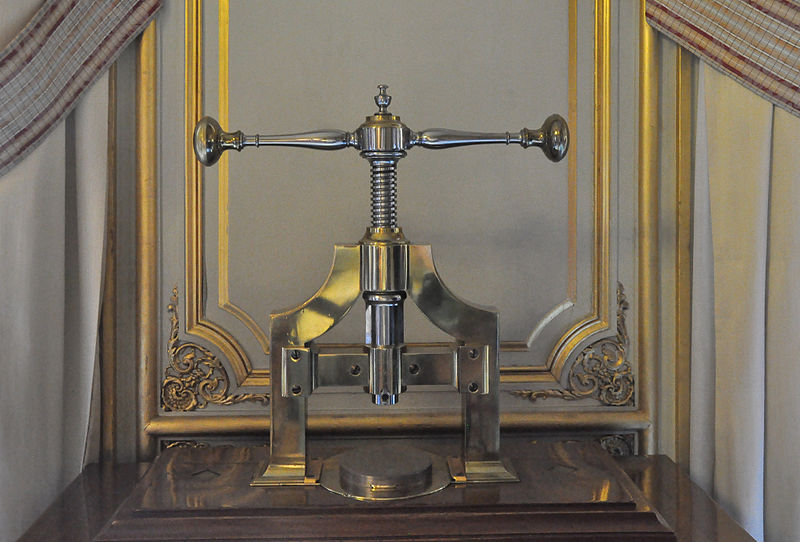
The people scrambled to the hold where they'd stored all their furniture and larger items, and soon enough a shout came out that they had found the press. Brewster hurried to it and took off the enormous screw that was the press, the thing that applied pressure to put ink on page. This giant screw was then hauled into place on the cracked beam.

"Slowly," Brewster cautioned. "Carefully."

And it worked. The screw pushed the beam back into place--and held it there. The Mayflower survived the storm, and at that point she was closer to the New World than the old. They pressed onward. Forward.

To a land that would soon become home to so many.

I'm not sure when Brewster could reclaim his screw press, but you can be sure he did--the Pilgrims put high stock in education and the written word. A mere 16 years later, they founded Harvard College. And helped forge a nation that would never forget them.

~*~


Roseana M. White pens her novels beneath her Betsy Ross flag, with her Jane Austen action figure watching over her. When not writing fiction, she’s homeschooling her two small children, editing and designing, and pretending her house will clean itself. Roseanna is the author of 9 historical novels and novellas, ranging from biblical fiction to American-set romances to her new British series. Spies and war and mayhem always seem to make their way into her novels…to offset her real life, which is blessedly boring. You can learn more about her and her stories at www.RoseannaMWhite.com.

Monday, October 6, 2014

Visiting Howland House in Plymouth, Massachusetts


I recently took a trip to Plymouth, Massachusetts and visited an ancestral home belonging to the son of the Mayflower pilgrim, John Howland. John Howland and his wife Elizabeth Tilly, also a Mayflower pilgrim, lived in this house with their son Jabez and his family during winters, Indian uprisings, and for six years after Elizabeth became a widow until she moved in with her daughter. This is the only surviving house belonging to one of the original pilgrims who came to Plymouth in 1620.

Mayflower II and Plymouth Rock.

The original house was built by Jacob Mitchell in 1666, son of my other pilgrim ancestors and purchased by John Howland's son, Jabez. I'm honored to be able to claim descent from 9 Mayflower pilgrims (my husband claims 14!). I'm truly blessed because Jacob Mitchell and his wife were killed in an Indian raid in Dartmouth in 1675 leaving behind three children who fled for safety and John Howland washed off the Mayflower on voyage to America, but was rescued. In fact, Jacob Mitchell's granddaughter married John Howland's great-grandson. If not for providence, I wouldn't be here today to write this blog post!

Howland family crest and tankard.
This ink pot would have been filled with iron gall ink.

John Howland was an indentured servant of John Carver, the first Governor, and acted as his bookkeeper and assistant. After Gov. Carver and his wife died the first winter,John Howland inherited his home and guardians -- the orphaned minors who the governor had taken into his household including Carver's granddaughter, Elizabeth Tilly, whose parents had passed away. He later married Elizabeth and all of their ten children survived to adulthood. John Howland's headstone reads: “Hee was a goodly man and an ancient / professor in the wayes of Christ. Hee was / one of the first comers into this land and / was the last man that was left of those / that came over in the Shipp called the / Mayflower that lived in Plymouth.”


From the hearth hung various lamps including a mullein torch,rush lamp, kizzie lamp, betsey (better) lamp,  pierced tin (with markings that identify the bearer), various pots, a dutch oven, and a swivel toaster. The butter mold is intended to stamp the butter and indicate the type of butter, such as "sweet clover" for what the cows grazed.


The hall chambers (bed rooms) were so lovely, despite the primitive setting. The crewel embroidered bed rugs with geometric designs were beautiful. No quilts here. In the 17th century rugs were bed coverings and clothing was quilted. Note the trundle under the bed in the top bedstead. People were not so much less tall than we are today, but their frames were smaller. A woman might be 5 foot 3 inches, but petite, and a fellow might be tall at five foot eight, but compact. Privacy was not a concern the way it is today either. So four adults would easily fit into this bed (trundle included) and possible others as well. Mother would have a rope attached to the cradle warmed by the hearth and give it a tug to rock the babe back to sleep. Hopefully the baby would not continue to cry and upset the mother also, hence mother reaching "the end of her rope."


One special item in the room was an intricately carved Bible box sitting atop a chest of drawers which belonged to the Howland family. I was surprised how large it was and the docent told me that the Bibles often were not very large at all and that the boxes were also used to hold important papers and other items. The picture doesn't do it justice since the room was so dim and flashes were not allowed, but perhaps this will give you an idea.


An interesting item displayed is a charred iron tasset (pictured below). The tasset, a thigh plate from a suit of pikeman's armor, is one of two pieces that have ever been found believed to belong to pilgrims. It was excavated from the hearth of another home belonging to John Howland. A fireback is one way to make use of an old armor.

I hope you enjoyed the view of Howland House. I so enjoyed it and it was fun sharing it with you.
What are some house museums that you've enjoyed visiting? Have you ever been to Plymouth?

Wednesday, September 12, 2012

Monument to the Forefathers in Plymouth, MA

Posted by Elaine Marie Cooper


My ears perked up when my husband beckoned me into the family room: “Hon, come watch the Kirk Cameron movie, ‘Monumental.’ He’s talking about the Pilgrims.”

What? I had heard about the movie but knew nothing about it except its title. Quickly drawn into watching this documentary about the beginnings of our country, I was especially surprised when Mr. Cameron visited a huge edifice. It was a monument to honor these enterprising heroes who traveled thousands of miles to obtain the freedom to worship God without having to bow to the king of England.

 I was stunned.

Even though I have visited Plymouth to see the landmarks like the Plimouth Plantation and the replica of the Mayflower, I knew nothing about this 81-foot tall monument set on the summit of a hill. And it turns out that I am not alone. Most visitors to Plymouth are surprised to find out about this amazing architectural creation. It used to be readily visible, yet tree growth over the years has all but obscured its presence. It now stands in the middle of a housing development. According to visitors that have actually seen it, viewing this granite monument is a breath-taking experience.


The National Monument to the Forefathers is the largest, freestanding granite monument in the world. But if its size is not impressive enough, the design itself is awe-inspiring and speaks to the faith-filled beginnings of this nation of America. In fact, the central figure of this statue is the 36-foot-tall woman named “Faith.” Her feet stand on Plymouth Rock and her finger points upward toward heaven.

Surrounding Faith are four figures: Education (with Wisdom on one side and Youth led by Experience on the other), Law (attended by Justice and Mercy), Morality (between a Prophet and an Evangelist holding the Ten Commandments in one hand and the scroll of Revelation in the other), and Liberty (with Peace flourishing and Tyranny overthrown). Just the description takes your breath away!

There are bas relief images surrounding the base of the monument depicting the Pilgrims’ history. They include images of the travelers leaving Delft Harbor in the Netherlands, the signing of the Mayflower Compact, the landing at Plymouth Rock, and the treaty with Massasoit, Sachem of the Wampanoags.

 This incredible memorial was birthed through the efforts of the Pilgrim Society in 1820—just 44 years after the signing of the Declaration of Independence. Its purpose was to be a tribute to the “memory of the virtues, the enterprise, and the unparalleled sufferings of their ancestors.”

 The National Monument to the Forefathers was designed by artist and architect Hammatt Billings from Milton, MA. The creative Mr. Billings designed other monuments as well, some beautiful Victorian mansions, and even the illustration for the cover of the Old Farmer’s Almanac.


 The cornerstone for the Plymouth monument was laid in 1859. The $150,000 needed to fund the endeavor were provided by the Federal Government, the Commonwealth of Massachusetts, the State of Connecticut, and 11,000 individuals. One of those individuals was then President Abraham Lincoln. There is an archived copy of the receipt for his donation of ten dollars.

The construction for the project was put on hold soon after the laying of the cornerstone, due to the onset of the Civil War. Unfortunately, Billings, who died in 1874, never saw the final memorial since it was not completed until 1889.

 According to Paula Fisher, Director of Marketing and Group Services at the Plymouth County Convention and Visitors Bureau, there are believed to be about three million Mayflower descendants in America today (including Paula and myself). But whether descended by blood or by belief in the desire to worship freely, we can all celebrate the memory of the Pilgrims and the stance they took for religious liberty. The National Monument to the Forefathers is a stunning symbol of that declaration.

The next time I visit Plymouth, it will be at the top of my “must-see” list.

The 400th Anniversary of the landing of the Pilgrims is right around the corner in 2020! It should be quite a celebration.


(Photos courtesy of Plymouth County Convention and Visitors Bureau)