Announcements

10 Year Anniverary & New Releases Winners: Carrie Fancett Pagels' Butterfly Cottage - Melanie B, Dogwood Plantation - Patty H R, Janet Grunst's winner is Connie S., Denise Weimer's Winner is Kay M., Naomi Musch's winner is Chappy Debbie, Angela Couch - Kathleen Maher, Pegg Thomas Beverly D. M. & Gracie Y., Christy Distler - Kailey B., Shannon McNear - Marilyn R.
Showing posts with label history highlights. Show all posts

Monday, December 11, 2017

This Month in Colonial History: December


This is my last month bringing you the theme of “this month in colonial (and Federal) history.” Next month I have the joy and privilege of starting posts relevant to my upcoming release, The Counterfeit Tory in CQ’s long-awaited all-colonial novella collection, The Backcountry Bride (May 2018, Barbour Publishing). So, this month I’m going to do something a little different and add in events specific to the Southern Campaign of the American Revolution, particularly in South Carolina—some of which are featured in my novella, and one of which figures into my first full-length release coming in October.

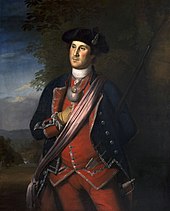
Washington's Portrait, by Stuart
1 – Spanish garrisons driven out of Portugal in a nationalist revolution that will lead to Portugal’s independence. (1640)

1-19 – Continuation of “the Bloody Scout,” a six-week reign of terror by loyalist officer William “Bloody Bill” Cunningham and his men across the South Carolina backcountry, in retribution for the treatment of family and friends by the patriots. (1780) (This event forms the backdrop of my story The Counterfeit Tory.)

2 - Napoleon Bonaparte crowned Emperor of France. (Because that was an improvement on the French Revolution?) (1804)

3 - Birth of Gilbert Charles Stuart (1755-1828) near Narragansett, Rhode Island. Best known for portraits of George Washington, James Madison, James Monroe, and Thomas Jefferson.

4 - The Observer, now the oldest Sunday newspaper in the world, first published in Britain. (1791)

5 - Wolfgang Amadeus Mozart dies in poverty at age 35 in Vienna, Austria. (1791)

5 – Birth of Martin van Buren (1782-1862), the 8th U.S. President and first born a U.S. citizen, in Kinderhook, New York.

7 – Birth of Marie Tussaud (1761-1850) in Bern, Switzerland. Later famous for Madame Tussaud’s Wax Museum.

8 – Birth of Eli Whitney (1765-1825) in Westboro, Massachusetts. Assisted in his invention of the cotton gin by Caty Greene, widow of General Nathanael Greene.

9 – Birth of John Milton (1608-1674) in London.

10 – Birth of Thomas Gallaudet (1787-1851) in Philadelphia, Pennsylvania. Co-founded the American School for the Deaf in Hartford, Connecticut, in 1817.

12 – Birth of John Jay (1745-1829) in New York City. Diplomat and the first Chief Justice of the U.S. Supreme Court. With Alexander Hamilton and James Madison, he co-wrote the Federalist Papers.

13 - The Council of Trent, summoned by Pope Paul III, met to discuss doctrinal matters, including the rise of Protestantism. (1545)

13 - Francis Drake departed Plymouth, England, on his voyage around the world. (1577)

13 - New Zealand discovered by Dutch navigator Abel Tasman of the Dutch East India Company. (1642)

13 – Birth of Heinrich Heine (1797-1856) in Dusseldorf. “Best known for his statement made a hundred years before the advent of book-burning Nazis in Germany – ‘Where books are burned, human beings are destined to be burned too.’”

14 – The evacuation of the British from Charleston, South Carolina, after occupying the city for more than a year and a half. (1782)

14 - George Washington dies at Mount Vernon. (1799)

15 - The Bill of Rights takes effect following ratification by Virginia. (1791)

16 - Following the defeat of King Charles I in the English Civil War, Oliver Cromwell, leader of the Parliamentary forces, is declared Lord Protector of England. (1653)

16 - The Boston Tea Party! Colonial activists disguised as Mohawk Indians board British ships anchored in Boston Harbor and dump 342 containers of expensive tea into the water. (1773)

16 – Birth of Ludwig van Beethoven (1770-1827) in Bonn, Germany.

16 – Birth of Jane Austen (1775-1817) in Hampshire, England.

17 – Excommunication of King Henry VIII after he declares himself supreme head of the Church in England. (1538)

17 - The Continental Army, led by General George Washington, settles in for the winter at Valley Forge in Pennsylvania. (1777)
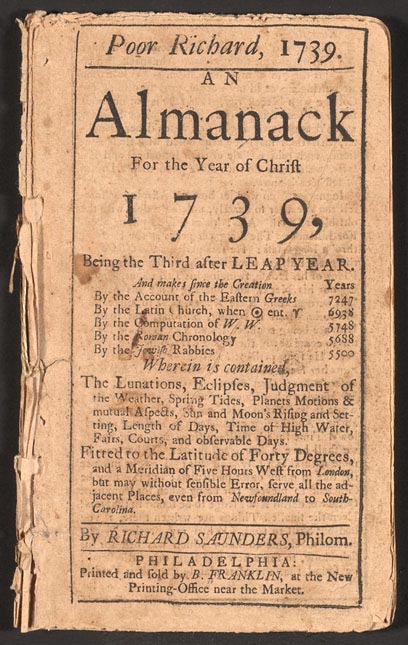
Poor Richard's Almanac
19 - Benjamin Franklin first published Poor Richard's Almanac containing weather predictions, humor, proverbs and epigrams, eventually selling nearly 10,000 copies per year. (1732)

19 – Birth of William Perry (1790-1855) in Bath, England. Famous for his Arctic expeditions and three attempts to find a Northwest Passage.

20 - The Virginia Company expedition to America began as three small ships, the Susan Constant, Godspeed and Discovery, departed London under the command of Captain Christopher Newport. (1606)

20 - Czar Peter the Great changes the Russian New Year from September 1 to January 1 as part of his reorganization of the Russian calendar. (1699)

20 – Attack on “Bloody Bill” Cunningham by General Andrew Pickens on the Edisto River, effectively ending “the Bloody Scout.” (1780)

22 – “Following a triumphant journey from New York to Annapolis, Maryland, George Washington, victorious Commander-in-Chief of the American Revolutionary Army, appeared before Congress and voluntarily resigned his commission.” (1783)

24 - Franz Joseph Gruber composed “Silent Night.” (1818)

24 – Birth of Benjamin Rush (1745-1813) on a plantation in Byberry, Pennsylvania. A signer of the Declaration of Independence, doctor, and humanitarian, whose writings on mental illness earned him the title “Father of Psychiatry.”

24 – Birth of Christopher "Kit" Carson (1809-1868) in Madison County, Kentucky.

25 - George Washington takes 2,400 of his men across the Delaware River for a surprise raid on 1,500 Hessians (German mercenaries) at Trenton, New Jersey. The Hessians surrendered after an hour, with nearly 1,000 taken prisoner by Washington, who suffered only six wounded. The victory provided a much-needed boost to American morale. (1776) (This incident figures into the backstory of my heroine’s father in The Cumberland Bride, releasing October 2018 from Barbour.)

25 – Birth of Isaac Newton (1642-1727) in Woolsthorpe, Lincolnshire, England.
Overlay of the Louisiana Purchase

27 – Birth of Johannes Kepler (1571-1630) in Wurttemberg, Germany. Considered the father of modern astronomy.

29 – Birth of Andrew Johnson (1808-1875), the 17th U.S. President, in Raleigh, North Carolina. Abraham Lincoln's vice president and President upon Lincoln's assassination in 1865.

30 - The Stars and Stripes flag raised over New Orleans as a sign of formal possession of the territory of Louisiana by the United States. (1803)

My thanks to The History Place, Holiday Insights, and the invaluable printed resource of Nothing But Blood and Slaughter: The Revolutionary War in the Carolinas by Patrick O'Kelley.

Monday, October 9, 2017

This Month in Colonial History: October

So what tidbits do we find in colonial and Federal history for this month? Every single month has held some surprises for me ... what are yours?

4 - "The Gregorian Calendar took effect in Catholic countries as Pope Gregory XIII issued a decree stating the day following Thursday, October 4, 1582, would be Friday, October 15, 1582, correcting a 10-day error accumulated by the Julian Calendar. Britain and the American colonies adopted the Gregorian Calendar in 1752."

4 - Belgium gained its independence in 1830, after having been a part of the Netherlands since 1815.

Jonathan Edwards
5 - Birth of theologian Jonathan Edwards (1703-1758) in East Windsor, Connecticut.

5 - "Meeting in Philadelphia, Pennsylvania, the 2d Continental Congress used the word 'Marines' on one of the earliest known occasions, when it directed General George Washington to secure two vessels on 'Continental risque and pay,' and to give orders for the 'proper encouragement to the Marines and seamen' to serve on the two armed ships." (usmcu.edu) (1775)

5 - Shawnee Indian Chief Tecumseh defeated and killed (1813).

7 - The Stamp Act Congress convenes in New York City, attended by representatives from nine colonies meeting in protest to the British Stamp Act, the first direct tax by the Crown upon the American colonies. (1765)

11 - King Henry VIII of England is given the title "Defender of the Faith" by Pope Leo X following the publication of the King's book against Martin Luther. (1521)

12 - After a 33-day voyage in 1492, Christopher Columbus makes first landfall in the New World in the Bahamas. Also, Paraguay declared its independence from Spain and Argentina in 1811. And in 1822, Brazil became independent of Portugal.

13 - The U.S. Continental Navy is created. (1775)

13 - The cornerstone of the White House is laid in 1792 by George Washington.

14 – Birth of Quaker founder of Pennsylvania, William Penn (1644-1718) in London.

15 - Napoleon Bonaparte arrived on the Island of St. Helena beginning a British-imposed exile following his defeat at the Battle of Waterloo.  (1815)

16 - Yale University founded in Killingworth, Connecticut, as the Collegiate School of Connecticut. (1701) The name later changed to Yale College to honor Elihu Yale, a philanthropist.

Marie Antoinette by Elisabeth Vigee Le Brun
16 - Queen Marie Antoinette beheaded during the Reign of Terror following the French Revolution. (1793)

16 - Birth of teacher and journalist Noah Webster (1758-1843) in West Hartford, Connecticut.

17 - The first major victory of the American Revolutionary War, the Battle of Saratoga, where British General John Burgoyne and his entire army of 5,700 men surrendered to American General Horatio Gates. (1777)

18 – In 1685, the Edict of Nantes is revoked by King Louis XIV of France, thus depriving Protestant Huguenots of all religious and civil liberties previously granted to them by Henry IV in 1598.

19 - The Revolutionary War ended with the surrender of Cornwallis to Washington at Yorktown. (1781) The final treaty would not be signed until September 3, 1783.

20 - The U.S. and Britain agreed to set the U.S.- Canadian border at the 49th parallel. (1818)

20 - Birth of British architect Christopher Wren (1632-1723) in Wiltshire, in southwestern England. “Considered one of the greatest minds of his time, he designed St. Paul's Cathedral and 52 churches for the City of London. His secular buildings included the ‘new’ wing of Hampton Court near London and Greenwich Hospital, now the Royal Naval College.”

21 - The Battle of Trafalgar takes place between the British Royal Navy and the combined French and Spanish fleets. Britain’s victory ends the threat of Napoleon's invasion of England, but British naval hero Admiral Horatio Nelson is mortally wounded aboard his ship Victory. (1805)

26 - The Erie Canal opens, connecting Lake Erie to the Hudson River. (1825)

27 - The first of 85 Federalist Papers, written by Alexander Hamilton, James Madison, and John Jay, appeared in print in a New York City newspaper, arguing for the adoption of the new U.S. Constitution. (1787)

28 - Harvard University, the oldest institution of higher learning in America, is founded in Cambridge, Massachusetts, named after John Harvard, a Puritan who donated his library and half of his estate. (1636)

29 - British explorer Sir Walter Raleigh is executed in London for treason on orders from King James I. (1618)

Luther's 1534 Bible
30 - Birth of John Adams (1735-1826) the 2nd U.S. President, in Braintree, Massachusetts.

31 - Martin Luther nailed his 95 Theses to the door of Wittenberg's palace church, denouncing the selling of papal indulgences, questioning various ecclesiastical practices, and marking the beginning of the Protestant Reformation in Germany. (1517)

As always, my thanks to The History Place, Holiday Insights, Marine Corps University, and Wikipedia. :)

Tuesday, September 12, 2017

This Month in Colonial History: September


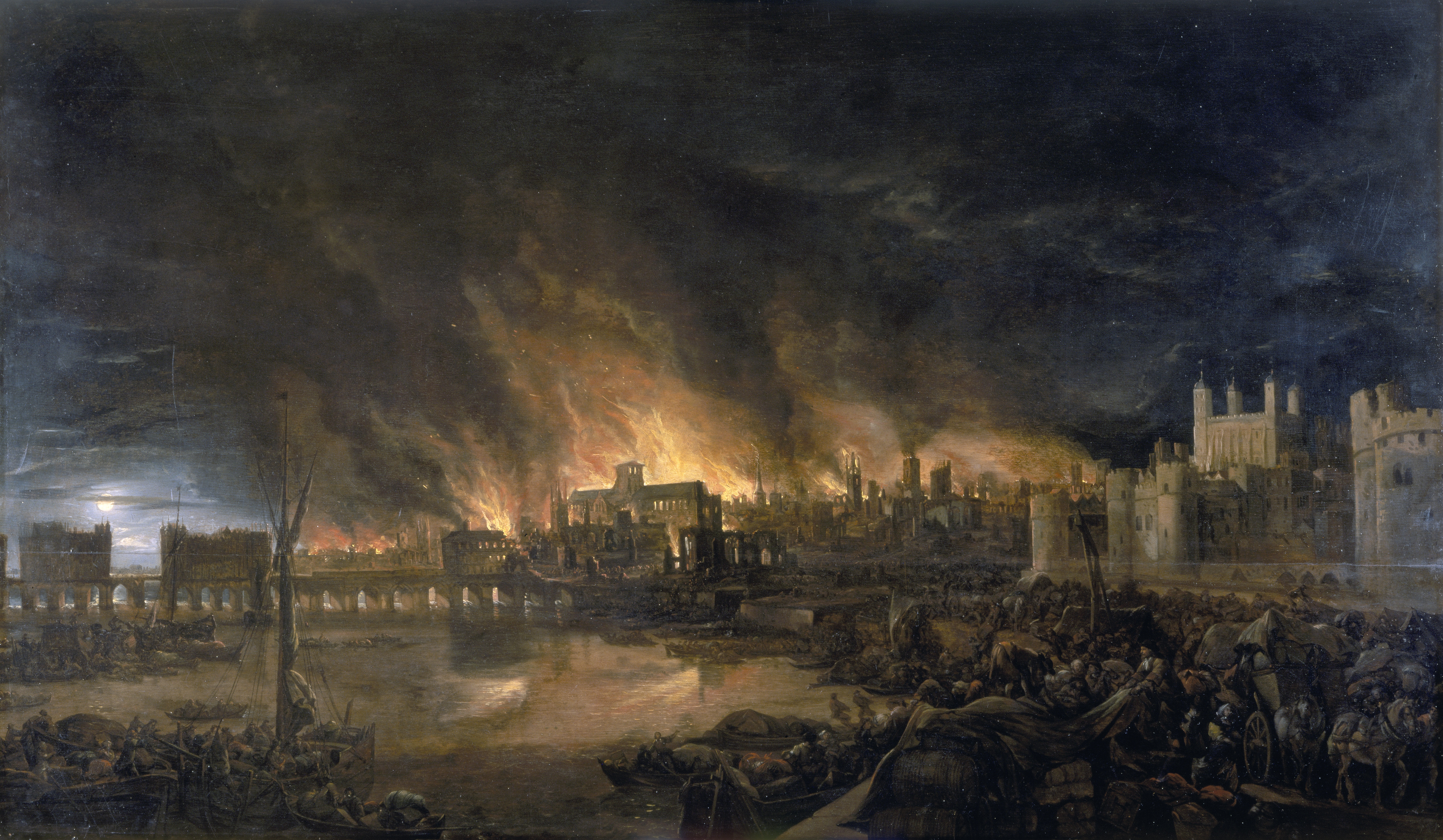
The Great Fire of London, unknown painter
1:  The death of King Louis XIV of France (the “Sun King”), who had ruled since age 5 and succeeded by his 5-year-old great-grandson, Louis XV.

2:  The Great Fire of London is started. More than 13,000 houses destroyed over 3 days, but supposedly only 6 lives lost. (1666)

2:  “The British ended their use of the Julian calendar, switching instead to the Gregorian calendar, resulting in a major adjustment as Wednesday, September 2, was followed by Thursday, September 14. The correction resulted in rioting by people who felt cheated and demanded the missing eleven days back.” (1752)

2:  The U.S. Treasury is established. (1789)

3:  The Treaty of Paris is signed, formally ending the American Revolution, by John Adams, Ben Franklin, and John Jay. (1783)

4:  Navigator Henry Hudson discovers the island of Manhattan. (1609)

4:  El Pueblo de la Reina de Los Angeles, or the Town of the Queen of the Angels, is founded by the Spanish governor of California, later to be known simply as Los Angeles. (1781)

5:  Russian Czar Peter the Great imposes a tax on beards. (1698)

5:  The First Continental Congress assembled in Philadelphia. Every colony represented except for Georgia. (1774)

6:  The Mayflower sets sail from Plymouth, England, after many trials and a few false starts, and still more unthinkable trials to come. Still, as leader William Bradford wrote, they “commited them selves to the will of God, and resolved to proseede” to the New World. (1620)

Marquis de Lafayette
6:  The birth of Marquis de Lafayette (1757-1834) in Chavaniac, France.

7:  The birth of Queen Elizabeth I (1533-1603) in Greenwich Palace, daughter of Henry VIII and Anne Boleyn.

8:  First Catholic settlement in America founded at St. Augustine, Florida, by Spaniard Don Pedro Menendez de Aviles. (1565)

9:  The United Colonies becomes the United States. (1776)

13:  New York City becomes the capitol of the United States. (1788)

14:  Composer George Frederick Handel finishes Messiah after 23 straight days of work. (1741)

14:  Napoleon enters a burning Moscow at the beginning of his disastrous Russian campaign. Fewer than 20,000 men of his original 500,000 survive. (1812)

14:  Francis Scott-Key composes the lyrics to “The Star Spangled Banner.” (1814)

15:  The birth of James Fenimore Cooper (1789-1851) in Burlington, New Jersey.

16:  “Mexico's break from Spain began in the town of Dolores Hidalgo as Father Miguel Hidalgo y Costilla rang his church's bells and exhorted local Indians to ‘recover from the hated Spaniards the land stolen from your forefathers...’” (1810)

16:  “A detachment of Marines under Major Daniel Carmick from the Naval Station at New Orleans, together with an Army detachment, destroyed a pirate stronghold at Barataria, on the Island of Grande Terre, near New Orleans.” (1814)

17:  The U.S. Constitution is unanimously approved by delegates from 12 states. (1787)

18:  Chile declared its independence from Spain after 269 years as a colony. (1810)

22:  Nathan Hale executed for spying. “I only regret that I have but one life to lose for my country.” (1776)

22:  Birth of Michael Faraday (1791-1867), discoverer of electromagnetic induction (moving a magnet through a coil of wire produces a current). Thus electric generators are developed.

25:  Sighting of the Pacific Ocean by Spanish explorer Vasco Nunez de Balboa, after crossing the Isthmus of Panama. (1513)

25:  Publication of the first American newspaper. “A single edition of Publick Occurrences Both Foreign and Domestick appeared in Boston, Massachusetts. However, British authorities considered the newspaper offensive and ordered its immediate suppression.” (1690)

25:  Ratification of the Bill of Rights. (1789)

26:  Birth of Johnny Appleseed, as John Chapman (1774-1845) in Leominster, Massachusetts.

26:  The U.S. Postal Service was founded. (1789)
Sam Adams, 1772, by Copley

27:  Birth of Samuel Adams (1722-1803) in Boston, Massachusetts.

28:  Duke William of Normandy begins the conquest of England at Pevensey, Sussex. (1066) Relevant to the colonial era because, well, Britain. :-)

28: Discovery of California by Portuguese navigator Juan Rodriguez Cabrillo upon his arrival at San Diego Bay. (1542)

29:  U.S. Army created by Congress, with just 1,000 enlisted men and officers. (1789)

  My thanks to The History Place, Holiday Insights, Marine Corps University, Smithsonian Magazine, and Wikipedia. :)

Monday, August 14, 2017

This Month in Colonial History: August

May I present the August edition of interesting and notable happenings during the colonial and early Federal eras ...

1:  Francis Scott Key (1779-1843), composer of “The Star Spangled Banner,” is born.

1:  The first U.S. Census is completed. There are four million people in the U.S. in 1790.

1:  Slavery is abolished in Jamaica, where it had been introduced by the Spanish in 1509. (1838)

2:  Most of the 55 members of the Continental Congress sign the Declaration of Independence, in Philadelphia. (1776)
1490 map by Bartolomeo and Christopher Columbus
3:  “Christopher Columbus sets sail from Palos, Spain, with three ships, Nina, Pinta and Santa Maria. Seeking a westerly route to the Far East, he instead landed on October 12th in the Bahamas, thinking it was an outlying Japanese island.” (1492)

4:  Dom Perignon invents champagne. (1693)

5:  First British colony in North America claimed by Sir Humphrey Gilbert, in the St. John’s harbor area of Newfoundland.

5:  Birth of John Eliot (1604-1690), "Apostle to the Indians." The first Bible printed in America was his translation of the Bible into a native language.

6-10:  The Constitutional Convention’s Great Debate. Outcomes included the establishment of a four-year term of office for the President, granting Congress the right to regulate foreign trade and interstate commerce, and the appointment of a committee to prepare a final draft of the Constitution. (1787)

7:  President Washington creates the Order of the Purple Heart. (1782)

7:  Through an Act of Congress, the Federal Government takes over the creation and maintenance of the nations' lighthouses. (1789)

8:  The Daughters of the American Revolution organization is created. (1890)

10:  The village of Chicago is incorporated. (1833)

12:  Metacom, leader of the Pokanokets, a tribe within the Wampanoag Indian Federation, is assassinated, resulting in the end of a two-year uprising known now as “King Philip's War.” (1676)

16:  The Battle of Bennington in Vermont ... local militiamen and Massachusetts troops wipe out a detachment of 800 German-Hessians sent by British General Burgoyne to seize horses. (1777)

16:  The Battle of Camden in South Carolina ... major defeat for Continentals under General Gates by troops of British General Charles Cornwallis, resulting in 900 Americans killed and 1,000 captured. (1780)

17:  Birth of American frontiersman Davy Crockett (1786-1836) in Hawkins County, Tennessee. Died at the Alamo.

18:  Birth of Meriwether Lewis (1774-1809) near Charlottesville, Virginia.

24:  St. Bartholomew’s Day Massacre in Paris and throughout France. Thousands of Protestant Huguenots died at the hands of Catholics. (1572)

24-25:  The Battle of Bladensburg, in defense of Washington, D.C. The Capitol, White House, and many other buildings, public and private, are burned by the British in retaliation for the American burning of York (Toronto). Participants in the defense of D.C. include a 100-man detachment from the Marines. (1814)

28:  Birth of Johann Wolfgang von Goethe (1749-1832) in Frankfurt am Main, Germany, author of the dramatic poem Faust, completed in 1831.

28:  Birth of the first American-born Roman Catholic saint, Elizabeth Ann Seton (1774-1821; born as Elizabeth Ann Bayley) in New York. Founder of the first American Catholic religious order, the Sisters of Charity of St. Joseph, and the an elementary school in Baltimore, marking the beginning of the parochial school system in the U.S in 1809.

29:  Birth of John Locke (1632-1704) in Wrington, England. Son of Puritans, this physician, philosopher, and essayist would deeply influence the Whig cause of England and all of Western thought.

29:  Sinking of the British battleship Royal George, resulting in the drowning of 900 men. (1792)

29:  Birth of physician and author Oliver Wendell Holmes (1809-1894) in Cambridge, Massachusetts.

30:  Birth of author Mary Shelley (1797-1851) in London.

31:  Beginning of Shays' Rebellion in Massachusetts, by ex-Revolutionary War Captain Daniel Shays leading an armed mob, to prevent the Northampton Court from holding a session to try and imprison debtors, mostly poor ex-soldier farmers. (1786)

As always, my thanks to The History Place, Holiday Insights, and Marine Corps University. And Wikipedia. :)

Monday, July 10, 2017

This Month in Colonial History: July

United States Declaration of Independence.jpg
Facsimile of the original Declaration of Independence
July was a busy month during the Colonial and Federal eras!

2: "Resolved, That these United Colonies are, and of right ought to be, free and independent States, that they are absolved from all allegiance to the British Crown, and that all political connection between them and the State of Great Britain is, and ought to be, totally dissolved. That it is expedient forthwith to take the most effectual measures for forming foreign Alliances. That a plan of confederation be prepared and transmitted to the respective Colonies for their consideration and approbation." In 1776, this resolution is adopted by the Continental Congress in Philadelphia, thus closing the Colonial era (roughly). In 1788, Congress announces that the Constitution has been ratified, by 9 of the 13 states, thus ushering in the Federal era.

3: George Washington steps up to command the Continental army. (1775)

4: In 1776, the Declaration of Independence is approved by the Continental Congress. In 1801, to commemorate the nation’s 25th anniversary, the U.S. Marines parade in review for President Jefferson.

A last effort to avoid full-out war with Britain
5: “The Continental Congress adopted the Olive Branch Petition expressing hope for a reconciliation with Britain. However, King George III refused even to look at the petition and instead issued a proclamation declaring the colonists to be in a state of open rebellion.” (The History Place) Now there’s a tidbit I’d never heard before! (1775)

6: Birth of John Paul Jones (1747-1792) in Kirkbean, Scotland.

8: First public reading of the Declaration of Independence in Philadelphia (1776). In 1796, the first passport is issued by the U.S. State Department.

10: Birth of John Calvin (1509-1564) in Noyon, France. (Cited here because of the deep influence Calvinism had on the American Revolution.)

11:  Birth of John Quincy Adams (1767-1848) in Braintree, Massachusetts. In 1798, his father President John Adams approves an act officially creating the U.S. Marine Corps. And in 1804, the death of Alexander Hamilton in a duel with Aaron Burr.

Kutani Crane by Wedgwood
12:  Birth of British pottery designer Josiah Wedgwood (1730-1795) in Burslem, Staffordshire, England.

13: Congress enacts the Northwest Ordinance: "Considered one of the most important legislative acts of the Confederation Congress, it established the precedent by which the Federal government would be sovereign and expand westward with the admission of new states, rather than with the expansion of existing states and their established sovereignty under the Articles of Confederation." (Wikipedia) (1787)

14: In 1789, the fall of the Bastille in France. In 1791, on the second anniversary, the Birmingham riot takes place, resulting in mob rule for three days.

15: Birth of Rembrandt van Rijn (1606-1669) in Leiden, Holland.

16: Birth of British portrait painter Joshua Reynolds (1723-1792) in Plympton, Devon, England. In 1769, the founding of San Diego as the mission San Diego de Alcala by Father Junipero Serra.

19: Samuel Colt invented the revolver. (1814)

20: Britain enacts the Riot Act, to be read in case of rowdy gatherings. “Our sovereign Lord the King chargeth and commandeth all persons, being assembled, immediately to disperse themselves, and peaceably to depart to their habitations, or to their lawful business, upon the pains contained in the act made in the first year of King George, for preventing tumults and riotous assemblies. God save the king.” Thus the term "being read the Riot Act" is born. (1715)

25: American forces defeat the British at the Battle of Niagara Falls. (1814)

26: Benjamin Franklin becomes the first Postmaster General. (1775)

31: The opening of the U.S. Patent Office. (1790)

Which of these did you not know, before?

 As always, my thanks to The History Place, Holiday Insights, and Marine Corps University. And Wikipedia. :)

Monday, June 12, 2017

This Month in Colonial History: June

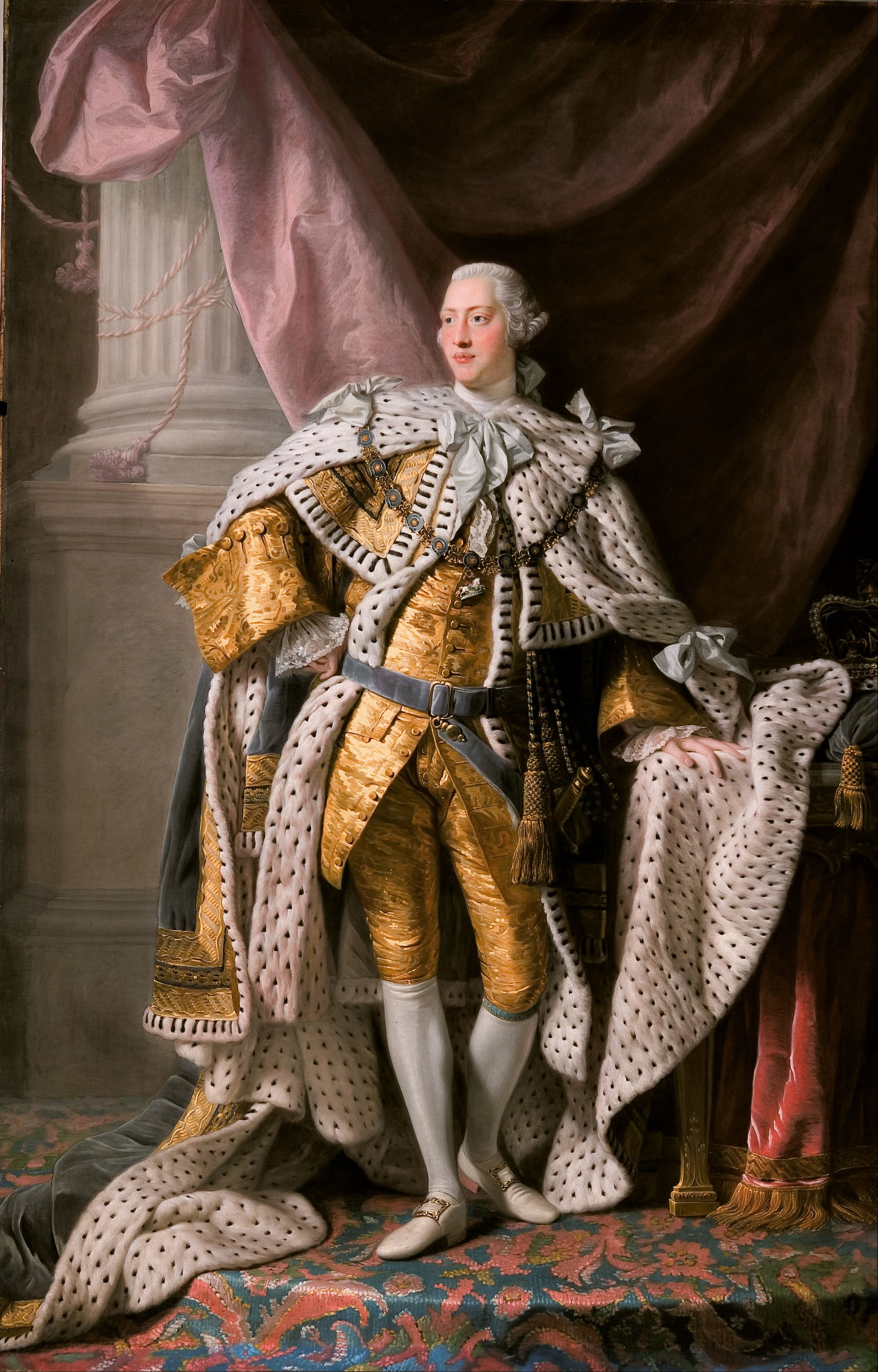
King George III of England, 1762

Time for the June edition of familiar and not-so-familiar colonial events!

1 – The term “Don't give up the ship!” is coined by Captain James Lawrence, U.S. Chesapeake. (1813)

2 – Birth of the Marquis de Sade (1740-1814), whose violence and cruelty led to the term sadism, defined as gratification in inflicting pain. (1740)

2 – First U.S. tour of PT Barnum’s circus. (1835)

4 – King George III (1738-1820) is born. Yes, this was THAT King George.

5 – Birth of Scots economist and philosopher Adam Smith (1723-1790), whose An Enquiry into the Nature and Causes of the Wealth of Nations (published 1776) deeply influenced modern economic theory.

5 – First sustained hot-air balloon flight, Annonay, France. (1783)

6 – Birth of Nathan Hale (1755-1776), American patriot and spy. “I only regret that I have but one life to lose for my country.”

7 – The United Colonies changes its name to The United States. (1775)

10 – Dutch colonists settle on Manhattan Island (1610)

Pine Tree Shilling, designed by John Hull
10 – The first mint is opened in America, in defiance of English colonial law, by silversmith John Hull. (1652)

10 – Benjamin Franklin flies a kite in a lightning storm and discovers electricity.  (1752)

13 – Birth of American Army General Winfield Scott (1786-1866) was born in Petersburg, Virginia. Nicknamed "Old Fuss and Feathers" because of his formality, he served in three wars: the War of 1812, the Mexican War, and the American Civil War.

14 – The U.S. Army is formed. (1775)

14 – Introduction by John Adams of a resolution before Congress mandating a United States flag, stating, "...that the flag of the thirteen United States shall be thirteen stripes, alternate red and white; that the union be thirteen stars, white on a blue field, representing a new constellation." (1777)

15 – George Washington is appointed the Commander-in-Chief of the U.S. Army. (1775)

17 – King John signs the Magna Carta. (1215)

Rubens self portrait, 1623
18 – The U.S. Senate votes in favor of a declaration of war against Great Britain, which is officially proclaimed by President Madison the following day. (1812)

18 – Crushing defeat of Napoleon at Waterloo, ending 23 years of warfare between France and the rest of Europe. (1815)

28 – Birth of Flemish painter and diplomat Peter Paul Rubens (1577-1640). Not only considered the master artist of his day, but also skilled in science and politics and spoke seven languages.

28 – Birth of philosopher Jean-Jacques Rousseau (1712-1778).

My gratitude as always to The History Place and Holiday Insights.

Monday, May 8, 2017

This Month in Colonial History: May

Penny Black--the first postage stamp
I bring you the May edition of highlights of colonial history ...

1 – England and Scotland unite to form Great Britain. Wales was already united to England, and Ireland would later be thrown into the mix.  (1707)

1 – The first adhesive postage stamp released in England. Thus ending the colonial/Federal era ... JUST KIDDING!!!! (1840)

3 – St. Iago, the island later known as Jamaica, discovered by Christopher Columbus. (1494)

4 – The sale of Manhattan Island takes place, for the sum of $24 in cloth & buttons. (1626)

7 – The first-ever inaugural ball! Can you guess who it was in honor of? (Hint ... first President and his wife ...) (1789)

8 – The establishment of the U.S. Post Office. (1794)

12 – In the category of obscure things that we’re glad exist ... the flush toilet is patented. (1792)

14 – The first permanent English settlement in the New World is established, led by John Smith, at Jamestown, Virginia. (1607)

14 – Dr. Edward Jenner develops the smallpox vaccine. (1796)

14 – Lewis and Clark set out from St. Louis on an expedition to explore the Northwest. It would take them a year and a half to reach the Pacific Ocean and then almost another two to return. (1804)

17 – The New York Stock Exchange is established by two dozen merchants and brokers. (1792)

18 – Napoleon Bonaparte becomes Emperor of France. (1804)

22 – Former Vice President Aaron Burr is tried for treason and acquitted. (1807)

24 – Mary Hale of Boston writes the nursery rhyme "Mary Had a Little Lamb." (1830)

25 – Delegates from seven states, constituting a quorum, gather in Philadelphia for the Constitutional Convention. (1787)

27 – The first execution of the Salem witch trials takes place (Achsah Young). (1647)
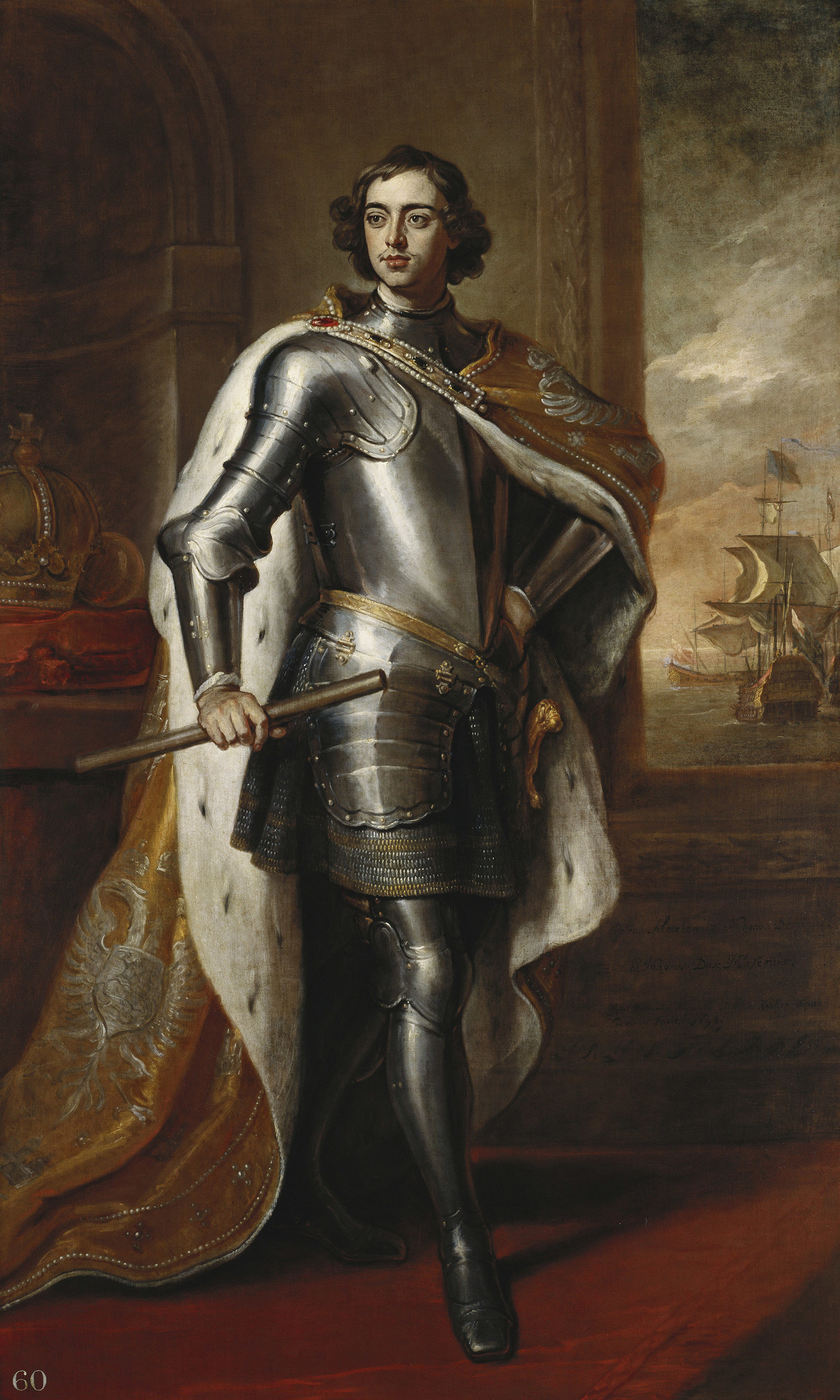
Peter I (aka "the Great"), 1698

28 – Birth of William Pitt the Younger (1759-1806), who became Prime Minister of Britain at a mere 24 years of age, and with his understanding of economics helped Britain reduce her debt from the American Revolution.

29 – Restoration of the English monarchy by Charles II, after several years of Oliver Cromwell’s rule. (1660)

29 – Birth of Patrick Henry (1736-1799). Famous for his speech, “... give me liberty or give me death!”

30 – Birth of Peter the Great of Russia (1672-1725). Credited with many reforms and basically creating the Russian empire.

30 – Publication of the first daily newspaper in America, the Philadelphia Evening Post. (1783)

My thanks to The History Place and Holiday Insights.


Monday, April 10, 2017

This Month In Colonial History: April

Washington Irving's Encounter with George Washington.jpg
Washington Irving meeting George Washington
It's that time again!

1: Oliver Pollack invents the dollar sign: $ (1778)

2: Spanish explorer Ponce De Leon sights Florida for the first time, and after landing at what is now St. Augustine, claims it for the Spanish Crown. (St. Augustine has the distinction of being the continental US’s oldest city.) (1513)

2: Congress passes the Coinage Act, establishing the U.S. Mint. (1792)

3: Birth of American folk writer Washington Irving (1783-1859) in New York City.

By George Bernard Butler, jr. - Historic Hudson Valley, Public Domain, Link

7: Uprising by 27 enslaved Africans. The state militia was called out to deal with the situation; 6 slaves committed suicide and 21 were executed. (1712)

9: French explorer LaSalle reaches the Mississippi river. (1691)

13: Birth of Thomas Jefferson (1743-1826) in Albemarle County, Virginia.

14: First abolitionist society in America founded in Philadelphia. (1775)

14: First American Dictionary of the English Language published by Noah Webster. (1828) Until this time, spelling was not standardized, even among the educated.

15: First school for the deaf established in Hartford, Connecticut, by Thomas H. Gallaudet and Laurent Clerc. (1817)

18: “The Red Coats are coming!” Famous “midnight ride” by Paul Revere--and William Dawes--from Charlestown to Lexington and Concord, Massachusetts, on the eve of what is marked by many as the beginning of the American Revolution. (1775)

19: The Revolutionary War begins at Lexington, Massachusetts. (1775)

24: The founding of the Library of Congress in Washington, DC. (1800)

27: First Lieutenant Presley N. O'Bannon, who with seven other Marines was part of a force of Greeks and Arabs led by American Consul William Eaton, raised the United States flag for the first time over a conquered fortress of the Old World at Derne, a stronghold of the Tripolitan pirates. Two Marines were killed and one wounded in the assault on the walled city. (1805, from www.usmcu.edu)

Washington's Inauguration.jpg
First Inauguration of George Washington
28: Birth of James Monroe (1758-1831), our 5th US President, in Westmoreland County, Virginia.

30: The presidential oath of office administered for the first time ever, to George Washington. (1789)


My thanks to The History Place, Holiday Insights, and Marine Corps University.

Monday, March 13, 2017

This Month in Colonial History: March

It's time for the March edition of "This Month in Colonial History." Enjoy!

1:  Articles of Confederation are formally ratified in 1781, establishing Congress as the governing body of the 13 American Colonies.

2:  In celebration of Samuel Houston’s birthday, Texas declared its independence from Mexico in 1836. Okay, so the two probably aren’t related, but it’s a fun fact to point out! Also, did you know that in his teens, Sam Houston ran away and lived with the Cherokee? 

4: Land grant in 1681 from King Charles II to William Penn, which later became ... you guessed it ... Pennsylvania.

4: The Constitution of the United States of America goes into effect in 1789.

5: The Boston Massacre in 1770 ... often presented as an action by overreactive British soldiers against a peaceable populace, but probably more likely the result of them cracking under provocation by a mob. The British were cleared in court of murder charges, after being defended by none other than John Adams.

9:  Birth in 1451 of Amerigo Vespucci, the Italian explorer for whom our continent is named.

11: (from www.usmcu.edu) “Marines participated in the action [of the American Revolution] when the Continental Navy frigate Boston, enroute to France, sighted, engaged, and captured the British merchant ship Martha. As the drum of the Boston beat to arms, John Adams seized a musket and joined the Marines on deck until the frigate's captain, Samuel Tucker, sent him below for safety.” (1778)

12: Colonization in 1609 of Bermuda, discovered after a ship bound for Virginia wrecked on its reefs.

13: Harvard University named after clergyman John Harvard, in 1639.

15: Birth in 1767 of Andrew Jackson, 7th U.S. President (1829-1837), hero of the War of 1812. One could argue that his harsh policies toward Native Americans were shaped by his witnessing the Cherokee conflict in the Carolina backcountry and British occupation of the same, since he was a mere lad of not quite 13 at the Battle of Camden, where he and his family resided.

16: Birth in 1751 of James Madison, 4th U.S President (1809-1817)

19: Birth in 1589 of William Bradford, governor of Plymouth Colony and credited with much of its success. First sailed with a group of 100 Pilgrims aboard the Mayflower, originally bound for Virginia.

21: Birth in 1685 of Johann Sebastian Bach, musical composer.

23: Patrick Henry’s famous declaration in 1775, “Give me liberty, or give me death!” Credited with sparking the powder keg of revolution in the colonies.

25: In 1807, the British Parliament abolished the slave trade.

28:  Nathaniel Briggs patents the washing machine in 1797.

31: Birth in 1596 of René Descartes, philosopher and mathematician.

31: Birth in 1732 of Franz Joseph Haydn, composer, who was a contemporary of Mozart and teacher to Beethoven.

My thanks to The History Place, Holiday Insights, and Marine Corps University.

Monday, February 13, 2017

This Month In Colonial History: February

Tadeusz Kosciuszko
Second month of my overview of colonial history! Enjoy!

February 4, 1746 - Thaddeus Kosciusko was born in Poland. Engineer who not only built the first fortifications at West Point but managed the siege of Ninety Six, South Carolina, during the summer of 1780. After the American Revolution, he returned to his homeland and fought against a Russian invasion.

February 6, 1788 – The U.S. Constitution was ratified by a sixth state ... Massachusetts!

Aaron Burr
February 6, 1756Aaron Burr
was born in Newark, New Jersey. Most famous for the death of Alexander Hamilton in 1804, but have you heard of the Burr Conspiracy? Or that he's the great-grandson of Jonathan Edwards? Neither had I!

February 13, 1635 – The first public (taxpayer supported) school in America, Boston Latin School.

February 22, 1732 - George Washington born. Commander of the Continental Army during the American Revolution and first U.S. President.

George Washington, age 40
A few additions! “This month in Revolutionary War history,” with a catch-up for January ...

January-February 1779 – After taking Savannah, Georgia, the British prepare to move on Charles Towne.

January 17, 1781 – The Battle of Cowpens: definitive defeat of British and loyalist forces under Tarleton by Continental regulars and militia under Daniel Morgan in upstate South Carolina. The most important win of the Southern Campaign after King’s Mountain.

February 1-14, 1781 - Race for the Dan: literal race between the Continental army (under Greene) and British army (under Cornwallis) to get through North Carolina into Virginia, which would give either army a strategical advantage.

January-February 1782 – The Siege of Charleston in reverse: after more than a year of thoroughly wearing out the British army, Greene’s forces press in on Charles Towne to effect a complete pull-out (not accomplished until Dec 1782).

With thanks to The History Place for their excellent lists, and Patrick O'Kelley's Nothing but Blood and Slaughter, Vols. 1-4.

Monday, January 9, 2017

This Month In Colonial History: January

This year, I thought it would be fun to do a feature highlighting various events important to, and parallel with, the American colonial era, and a few from the Federal era. Assisting me in this endeavor is a site titled The History Place™.

For purposes of NOT plagiarizing, I'll attempt to summarize each event ... enjoy!!

Grand Union Flag of America, 1776
January 1, 1776 - the unveiling of America's first national flag, the Grand Union, by George Washington.

January 1, 1735 - Paul Revere born in Boston, Massachusetts. Does anyone not know about his ride on the night of April 18, 1775?

January 1, 1752 - Betsy Ross born in Philadelphia, Pennsylvania.

January 3, 1777 - During the Revolutionary War, the British are defeated at Princeton and driven back toward New Brunswick. American winter quarters established at Morristown, New Jersey. During the long, harsh winter, the American army shrinks to about a thousand men as enlistments expired and deserters fled

January 4, 1790 - The first State of the Union address, delivered by President Washington.

January 7, 1714 - A patent was issued for the first typewriter designed by British inventor Henry Mill "for the impressing or transcribing of letters singly or progressively one after another, as in writing." Thank you, Mr. Mill, from writers everywhere!

January 7, 1782 - The Bank of North America, our first commercial bank, opens in Philadelphia.

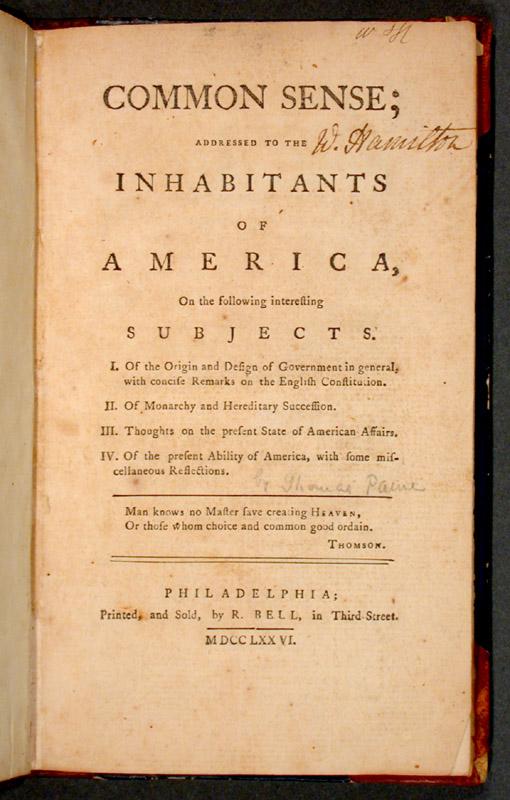
January 10, 1776 - The publication of Common Sense, a fifty page pamphlet by Thomas Paine, which served as a great influence to many, including the authors of the Declaration of Independence.

January 11, 1755 - Alexander Hamilton born in the British West Indies.

January 12, 1588 - John Winthrop born in Suffolk, England. Joined a group of Puritans emigrating to America in 1630 and "became the first governor of Massachusetts Bay Colony, establishing a colony on the peninsula of Shawmut, which became Boston."

January 12, 1737 - John Hancock born in Braintree, Massachusetts.

January 14, 1741 - Benedict Arnold born in Norwich, Connecticut.

January 17, 1773 - "The ship Resolution, sailing under Captain James Cook, became the first vessel to cross the Antarctic Circle."

January 17, 1706 - Benjamin Franklin born in Boston, Massachusetts.

January 21, 1793 - "In the aftermath of the French Revolution, King Louis XVI of France was guillotined on the charge of conspiring with foreign countries for the invasion of France. During the Revolution, the King had attempted to flee to Austria for assistance. Ten months later, his wife, Queen Marie Antoinette, was also guillotined."

January 26, 1788 - The establishment of Sydney Harbor in Australia to accommodate 11 ships with 778 convicts, "setting up a penal colony to relieve overcrowded prisons in England."

January 27, 1756 - Wolfgang Amadeus Mozart born in Salzburg, Austria. "From the age of five, through his untimely death at age 35, this musical genius created over 600 compositions including 16 operas, 41 symphonies, 27 piano and five violin concerti, 25 string quartets, 19 masses, and many other works." One could say he wrote the soundtrack to the colonial era ....

January 29, 1737 - Thomas Paine born in Thetford, England. "His pamphlet, published in 1776, provided inspiration to undecided Americans that a new nation, independent from Britain, might eventually become '...an asylum for mankind!' He served in the Continental Army and observed the hardships of American troops fighting the world's most powerful army. He then published The Crisis series pamphlets which began by stating, 'These are the times that try men's souls.' He refused to accept the profits from his writings and wound up destitute after the Revolution."