Announcements

10 Year Anniverary & New Releases Winners: Carrie Fancett Pagels' Butterfly Cottage - Melanie B, Dogwood Plantation - Patty H R, Janet Grunst's winner is Connie S., Denise Weimer's Winner is Kay M., Naomi Musch's winner is Chappy Debbie, Angela Couch - Kathleen Maher, Pegg Thomas Beverly D. M. & Gracie Y., Christy Distler - Kailey B., Shannon McNear - Marilyn R.
Showing posts with label Cotton Mather. Show all posts

Monday, September 21, 2020

Historic Boston: the highlights, part 2

 
Sometimes the best history is found in ... a cemetery.
 
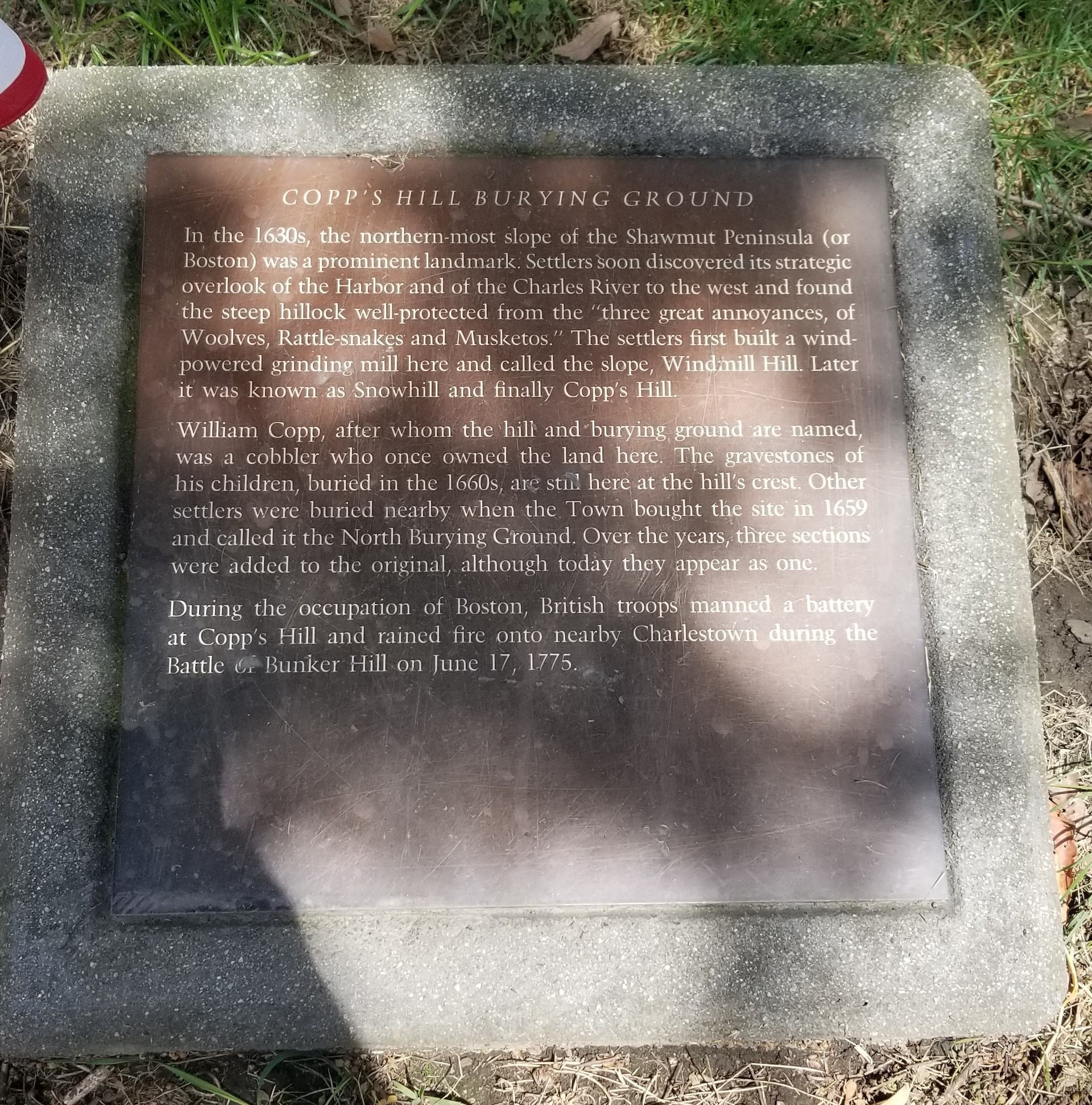
One of our too-short stops in the North End of Boston (which I completely fell in love with!) was the Copps Hill Burying Ground. This cemetery was, as explained by one of the informational placards, transformed during the Victorian era from a simple "burying ground" to a park.


 (Forgive the odd formatting on this post--Blogger has changed things all up and it's much harder to get things to look the way one wishes them to!)


One of my favorite discoveries was the family tomb of Cotton Mather, his son Increase, and grandson Samuel. I remember reading about Cotton Mather in church history, so in nosing around the CQ archives for connections to him, I really enjoyed MaryLu Tyndall's article, Cotton Mather: Preacher to the Pirates!
 
(Note the furry resident taking refuge in the construction around the monument ...)


And my youngest daughter, trying to see how close she can get to the wild bunny ...
 
Amongst other things we saw on this particular morning was the Revere house. We lacked the time to go in and tour, but I snapped an awkward selfie, and turned to capture the way the colonial building abuts a more modern construction before we had to hurry on.


And then there was the beautiful Old North Church! More on that next time, because it deserves its own post ...


Friday, May 11, 2012

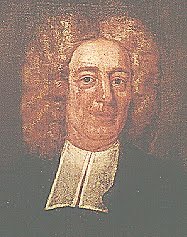
Cotton Mather - Preacher to the Pirates!

On Friday, 20 June 1704, Cotton Mather and another minister, as well as “Forty Musketeers, Constables of the Town, the Provost Marshall and his Oficers,” accompanied the condemned pirates to the place of execution. In An Account of the Behaviour and Last Dying Speeches of the Six Pirates, he wrote:
Being allowed to walk on Foot through the Town, to Scarlets wharf, where the Silver Oar being carried before them; they went by Water to the Place of Execution being Crowded and thronged on all sides with Multitudes of Spectators.

Cotton Mather made it his life's goal to preach to condemned pirates with the intent of saving their souls for all eternity.  He often visited them in prison, reading Scripture to them and exhorting them to come to a true repentance for their sins before their execution. A diary entry in April 1699 read:
After the other public Services of the Day were over, I visited the Prison. A great Number of Pyrates being there committed, besides other Malefactors, I went and pray’d with them, and preach’d to them. The Text, in which the Lord helped mee to Discourse, was Jer. 2. 26. The Thief is ashamed, when hee is found. I hope, I shall have some good Fruit of these Endeavours.
http://alturl.com/yd6tr
But who was this Cotton Mather? Born in 1663, the eldest son of a prominent preacher in Boston, he grew up believing in hard work and living a Godly life. He learned to speak and read Latin, Greek, and Hebrew. Science intrigued him to such a degree that in 1713 he became the first person born in America to become a member of The Royal Society in England.   At age eleven, he was the youngest person admitted to Harvard College where he studied medicine and theology.

Two years after he graduated in 1678, Cotton Mather delivered his first sermon in Dorchester at Grandfather Richard Mather’s church.   Eight years later, he visited his first condemned prisoner.

His doctrine, or fundamental belief, was that “If we Mark the Ways of Wicked men, which is indeed, an old Way, we shall find in it some things that are truly Remarkable.”  The truths he found "remarkable" in each of the condemned men he visited were:

  • Sin has been around for a long time 
  • To follow the path of evil is not an easy way
  • When one allies himself with evil, he hastens his downfall
  • Sinning is a deceitful vocation
  • Commiting a sin only leads one to greater sins.
  • Once facing justice, sinners claim to repent but they're not sincere in doing so
  • Too much wickedness ensures an early demise
  • God knows all sins the wicked commit
  • Sooner or later all sinners must face their just punishments

Over his years, Cotton ministered to hundreds of condemned pirates. Most repented. Some never did. One of the most famous of those men who refused to see the light was a man by the name of William Fly, a 27 year old sailor who staged a mutiny on board the slaver, Elizabeth in 1726. After killing the captain and first mate, they took over the ship and became pirates, feasting on any ship that happened their way. After Fly's capture and speedy trail, he was quickly condemned to death by hanging.

Mather then described two meetings he had with the convicted pirates. Their first conference took place six days before their executions. Although doomed men, Mather assured them they could still be saved – “Tho’ you have been so wicked overmuch, that the Sword of Justice can do no other, than Cause you to Dy before your Time, yet there is Mercy with God for you, if you Return to Him. . .the great God is Angry with you…. You are within a very few Days, to be thrown into those Hands, which if you dy in Ill Terms with Heaven, you will find it a fearful thing to fall into. Now, tis only in the Way of repentance…that you can be saved from the inconceivable Miseries….

After several meetings , and try as Cotton Mather did, he failed to turn Fly toward God. 

The final segment of The Vial Poured out upon the Sea (an account of the proceedings)  involved the execution. Mather bid Fly “to Speak, what he should judge proper to be spoken on that sad occasion….” Instead of confessing or warning others not to tread the path he had, Fly said, “he would advise the Masters of Vessels to carry it well to their Men, lest they should be put upon doing as he had done.” Remaining defiant to the end, Fly died on 11 July 1726, at the age of twenty-seven, and his “Carcase hanged in Chains, on an Island, at the Entrance into Boston-Harbour.” 

Cotton Mather was sixty-three when he counseled William Fly. The Vial Poured out upon the Sea was his last narrative that focused on condemned criminals. He took seriously his job of ministering to sinners before they departed this life. 

Cotton Mather was the most prolific writer of early American literature, yet few of his 469 published writings have appeared in print since his death in 1728. He craved knowledge, and when he died, he owned one of the largest libraries in America.   


Sunday, January 1, 2012

Cotton Mather Exhorts Us to Study the Word of God

" The Word of God must be Read and Heard with Diligence that so you may arrive to the Knowledge that is needful for you. "
Cotton Mather

Cotton Mather, the 17th Century Puritan preacher, echoes the Apostle Paul’s words to Timothy:
“Study to shew thyself approved unto God, a workman that needeth not to be ashamed, rightly dividing the word of truth.” II Timothy 2:15
What is the knowledge we need to know? To begin with, it is the knowledge of the Lord Jesus Christ, who died for our sins, was buried, and rose again for our redemption. After understanding and receiving this truth, we need to understand how to live for Him.

Through the study of the Holy Bible, we glean the knowledge of what it means to love God and to serve Him—we learn what is our purpose in life.

Revelations 4:11 says:
“Thou art worthy, O Lord, to receive glory and honour and power: for thou hast created all things, and for thy pleasure they are and were created.”
If God has created all things (which includes us) for His pleasure, then we need to learn how to bring Him pleasure. What pleases God?

Hebrews 11:6 tells us that we need to have faith in order to please Him.

In John 14:21 Jesus tells us that if we love Him, we will keep His commandments. Jesus tells us that the kind of love we are to have is one that will die for another, even as He has died for us.

The Apostle Paul time and time again speaks of the knowledge of God and of the knowledge of the love of Christ. We learn of this knowledge through reading and studying of God’s Word, and we please Him when we demonstrate our faith by applying what we learn from His Word. Have you studied the Bible today?