Announcements

10 Year Anniverary & New Releases Winners: Carrie Fancett Pagels' Butterfly Cottage - Melanie B, Dogwood Plantation - Patty H R, Janet Grunst's winner is Connie S., Denise Weimer's Winner is Kay M., Naomi Musch's winner is Chappy Debbie, Angela Couch - Kathleen Maher, Pegg Thomas Beverly D. M. & Gracie Y., Christy Distler - Kailey B., Shannon McNear - Marilyn R.
Showing posts with label frontier law. Show all posts

Monday, March 16, 2020

Early American Justice


Daniel Boone leading settlers through Cumberland Gap
Before the Wild West there was ... the even wilder frontier of early America.

During the colonial era, the justice system was limited, of course, by the location of courts. In South Carolina, for instance, the only court was in Charles Towne, which meant that most law-keeping efforts were expended closer to the coast, and mostly on behalf of the planters, leaving the backcountry settlers vulnerable to all manner of criminal depredations. North Carolina saw a similar situation, but with a legal system that was both passive and corrupt.

This gave rise to what was termed the Regulator movement, as summarized in The Carolina Backcountry on the Eve of the Revolution:

The Regulator movement [in South Carolina] ... was only slightly related to the uprising which had troubled North Carolina during almost the same period. The North Carolina Regulators had appeared first, and had probably both inspired and provided a name to their counterparts in the southern province. ... The aims of the two movements were different. The North Carolina Regulators tried to "regulate" the local sheriffs, registers, clerks, and lawyers who, they complained, exacted illegal and exorbitant taxes, fees, and rents from them. The Regulators of South Carolina, on the other hand, demanded the benefits of law and order, and their "regulation work" consisted largely of punishing and driving away the bandits who infested their settlements.

These situations greatly contributed to the tide of opinion in favor of rebelling against the Crown, as the above paragraph concludes, "Though the back settlers of both provinces had numerous and genuine grievances, there is little doubt that the South Carolinians had by far the greater provocation to rebellion."

Fast-forward 10-15 years after America had won her independence. Among others added to the original thirteen, Kentucky became a state in 1792. While the western reaches remained wild and woolly for quite some time, the residents of the interior--that beautiful bluegrass region so loved by native tribes as a seasonal hunting grounds--were careful to set a justice system in place. Constables and clerks worked alongside judges and attorneys, but the main courts were held twice a year, in April and October, with "Quarter Courts" sessions in between, in January and July. (A previous description of the colonial court system was provided in the post The Colonial Courthouse, by Jennifer Hudson Taylor.) When the situation called for it, such as dealing with river pirates or bandits afflicting travelers along the Wilderness Road and its various adjoining traces, a local sheriff and deputy (or deputies) would organize a posse to ride out and bring criminals to justice. Although this system is most familiar in the setting of the Old West, decades later, it was already in use before 1800, and is referred to as a Regulator-style method of dealing with criminal activity.

When the Harpes launched their "war on all mankind," local law enforcement enlisted ordinary merchants and farmers in the effort to locate the murderers. Dozens of groups joined the search, some staying at it for mere days, while others kept going for weeks. Since each man was responsible for his own provisions, with limited resources, many returned home sooner rather than later because farms and businesses simply wouldn't run themselves. Others were concerned about reprisal from the Harpes, and wished to make sure their families and homes were still safe.

The early American justice system was by no means perfect, but ... it was all they had. With no professional police force in place, at least not such as we know today--and in the absence of modern technology or social media--the dedication of those who gave time and effort to the chase is rather amazing.

Monday, January 13, 2020

Criminals of Early America: Samuel Mason


The mighty Ohio River (looking across to Kentucky from Illinois)
History is full of men (and women) who have wanted to live without law. One could argue that part of the reason explorers like Daniel Boone took to the wilderness was to escape the strictures of civilized life, but there’s a huge difference between those who in their own heart hold moral law in high enough regard but feel the need for “elbow room,” and those who have no regard for morality at all.

And then there are the interesting subjects who fall somewhere in the middle.

Such was the case of Samuel Mason, former captain of the American Revolution, who became a river pirate.

Until the opening of the Wilderness Road to wagon traffic in 1795-96, travel down the Ohio River was regarded as the easiest method of travel into western lands during the Federal era—if the most dangerous because of the threat of attack by natives. But the danger was by no means limited to by that from the Shawnee, because as soon as the native tribes migrated west, others found travelers a too-easy target as settlers poured into the frontier by both land and waterway.

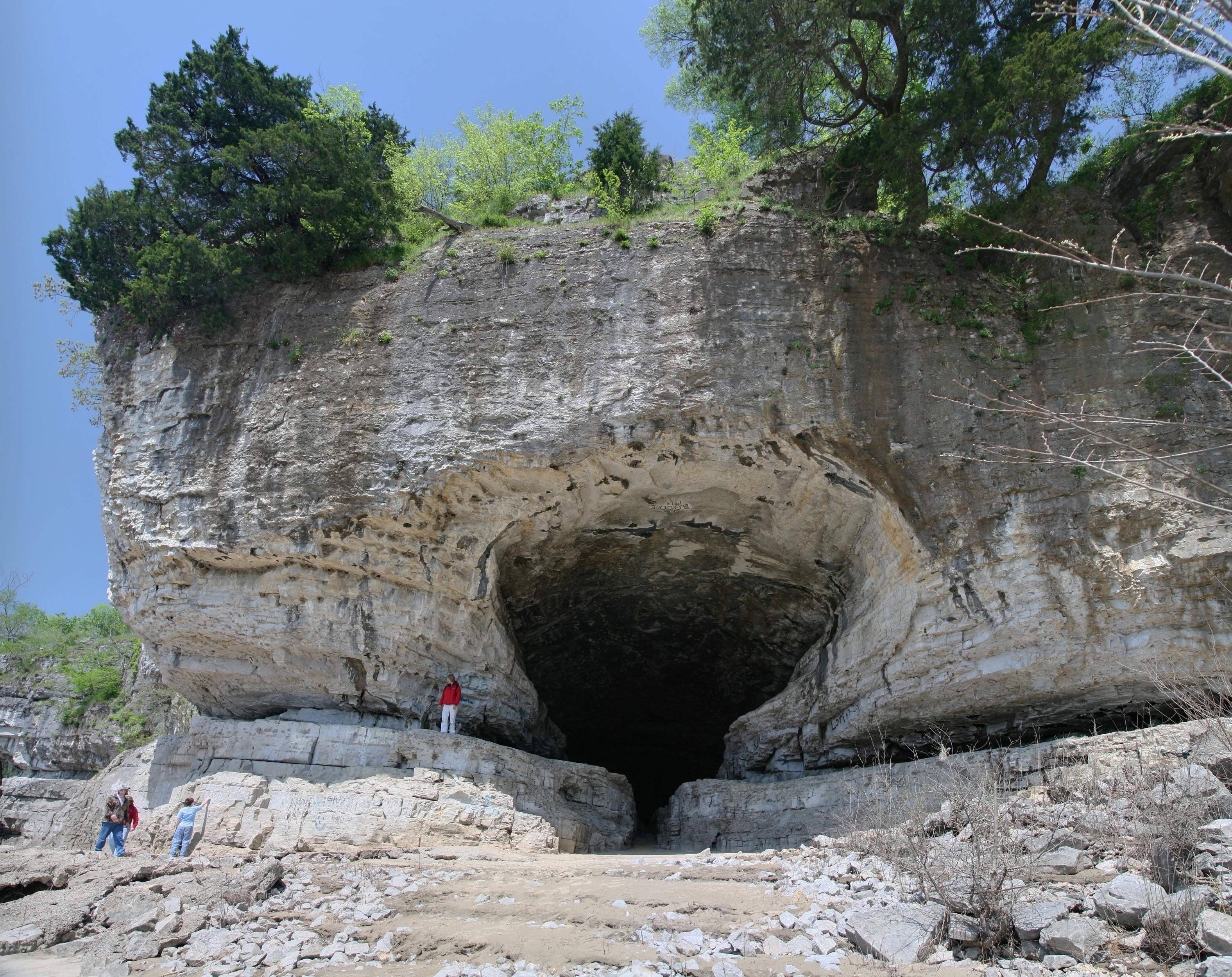
Cave-in-Rock State Park, Illinois
No one really knows enough of Mason’s background to say why he chose a life of crime, but it’s said that he came of a solid, well-connected family in Virginia, served on the western frontier before and during the Revolution (in what would become Ohio, Indiana, and Illinois, among other things on a campaign led by George Rogers Clark), and became associated with others who preferred theft to honest work. He’s most known for heading up a gang based out of Cave-in-Rock, a large natural hollow in the limestone rock overlooking the Ohio River from the Illinois side, about halfway between what is now Henderson and Paducah, Kentucky.

Mason was later credited with being shrewd but not bloodthirsty, bragging that he never took a life “unless necessary” (self defense and avenging family members seemed to be included in that). This was in contrast to the notorious Harpes, a pair of men who although called brothers were likely cousins, and who wreaked mayhem all up the Wilderness Road and across Kentucky and Tennessee. (The saga of their murder spree in 1798-99 provides the background for my upcoming release, The Blue Cloak, #5 of Barbour Publishing’s True Colors series.)

Keelboats and flatboats, both popular with settlers
The Harpes are another study entirely, and I’ll share more about them later, but for now suffice it to say that they were so twisted and cruel, not even river pirates wanted them around.

It was around this time—again, no one is really sure—that Mason abandoned Cave-in-Rock and drifted over to the Natchez Trace, a road which connected Nashville, Tennessee, with towns farther south in Mississippi Territory and eventually reached New Orleans. His fate is later tied up with the Harpes in a most bizarre manner, but the man had a wife who apparently did not approve of his activities, and sons who joined him at least occasionally.

Robbery and murder were not the only criminal acts taking place on the frontier. Counterfeiting became big business as well, and a sort of mafia-like “protective” service offered by some.

And how did folk on the frontier deal with such things? Well, more on that later. :-)