Announcements

10 Year Anniverary & New Releases Winners: Carrie Fancett Pagels' Butterfly Cottage - Melanie B, Dogwood Plantation - Patty H R, Janet Grunst's winner is Connie S., Denise Weimer's Winner is Kay M., Naomi Musch's winner is Chappy Debbie, Angela Couch - Kathleen Maher, Pegg Thomas Beverly D. M. & Gracie Y., Christy Distler - Kailey B., Shannon McNear - Marilyn R.
Showing posts with label Sir Walter Raleigh. Show all posts

Monday, January 11, 2021

Researching the 16th Century: Fort Raleigh National Historic Site

In a year full of uncertainty and isolation, I was blessed to not only sign another book contract, but also do onsite research for the story. Daughters of the Lost Colony: Elinor is scheduled for a December 2021 release. This was not a story I expected to get to tell--but I am so excited to present it to y'all!

After writing already about the Lost Colony and where recent research indicates they went after leaving Roanoke Island, I'll be sharing more bits and pieces of the story: key players in the Lost Colony saga and maybe even some of the political aspects of the era.

But first, the setting itself.

An important part of research for me is to walk the ground where my characters walked, when possible. To get a taste of what a particular area might have looked, smelled, and felt like, especially in a historical context. So after my niece's wedding in July, near Boston, my daughters and I headed to the Outer Banks of North Carolina. My journey took me in reverse order from history, with Buxton on Hatteras Island being our first stop, but Fort Raleigh National Historic Site is properly the first location to be covered chronologically. It's where Ralph Lane of the disastrous 1585-86 expedition built an earthenworks fort, and where the 1587 expedition landed, originally just to check on the 15-some men left to hold an English presence in the New World but then temporarily settling there after being informed their navigator would take them no further. The actual site of the resulting village and its palisade fort is unknown, but archaeological research found the location of Lane's fort, and a reconstruction was commissioned in the 1950's.

Informational plackards at the site explain that it's obvious the fort would have been too small to shelter an entire settlement. The exact site of the village Lane and his men built then abandoned, and the 15 occupied for however long, is unknown, but that would be where the Lost Colony first took up residence, so I had fun imagining what this area might have looked like with a cluster of English cottages nearby. 


The ampitheater belonging to the modern-day Lost Colony drama production is also located here, so we poked about there as well. It provides a lovely view of the ocean, and the currently unused Elizabethan-inspired buildings added to the atmosphere of historical mystery. And of course the ever-gorgeous maritime forest of pine and oak possess a charm all their own!


Outside the entrance to the ampitheater lies the beginning of a walking trail, with paths leading down to the beach. We didn't have time for the whole route, but a side path led us to a spot where I wanted to linger and linger, overlooking Albemarle Sound. You can bet my imagination ran wild here!


It isn't hard to envision what those first English explorers might have seen when first setting foot here, how enchanted they must have been with the fragrance of the pines and the tallness of the trees, and how strange and yet a part of the forest the native people might have appeared . . .

And how those same people might have felt, seeing their first Europeans, with their equally strange clothing and armor . . .

To be continued!

Monday, July 20, 2020

In the Name of Religious Freedom

French Florida
Or, America's Earliest Colonial History, Part 2.

Right after my last post, a friend messaged me:
I saw your Colonial Quill post. You know how every time one thinks one has history down and then another obscure fact crops up that changes everything? Yeah, that. The first interest in colonizing America wasn't fueled by Queen Elizabeth, who was hoping to stop Spanish expansion. Before that, Jean Ribault landed on the shores of Florida hoping to set up a colony. For Huguenots, I believe.

https://jeanribault.org/
Take a peek at this beautiful website. You're welcome. Makes me long to write a story about this man and the people he sought to defend--although now, alas, I am under contract for a story featuring another, but maybe not so different, group.

That group would be the famed Lost Colonists of Roanoke Island.

These days, even the word "colonial" has a bad name. I've written about this before.

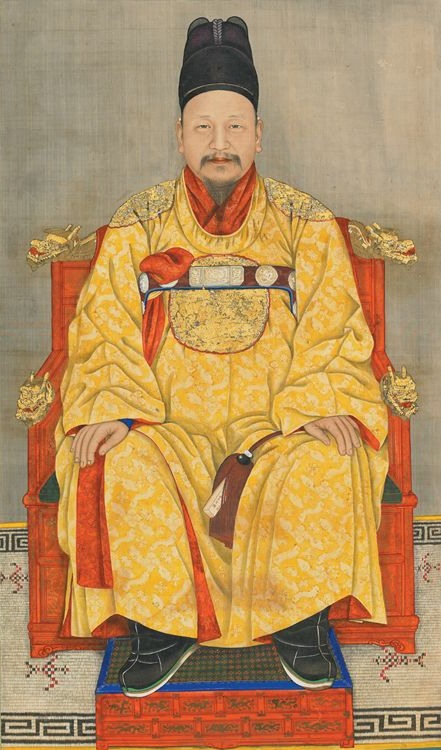
Emperor Gojong of Joseon (Korea)
Truth is, every empire down through history has sought to grow their holdings and increase their wealth by annexing other lands and peoples. I was recently reminded of this while watching, of all things, a Korean drama with my youngest girl, set during the early 1900's, a particularly turbulent time of Korean history. Joseon (Korea) was just beginning to open up to Western ways, just beginning to not immediately put Christians to death, and struggling to find her place between China, Russia, America, and Japan. The latter, that tiny but ridiculously ambitious island nation, made no secret of its desire to make Korea a colony of Japan. Ruthlessness and political maneuvering were the standard of the day, and corruption abounded.

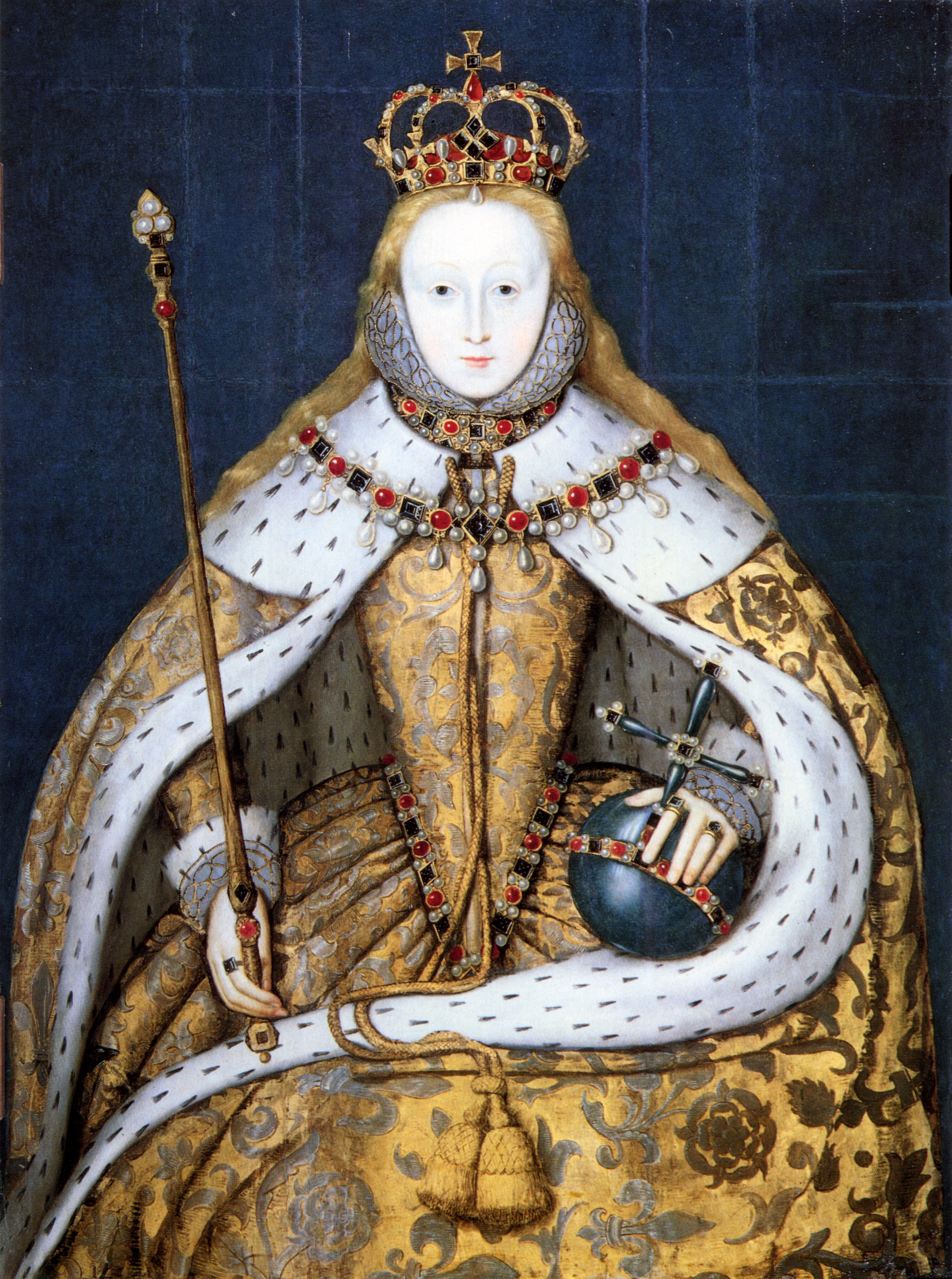
Good Queen Bess at her coronation
Not so very different from the time of Queen Elizabeth. "Good Queen Bess" furthered her father's move in breaking away from the Church of Rome by establishing the Church of England. Bloodshed between Catholics and Protestants abounded, and religious views were the standard by which political views were judged. Ireland suffered a harsh and bloody takeover by England, for reasons which I will not get into here, but doubtless that set the precedent for what later happened on American shores. When Elizabeth granted Sir Walter Raleigh his charter for a colony in the New World, however, she was very clear that it was at least in part for the purpose of furthering the Gospel to unreached peoples, but plenty of folk in England were unhappy enough with the way things were going in the newborn Anglican Church that they wished to either purify the Church (thus, Puritans) or create their own group entirely (Separatists).

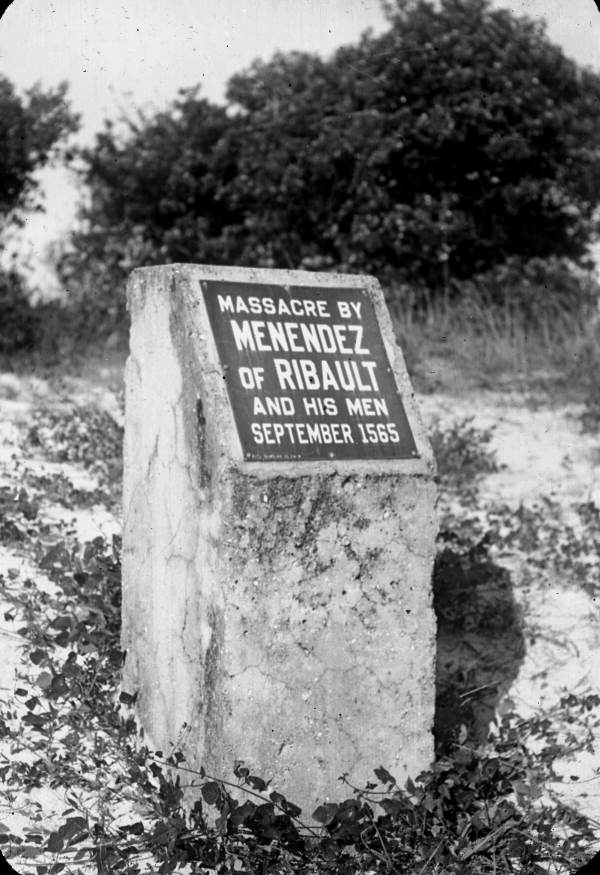
Most feared, however, were the Spanish. Spain already had holdings across South America, and their treasure galleons were the most coveted prize of English privateers. Staunchly Catholic to the point of meting out torture and death to those who disagreed (the Spanish Inquisition, anyone?), they were equally ruthless on the sea. The English were by far not the only ones to suffer at Spanish hands. As outlined in the website I shared above, French Huguenots sought refuge on what is now the Florida and South Carolina coast, but were seen as a threat to Spain's supremacy in the New World and met with death once their Protestant leanings were made known.

Marker at Fort Matanzas National Park
Lee Miller theorizes in her book Roanoke: Solving the Mystery of the Lost Colony that the group which set sail in 1587 under Governor John White, seeking to establish the first permanent English settlement in the New World, were Separatists. If so, the fate of French Huguenots would have been fairly fresh, and avoiding the Spanish at all costs would have been uppermost on their minds. Brandon Fullam makes the case in The Lost Colony of Roanoke: New Perspectives that this would have been a good reason why they settled on Roanoke Island rather than going north to the Chesapeake as originally planned. Maybe it's just my own firm Christian faith, but I find the Separatist theory quite compelling. It certainly wouldn't be the first time that a people group migrated in search of religious freedom, would it?


Monday, June 15, 2020

The Earliest Colonial History

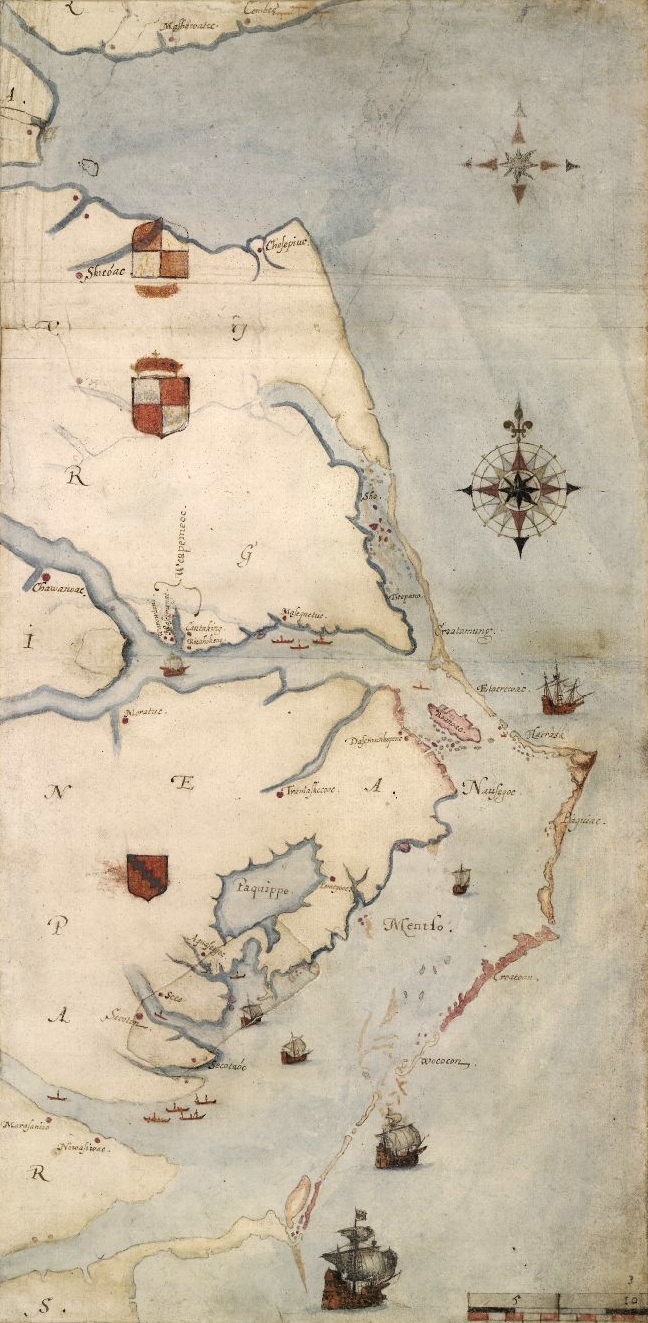
The coast of "Virginia," by John White
DISCLAIMER: Our country's own recent events might make us shy from terms such as "colonial," but I seek only to report history as described by contemporaries of whatever time period I am examining. In no way do I condone the actions of men (or women) who lived in those times. The fact is, certain events took place, and certain actions resulted from those events, and political corruption has always been a thing. Just within the past two weeks, while researching for this post and even while watching things for entertainment, I'm reminded that genocide was practiced even among those who considered themselves civilized (note the English subjugation of Ireland in the 1500's) and colonization was certainly not the sole purview of Europeans (note the Japanese takeover of Korea in the early 1900's). Making such observations might sound like I'm excusing the actions of (some of) my own forebears, but I assure you it is not. I only say so to address the belief that injustices are a primarily "white" problem. The entirety of history is just awful in so many ways.

So ... what do we think of, in the context of America, when someone says "Colonial History"? Most of us, I'm sure, think of the War for American Independence, possibly of Daniel Boone, and before that, of the Mayflower, Plymouth Rock, and Jamestown.

Our country's European roots go even further than that, however. Though the period between Columbus and the Mayflower is usually viewed as a misty void, the English quest to colonize the New World was first fueled by Queen Elizabeth I, who sought lands not already claimed by Christian rulers to add to the fame and fortunes of Britain.
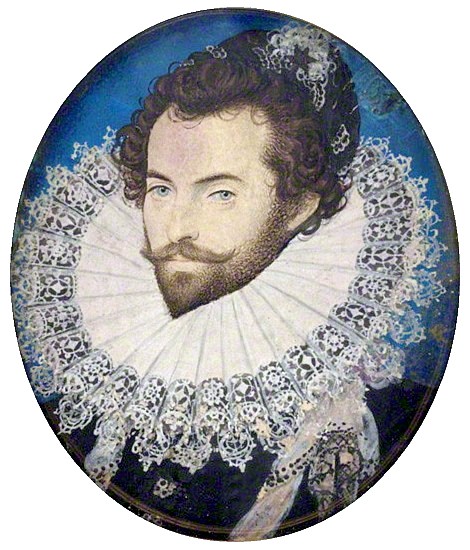
A very dapper Sir Walter Raleigh

After the 1583 voyage to Newfoundland by Sir Humphrey Gilbert ended in disaster (Gilbert perished at sea on his way home), the patent passed to his younger half brother, Sir Walter Raleigh. Wasting no time, Raleigh sent an expedition to what was then known as Virginia--named after Elizabeth herself, the "Virgin Queen." The first colonist--more a military endeavor than a serious permanent settlement yet--landed on Roanoke Island in 1585, on the Outer Banks of what is now North Carolina. Those original colonists returned to England shortly after, just missing their supply ship. This second wave left a contingent of 15 men to hold the area.

The next serious attempt at colonization took place in 1587, and the group of 117-some included women and children. These brave souls comprised what would later be called "the Lost Colony." A brief introduction to that story was provided by our own Janet Grunst, in her post "America's Oldest Unsolved Mystery."

More on that later, as over the next few months, I'll be looking at some of the key players in these early attempts at colonizing North America. :-)

Friday, July 10, 2015

America’s Oldest Unsolved Mystery


I recently had the opportunity to visit the Outer Banks of North Carolina and fulfill a 40 year wish to see the production of The Lost Colony on Roanoke Island. This popular summer attraction was first performed seventy-eight years ago, making it the oldest outdoor symphonic drama in the country.

On the way to the Outer Banks, I recalled my parents telling me about another drama that took place that same summer on Roanoke Island. That event occurred seventy-eight years ago to the day I would be attending the play.

On an early June day in 1937, a young Naval Lieutenant stationed in Norfolk, Virginia planned on taking his sweetheart on a picnic to propose marriage.
July 1937
That couple in their mid twenties was my parents. Whether it took my father hours to work up his courage or whether it was his intent, they ended up driving all the way to
Roanoke Island, North Carolina. A 200 mile round trip was no small Saturday excursion in 1937. It was also the subject of a lot of teasing over their 43 year marriage, since, at the time, transporting a single female across a state line was a felony.

So now, seventy-eight years later, I had tickets and was on my way to see the play I’d been waiting so long to see. The Lost Colony, a Tony award winning play was written by Pulitzer Prize winning playwright Paul Green.

The musical pageant is based on accounts of Sir Walter Raleigh's attempts to establish a settlement on Roanoke Island, then part of the Colony of Virginia. Early in the play we watched Raleigh lead a group of men in 1585 to Roanoke on primarily a military mission. These settlers returned to England with two Indian leaders, Manteo and Wanchese, because of a shortage of food and altercations they had with other natives.
Opening Scene for "The Lost Colony"

John White, Governor of the new colony, led another group of 117 men, women and children in July 1587 to the existing Roanoke Island settlement. The next month, the Governor’s daughter, Eleanor Dare, wife of Ananias Dare gave birth to Virginia Dare, the first English child born on American soil. Ten days later John White sailed back to England for a fresh load of supplies. During this time a major naval war broke out between England and Spain. Queen Elizabeth I insisted every ship would be needed to confront the invading Spanish Armada. Governor White was not able to return to his wife, daughter, granddaughter and other settlers at Roanoke until August 1590. When he arrived, no trace was found of the colony or its settlers. The only clue was the single word “Croatoan” carved into a wooden post. In the past 428 years there have been many scenarios speculated on what happened to these colonists, but no one really knows. At the time the settlers did enjoy a friendlier relationship with the local Indians, so it is possible that they joined with the friendly Croatoan natives in order to survive.

The Lost Colony production was first rate and priced at $30 a ticket. It had elaborate Elizabethan costumes, particularly for the scenes taking place in London. Watching the scene transitions was fascinating. The singing and dancing were nothing short of a Broadway play. I was particularly moved by the Christian emphasis in the Colonist’s hymns, prayers and dialog.

Memorial Stone to the original Roanoke Settlers
Given that our nation was in the midst of the Great Depression when this award winning production was written, it is no surprise that it focuses on the ideals of freedom, struggle and perseverance. The names of the people who lived there so long ago are memorialized everywhere in the towns and on street signs throughout Roanoke Island.