Announcements

10 Year Anniverary & New Releases Winners: Carrie Fancett Pagels' Butterfly Cottage - Melanie B, Dogwood Plantation - Patty H R, Janet Grunst's winner is Connie S., Denise Weimer's Winner is Kay M., Naomi Musch's winner is Chappy Debbie, Angela Couch - Kathleen Maher, Pegg Thomas Beverly D. M. & Gracie Y., Christy Distler - Kailey B., Shannon McNear - Marilyn R.
Showing posts with label Kentucky. Show all posts

Monday, January 13, 2020

Criminals of Early America: Samuel Mason


The mighty Ohio River (looking across to Kentucky from Illinois)
History is full of men (and women) who have wanted to live without law. One could argue that part of the reason explorers like Daniel Boone took to the wilderness was to escape the strictures of civilized life, but there’s a huge difference between those who in their own heart hold moral law in high enough regard but feel the need for “elbow room,” and those who have no regard for morality at all.

And then there are the interesting subjects who fall somewhere in the middle.

Such was the case of Samuel Mason, former captain of the American Revolution, who became a river pirate.

Until the opening of the Wilderness Road to wagon traffic in 1795-96, travel down the Ohio River was regarded as the easiest method of travel into western lands during the Federal era—if the most dangerous because of the threat of attack by natives. But the danger was by no means limited to by that from the Shawnee, because as soon as the native tribes migrated west, others found travelers a too-easy target as settlers poured into the frontier by both land and waterway.
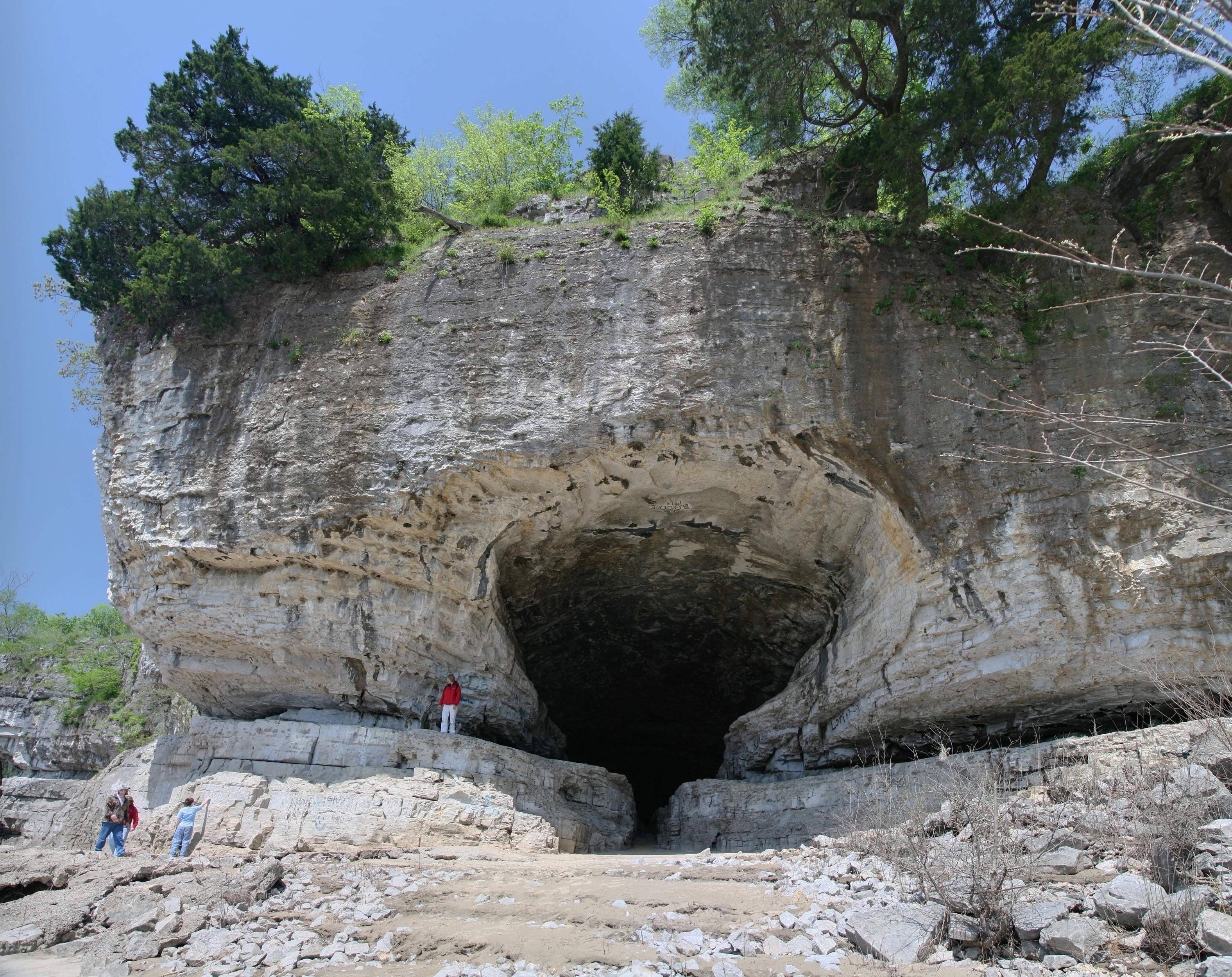
Cave-in-Rock State Park, Illinois
No one really knows enough of Mason’s background to say why he chose a life of crime, but it’s said that he came of a solid, well-connected family in Virginia, served on the western frontier before and during the Revolution (in what would become Ohio, Indiana, and Illinois, among other things on a campaign led by George Rogers Clark), and became associated with others who preferred theft to honest work. He’s most known for heading up a gang based out of Cave-in-Rock, a large natural hollow in the limestone rock overlooking the Ohio River from the Illinois side, about halfway between what is now Henderson and Paducah, Kentucky.

Mason was later credited with being shrewd but not bloodthirsty, bragging that he never took a life “unless necessary” (self defense and avenging family members seemed to be included in that). This was in contrast to the notorious Harpes, a pair of men who although called brothers were likely cousins, and who wreaked mayhem all up the Wilderness Road and across Kentucky and Tennessee. (The saga of their murder spree in 1798-99 provides the background for my upcoming release, The Blue Cloak, #5 of Barbour Publishing’s True Colors series.)

Keelboats and flatboats, both popular with settlers
The Harpes are another study entirely, and I’ll share more about them later, but for now suffice it to say that they were so twisted and cruel, not even river pirates wanted them around.

It was around this time—again, no one is really sure—that Mason abandoned Cave-in-Rock and drifted over to the Natchez Trace, a road which connected Nashville, Tennessee, with towns farther south in Mississippi Territory and eventually reached New Orleans. His fate is later tied up with the Harpes in a most bizarre manner, but the man had a wife who apparently did not approve of his activities, and sons who joined him at least occasionally.

Robbery and murder were not the only criminal acts taking place on the frontier. Counterfeiting became big business as well, and a sort of mafia-like “protective” service offered by some.

And how did folk on the frontier deal with such things? Well, more on that later. :-)

Monday, October 14, 2019

The Wonders of the Colonial Frontier: Wildlife

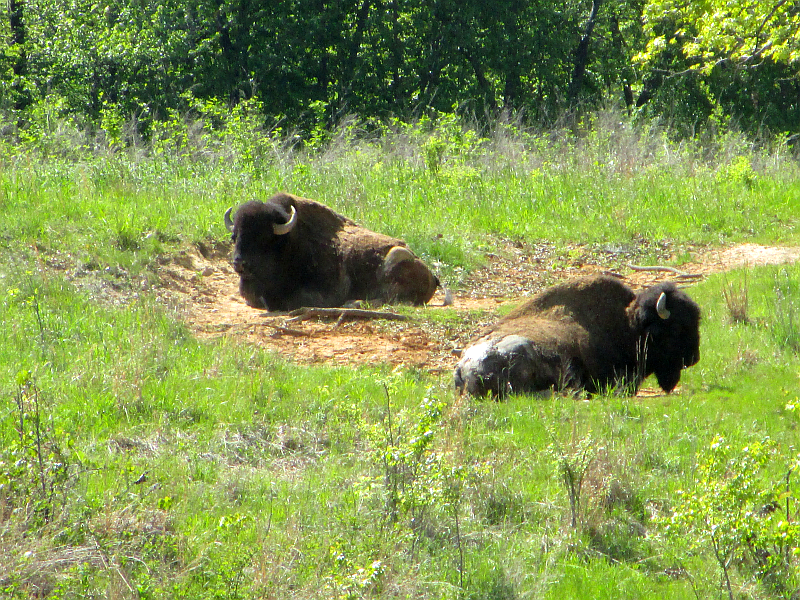
Back in August, I wrote about the South Carolina wilderness as it appeared to early European settlers, and promised I'd discuss the different types of wildlife that populated this frontier. Years ago, at Charles Towne Landing, a state park in Charleston, South Carolina, site of the earliest permanent settlement in the area, visitors could walk through an area called the Animal Forest and see examples of such wildlife. I've no idea to what degree the park maintains this area--so much else there has changed, though the park website still advertises it as an attraction--but our family has never forgotten our visits. Panthers, wolves, elk, bison, black bears, wild turkeys, and otters shared space with alligators, foxes, raccoons, and other critters who remain when others moved west or were hunted into scarcity.

John Henry Logan describes great herds of elk and bison across the Carolinas in the early 1700's, and explorers across Cumberland Gap into Kentucky attest to the richness of game in that area as well. When I researched for my Daughters of the Mayflower title The Cumberland Bride, I was under the impression that the elk and bison had mostly disappeared by 1800, but later research revealed this was not so.

One noteworthy source that I haven't covered before is the letters of Sarah McClendon, a settler to western Kentucky, near the Ohio River and a little south of what would become Henderson, about 1794. I ran across this woman's letters, a rather rambly reminisce of her early married life and late husband for the benefit of their three sons, while researching for my upcoming book The Blue Cloak, and found a fascinating trove of all sorts of tidbits, despite misspellings. Sarah recounts how the region they settled was frequented by large herds of elk and bison, and she mentions the curiosity of flocks of parrots, sometimes referred to as the Carolina parakeet.
Carolina Parakeet, stuffed and mounted at the Field Museum

Interestingly, Wikipedia had this to say about the bird:

The Carolina parakeet had the northern-most range of any known parrot. It was found from southern New England and New York and Wisconsin to Kentucky, Tennessee and the Gulf of Mexico. It has also had a wide distribution west of the Mississippi River, as far west as eastern Colorado. Its range was described by early explorers thus: the 43rd parallel as the northern limit, the 26th as the most southern, the 73rd and 106th meridians as the eastern and western boundaries respectively, the range included all or portions of at least 28 states.[Note 6] Its habitats were old-growth wetland forests along rivers and in swamps especially in the Mississippi-Missouri drainage basin with large hollow trees including cypress and sycamore to use as roosting and nesting sites. 
I may have geeked a little at that last line, imagining flocks of the exotic bird flitting through the Congaree National Park, my feature last month!

Additional note: it should not surprise me when I find various resources for giving people a taste of what our land was like during earlier days--and two such relevant places are the Elk & Bison Prairie, and Blackfish Bison Ranch, both in Kentucky. I haven't visited either place, but they look interesting! (The photo at the top of my post is borrowed from the former site.)

Monday, December 10, 2018

The Travelling Church

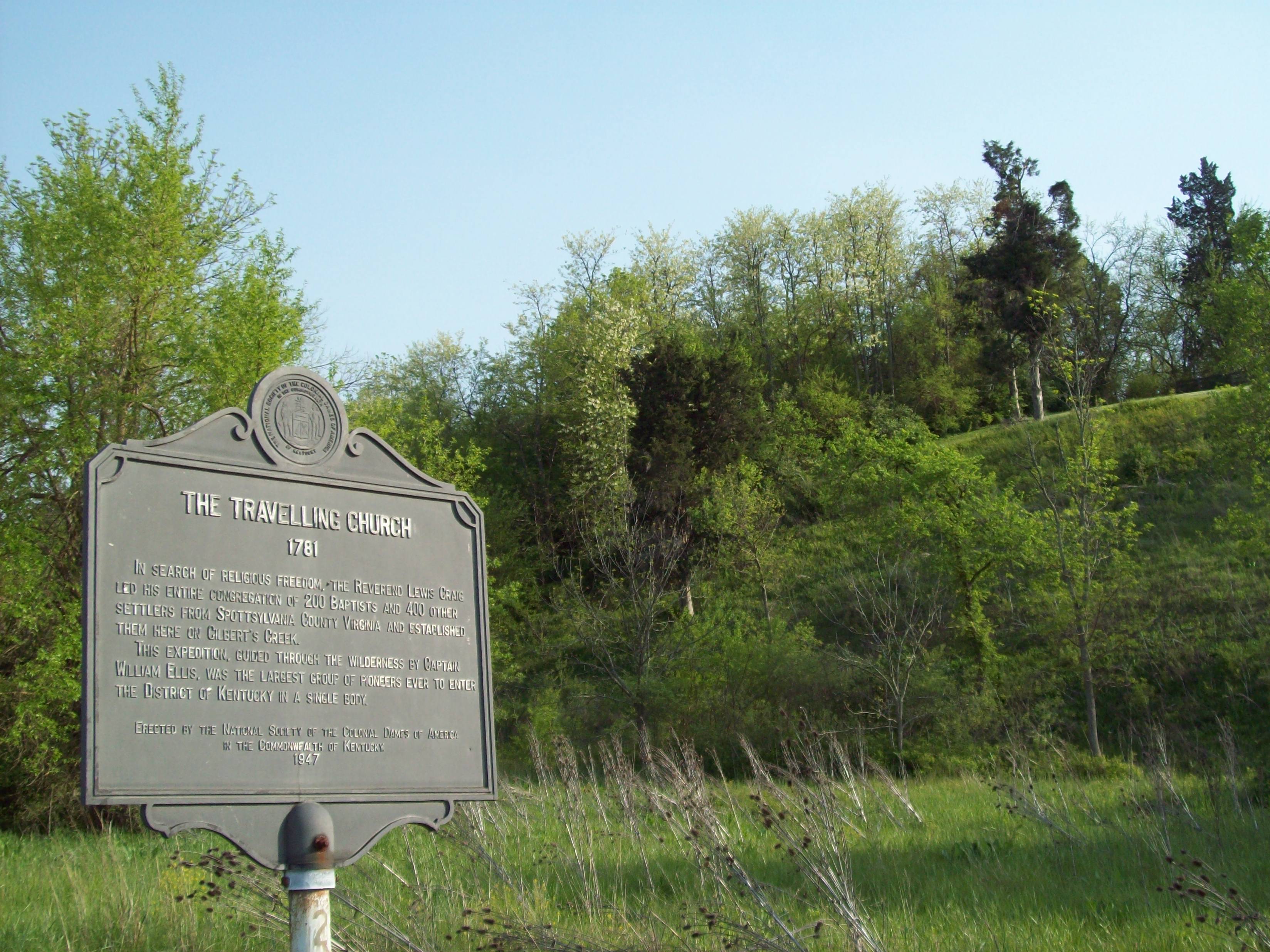
Kentucky State Marker #25
From Kentucky State historical marker #25:

In search of religious freedom, the Reverend Lewis Craig led his entire congregation of 200 Baptists and 400 other settlers from Spottsylvania County, Virginia, and established them here on Gilbert's Creek. This expedition, guided through the wilderness by Captain William Ellis, was the largest group of pioneers ever to enter the District of Kentucky in a single body.

So we remember “The Travelling Church,” which set out from Virginia in 1781 for the purpose of exploring the “Canaan” of Kentucky while furthering their missionary endeavors. In October 1781, they arrived in Fort Chiswell in southwestern Virginia with a considerable-sized wagon train, only to find that a hundred miles further, the road would become impassable to anything but horse and foot traffic. They then sold or traded off their wagons and larger household goods, packed things up, and set on down the road. Robert L. Kincaid gives this colorful description in The Wilderness Road:

It was a crushing blow for Craig and his people to give up their wagons so early in their journey. The women and the children hated to leave the luxury of wheels for a hard and uncertain horseback ride. But it could not be helped. Huge baskets and bundles of clothing, bed furnishing and household articles were prepared and lashed upon packhorses. Children were crowded on top, or rode in front and behind their mothers and relatives. The men and older boys who did not have mounts trudged along on foot. Thus accoutered, the company strung out on the road to the dark wilderness with its unknown terrors.

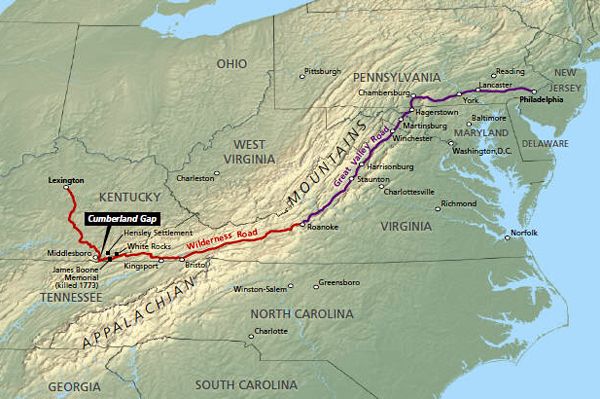
The Great Road (purple) and the Wilderness Road (red)
The group met with delays because of unrest with the Cherokee, wet weather that turned into cold and ice as winter approached. They learned of Cornwallis’s surrender while still in eastern Tennessee and rejoiced greatly over the news. Then, through eastern Tennessee, up over Cumberland Gap and down into southeastern Kentucky, they forded icy rivers and slogged through knee-deep mud in sloughs and canebrakes. Finally the weather eased a bit as they approached Crab Orchard, Kentucky, and at Gilbert’s Creek, in December 1781, they chose a spot for their new church home. This would be the third Baptist church in Kentucky, as two others had been founded earlier the same year.

So why would they do this? Why would almost an entire church leave home and possibly family behind? Obviously the party was comprised of far more than church members—some just wanted the material opportunities Kentucky had to offer—but the biggest reason, for the church itself, was religious persecution. During the colonial era, any church besides the one established by Mother England often came under serious heat from Anglicans. The leader of this particular congregation saw the western frontier as their best solution to this.

Is it possible there could have been a calling from God involved, as well?

~*~*~*~

Filed under the category of historical tidbits I didn’t manage to shoehorn into my recent release The Cumberland Bride. Thanks to Kincaid for his excellent if sometimes embellished work on the Wilderness Road, and to Wikipedia, which has gotten far more reliable over the past few years. :-)

Monday, June 18, 2018

The Longhunters


One cannot read colonial-era stories for long without finding mention of the longhunters—or long hunters, depending upon the writer. But just who were these people?

Only known portrait of Daniel Boone during his lifetime (1820)
The era of the longhunter probably starts with the expedition led by Dr. Thomas Walker in 1750 along the frontier of Virginia, into what is now Tennessee and Kentucky by way of Cumberland Gap, who reported on a land of unbelievable richness, with buffalo and beaver and all kinds of other game whose hides and pelts brought a great deal of money out East, and in trade to England. It wasn’t long before various parties of men followed, venturing into the wilderness for “long hunts”—expeditions that, like Walker’s, could last from several months to more than a year. The most famous of the hardy (some might say foolhardy) men who set out on these hunts was Daniel Boone, but he was by no means the only one.

The era reached its peak during the 1760’s. Up until that time, politics between France and England, and resistance from native tribes, kept most from venturing west. Tensions were bad enough during the French and Indian War, and at the close of that conflict in 1763, King George made it essentially illegal to hunt west of the Appalachians without a trading license. The vast majority of hunters ignored his proclamation. One accounts says that Daniel Boone himself did not make his first trip west until 1769, after a visit by English trader John Finley, but others say his first long hunt was in 1750. I'm inclined to believe the latter. Boone’s adventures included capture by the Cherokee and Shawnee, having his pelts confiscated, probable adoption as a native, returning home after so long that his wife had given him up for dead, and the later loss of a son to Indian attack. None of this deterred him from making the hunting grounds his eventual home, and persuading others to join him there.

Other notable longhunters included James Harrod (for whom Harrodsburg, KY is named), Simon Kenton, Elisha Walden (also called Wallen/Walling, for whom Wallen’s Ridge at Cumberland Gap is named), Abraham and Isaac Bledsoe (yes, from the same real-life family I used in both Defending Truth and The Cumberland Bride), and Benjamin Cutbirth (almost certainly a mispronunciation and subsequent mispelling of Cuthbert).

1852 painting of Squire Boone Crossing the mountains
By the time the American Revolution ended, the heyday of the longhunter had passed. The unbelievable abundance of game across Kentucky and Tennessee had thinned considerably, probably less by hunting than pushed westward by the rising tide of settlers. And so the explorers and adventurers went further west, as well. In the process, the Boones and Bledsoes left a trail across Tennessee and into central Missouri of both place names and descendants.

More reading:

William Blevins, Long Hunter
Daniel Boone (and at Wiki)
Simon Kenton
Longhunters (at Wiki)
Bledsoe's Station in Tennessee


Friday, August 3, 2012

Tools of the Trade - The Road Trip


This past week my family took a road trip to Texas. And while I've flown to Texas before (and will again for the ACFW conference in September--woot!), I've never before driven through many of the states. From Maryland, the path to Dallas takes us first through the entire diagonal of West Virginia, then through Kentucky, then Tennessee, Arkansas, and finally Texas.

As we drove, I couldn't help but think of the beloved books I've read that take place in these areas. Laura Frantz's amazing colonials, for example, that are set in Kentucky. Many of the books I grew up on that were set in early Texas. I noticed the names that I knew from my own research, like Pulaski, who was apparently well revered by states other than Georgia. ;-)

And as I saw this 1200-mile cross-section of our country, I was hit again and again with how big it is. How diverse. How mysterious those territories must have been for the early settlers. We started our trip in the beautiful rolling mountains of the Appalachians, spending hours and hours driving up and down, around turns, dodging wildlife. When those mountains tapered into hills, we entered the beautiful horse country of Kentucky--where there is, of all things, a castle. Talk about a fun thing for the kids to see! Though the castle was built only 30-40 years ago, renovators today are apparently shocked by the detail given to medieval authenticity. Pretty cool, eh?

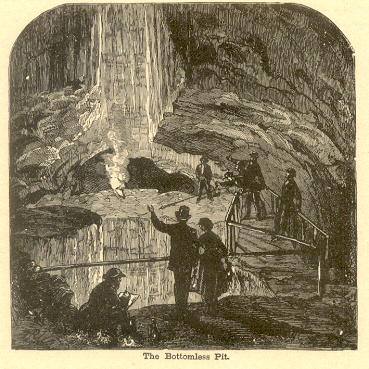
The Bottomless Pit in Mammoth Cave,
woodcut, 1887
 (Nuno Carvalho de Sousa Collection, Lisbon)
From the Lexington area we continued into Cave Country, with beautiful rock ledges and hidden wonders that I obviously couldn't see from the road, but which my imagination knew waited in those caves. I naturally had to look it up when we got home, and I discovered that Mammoth Cave, for instance, was discovered in 1797, our favorite era here at the CQ. Oh, how I would love to tour that cave and imagine myself as one of the earliest Americans, one of the first set of settler eyes to see it!

The land began to flatten out as we drove through Tennessee, and was particularly lovely around the Mississippi. No wonder, then, that civilization sprang up there! It was quite an experience to drive over that massive river and into Arkansas, where the straight, flat countryside was largely fields with trees along the border. 

This mountain-girl started yawning at all the flat, straight lines in Arkansas and Texas (sorry, natives!), but there was definitely something about the sheer vastness that made me able to see the allure. I could just imagine that the first travelers from the east, after navigating those treacherous mountains, finally reaching this and thinking, "Oh my. Just look at all that land!"

It's no wonder that this New World drew so many people. No wonder that they saw how it went on and on and got that itch in the feet that begged them to go explore. And one only has to follow in their footsteps to imagine all the stories that lived, breathed, worked, and yearned through every mile. Hello, inspiration!

~*~

Roseanna M. White grew up in the mountains of West Virginia, the beauty of which inspired her to begin writing as soon as she learned to pair subjects with verbs. She spent her middle and high school days penning novels in class, and her love of books took her to a school renowned for them. After graduating from St. John’s College in Annapolis, Maryland, she and her husband moved back to the Maryland side of the same mountains they equate with home.

Roseanna is the author of two biblical novels, A Stray Drop of Blood and Jewel of Persia, both from WhiteFire Publishing (www.WhiteFire-Publishing.com), Love Finds You in Annapolis, Maryland from Summerside Press, and the upcoming Culper Ring Series from Harvest House, beginning in March 2013 with Ring of Secrets.

She is the senior reviewer at the Christian Review of Books, which she and her husband founded, the senior editor at WhiteFire Publishing, and a member of ACFW, Christian Authors Network, HisWriters, and Colonial American Christian Writers. She is a regular blogger at Go Teen Writers, Colonial Quills, and her personal blog.