Announcements

10 Year Anniverary & New Releases Winners: Carrie Fancett Pagels' Butterfly Cottage - Melanie B, Dogwood Plantation - Patty H R, Janet Grunst's winner is Connie S., Denise Weimer's Winner is Kay M., Naomi Musch's winner is Chappy Debbie, Angela Couch - Kathleen Maher, Pegg Thomas Beverly D. M. & Gracie Y., Christy Distler - Kailey B., Shannon McNear - Marilyn R.
Showing posts with label Daniel Boone. Show all posts

Friday, June 4, 2021

Those Intrepid Travelers Who Traversed the Vast American Wilderness

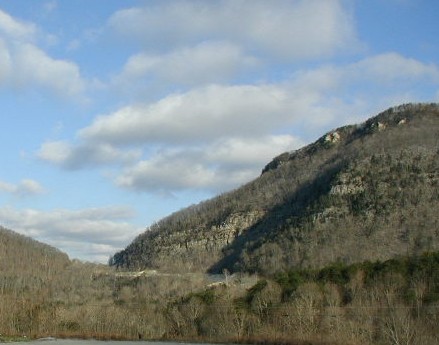
Whenever driving across sections of the country, I've always been fascinated to think of how the early settlers, explorers, adventurers, and armies traversed the rugged distances of the wilderness. Nowadays, we can hop aboard a plane and barely have time to finish reading a novella before we land a thousand miles away. Or we can get into a car and not quite finish a novel before driving the hours across a couple of states. We look at the hills and valleys, we imagine the vastness of the tangled forests that were riddled with narrow Indian trails at best. In a flash, we drive over rivers that took hours to ford.

Yet, the remarkable thing of it all, to me, is that the colonists and fur traders and who-not seemed to go back and forth across this land with great frequency. It seems, in reading historical accounts, that Daniel Boone tramped back and forth with great regularity, and the voyageurs paddled many thousands of miles across the great lakes and up and down the mighty rivers.


I recently read of a British attempt, during the latter part of the Revolutionary War, to thwart the spread of America's hold on the western lands--particularly hoping to stop the advancement of American General George Rogers Clark and decimate his army--by planning a 3-prong attack on St. Louis in the center of the continent. Now, consider the vastness of this three-prong approach:

1. One force was to march northward from the Gulf of Mexico.

2. The second force was to march from Fort Detroit to Cahokia (across from St. Louis).

3. The third force was to trek from Lake Superior to the Mississippi River, and then follow the river to St. Louis.

Each of these would be a momentous tour for anyone nowadays with modern equipment at their disposal. Can you imagine such an attack, with each prong thousands of miles distant from each other, working its way through unsettled wilderness territory? Incidentally, it failed. But only incidentally. The fact that such a task was attempted simply blows my mind.

While I've often thought about the difficulty faced by pioneers moving into the west, knowing they'd likely never see their families "back home" again, these men who trekked back and forth over mountains and rivers seemed little daunted by the magnitude.

These are the things I think about when I travel. Do you think about them too?

In Song for the Hunter, my new novel available for pre-order, I deal largely with the travels of the voyageurs and fur traders across the great lakes, the area known as the "Upper Country", and the western Lake Superior region, especially along the south shore lands of Ouisconsin (Wisconsin).


Endorsements for Song for the Hunter

"A few pages into Song for the Hunter, Naomi Musch earned a spot on my list of favorite Christian historical fiction authors. What a joy to find another writer who shares my heart for telling cross-cultural stories in a frontier/wilderness setting—and discovering that writer's gorgeous, evocative prose brought the setting to such vivid life that I found myself often lingering over the imagery conjured. Characters Camilla and Bemidii (and a large supporting cast) came leaping off the pages straight into my heart. I couldn't turn those pages fast enough to discover how they charted a course through desperately entangled paths to find a clear way forward. Hope triumphs in this latest offering from gifted wordsmith and lover of history, Naomi Musch."

Lori Benton, Christy-Award winning author of Burning Sky and the Kindred duology, Mountain Laurel and Shiloh

"This beautifully written and immersive story will transport you back in time and keep you turning the pages! Naomi Musch's voice and style is the perfect balance of lyrical combined with cadence and word choice appropriate for the time and setting. Fans of Lori Benton and Laura Frantz will find this story a perfect addition to their libraries! Highly recommend."

Carrie Fancett Pagels, Award-winning and bestselling author, Behind Love's Wall

"In Song of the Hunter, the long-awaited sequel to Mist O’er the Voyageur, Naomi Musch transports us back to the waters of Lake Superior during the height of the fur trade. Cultures clash as an evil man sends ripples across the waters that will touch the hearts of many. It took strong people to survive the wild and unpredictable environment, and it would take strong people to find the truth and reconcile with it. The story is beautifully presented in a setting rich in the heritage of the people and the grandeur of nature. A must read for those who enjoy the rugged landscapes and rich cultures of America’s northern shores."

Pegg Thomas, Award-winning author of Sarah’s Choice


Naomi Musch

www.naomimusch.com


Monday, June 18, 2018

The Longhunters


One cannot read colonial-era stories for long without finding mention of the longhunters—or long hunters, depending upon the writer. But just who were these people?

Only known portrait of Daniel Boone during his lifetime (1820)
The era of the longhunter probably starts with the expedition led by Dr. Thomas Walker in 1750 along the frontier of Virginia, into what is now Tennessee and Kentucky by way of Cumberland Gap, who reported on a land of unbelievable richness, with buffalo and beaver and all kinds of other game whose hides and pelts brought a great deal of money out East, and in trade to England. It wasn’t long before various parties of men followed, venturing into the wilderness for “long hunts”—expeditions that, like Walker’s, could last from several months to more than a year. The most famous of the hardy (some might say foolhardy) men who set out on these hunts was Daniel Boone, but he was by no means the only one.

The era reached its peak during the 1760’s. Up until that time, politics between France and England, and resistance from native tribes, kept most from venturing west. Tensions were bad enough during the French and Indian War, and at the close of that conflict in 1763, King George made it essentially illegal to hunt west of the Appalachians without a trading license. The vast majority of hunters ignored his proclamation. One accounts says that Daniel Boone himself did not make his first trip west until 1769, after a visit by English trader John Finley, but others say his first long hunt was in 1750. I'm inclined to believe the latter. Boone’s adventures included capture by the Cherokee and Shawnee, having his pelts confiscated, probable adoption as a native, returning home after so long that his wife had given him up for dead, and the later loss of a son to Indian attack. None of this deterred him from making the hunting grounds his eventual home, and persuading others to join him there.

Other notable longhunters included James Harrod (for whom Harrodsburg, KY is named), Simon Kenton, Elisha Walden (also called Wallen/Walling, for whom Wallen’s Ridge at Cumberland Gap is named), Abraham and Isaac Bledsoe (yes, from the same real-life family I used in both Defending Truth and The Cumberland Bride), and Benjamin Cutbirth (almost certainly a mispronunciation and subsequent mispelling of Cuthbert).

1852 painting of Squire Boone Crossing the mountains
By the time the American Revolution ended, the heyday of the longhunter had passed. The unbelievable abundance of game across Kentucky and Tennessee had thinned considerably, probably less by hunting than pushed westward by the rising tide of settlers. And so the explorers and adventurers went further west, as well. In the process, the Boones and Bledsoes left a trail across Tennessee and into central Missouri of both place names and descendants.

More reading:

William Blevins, Long Hunter
Daniel Boone (and at Wiki)
Simon Kenton
Longhunters (at Wiki)
Bledsoe's Station in Tennessee


Monday, May 14, 2018

The Wilderness Road and Cumberland Gap

Travel during colonial times was notoriously slow and arduous. I've written before about the Great Wagon Road stretching from Philadelphia down through western Virginia and into North Carolina, which had its origins as the Warrior’s Path, a highway of sorts between the northern and southern native tribes. The Wilderness Road, stretching from western Virginia, down into east Tennessee and up into Kentucky, had similar origins. Traffic between the upper Ohio Valley and the lower Appalachians traced a path down through the heart of the region famed as a favored native hunting ground, converging with the Warrior’s Path at the great Cherokee town of Chota, in southern Tennessee. Interestingly enough, that western trail was called Athawominee, “Path of the Armed Ones,” essentially a variation of Warrior’s Path like the one up through the Shenandoah Valley.

The first European recorded as having seen Kentucky and the Ohio Valley is Gabriel Arthur, a white indentured servant taken captive after an expedition gone badly during 1673. Directed by the Shawnee down the well-marked path that took him south to the Cumberland Mountains and eventually through Cumberland Gap then back northeast to Fort Henry (near present-day Petersburg, Virginia). No one at that time realized the significance of what Arthur had been shown, the best route over the Appalachian Mountains to the western frontier.

The area remained unexplored until 1750, when Dr. Thomas Walker mounted an expedition into what was then western Virginia, which in colonial times extended all the way to the Mississippi River. Others followed, including Daniel Boone and James Harrod, initially traveling companions but separating after a difference of opinion, and both with Kentucky towns named after them. Employed by the Transylvania Company to blaze the way for a road northward from Cumberland Gap, Boone led a company of thirty-some mounted and armed axmen in 1775. He and other longhunters had already been exploring this region for a decade and more, but he’s the one credited with first leading settlers over the pass called Cave Gap in the early days, and up into the lush, wild country called Kentucky.

Many early explorers wrote of their journeys, describing herds of bison, elk, and deer, flocks of turkeys and geese, rivers full of fish, canebrakes taller than a mounted man’s head, and tangled thickets of holly and laurel that afforded little grazing for the horses that carried them and their provisions. Bear and wolves ranged freely, drawn by the plentiful game. While hunting was easier than they’d ever dreamed possible, the land itself was poor for farming on the eastern side of the region. They wrote of the mountains and caves, of stream crossings complicated by sand and mud flats. More fearsome were Indian warriors, who often struck parties of explorers and later settlers without warning, taking captives and scalps and leaving terror in their wake.

And still, the settlers came, pouring over the Cumberland Gap on foot and by horseback long before the way was fit for wagon traffic. Some went north to the lower Ohio River Valley, via Boone’s Trace, as it was called, since travel down the Ohio was still too hazardous, made so by native tribes and white outlaws. Others went westward along Harrod’s Trace. In 1796, work was completed on an actual wagon road, commissioned a year or so before by the newly formed Kentucky legislature. There’s evidence that improvements began about 1780, with completion not taking place until after Kentucky gained statehood, but other sources say most improvements happened around 1792, with official work and opening in 1796. The latter is the timeline I used in my upcoming novel, The Cumberland Bride.

By the end of the colonial era, Westward Expansion was already well in motion, thanks to the Wilderness Road. Today, modern highways and interstates roughly trace the route, and a mountain tunnel eases traffic across the Cumberland Gap. The forests still look as wild, though, in between scattered towns that dimly recall their origins, and historic markers and sites bearing witness of the amazing journeys of those explorers, hunters, and settlers.

Wednesday, September 20, 2017

The Draper Manuscripts

Earlier this month I attended the 35th Fair at New Boston, a huge reenactment held at George Rogers State Park in Springfield, Ohio. A couple of my friends invited me to come, and boy, was I impressed! It looked and felt just like being in a real colonial camp, and in spite of the drizzly day, we had a wonderful time!

One of the suttlers’ tents I stopped by to check out period-correct wares was “Squire Boone’s” establishment, and my eyes were immediately drawn to a display of volume 3 of the Draper Manuscripts. Squire Boone had just acquired the last few copies still available, the only one issued in a new printing in recent years and was selling them for a price I couldn’t resist. This volume covers the Revolution and early Federal periods, just what I need for my American Patriot Series.

In case you didn’t know, the Draper Manuscripts are the holy grail of 18th and early 19th century frontier research, and full volumes can be expensive and hard to find. The alternative is to go to the Wisconsin Historical Society, where they’re held, or to a library that has them in microfilm form. Here’s a basic rundown on this amazing research goldmine.

Lyman Copeland Draper

Lyman Copeland Draper was born September 4, 1815 in Lockport, New York, and died August 26, 1891. He lived much of his life in Madison, Wisconsin, where he became a librarian and historian, serving as the first corresponding secretary for the state’s Historical Society from 1854 to 1886 and as superintendent of public instruction from 1858 to 1860.

When Draper was a boy, the tales his grandfathers told of their exploits during the Revolution and his father’s experiences in the War of 1812 naturally aroused his interest in the history of those times. By the 1830s he was corresponding with settlers who had moved into what his contemporaries called the Trans-Allegheny West—the area west of the Allegheny Mountains—during the second half of the 18th century. This region includes the Ohio River Valley and parts of the Mississippi River Valley as well as the western Carolinas and Virginia and portions of Georgia and Alabama.

Intending to document the Indian Wars in Ohio territory and write a series of biographies of the settlers, Draper traveled extensively throughout the region to develop a better sense of it. In all, he published 10 volumes of historical notes for the Wisconsin Historical Society and also a volume on the Battle of King’s Mountain (1780) that featured many of the settlers he corresponded with.

The Draper Manuscript Collection

Daniel Boone by Chester Harding, 1820
Draper never finished his biographies, but his manuscript collection provides the largest single first-hand account of the settlement of the Trans-Allegheny region. It includes a welter of materials, from Draper’s research notes, to correspondence, interview notes, extracts from newspapers and other published sources, muster rolls, transcripts of official documents, and much more. Organized into 491 volumes, the materials are divided into 50 series of various lengths by geographic area, subject, and individuals. These cover primarily events in the Trans-Allegheny region between the French and Indian War and the War of 1812—roughly from 1755 to 1815.

The collection contains voluminous military records, including Revolutionary War pension applicant information; descriptions of actions in the West during the Revolution; the War of 1812; Native American conflicts; and western exploration, such as the Lewis and Clark Expedition. Original documents of the Revolutionary period comprise only a small part, however. The works and papers of a number of notable early Americans are also included, among them Joseph Brant, Daniel Boone, George Rogers Clark, John Donelson, James Robertson, and Simon Kenton.

Joseph Brant by Gilbert Stuart, 1786
Draper bequeathed his manuscript collection to the Wisconsin Historical Society. The archives are free and open to the public, and the original materials are available to researchers. Major research libraries around the United States also have microfilm of portions of the collection. You’ll find a list of these libraries on the Wisconsin Historical Society website.

All in all, this amazing collection is an invaluable resource for writer like me who focus on the early American frontier. Needless to say, I’m thrilled to own a little piece of it!

Is there a historical period, event, or person you’re particularly drawn to? Or do you own something related to a particular period in history that has a special meaning for you? If so, please share with our readers!
~~~
J. M. Hochstetler is the daughter of Mennonite farmers and a lifelong student of history. She is also an author, editor, and publisher. Her American Patriot Series is the only comprehensive historical fiction series on the American Revolution. Northkill, Book 1 of the Northkill Amish Series coauthored with Bob Hostetler, won Foreword Magazine’s 2014 INDYFAB Book of the Year Bronze Award for historical fiction. Book 2, The Return, releases April 1, 2017. One Holy Night, a contemporary retelling of the Christmas story, was the Christian Small Publishers 2009 Book of the Year.