
 |
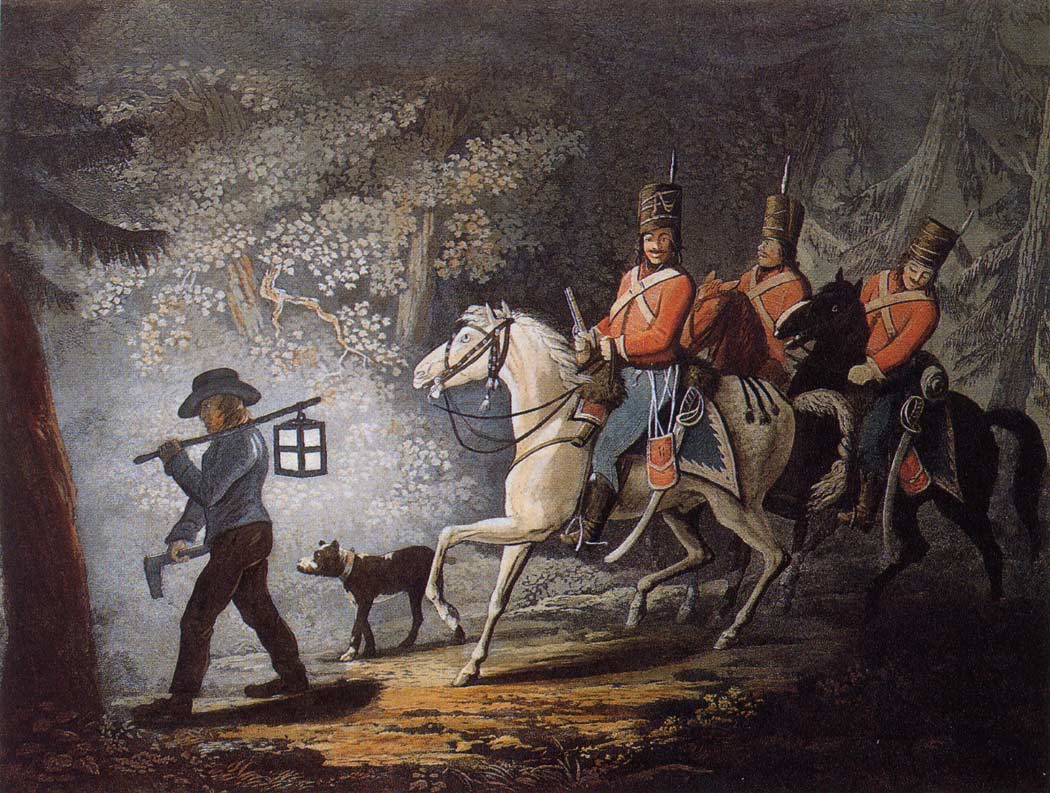
| Hessian hussars in America |
The historical note in the back of a novel can only cover just
so many topics, and I recently discovered a few holes in mine. A very “meh”
review on my newly released title The
Cumberland Bride (granted, it was a 5-chapter free preview) made me realize
I’d never addressed a particular issue of the family’s backstory—that is, the
heroine’s father, Karl Gruener, having been a Hessian in the employ of the British
army during the American Revolution.
So who were the Hessians? Essentially, they were German mercenaries hired by Great Britain, and not just for the American Revolution. Surprising? Let's look at the details.
During the American colonial era, Germany was not one unified country. It was a collection of imperial states, each granted authority under the Holy Roman Empire, which included Prussia, Bavaria, Hesse-Hanau, and Hesse-Kassel. The troops of the last two in particular regularly hired out to other countries during the 1700’s, and in at least one case even fought on opposite sides, such as during the War for Austrian Succession, under Britain and Prussia. Because so many came from Hesse-Kassel and Hesse-Hanau, these troops were often referred to as simply “Hessians,” and so the term stuck.
During the American colonial era, Germany was not one unified country. It was a collection of imperial states, each granted authority under the Holy Roman Empire, which included Prussia, Bavaria, Hesse-Hanau, and Hesse-Kassel. The troops of the last two in particular regularly hired out to other countries during the 1700’s, and in at least one case even fought on opposite sides, such as during the War for Austrian Succession, under Britain and Prussia. Because so many came from Hesse-Kassel and Hesse-Hanau, these troops were often referred to as simply “Hessians,” and so the term stuck.
The first German mercenary troops used during the American
Revolution landed in 1776 and fought in many of the battles between British and
Continental troops, including during the Southern Campaign. These troops were
comprised of Jagers (infantry), Hussars (cavalry), artillery, and
grenadiers. Jagers were the ones I’d heard most about, many of them
sharpshooters and brought in as “anti-sniper” troops because they often carried
German-made rifles that rivaled the ones carried by backcountry militia. Their
skill could be as legendary as American riflemen, and the faith was attested
to, albeit mockingly, by the British colonel Lord Rawdon, who had this to say
about their behavior under pressure (in this case, at the prospect of being
fired upon while crossing a river):
The Hessians, who were not used to
this water business and who conceived that it must be exceedingly uncomfortable
to be shot at whilst they were quite defenceless and jammed so close together,
began to sing hymns immediately. Our men expressed their feelings as strongly,
though in a different manner, by [cursing] themselves and the enemy
indiscriminately with wonderful fervency.
And yes, for those who have read The Cumberland Bride, this event, from September 1776, is the one I
reference in the opening scene.
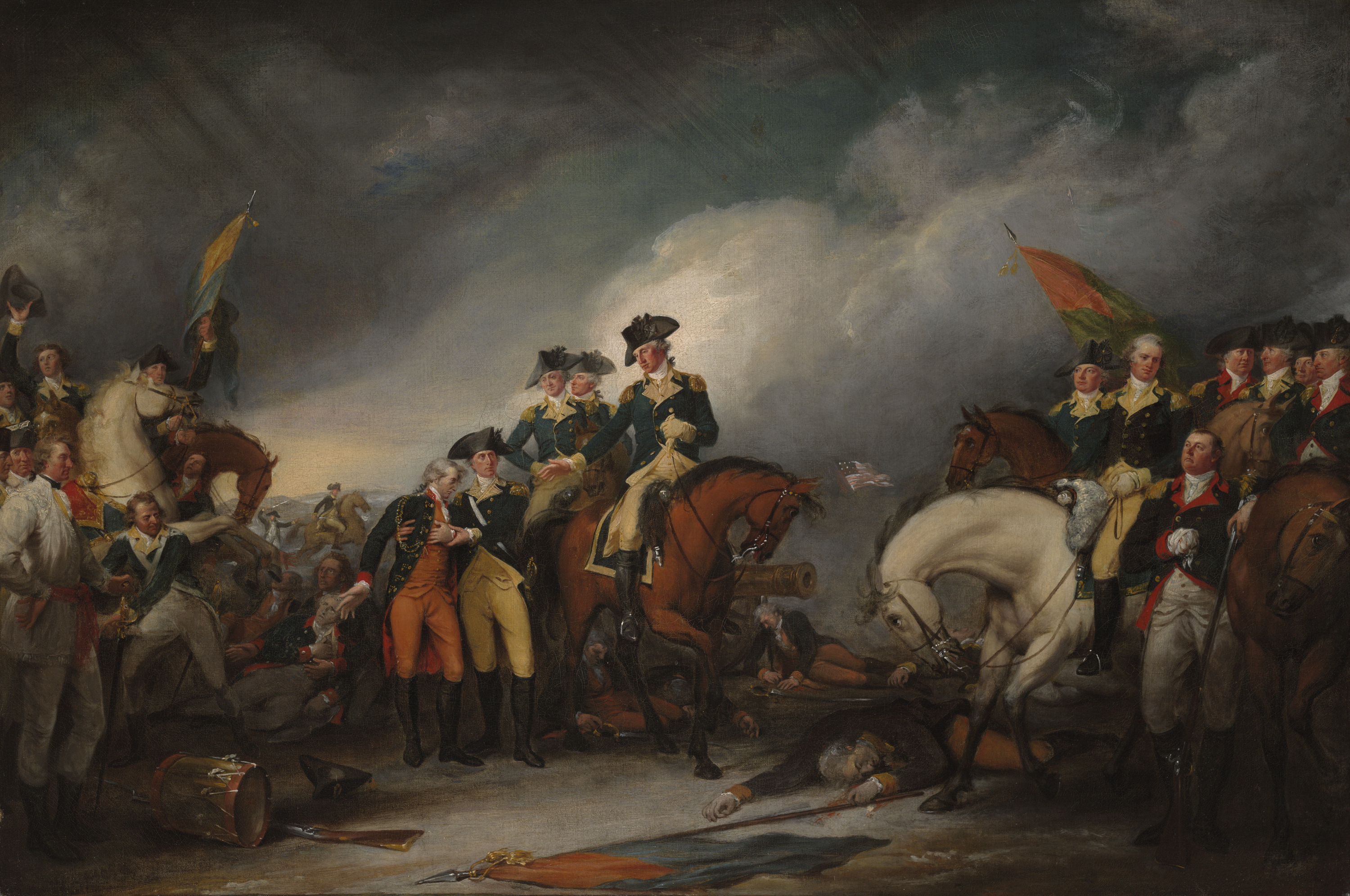 |
| The Capture of Hessians at Trenton |
~*~
Quote from Redcoats and Rebels: The American Revolution Through British Eyes, Christopher Hibbert. Also thanks to Wikipedia for an excellently footnoted article on the Hessians ... and to a particular group of reenactors I met years ago at the Battle of Parker's Ferry, whose name I've sadly lost track of.
