Announcements

10 Year Anniverary & New Releases Winners: Carrie Fancett Pagels' Butterfly Cottage - Melanie B, Dogwood Plantation - Patty H R, Janet Grunst's winner is Connie S., Denise Weimer's Winner is Kay M., Naomi Musch's winner is Chappy Debbie, Angela Couch - Kathleen Maher, Pegg Thomas Beverly D. M. & Gracie Y., Christy Distler - Kailey B., Shannon McNear - Marilyn R.
Showing posts with label Great Lakes. Show all posts

Friday, March 6, 2020

Étienne Brulé, Lake Superior's First European Visitor

Being a Midwesterner, when I think of the Colonial era, I almost always consider what was going on in other parts of the continent west, north, or south of the Alleghenies during that time. Colonization was pushing into those regions also, as the race was on between European countries to settle our massive continent and wrest it from anyone here before them.

About the time the Pilgrims were landing on Plymouth Rock, French explorer Étienne Brulé was already visiting Lake Superior's Apostle Islands just off the north shore of present day Wisconsin. He was the first European explorer to venture beyond the St. Lawrence River into Canada. 


Brulé was born not far from Paris, France, but it is believed he came to the American continent in the company of Samuel de Champlain in 1608, ahead of other well-known explorers. In Champlain's writings, he referred to Brulé as "my lad" and remarked on his ambition and abilities. Because of Brulé's desire to see what laid beyond the Richelieu River and Lake Champlain and to know about the Algonquin people, Champlain sent him off to seek a route that would carry them westward to the great lake they'd heard about. So Brulé became a true pathfinder. He mastered Huron language and culture. When next he met with Champlain, Champlain noted how Brulé had taken on the manner of dress of his Indian allies, and that Brulé gave a good report of his time spent among them. When Champlain "discovered" Lake Huron, he met his young interpreter already there and gave him permission to continue on further south, as was his desire.

Over the next couple of years, Brulé continued his travels among the native peoples deep in the interior. He remarked on the many powerful and warlike nations (the Iroquois, of whom he was at one time captured by and tortured, then saved by his own wits). He made his way as far as the junction of lakes Erie and Ontario and then to the Susquehanna River. He was the first to explore Pennsylvania. 


Brulé was eventually denounced by a friar for his immoral life-style among the Indians and was further discredited for not being on the up-and-up with France, playing a two-sided game of working for the administration under Champlain but also for the fur merchants who opposed him.  


In 1629, after Champlain gave up his colony (Quebec) to England's Kirke brothers, he wanted Brulé to return to France with the company, but Brulé, along with a fellow interpreter Nicolas Marsolet, claimed they'd be hung if they returned, so they remained behind. 


Later on, while the colony was still under English rule, the young and adventurous Étienne Brulé was killed by the Hurons he knew so well. Word reached Champlain in 1633.


It's hard to imagine these explorers and their native allies covering such vast amounts of rough country and becoming so well adjusted to the life styles they took on. I love thinking about those days, the grandeur they first laid eyes on, and trying to coax from my visions of that time something akin to what it must have been like, don't you?


Naomi Musch

https://naomimusch.com/

Friday, July 27, 2018

Great Lakes Lighthouses

What does The Great Lakes Lighthouse Brides Collection have to do with Colonial America? Nothing. But ...

Founding CQ author, Carrie Fancett Pagels and I are both authors in this upcoming collection that releases in November. 

Carrie and I both love the Great Lakes and there is a lot of Colonial history here. However, the first Great Lakes lighthouse was not erected until 1825 in what would become the state of Michigan at Fort Gratiot.

Faster, cheaper, and free from attacks by Natives, shipping on the Great Lakes was the answer to moving a lot of people and materials in and out of the northern Great Plains. But it wasn't necessarily safer. Rocks, shoals, islands, and other obstacles - many of them difficult or impossible to see in the dark or during bad weather -  ripped open the hulls of unsuspecting ships.

Lighthouses were the answer, and they popped up along the shorelines of the Great Lakes in amazing numbers from 1850 - 1860. Construction slowed during the Civil War, only to increase with even more lighthouses build between 1870 - 1925. 

Along the shorelines, on riverbanks, and on islands that dot our great inland seas, many of these lighthouses still stand tall and strong and still guide vessels along their way. New technology has replaced the lonely lighthouse keepers, but many of the buildings are open to tourists and include an intriguing glimpse into the past.

If you're roaming around the Great Lakes, take time to visit one of these lighthouses. You won't regret it!


Pegg Thomas
Writing History with a Touch of Humor

Friday, June 22, 2018

Celebrating 350 years of Sault Ste. Marie, Michigan


The waterways along the Great Lakes aren't given the respect that they deserve for America's Colonial Era. People tend to focus on Boston, New York, and Philadelphia. But here are some interesting facts to point out for the 350th Anniversary of Sault Ste. Marie, Michigan:

  • In 1623, Étienne Brûlé visited what is now Sault Ste. Marie, Michigan, and named it "Sault de Gaston" in honor of Gaston, the brother of King Louis XIII of France. (Sault meant either waterfall or rapids.)
  • The Dutch started the first settlement in New Netherland (New York) in 1624.
  • The Puritans did start not arriving in Boston until 1630.
  • In 1668 the French Jesuits missionaries started the first settlement where Étienne Brûlé had visited and named it "Saults de Sainte-Marie, meaning St. Mary's Falls.
  • Pennsylvania didn't get its charter until 1681
  • The War of 1812 touched Sault Ste. Marie with the American burning and looting of the British Northwest Company's fur trader post there.

The area was first under the control of the native Ojibwe, Sauk, and Ottawa tribes who migrated north in the summer months when the whitefish were plentiful.

The French came and traded with the native tribes, they introduced things like metal knives, pots, woven cloth, guns, and gunpowder. The tribesmen traded beaver and other hides which were much in fashion in Europe as well as food. The French claim on the area spanned from 1623 - 1763.

The Brittish drove out the French and alienated the natives. Their tenure in the area was relatively short, from 1763 - 1814.

The Americans claimed the area in 1814 at the conclusion of the War of 1812. Aside from the fortune in furs, the area proved to be rich in other natural resources like iron, copper, fish, and lumber.
Related image
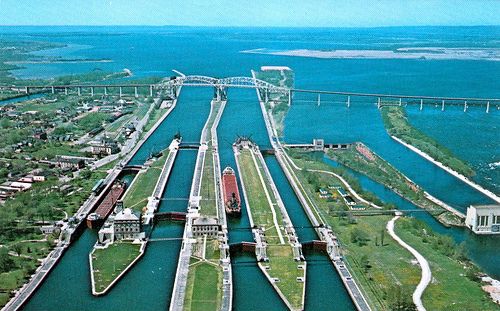
Today, Sault Ste Marie operates the only lock system that allows freighters to move between Lake Superior and Lake Huron. Millions of tons of cargo and raw materials - many vital to our national interests and security - pass through the Soo Locks each year. 


Pegg Thomas is a native Michigander and avid Upper Peninsula fan. She and husband Michael plan to return to "Da Soo" (Sault Ste. Marie) when he retires in a few years. Both attended Lake Superior State University - back when it was Lake Superior State College - and look forward to moving back "home."

PeggThomas.com

Friday, June 23, 2017

Who are the Métis?

Image result for metis photos

The term Métis is not new, it's been around for hundreds of years, but its meaning can be a bit murky still.

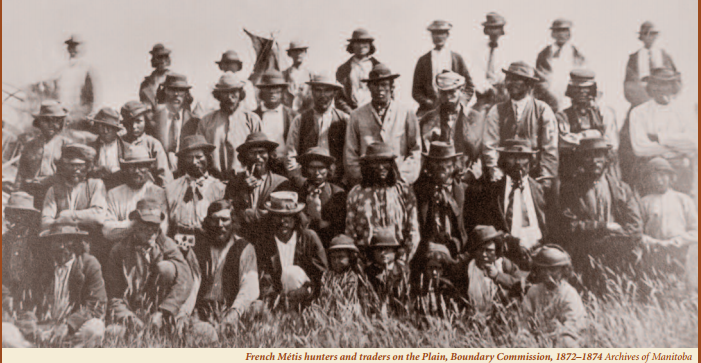
When the first European men, mostly French involved in the fur trade, came to what is now Canada and the northern fringe of the United States, some settled with the native tribes. They blended in with the tribes, mainly Ojibwe and Cree, and took wives. The offspring of these couples were considered half-breeds, half-castes, or in French, Métis. (Pronounced May-tees') Over time, these bi-cultural people developed a culture of their own.

Some claim that Métis with a capital M refers only to those people who originated in the Red River Valley area who more fully developed their own unique culture and language, a blend of French and Native words called Michif. They hold that métis with a lower-case m refers to any persons of mixed Native and European ancestry. Canada has recognized Métis as a First Nation for more than 100 years.

The United States has never formally acknowledged them, even though the Métis have been here since the first European men landed on our shores. Well, nine months after, anyway.

In my work-in-progress, set around the Straits of Mackinac, the heroine is Métis. Researching this little-known - at least in the United States - culture has been interesting. As with any bi-cultural group, they faced prejudice and persecution from those who deemed themselves superior ... on both sides of the Métis family tree.


ponyexpressbookcover

Friday, May 6, 2016

Minnesota and Early American History

When people think of early American history, Minnesota probably doesn't come to mind. On the east coast, there are a wealth of historical events and people that we think of, pushing their way from the Atlantic Ocean, over the Appalachian Mountains, onward toward the Mississippi.

But, Minnesota? What was happening there?

For me, when I think of early American history, I almost always think of Minnesota first. Why? Because I've been studying my state's history since I was a teenager, and there are a surprising number of important historical events and people who impacted not only early Minnesota history, but also a broader scope of American history.

The five biggest influences in early Minnesota history were explorers, fur traders, missionaries, warring Native American tribes, and the military presence.
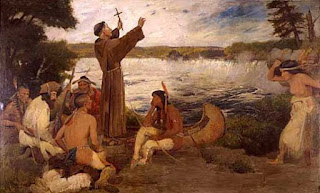
Father Hennepin discovering St. Anthony Falls on the
Mississippi (present-day Minneapolis), in 1680
Minnesota is blessed with two significant bodies of water that impacted early American history. Lake Superior and the Mississippi River. The first European to find Lake Superior is Etienne Brule in 1623. He was a French fur trader and explorer. Some believe he made it all the way to present day Duluth, MN. In 1659, two more French fur traders and explorers made it to what is present day Minnesota. They were Medart Chouart des Groseilliers and Pierre Esprit Radisson. On their heels were French explorers and missionaries, Louis Joliet and Father Jacques Marquette, who found and mapped the upper portion of the Mississippi River from Minnesota to what is now Arkansas.

French explorers and fur traders on Lake Superior.
With the discovery of those significant bodies of water, other explorers, missionaries, and fur traders soon followed.

One notable explorer was Zebulon Pike, for whom Pike's Peak is named in Colorado. In 1805, he was sent by the United States government to find the source of the Mississippi and to locate an ideal spot for a military fort. He met with some success, as he acquired over 100,000 acres of land where Fort Snelling (near present-day St. Paul) was built in 1819. While traversing up the Mississippi, an early winter set in and he built a fort and stockade near present-day Little Falls, MN (my hometown). His men wintered there while Pike continued north. He thought he had found the source of the Mississippi, however, he was proven wrong in later years.

Zebulon Pike
Fur trading and missionary work make up the bulk of European involvement in early Minnesota history. But Native American history is also an important aspect of that time period.

Ojibwe Chiefs in the early 1800's.
Around the time of European entrance into Minnesota, the Ojibwe Indians, who had been occupying parts of Canada and Michigan, and working with the French fur traders, acquired weapons and moved into the Upper Mississippi region, pushing their enemies, the Sioux, to southern Minnesota. For over two centuries, the Ojibwe and Sioux fought, and the area where I live in central Minnesota was a contested zone that both tribes claimed. Another military presence was needed in this area, so in 1849, Fort Ripley (then called Fort Gaines) was built.

This is just a tiny glimpse into Minnesota history and all the people and events that helped shape this beautiful and diverse state. Maybe, just maybe, Minnesota will come to mind the next time you think of early American history.

Your Turn: Are you surprised at how early Europeans discovered Minnesota? Did you realize so much was happening in this Midwest state at such an early date? Do you have any questions about Minnesota history?

Gabrielle Meyer lives in central Minnesota on the banks of the Mississippi River with her husband and four young children. As an employee of the Minnesota Historical Society, she fell in love with the rich history of her state and enjoys writing fictional stories inspired by real people and events. Gabrielle's next release, A Mother in the Making, will be available in September from Love Inspired Historical. She can be found at www.gabriellemeyer.com where she writes about her passion for history, Minnesota, and her faith.              

Find her on Facebook
Find her on Pinterest
Find her on Twitter
Find her on Amazon
Find her on Goodreads
Find her on My Website

Friday, October 23, 2015

Michigan's First Jewish Settler

Sometimes it's easy to fall into the rut of thinking all colonial people were British, Protestant, and poor. We remember the Pilgrims barely surviving their first winter, or the Puritans coming in droves to back-breaking labor in an untamed land. But, in fact, people came to our new shores for many different reasons.

Ezekiel Solomon was born in Germany during the Enlightenment Period. He arrived in Montreal, Canada, in the late 1750s. Quite likely he came from a prosperous family, since he had the money to relocate to Canada and the knowledge to run a successful business. He partnered with several other Jewish men and set out for Fort Michilimackinac, where he established his mercantile in 1761.

It was a rough time to live on the northern frontier. This was the end of the French and Indian War, when the British gained control of Fort Michilimackinac and other previously French strongholds in the Great Lakes area. The native tribes, used receiving many gifts from the French, were not happy with the British in power. Pontiac's Rebellion, a coordinated war by Ottawa Chief Pontiac and warriors from many other tribes, came north to Fort Michilimackinac in 1763. During the attack, Ezekiel Solomon and a few others were taken hostage and eventually ransomed in Montreal. Exactly why Solomon was spared when so many others died is unknown.

Returning to Fort Michilimackinac, Solomon restarted his business, making many trips back and forth to Montreal. At some point, he married Louise Dubois, also known as Okimabinesikwe, a practicing Roman Catholic. Their marriage was both inter-racial and inter-faith.

Solomon moved his business several times after the Revolutionary War to avoid living on American soil. He moved first to Mackinac Island, then St. Joseph's Island, and sometime later to Dummond Island.

Ezekiel Solomon was a partner of the Mackinaw Company, organized in 1779 by traders and companies. It is believed to be the first example of a department store operated in the United States.

Trooper and Pegg cropped