Announcements

10 Year Anniverary & New Releases Winners: Carrie Fancett Pagels' Butterfly Cottage - Melanie B, Dogwood Plantation - Patty H R, Janet Grunst's winner is Connie S., Denise Weimer's Winner is Kay M., Naomi Musch's winner is Chappy Debbie, Angela Couch - Kathleen Maher, Pegg Thomas Beverly D. M. & Gracie Y., Christy Distler - Kailey B., Shannon McNear - Marilyn R.
Showing posts with label 1600s. Show all posts

Friday, March 6, 2020

Étienne Brulé, Lake Superior's First European Visitor

Being a Midwesterner, when I think of the Colonial era, I almost always consider what was going on in other parts of the continent west, north, or south of the Alleghenies during that time. Colonization was pushing into those regions also, as the race was on between European countries to settle our massive continent and wrest it from anyone here before them.

About the time the Pilgrims were landing on Plymouth Rock, French explorer Étienne Brulé was already visiting Lake Superior's Apostle Islands just off the north shore of present day Wisconsin. He was the first European explorer to venture beyond the St. Lawrence River into Canada. 


Brulé was born not far from Paris, France, but it is believed he came to the American continent in the company of Samuel de Champlain in 1608, ahead of other well-known explorers. In Champlain's writings, he referred to Brulé as "my lad" and remarked on his ambition and abilities. Because of Brulé's desire to see what laid beyond the Richelieu River and Lake Champlain and to know about the Algonquin people, Champlain sent him off to seek a route that would carry them westward to the great lake they'd heard about. So Brulé became a true pathfinder. He mastered Huron language and culture. When next he met with Champlain, Champlain noted how Brulé had taken on the manner of dress of his Indian allies, and that Brulé gave a good report of his time spent among them. When Champlain "discovered" Lake Huron, he met his young interpreter already there and gave him permission to continue on further south, as was his desire.

Over the next couple of years, Brulé continued his travels among the native peoples deep in the interior. He remarked on the many powerful and warlike nations (the Iroquois, of whom he was at one time captured by and tortured, then saved by his own wits). He made his way as far as the junction of lakes Erie and Ontario and then to the Susquehanna River. He was the first to explore Pennsylvania. 


Brulé was eventually denounced by a friar for his immoral life-style among the Indians and was further discredited for not being on the up-and-up with France, playing a two-sided game of working for the administration under Champlain but also for the fur merchants who opposed him.  


In 1629, after Champlain gave up his colony (Quebec) to England's Kirke brothers, he wanted Brulé to return to France with the company, but Brulé, along with a fellow interpreter Nicolas Marsolet, claimed they'd be hung if they returned, so they remained behind. 


Later on, while the colony was still under English rule, the young and adventurous Étienne Brulé was killed by the Hurons he knew so well. Word reached Champlain in 1633.


It's hard to imagine these explorers and their native allies covering such vast amounts of rough country and becoming so well adjusted to the life styles they took on. I love thinking about those days, the grandeur they first laid eyes on, and trying to coax from my visions of that time something akin to what it must have been like, don't you?


Naomi Musch

https://naomimusch.com/

Friday, September 13, 2019

Commemorating 400 Years of the First Representative Assembly in the New World


The Virginia Company of London, a joint-stock company, was created by King James to establish a colony in North America. The settlement of Jamestown was founded in 1607. The King and the Virginia Company of London chartered Burgesses (representatives in a given area) to oversee the colony.

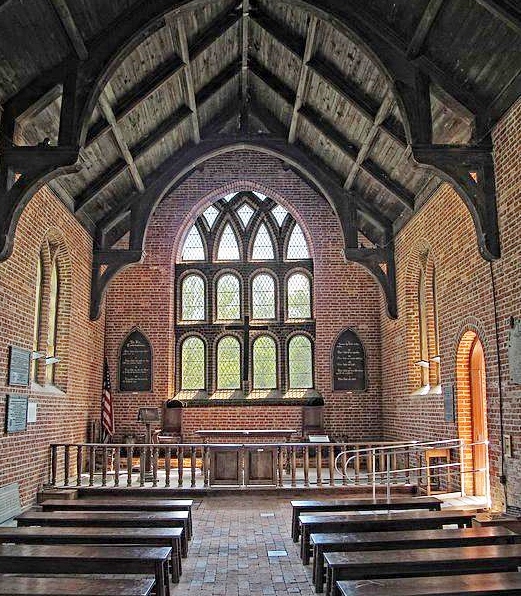
Four hundred years ago, 22 Burgesses representing each of Virginia’s eleven major settlements met in the church at Jamestown, Virginia from July 30-August 4, 1619. They were the first Virginia General Assembly. Democracy in the Western Hemisphere was born along the banks of the James River on July 30, 1619.

On July 30, 2019, there were two events to commemorate the 400th anniversary. 
One occurred early in the morning, at the reconstructed Historic Jamestowne Church, where the Governor and a small group of officials, and some descendants of the first families met. 

Later the President of the United States was joined by former Governors, some Virginia legislators, a former clerk of the British House of Commons at the Jamestown Settlement for a joint session of the General Assembly.

1619 was a pivotal year for Virginia, the first permanent English colony in North America.
~ In addition to being the birthplace of the first Representative Assembly in the New World, Virginia welcomed the arrival of the first enslaved West Central Africans to English North America later that same summer.
~ By November English women were brought to Jamestown to establish families.
~ In December of 1619, the English ship Margaret landed at Berkeley Hundred, and celebrated the first Thanksgiving, over two years before the Pilgrims arrived aboard the Mayflower.
~ New laws passed that same year authorized Virginia’s colonists to initiate various industries, which established the basis for America’s free enterprise system.