Announcements

10 Year Anniverary & New Releases Winners: Carrie Fancett Pagels' Butterfly Cottage - Melanie B, Dogwood Plantation - Patty H R, Janet Grunst's winner is Connie S., Denise Weimer's Winner is Kay M., Naomi Musch's winner is Chappy Debbie, Angela Couch - Kathleen Maher, Pegg Thomas Beverly D. M. & Gracie Y., Christy Distler - Kailey B., Shannon McNear - Marilyn R.
Showing posts with label Jamestown. Show all posts

Friday, September 13, 2019

Commemorating 400 Years of the First Representative Assembly in the New World


The Virginia Company of London, a joint-stock company, was created by King James to establish a colony in North America. The settlement of Jamestown was founded in 1607. The King and the Virginia Company of London chartered Burgesses (representatives in a given area) to oversee the colony.

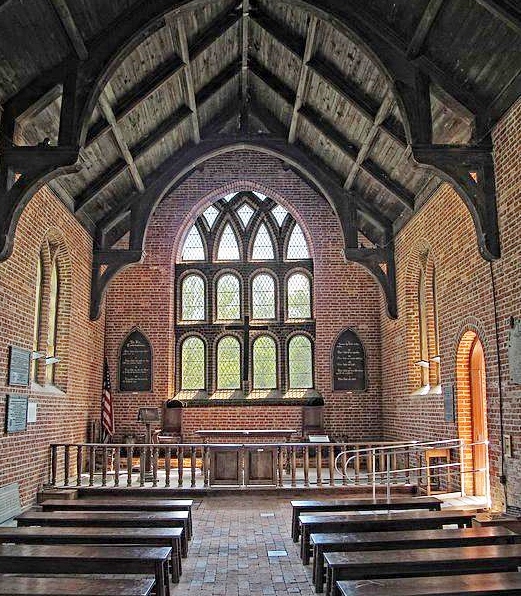
Four hundred years ago, 22 Burgesses representing each of Virginia’s eleven major settlements met in the church at Jamestown, Virginia from July 30-August 4, 1619. They were the first Virginia General Assembly. Democracy in the Western Hemisphere was born along the banks of the James River on July 30, 1619.

On July 30, 2019, there were two events to commemorate the 400th anniversary. 
One occurred early in the morning, at the reconstructed Historic Jamestowne Church, where the Governor and a small group of officials, and some descendants of the first families met. 

Later the President of the United States was joined by former Governors, some Virginia legislators, a former clerk of the British House of Commons at the Jamestown Settlement for a joint session of the General Assembly.

1619 was a pivotal year for Virginia, the first permanent English colony in North America.
~ In addition to being the birthplace of the first Representative Assembly in the New World, Virginia welcomed the arrival of the first enslaved West Central Africans to English North America later that same summer.
~ By November English women were brought to Jamestown to establish families.
~ In December of 1619, the English ship Margaret landed at Berkeley Hundred, and celebrated the first Thanksgiving, over two years before the Pilgrims arrived aboard the Mayflower.
~ New laws passed that same year authorized Virginia’s colonists to initiate various industries, which established the basis for America’s free enterprise system.

Friday, January 20, 2017

Abolitionism in Colonial America

by Tamera Lynn Kraft

Most people think abolitionism didn't really come to be until the early 1800, but abolitionist views in America started almost as early as slavery in America.


The first Africans that came to America, according to some historians, were sold to Jamestown colonists in 1619 as indentured servants although some say there were already Africans there. The twenty men had been stolen from a Portuguese slave ship and were allowed land and freedom when there period of service was done, but by the 1630s, some colonists were keeping African servants for life. John Punch, in 1640, was the first documented indentured for life servant. In 1662, the law recognized slavery and instituted statutes that any children born would follow the status of their mother making it so children could be born slaves.

The first dispute against this practice was that Christians could not own their brothers in Christ. If a slave was baptized in the faith, he had to be freed. In 1667, the General Assembly outlawed freedom by baptism. By 1705, an array of slave codes were enacted, and half of the labor force in Virginia. In the 1620s, the Dutch West India Company introduced slavery to New England, and be 1700, slavery was established as an institution there as well.


Even though slavery was being established in the colonies, there was a movement growing to end the practice. Throughout the 17th century, many evangelicals and Quakers came out against slavery.  As early as 1688, four Quakers in Germantown signed a protest against the practice of slavery and made their case that the practice was not Christian and against Biblical precepts. In the 1730s and 1740s, during the Great Awakening, preachers decried owning slaves as sin.

During the American Revolution, Moravian and Quaker preachers convinced over a thousand slave owners to free their slaves. The newly formed states debated whether to allow slavery to continue. It was finally decided to outlaw the slave trade within twenty years and allow each state to decide for itself. The economy in the South was also encouraging freedom for slaves. Planters were shifting from labor-intensive tobacco to mixed-crop cultivation and needed fewer workers.


After the American Revolution, northern states gradually outlawed slavery. In 1808, the United States criminalized the slave trade and outlawed any new slaves being brought to America. If it hadn't been for Eli Whitney's cotton gin patent in 1794, slavery may have only been a footnote in history. The cotton gin overnight made the practice of slavery profitable. We'll never know if the invention had been delayed twenty years, if that would have ended slavery. Either way, it didn't end abolitionism. The abolitionist movement that started in Colonial times would continue to grow until a war forced the end of slavery in the United States.


Tamera Lynn Kraft has always loved adventures and writes Christian historical fiction set in America because there are so many adventures in American history. She has received 2nd place in the NOCW contest, 3rd place TARA writer’s contest, and was a finalist in the Frasier Writing Contest. Her novellas Resurrection of Hope and A Christmas Promise are available on Amazon and at Barnes and Noble.

Friday, November 18, 2016

Bibles in Colonial America

by Tamera Lynn Kraft


Saur's German Bible
Bibles were in America from the earliest days of the English colonization. There were four common translations of the Bible in the early 1600s: The Great Bible, The Bishop's Bible, The Geneva Bible, and the King James Bible. Bibles were allowed to be printed only at official printers approved by the king, so Bibles weren't printed in America. The first Bible printed in America was Saur’s German Bible in 1743.

In his book written in 1810, The History of Printing in America, Isaiah Thomas claims Gamaliel Rogers and Daniel Fowle printed about 2,000 copies of the New Testament in Boston, Massachusetts as early as 1750. Apparently they falsely added to the first page that the Bible was printed in London to avoid being fined by the English Crown, but there is no proof that happened.


American Revolution Bible
The first English language Bible printed in America that can be verified was in 1771. Robert Aitken, who became the first official printer of the Journals of Congress for the United States Congress in 1776, was disturbed by the lack of Bibles in America so he printed the first English language New Testament. On January 21, 1781, Aitken petitioned the Unites States Congress to authorize, and if possible even fund, the printing of a complete Bible in the English language of the King James Version. On September 10, 1782, Aitken received authorization to commence his American printing of the Bible in English. In 1782, Robert Aitken produced the first English language Bible printed in America. It was known as the “Bible of the American Revolution.


The Great Bible
Nobody knows for sure which Bibles were brought to America. A Bible might have been brought to the Roanoke colony in 1585. More likely, it was in 1605 when Jamestown was colonized. The Great Bible translated in 1539 was the first official English translation, and many churches used that version, so it might have been brought to Roanoke or Jamestown. The Great Bible used the outlawed Tyndale Bible as its guide. Another Bible that might have been in early Jamestown was the Bishop's Bible first printed in 1568 to correct problems in The Great Bible translation. It was the authorized version of the Bible in England until 1611 when the King James Bible was authorized. There may have been King James Bibles later, but in 1605 when the ships sailed for Jamestown, it didn't exist. By 1620, it might have been shipped to Jamestown for use by the pastor.

Geneva Bible
When the Pilgrims landed in Plymouth in 1620, there were two Bible translations aboard the ships. John Alden, a prominent member of the Plymouth Colony who was a ship's carpenter on the Mayflower, brought a copy of the King James Bible. Alden was not originally a member of the Pilgrims which is why he probably brought that version. The Pilgrims used the Geneva Bible first printed in 1560, the most popular English Bible until the mid-seventeenth century. William Bradford quoted from the Geneva Bible. The Bible was given its name because of its associations with the Calvinists in Geneva. The Geneva Bible had study notes in it written by many Protestant reformers including John Calvin. King James considered the translation seditious. 

Tamera Lynn Kraft has always loved adventures and writes Christian historical fiction set in America because there are so many adventures in American history. She has received 2nd place in the NOCW contest, 3rd place TARA writer’s contest, and was a finalist in the Frasier Writing Contest. Her novellas Resurrection of Hope and A Christmas Promise are available on Amazon and at Barnes and Noble.

Friday, June 17, 2016

Myths about Captain John Smith, Leader of Jamestown

by Tamera Lynn Kraft

Captain John Smith was an explorer who led the first permanent English settlement in North America, Jamestown. He was a larger than life man who captured the imagination of historians and school children alike. His life was full of adventure and intrigue, but the facts most people know about John Smith are myths and legends instead of facts.

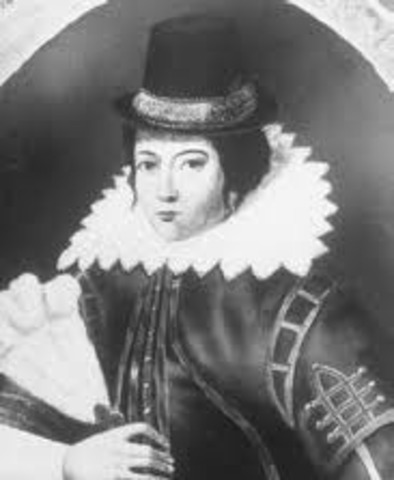
Some of the biggest myths surrounding Captain John Smith are stories about him and Pocahontas.  Pocahontas was an Indian girl, daughter of Chief Powhatan, who hung around Jamestown. According to legend, she was so in love with John Smith that when her father threatened to kill him, she begged for his life. Some even belief that John Smith and Pocahontas married. John Smith was the first to perpetuate part of this myth. He claimed that when he was captured by Indians, Pocahontas threw herself across his body to save him.


The truth is historians belief John Smith might have exaggerated the story. Soon after the incident happened, he never mentioned Pocahontas' part in the Powhatans releasing him without harm. Over ten years later, Captain Smith told the harrowing tale in a letter to Queen Anne introducing Pocahontas and asking the queen to treat her with dignity. One historian, David A. Price, believes the incident might have happened but suggested Captain Smith was in no real danger. He could have been involved in a ritual that symbolized his death and rebirth as a member of the tribe.

Whatever the case, Pocahontas and Captain Smith were not in love. When Captain Smith was captured, Pocahontas was only ten or eleven years old when it happened. It's also not true that she converted Captain Smith to the Indian religion. After spending years around the settlers at Jamestown, Pocahontas was converted to Christianity and took the name Rebecca. In 1614, she married John Rolfe, a tobacco farmer, and in 1616, she travelled to London with her husband where she died of an unknown virus.


Another myth is that Captain John Smith was highly revered by the other colonists. This also is only partially true. During the voyage to the New World, the colonists for the Virginia Company had papers that were to remain sealed until they reached the new land. Apparently Captain Smith was involved in a mutiny aboard ship, and Captain Christopher Newport and the crew planned to execute him when they landed at Cape Henry. When they did arrive at Cape Henry, the letter was opened, and the colonists found out that the man they were planning to execute was appointed one of the leaders of the new colony. This saved Captain Smith from the gallows.


A year later, Captain Smith became the president of the council. He proved his leadership abilities, saving the colonists from starvation by initiating strict policies including an order, “He that will not work shall not eat." He built the first well in the fort and repaired many of the buildings. Even though his leadership helped to save the colony, not everyone liked Smith. One night, while he was sleeping on the boat, a mysterious gunpowder explosion went off causing him to be injured. Some historians suggest it might have been an attempted assasination.

Another myth is that Captain John Smith lived in Jamestown for the rest of his life. The truth is he arrived in Jamestown in 1607, became president of the council in 1608, and sailed to England because of his injury for the gunpowder explosion in 1609. Captain Smith never returned to Jamestown. He died in 1631 in England at the age of 51.

During his years in England, John Smith encouraged colonization in America by writing accounts of his time there and giving detailed maps of the land. He was a major part of the Jamestown Colony even though he was only there for three years.


Tamera Lynn Kraft has always loved adventures and writes Christian historical fiction set in America because there are so many adventures in American history. She has received 2nd place in the NOCW contest, 3rd place TARA writer’s contest, and is a finalist in the Frasier Writing Contest.
Her novella A Christmas Promise is available on Amazon. Her novella Resurrection of Hope will be released next month.

Friday, May 20, 2016

Jamestown Brides


by Tamera Lynn Kraft


We've all heard about the mail order brides who came out West to marry men they'd written letters to but had never met, but long before the mail order brides of the Wild West, there were the Jamestown brides.

In 1607,  Jamestown was the first permanent British settlement in America. On the shores of James Island in the colony of Virginia, men from the Virginia Company built a fort hoping to strike it rich finding gold. They didn't find gold, but after years of struggling, they did find Virginia was the perfect place to plant a cash crop of tobacco. Until then, tobacco was a luxury in England because it needed a warm climate to grow. After Jamestown was established, the habit of smoking became commonplace.

When Jamestown started, there were few women in the settlement. In 1608, the second ship arrived with the first two women, Anne Forrest, wife of Thomas Forrest, and her maid, fourteen-year-old Anne Buras who married a carpenter, John Layton. Anne Layton gave birth to the first European baby in the colony and named her Virginia.

In 1609, 120 more women arrived, most of them wives and families of the men traveling to Jamestown. Most of these women died, but Temperance Flowerdew Yeardley, wife of Captain George Yeardley who later became the governor of the colony, survived the "starving time" and became the mistress of a large plantation known as the Flowerdew Hundred. Joan Pierce sailed with her husband and daughter Jane and loved Jamestown life. Jane Pierce later married John Rolf after his first wife, Pocahontas died.

In order to entice more men to the colony to grow tobacco, in 1618, the Virginia Company began recruiting women to go to Jamestown to become brides and help establish the colony through families. In the first few years of bride ships, the women had to have references they were moral church going women. Later, because of the great need for women, the rules were relaxed.

The first bride ships left England in 1619 with a hundred women and arrived in Jamestown with only 90 of those women still alive. The second group of bride ships left England in 1621 with another 57 women. The women were expected to find husbands who could pay for their passage to the New Land. They could choose the husband they wanted, and they could also choose to remain single provided they worked as indentured servants for seven years to pay their passages. Because the ratio of men to women was seven to one, most women had married by the time the ship left to return to England three months later. If a woman chose to become an indentured servant instead of marrying immediately, she could marry at any time provided her husband paid the remainder of the passage she had not yet worked off.

Women came to Jamestown for many reasons. Even with the hardships they suffered, many had no resources in England. The cities were crowded, and their were no employment opportunities for women. If they didn't have husbands or fathers to care for them, their futures were bleak. Many times, they would be forced into starvation or prostitution. The bride ships gave them an opportunity to find a husband and a new life in a new land.

These women who left everything to come to Jamestown and survived famine, disease, and Indian attacks beside their husbands were the fore-mothers of the new land that would later be known as the United States of America. Their strength and courage, as well as their adventurous spirit, gives women today a great pattern to emulate.

Tamera Lynn Kraft has always loved adventures and writes Christian historical fiction set in America because there are so many adventures in American history. She has received 2nd place in the NOCW contest, 3rd place TARA writer’s contest, and is a finalist in the Frasier Writing Contest. 

Her novellas Soldier’s Heart and A Christmas Promise are available on Amazon. Her novella Resurrection of Hope will be released in July.

Friday, July 11, 2014

JAMESTOWNE ~ WHERE AMERICA WAS BORN


The story of the establishment of the Jamestowne Colony is an interesting one. The Virginia Company of London, a privately owned business, was granted land by King James I of England with the intention of planting a colony near the Chesapeake in Virginia. The purpose was to profit from the wealth of the new world.

Replica of The Discovery
Replica of the Susan Constant
In December of 1606, three small ships departed London bound for Virginia. The largest of the three, The Susan Constant, under the command of Captain Christopher Newport, carried seventy-four passengers and crew, as well as needed supplies. Newport, an experienced mariner and familiar with American waters commanded the fleet. The Godspeed, less than half the size of The Susan Constant carried fifty-two men. The smallest of the three ships, The Discovery, carried only twenty-one men. Nearly one half of the passengers were gentry, some soldiers and privateers. Among the other passengers were some skilled craftsmen and artisans, unskilled labor and common seamen.

The majority of the passengers and crew of the three ships never planned to permanently settle in Virginia. Their intent was to explore the land, find gold or silver, or to seek their fortune in some other way. With little interest in farming, these men only intended to plant and harvest crops for sustenance. The sea voyage got off to a rough start. After poor weather detained the fleet off the coast of England for six weeks, they were once again on their way across the Atlantic via the southern route. However, difficulties arose on the passage when Capt. John Smith criticized those in charge, was alleged to have plotted a take over of the ship, and was accused of insubordination. Part of the problem was that the intended leadership of the colony had not yet been revealed to those on board. The secret was kept in a box not to be opened until they reached their destination. This plan was devised to keep the gentry ignorant of the intended ruling council so they would not lose interest in the venture.
 
The Route of the Susan Constant, Godspeed and Discovery
Toward the end of March the ships reached the Caribbean islands. By late April 1607 they sighted Virginia and entered what is now the Chesapeake Bay. About this time the box with the intended Council Leader’s names was opened. John Smith was one of the seven men appointed to lead. After two weeks of exploring the area, the Council Leaders selected a site on the James River at the southwestern shore of Jamestowne Island.

When two colonists perished after an attack by the Native Americans, a triangular wooden palisade with a bulwark at each corner was built to provide security for the settlers. Inside the fort, construction began on
Typical thatched roof mud and stud building
several thatched roof mud and stud communal buildings, storage houses, a church and several individual homes. Life in the settlement proved difficult initially. The intention had been that the colonists would trade with the Native Americans for food, but the region was experiencing a drought and food was scarce. Additionally, the water in the
James River was salty, making fresh water scarce.

For the first two years, the colonist’s relationship with their Indian neighbors was fairly cordial. But then, during the winter of 1609-1610 the fort was attacked, trapping the colonists inside with little fresh water or food. This came to be known as “the starving time” and only sixty survived. When ships arrived from Bermuda, the colonists, ready to end their colonization, boarded the ships to return to England. However, upon meeting supply ships on the James River headed toward Jamestowne, they were ordered to return to the fort where they were under strict martial law to restore the fort. Finally, conditions improved, resulting in the establishment of the first permanent English American colony.

Tobacco Drying
By the summer of 1610 more men and now, women arrived at Jamestowne from England. The community began to flourish as they increased their agricultural products, and also began experimenting with tobacco cultivation. One of the successful tobacco planters was John Rolfe, probably best known as the husband of Pocahontas.

The profits the investors originally sought from gold and silver ended up being from tobacco. The fort continued to expand and more English women arrived as brides for the colonists. By 1624, the Virginia Company’s charter was revoked by King James, and Virginia became a crown colony.

See my earlier post for the true story of Pocahontas http://colonialquills.blogspot.com/search/label/Pocahontas

See my earlier post on Jamestown Settlement and Historic Jamestowne in the 21st Century. http://colonialquills.blogspot.com/search/label/Jamestowne