Announcements

10 Year Anniverary & New Releases Winners: Carrie Fancett Pagels' Butterfly Cottage - Melanie B, Dogwood Plantation - Patty H R, Janet Grunst's winner is Connie S., Denise Weimer's Winner is Kay M., Naomi Musch's winner is Chappy Debbie, Angela Couch - Kathleen Maher, Pegg Thomas Beverly D. M. & Gracie Y., Christy Distler - Kailey B., Shannon McNear - Marilyn R.
Showing posts with label Jamestowne. Show all posts

Friday, June 17, 2016

Myths about Captain John Smith, Leader of Jamestown

by Tamera Lynn Kraft

Captain John Smith was an explorer who led the first permanent English settlement in North America, Jamestown. He was a larger than life man who captured the imagination of historians and school children alike. His life was full of adventure and intrigue, but the facts most people know about John Smith are myths and legends instead of facts.

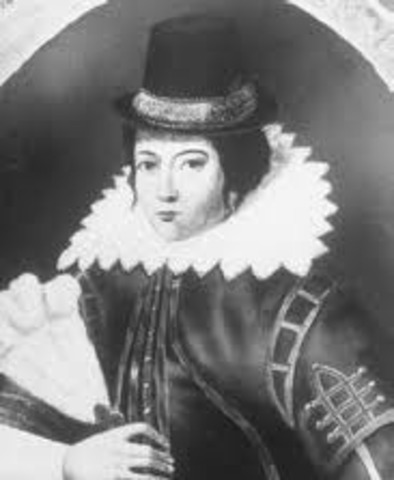
Some of the biggest myths surrounding Captain John Smith are stories about him and Pocahontas.  Pocahontas was an Indian girl, daughter of Chief Powhatan, who hung around Jamestown. According to legend, she was so in love with John Smith that when her father threatened to kill him, she begged for his life. Some even belief that John Smith and Pocahontas married. John Smith was the first to perpetuate part of this myth. He claimed that when he was captured by Indians, Pocahontas threw herself across his body to save him.


The truth is historians belief John Smith might have exaggerated the story. Soon after the incident happened, he never mentioned Pocahontas' part in the Powhatans releasing him without harm. Over ten years later, Captain Smith told the harrowing tale in a letter to Queen Anne introducing Pocahontas and asking the queen to treat her with dignity. One historian, David A. Price, believes the incident might have happened but suggested Captain Smith was in no real danger. He could have been involved in a ritual that symbolized his death and rebirth as a member of the tribe.

Whatever the case, Pocahontas and Captain Smith were not in love. When Captain Smith was captured, Pocahontas was only ten or eleven years old when it happened. It's also not true that she converted Captain Smith to the Indian religion. After spending years around the settlers at Jamestown, Pocahontas was converted to Christianity and took the name Rebecca. In 1614, she married John Rolfe, a tobacco farmer, and in 1616, she travelled to London with her husband where she died of an unknown virus.


Another myth is that Captain John Smith was highly revered by the other colonists. This also is only partially true. During the voyage to the New World, the colonists for the Virginia Company had papers that were to remain sealed until they reached the new land. Apparently Captain Smith was involved in a mutiny aboard ship, and Captain Christopher Newport and the crew planned to execute him when they landed at Cape Henry. When they did arrive at Cape Henry, the letter was opened, and the colonists found out that the man they were planning to execute was appointed one of the leaders of the new colony. This saved Captain Smith from the gallows.


A year later, Captain Smith became the president of the council. He proved his leadership abilities, saving the colonists from starvation by initiating strict policies including an order, “He that will not work shall not eat." He built the first well in the fort and repaired many of the buildings. Even though his leadership helped to save the colony, not everyone liked Smith. One night, while he was sleeping on the boat, a mysterious gunpowder explosion went off causing him to be injured. Some historians suggest it might have been an attempted assasination.

Another myth is that Captain John Smith lived in Jamestown for the rest of his life. The truth is he arrived in Jamestown in 1607, became president of the council in 1608, and sailed to England because of his injury for the gunpowder explosion in 1609. Captain Smith never returned to Jamestown. He died in 1631 in England at the age of 51.

During his years in England, John Smith encouraged colonization in America by writing accounts of his time there and giving detailed maps of the land. He was a major part of the Jamestown Colony even though he was only there for three years.


Tamera Lynn Kraft has always loved adventures and writes Christian historical fiction set in America because there are so many adventures in American history. She has received 2nd place in the NOCW contest, 3rd place TARA writer’s contest, and is a finalist in the Frasier Writing Contest.
Her novella A Christmas Promise is available on Amazon. Her novella Resurrection of Hope will be released next month.

Friday, July 11, 2014

JAMESTOWNE ~ WHERE AMERICA WAS BORN


The story of the establishment of the Jamestowne Colony is an interesting one. The Virginia Company of London, a privately owned business, was granted land by King James I of England with the intention of planting a colony near the Chesapeake in Virginia. The purpose was to profit from the wealth of the new world.

Replica of The Discovery
Replica of the Susan Constant
In December of 1606, three small ships departed London bound for Virginia. The largest of the three, The Susan Constant, under the command of Captain Christopher Newport, carried seventy-four passengers and crew, as well as needed supplies. Newport, an experienced mariner and familiar with American waters commanded the fleet. The Godspeed, less than half the size of The Susan Constant carried fifty-two men. The smallest of the three ships, The Discovery, carried only twenty-one men. Nearly one half of the passengers were gentry, some soldiers and privateers. Among the other passengers were some skilled craftsmen and artisans, unskilled labor and common seamen.

The majority of the passengers and crew of the three ships never planned to permanently settle in Virginia. Their intent was to explore the land, find gold or silver, or to seek their fortune in some other way. With little interest in farming, these men only intended to plant and harvest crops for sustenance. The sea voyage got off to a rough start. After poor weather detained the fleet off the coast of England for six weeks, they were once again on their way across the Atlantic via the southern route. However, difficulties arose on the passage when Capt. John Smith criticized those in charge, was alleged to have plotted a take over of the ship, and was accused of insubordination. Part of the problem was that the intended leadership of the colony had not yet been revealed to those on board. The secret was kept in a box not to be opened until they reached their destination. This plan was devised to keep the gentry ignorant of the intended ruling council so they would not lose interest in the venture.
 
The Route of the Susan Constant, Godspeed and Discovery
Toward the end of March the ships reached the Caribbean islands. By late April 1607 they sighted Virginia and entered what is now the Chesapeake Bay. About this time the box with the intended Council Leader’s names was opened. John Smith was one of the seven men appointed to lead. After two weeks of exploring the area, the Council Leaders selected a site on the James River at the southwestern shore of Jamestowne Island.

When two colonists perished after an attack by the Native Americans, a triangular wooden palisade with a bulwark at each corner was built to provide security for the settlers. Inside the fort, construction began on
Typical thatched roof mud and stud building
several thatched roof mud and stud communal buildings, storage houses, a church and several individual homes. Life in the settlement proved difficult initially. The intention had been that the colonists would trade with the Native Americans for food, but the region was experiencing a drought and food was scarce. Additionally, the water in the
James River was salty, making fresh water scarce.

For the first two years, the colonist’s relationship with their Indian neighbors was fairly cordial. But then, during the winter of 1609-1610 the fort was attacked, trapping the colonists inside with little fresh water or food. This came to be known as “the starving time” and only sixty survived. When ships arrived from Bermuda, the colonists, ready to end their colonization, boarded the ships to return to England. However, upon meeting supply ships on the James River headed toward Jamestowne, they were ordered to return to the fort where they were under strict martial law to restore the fort. Finally, conditions improved, resulting in the establishment of the first permanent English American colony.

Tobacco Drying
By the summer of 1610 more men and now, women arrived at Jamestowne from England. The community began to flourish as they increased their agricultural products, and also began experimenting with tobacco cultivation. One of the successful tobacco planters was John Rolfe, probably best known as the husband of Pocahontas.

The profits the investors originally sought from gold and silver ended up being from tobacco. The fort continued to expand and more English women arrived as brides for the colonists. By 1624, the Virginia Company’s charter was revoked by King James, and Virginia became a crown colony.

See my earlier post for the true story of Pocahontas http://colonialquills.blogspot.com/search/label/Pocahontas

See my earlier post on Jamestown Settlement and Historic Jamestowne in the 21st Century. http://colonialquills.blogspot.com/search/label/Jamestowne


Friday, May 9, 2014

JAMESTOWN   ~   JAMESTOWNE

In the 21st Century

This May 13th is the 407th anniversary of the founding of Jamestowne, our country’s first permanent English settlement. Our capitalist society, our nation’s democracy, and the precepts of our Constitution were birthed here, on this island in the James River in Southeastern Virginia. In this post I will give you a brief tour of Jamestown Settlement and Historic Jamestowne, two living history museums that detail the history of Jamestowne and provide a visual experience for people of all ages. A free shuttle runs between the two locations and there is ample free parking in both places. Naturally, both sites have a gift shop with items to please all. There are numerous books of interest for all ages for those of us who devour history.


The entrance to Jamestown Settlement
Jamestown Settlement is run by both the state of Virginia and the Colonial National Historical Park at Jamestown. At the Settlement, there is a video presentation and 30,000 square ft. of exhibit space made up of several galleries that provides a wealth of visual and written information about the origins and the development of the colony. Here, we learn more about the three ethnic groups that
make up Jamestown, the English, Native
Native American Village Scene
American, and African. From the museum, one can go outside and literally feel like you are back in the seventeenth century as you walk through a reconstructed Indian village, explore their dwellings and speak with the interpreters. Take a short walk down to the pier where you will find three ships of different sizes, reconstructed to look like the original ships that brought 144 men and boys here; the Godspeed, the Susan Constant, and the
The Susan Constant
(the largest of the three ships)
 Discovery. One’s first impression of these vessels is how much courage it took to travel on these small, smaller, and tiny ships across the
Atlantic. After boarding and wandering through the ships, we walk back up through an example of the colonist’s agricultural area into the reconstructed fortified area where their homes, church and buildings are located. Some of the structures have thatched roofs and it is a
Building with thatched roof
fascinating treat to be there when the re-thatching occurs. Interpreters can be found throughout this mock up village explaining their various occupations from burning and scraping out a tree log to make a canoe to demonstrating how the firearms of that era were used.


Diagram of
Historic Jamestowne site
Historic Jamestowne is only a short ride by car or shuttle bus from Jamestown Settlement is. It is run by both Preservation Virginia and the National Park Service. A land bridge takes us to the island. After entering through the Visitor’s Center, one will travel over a walking bridge through a swampy area to a vast open portion of the island looking out to the James River. The original
Jamestowne Memorial Church
triangular shaped wooden fort constructed near the water’s edge no longer exists but archaeological digs over many years have located the site of the original fort as well as many of the homes, buildings, and the church. The
Memorial Church was built in 1907 gives a visitor an idea of what the original church probably looked like. Not far from
Pocahontas
there is a lovely statue of Pocahontas created for the 300th anniversary celebration of Jamestowne. A large statue of Captain John Smith looking out to the
James River is located nearby.
Captain John Smith

Take a walk outside the area of the original fort through an area called New Towne and you will see reconstructed brick outlines of the foundations of buildings discovered during continuing excavations.

Entrance to
the Archaearium
A visit to Historic Jamestowne would not be complete without visiting the Archaearium Archaeology Museum which houses artifacts and tells the story of Jamestowne via some fascinating modern technology.

Before or after viewing the actual site, one can take a detour to visit the Jamestown Glasshouse where one can see demonstrations of glassblowing and learn about one of the colony’s first industries that began in 1608 by Polish and German artisans. Visitors can also bike or drive around the entire island.
 

I remember how excited I was to be living here in 2007, when so many people from around the country and world came to share in the 400th anniversary year celebration. It was a real treat to attend the 400th celebration at Jamestown.  And like they did fifty years earlier, Queen Elizabeth and Prince Philip stayed at the Williamsburg Inn and attended many of the festivities in Jamestown and Williamsburg.

Williamsburg Fife & Drum Corps
Being an unapologetic anglophile, I wasn’t going to miss the chance to see the Queen. A girlfriend and I stood on Duke of Gloucester Street in Williamsburg with many of our neighbors as Williamsburg’s finest, the members of Williamsburg Fife and Drum Corps led the parade of carriages that would take
Queen Elizabeth & Prince Philip
the royal couple and many other dignitaries to their luncheon. There was such joy and unity this day with the empire we fought so long and hard to separate from 400 years earlier.

Come back and view my post in July to learn the fascinating history of Jamestowne.
You can learn more about the two sites at:


See my earlier post for the true story of Pocahontas http://colonialquills.blogspot.com/search/label/Pocahontas