Announcements

10 Year Anniverary & New Releases Winners: Carrie Fancett Pagels' Butterfly Cottage - Melanie B, Dogwood Plantation - Patty H R, Janet Grunst's winner is Connie S., Denise Weimer's Winner is Kay M., Naomi Musch's winner is Chappy Debbie, Angela Couch - Kathleen Maher, Pegg Thomas Beverly D. M. & Gracie Y., Christy Distler - Kailey B., Shannon McNear - Marilyn R.
Showing posts with label Iroquois. Show all posts

Friday, December 4, 2020

How the Beaver Wars Aided European Conquest of North America (PLUS a Free Novel Download)

Last month, I began a series about the historic fur trade on the American continent, introducing it as the trade that shaped the colonies. To our modern way of thinking, it may seem strange that trapping was such a powerful force on the developing continent, but for many decades, the rush for fur drove the North American economy and pushed nations that had colonized along the ocean shore ever deeper into the interior.

The fur trade began among the indigenous people of America themselves. Native American tribes had been trading among themselves for untold numbers of generations, and often the currency was furs. Meanwhile, the Europeans source for fur was often Russia or Scandinavia. After Europeans began expanding their interests here on this continent, it wasn't long before war broke out between Indian nations seeking to establish alliances that would help them monopolize their own powers of trade. These wars that went on intermittently throughout the 17th century, but principally from 1650-1655, became known as the Beaver Wars.

The Beaver Wars are a study in themselves. It was a period of time when the powerful Iroquois confederation sought to expand territory and control the fur trade. They established a pact among themselves that they called "the Great Peace"; however, against their enemies, the Iroquois--led by the powerful Mohawk--carried on their own form of genocide. They either brutally killed their enemies or else took them captive, absorbing them into their tribes. The Iroquois were supplied with firearms by their allies, the Dutch (and later on, the English). 


Meanwhile, the Iroquois' Algonquin enemies--remnants from tribes like the Neutrals, Tobacco (Tionontati) Erie, Susquehannock, and others who were allied with the French--had no guns, only missionaries who lived among them, attempting to convert them to Catholicism. To flee massacre, they were pushed further inland, seeking refuge along the shores of the western Great Lakes. Even there, however, the Iroquois nations sought their destruction. The Mohawks, in particular, were known for the ferocity of their raids. (The Dutch used the Mohawks as weapons of terror against the French and Hurons, while at the same time keeping a wary, untrusting eye on these so-called allies.) There is more that can be said about the Mohawks. They were the last tribe to negotiate peace, as they held out the longest in trying to hold the reins of the fur trade with the Dutch. But the Mohawk's power grab ultimately led to fractures in the Iroquois confederacy. (This after further wars and manipulations.)

While the Mohawks achieved a monopoly on trade with the Dutch, they were unable to gain control of any of the trade with the French in Montreal. The French had turned their attentions further west toward the Ojibwa nations. These included the Chippewas, Missisaugas, Ottawas, and Potawatomis. These people, along with the Miami, gave the French access to lands still rich with furs, so much so that the French government was highly motivated to support them in their confrontations against the campaigns of the Iroquois. 

With French support of the Ojibwe and Miami, the Iroquois went on to suffer heavy defeats in present-day Michigan and Wisconsin. Meanwhile, English warships sailed up the Hudson to claim New Netherland in 1664. The Dutch surrendered New Netherland along with Fort Amsterdam and the town of New Amsterdam on the island of Manhattan. With their political collapse on the continent, the Mohawks lost their special powers of alliance. This further weakened the Iroquois league, though it didn't break it completely. Nevertheless, as a consequence, both England and French conquest in North America was strengthened.

At the end of the Beaver Wars, the internal struggles between Indigenous nations to secure the power of trade only weakened them and served the ends of the Europeans rather than they themselves. 

~~~~~~~~~~

Have you been attending this 3-day party, happening now? If not, come join me and a host of authors (40 in total!) for a Christmas Extravaganza, December 3rd, 4th, 5th.

AND Saturday through Monday, December 5th-7th, you can download my historical novel The Green Veil FREE!


I wish you a Merry Christmas, and pray God's peace and blessings upon you in 2021!

Naomi

https://naomimusch.com/


Monday, October 28, 2019

Sarah Kast McGinnis ~ Loyalist Spy

Johann Georg Kast, and his wife Anna Margaretha Feg, Palatine Germans desperate to escape religious strife in their homeland, arrived in New York in 1710. They were brought to the American colonies by England’s Queen Anne to work in the British tar camps, where the production of tar and pitch was necessary for the building of British ships. But Johann, unable to support his growing family on his meager wages, traveled west and settled in German Flatts on New York’s Mohawk Valley frontier, where he opened a trading post. Their sixth child, Sarah, was born in 1713, and as the family lived near a neighboring tribe of Iroquois Confederacy Mohawk, Sarah grew up closely allied with them and familiar with their culture and language. 


Johnson saving life of wounded French officer
during Battle of Lake George by Benjamin West
When an Irishman by the name of Teady Magin, (Timothy McGinnis) who’d worked for a family south of Albany had completed his indenture, he set out to be a fur trapper and acquired a strong knowledge of native language and way of life along the way. Through his travels up and down the river, he frequently stopped at Kast’s trading post where he met and fell in love with Sarah.  

McGinnis proposed, and Sarah married Timothy in 1734. They raised a family of eight children on a farm built close to the Mohawk Castle (principal village) of the natives they’d befriended. Sarah remained at home and continued to run the thriving trading post when Timothy, now a captain in the British forces, joined his friend Sir William Johnson in the war against the French in North America. 

After the death of her husband at the Battle of Lake George in 1755, Sarah, with the help of her children, ran their farm, the trading post, and took up her husband’s fur trading business to help support her family. As a widow, a woman in the eighteenth century could retain ownership of property and wealth. However, if she remarried, all her property would go to her new husband. Sarah would remain a widow for the rest of her life.

Sarah and the American Revolution 


It was rare to see a woman take up arms in combat, though most knew how to handle a rifle for hunting and protection if necessary. Others contributed to the war effort by covert observation, collecting important information and carrying messages. Even more unlikely was seeing those of German descent like Sarah, as an important liaison who used her trading ties to keep the Mohawk loyal to the British cause. 

Loyalists, or Tories—those devoted to the British cause—comprised about one-third of American colonists, including officeholders who served the British crown, large landholders, wealthy merchants, Anglican clergy and their parishioners, and Quakers.  

Like many Tories, however, Sarah’s loyalty cost her dearly. In retaliation, members of her family were killed by their rebel neighbors, their property and trading post seized, and Sarah’s house burned to the ground, with the tragic loss of her son, William, who’d been trapped inside. Alienated from friends and extended family members, her personal property was taken and sold at auction to Patriot buyers. Sarah’s spying for the British had been discovered, and along with her daughter and granddaughter, was imprisoned at Fort Dayton, (now Herkimer, New York), where her granddaughter died. Her son-in-law, Symon DeForest was jailed and died in captivity.  

Barry St. Leger
Sarah and her daughter were released when General Barry St. Leger and his troops attacked the area. St. Leger’s force, composed mostly of Native Americans and Tories, intended to come down the Mohawk Valley to meet General Burgoyne at Albany. But Continental troops barred his way, and he lay siege to Fort Dayton. When St. Leger’s native allies heard that a Continental force under Benedict Arnold was moving to relieve Fort Stanwix, they deserted the British, and St. Leger was forced to make a retreat to Canada. 

General St. Leger retreated to Oswego and then to Canada, with Sarah and her family following close behind. In August 1777, they arrived in Canada at a British fort on Carleton Island, southeast of Kingston on the St. Lawrence River. She was 64 years old. 

In the winter of 1777, at the request of British authorities, Sarah returned to New York to live with the Iroquois. Loyalist officials had learned the Americans were trying to influence the Mohawk into joining the Patriot side and wanted Sarah to persuade them to remain loyal to King George. 

French Castle at Fort Niagara, copyright Ad Meskens
Sarah, traveling with her youngest son, George, reached Fort Niagara and wintered in a Cayuga village. They managed to travel through forests, cross rivers and streams and camp along the 245 mile stretch of wilderness from Lake Ontario to the Mohawk Castle in central New York. Upon their arrival, they were greeted warmly by many native friends.

When the Mohawk showed Sarah a wampum belt they had received from American General Philip Schuyler, she told the Indians it was an evil message and to bury it. She and her son lived with the Iroquois through another winter near Genesee, New York, the trip deemed a success because Sarah had convinced the Mohawk to remain loyal to the British. They returned to Canada in the spring of 1778. 

In the fall of 1779, Sarah, once again accompanied by her son, now a lieutenant in the Indian Department, was asked to return to visit the Mohawk Nation. They left the safety of Canada to arrive in New York where the war still raged. During this visit, George was wounded in the Battle of Stone Arabia in 1780. But as a result of her visits, many of the Mohawk people had survived and fled to Canada, where their descendants still live.  

At the end of the Revolution, Sarah moved to Upper Canada with other Loyalists. She petitioned the British government for land and money to cover her losses during her trips to New York. Though steadfast to the British Crown, Sarah received a mere pittance, was refused a land grant (to which, as a Loyalist, she was entitled) nor any other recognition. 

Sarah Kast McGinnis died September 9, 1791, at the home of her grandson Lieutenant Timothy Thompson in Fredericksburg Township, Ontario. She was buried near Bath, Ontario. She was 78 years old.

A certificate was finally issued in 1998, making Sarah Kast McGinnis an official “United Empire Loyalist”.  

Wednesday, November 5, 2014

Old Fort Niagara's Trading Post by Cynthia Howerter

As part of the research for the colonial historical novel I’m writing, I recently visited Old Fort Niagara near Youngstown, New York where the mouth of the Niagara River meets Lake Ontario.

Old Fort Niagara

 In 1726, the French military force in North America desired to build a fortification on this strategic site in order to control who traveled on the Niagara River. However, the Five Nations of the Iroquois Confederacy owned this land and strenuously objected to the building of a fort. In order to appease the Iroquois and still meet their own military objective, the French purposely built the main building of the fortification to look like nothing more than a large residence. They named it the “French Castle.”

The French Castle at Old Fort Niagara

Eager to retain the Iroquois’s loyalty, the French shrewdly outfitted a room on the castle’s first floor as a trading post and stocked it with goods that the Indians desired to purchase. Cognizant of Europe’s insatiable desire for furs—especially beaver pelts that were used to make hats—the French encouraged the Indians to trade the furs they trapped for European goods. As would any woman who enjoys shopping, I was eager to spend some time in the French Castle’s trading post. Come with me as we take a look at some of the items that induced the Iroquois to part with their furs.


Bundles of imported wool trade blankets
Bales of luxurious wool trade blankets were shipped from France to Old Fort Niagara. Before the Native Americans were able to purchase blankets, they used furs for warmth on a cold night. Notice the small keg containing trade tomahawks in the lower left corner which not only provided the owner with a sharp edge, but a pipe for smoking tobacco as well.


An iron trap amidst colorful fabrics
Hanging between bolts of colorful wool fabric is a metal trap used in hunting. Because Native Americans were unable to produce iron, these traps were a popular and fast-selling item, helping them acquire more furs for trading. Knives and trade beads are displayed on the bottom shelf.


Guns, snowshoes, kegs of cider, plates, iron cooking kettles, kegs of gunpowder, and silver jewelry enticed the buyer to part with his furs or money.


Once the French learned what items were important to Native Americans, they imported large quantities from Europe. Because the Indians loved jewelry, the trading post offered a large selection of silver necklaces, pendants, and glass trade beads.


Note the animal pelts on the counter and the canoe and paddles hanging from the ceiling. Perhaps someone needed a canoe but didn’t have time to construct one.


A customer has recently traded fox pelts for goods.


Purchased furs were bundled and tied with cording …

… or wrapped in canvas and sent to France where they were made into garments.


The man who ran the French Castle’s trading post not only slept in the store—perhaps to make certain his wares didn’t disappear during the night …


… he also cooked his meals in the trading post’s fireplace.


I’m glad you were able to join me on this tour of Old Fort Niagara’s trading post. Did you see anything that you'd like to purchase? I must admit that I loved the well-made silver jewelry imported from France. Because there’s so much more to see at the fort, I’ll return there on a later post.

A very special thank you to our wonderful Old Fort Niagara tour guide, Jim Watz, who graciously answered our many questions and to Robert Emerson, the Executive Director of Old Fort Niagara, who met privately with my husband and me and provided valuable historical details, and to Hawk, a Seneca Indian employed at the fort who taught us about muskets and rifles. Visit Old Fort Niagara’s website: www.oldfortniagara.org 

All Photographs ©2014 Cynthia Howerter


Award-winning author Cynthia Howerter loves using her training in education, research, writing, and speaking to teach and inspire others about a time in America that was anything but boring. A member of the Daughters of the American revolution (DAR), Cynthia believes history should be alive and personal.


Friday, May 16, 2014

Settling Iroquois land--One town's history from Revolution to Civil War


Elmira, New York today is a mid-sized city set in the Southern Tier of the state along the Pennsylvania border. April 6 marked the 150th anniversary of Elmira's incorporation as a city during the Civil War in 1864, but its roots go down into history much deeper than that.


After the Revolutionary War and Sullivan's army had driven away many of the Iroquois who had settled the
land along the Susquehanna and Chemung Rivers, some of the continental soldiers came back to the fertile valleys to homestead. The battle of Newtown, fought in 1779, had left an impression on the soldiers of farmland and orchards cultivated by the native Haudenosaunee. By 1783, Matthias Hollenbeck had built a trading post along the northeast bank of the Chemung River not far from the Newtown battlefield. That same year, white settlers arrived in "Newtown" and surrounding lands.

Revolutionary War drums at the Chemung Valley historical society

Colonel John Hendy, one of General Sullivan's officers, is the first white man reported to have built a log cabin in what is now West Elmira, where he lived out the rest of his days battling the seasons as a farmer. Just a year later in 1789, a drought caused severe local food shortages, and the land of plenty which had tempted the settlers there seemed to fall under a curse, as though the Iroquois blood cried out from the ground against them.

By 1790, the first streets had been laid in Newtown and nearby Dewittsburg and Wisnerburg. Several still stand today, including Main Street and Sullivan Street, which run north to south, and Water and Church Streets which run east to west. As the years passed, these small burgs would combine into one town.

A treaty was signed in Newtown/Elmira in 1791 with the Six Nations for the right of Europeans to settle safely. The Treaty of Painted Post ended warfare between settlers and the native tribes. Originally slated for the Iroquois settlement of Painted Post, the treaty 's signing location was pushed to Newtown due to localized flooding.

In 1800, the Wilkes-Barre, Pennsylvania mail route added Newtown to its delivery, and the village's name unofficially changed to Elmira. The name is said to have come from the innskeeper Nathan Teall's daughter, Elmira Teall. It means "fair outlook". On April 6, 1808, the name change became official, and the outlying villages were annexed.

Progress in transportation

From the first days of mail delivery, it took a rider on horseback four days to reach Elmira from Wilkes-Barre. With the Berwick Turnpike linking Elmira to Wellsboro, PA in 1817, a road opened up the city's first stage coach service in 1819. A decade later, in 1830, Colonel Hendy and others began work on digging a canal that would link Elmira to the Erie Canal via the Finger Lakes. The Chemung Canal opened in 1833. Almost simultaneously, the first rails came through the city. 1832 brought the Elmira and Williamsport Railroad, linking Elmira to southern Pennsylvania and points even further south. Elmira became a transportation hub between canal and rail, complete in 1849 with the Erie railroad. 

This accessibility from points north, south, east, and west served Elmira when the War Between the States erupted in 1861. Elmira was chosen as one of three sites statewide in New York for a military recruiting rendezvous to muster and train troops. The town flourished with the influx of population and commerce until it became the city of Elmira later in the war. By then, one of the barracks for training troops had been converted to a prisoner of war camp detaining Confederates. 

This same rail line which sent troops south and prisoners north, also brought escaped slaves to Canada just prior to the war. A literal railroad to freedom transported hundreds of souls with the help of an escaped slave and resident of Elmira who worked at Erie station in the wee hours of the night.  

From its earliest days as a trading post after the Revolutionary War, to its dramatic role in Civil War history, Elmira has seen its share of history. With such an eyewitness to historic events, Elmira is a destination spot for the serious student of history.


Monday, May 20, 2013

Four and a Half Kings


In 1710, five Native American men traveled first class from New York State to London. One died on the voyage, but the remaining four became the talk of the town and had numerous interactions with Queen Anne.
This was not the first ‘royal treatment’ bestowed upon a native American.  About 100 years earlier, Pocahontas was received as a “princess” because her Algonquin father, Powhaten, had been called The Indian King.
The Four Indian Kings
Queen Anne
The four kings were not kings and not even chiefs. One was Mahican, the other three Mohawk, and only one, King Hendrick, a baptized Christian, had any position in his nation as a member of the Mohawk council.
The native Americans were sent out by New York’s colonial leaders, (mostly by Dutchman Peter Schuyler) to ask Queen Anne for money and help to fight the French influence.  The Iroquois confederacy (Five Nations plus the Tuscarora) were THE BUFFER/BORDER between the English speaking colonies and the French speaking colonies of what is now Canada. 


The kings asked for missionaries ‘to spread the Gospel’. (yes, their translated speeches are on file.)
While in London, they visited the sights and a Shakespeare play. It’s said that the audience clammered until the Four Kings were placed on stage where they could be seen --- they were much more of a draw than a repeat of Shakespeare!  They also sat for oil portraits after being fitted out for royal robes.  Many English considered the Four Kings to be only a bit more savage than their own Barbarians of the north—the Irish and the Scots Highlanders!


Prints were made of the oil paintings and sent to each Iroquois village as well as NY City,  the mission and Fort Hunter in Lower Mohawk Castle (village), and Kensington Palace. The originals were moved to Canada in 1977 and unveiled by Queen Elizabeth in Ottawa.

As all things to do with government and religion, part of the request for funding a mission had to do with the angst between the Catholic and Protestant churches. French Jesuits had converted some Mohawks to Catholicism while others  adopted Anglican faith.  Eventually, these Catholic Mohawks became their own nation close to Canada called the Caughnawaga and would later be part of the turmoil during the French and Indian War. As you can see, the Mohawks had a long standing relationship with Great Britain.

While the goal of the Iroquois Confederacy was neutrality,  Mohawks (Keepers of the Eastern Door) accepted Colonial ways and the English King, but some Seneca (Keepers of the Western Door) favored the French. Despite this family squabble, the Iroquois held together through a century of agreeing to disagree and were loath to fight each other unless …it was a matter of life or death.

Back in the Mohawk Valley of NY,  an Anglican mission was built, funded by Queen Anne and run by “The Society for the Propagation of the Gospel”, a missionary society still active today.

One more interesting note:  Two King Hendricks?
 
Only as late as 2010 was a long-standing Mohawk mystery solved.  King Hendrick who traveled to England in 1710 was referred to as the same King Hendrick who led Indian attacks alongside the British at Crown Point, and later at Fort George where he died at “The Bloody Morning Scout” in 1755.
The fact is there were two Mohawk King Hendricks, one from the Wolf Clan, one from the Bear Clan and in almost all ways very dissimilar besides a thirty year age difference.  

King Hendrick of the French and Indian war, loved wearing British military regalia.


Wednesday, May 30, 2012

Lori Benton - Researching the Iroquois

Flag of the Iroquois Confederacy
Occasionally I write a blog post dealing with a subject I've researched for my 18th century-set novels. I like to do this for the benefit of other writers, or anyone interested in that particular subject, coming along behind me on this research path. I imagine them stumbling upon the post like an unexpected cache of provisions. I hope they'll prove useful to the knowledge-hungry traveler.

Today I'd like to share my bibliography of titles collected while researching the history of the Iroquois Confederacy, or The Six Nations, particularly the Mohawk and Oneida nations.

The Six Nations are a confederacy of Iroquoian-speaking peoples that once occupied the the western portions of the state of New York from the Hudson River to the Finger Lakes region.

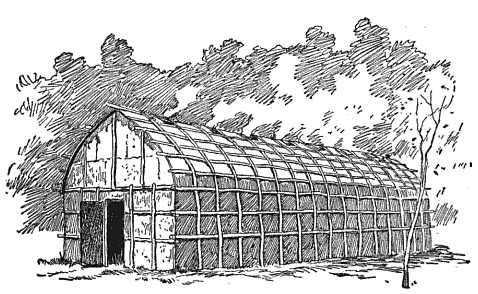
Traditional Iroquois longhouse
At a certain period of their history, their primary dwelling was the longhouse. The Iroquois thought of their land symbolically as a giant longhouse running east to west across their territory.


Guarding the eastern door of The Great Longhouse were the Mohawk. Next came the Oneida and (after 1722) the Tuscarora. In the center of the Longhouse, as Keepers of the Central Fire, were the Onondaga. Then came the Cayuga and lastly the Seneca guarding the western door.

Sometime before European contact, arguably around the year 1450, these tribes united under the Great Law of Peace to form the Haudenosaunee, or The People of the Longhouse.

Due to war, disease, settlement, and broken treaties, the 18th century and the early 19th saw the removal of these tribes from most of their traditional land. Many were resettled in Canada. Some in Wisconsin, some in Oklahoma. Some still live in New York.

As part of the research for my debut novel I studied the history of the the Mohawk, or Kanyen'kehake, nation. Their name translates to People of the Flint.

Joseph Brant, Mohawk chief
Much of this research centered around Joseph Brant, or Thayendenegea, who was educated in an eastern school, rose to prominence among the Mohawk partly due to the influence of Sir William Johnson, Superintendent of Indian Affairs for the northern colonies (and husband of Joseph's sister Molly), and became a war chief for his people who fought with the British during the Revolutionary War.

Titles I found helpful in my research:

~ The Ordeal of the Longhouse: The Peoples of the Iroquois League in the Era of European Colonization by Daniel K. Richter
~ Joseph Brant 1740-1807, Man of Two Worlds by Isabel Thompson Kelsay
~ Turtles, Wolves, and Bears, A Mohawk Family History by Barbara J. Sivertsen
~ Kanyen'keha Tewatati (Let’s Speak Mohawk) and One Thousand Useful Mohawk Words by David Kanatawakhon Maracle
~ The Iroquois by Evelyn Wolfson
~ Joseph Brant, Mohawk Chief by Jonathan Bolton and Claire Wilson
~ Realm of the Iroquois by The Editors of Time-Life Books
~ The Iroquois in the American Revolution by Barbara Graymont
~ The Tribes of the Iroquois Confederacy by Michael Johnson


The second eastern-most tribe after the Mohawk were the Oneida, or Onyota’a:ká:. Their name is translated as People of the Standing Stone.

Though no nation of the League was unanimously pro-British or pro-Patriot during the Revolutionary War, most of the nations fought on the side of the British--except for the Oneida Nation, who sided with the colonists.

This was due in large part to the influence of New Englander and Patriot Samuel Kirkland, a Protestant missionary who had lived and ministered among them since the mid 1760s. While not all Oneidas welcomed Kirkland and the Gospel he preached, many considered him a friend to their people. Kirkland lived among them and shared their hardships, alleviating them as best he could through pleas for aid from wealthy seaboard acquaintances and missionary societies. Through him the Oneida people formed stronger links with the colonials than did the other Iroquois nations. Some Oneida warriors served during the Revolutionary War as scouts. Some fought with the colonial militia at the Battle of Oriskany, near Fort Stanwix in western New York.

Finding resources for Oneida-related subjects has proven harder than for those pertaining to the Mohawk. For the benefit of anyone else researching along this same path, here's what I've found thus far:

~ The People of the Standing Stone, The Oneida Nation from the Revolution through the Era of Removal, by Karim M. Tiro.
~ The Oneida Indian  Experience, Two Perspectives, Edited by Jack Campisi and Laurence M. Hauptman.
~ Forgotten Allies, The Oneida Indians and the American Revolution, by Joseph T. Glatthaar and James Kirby Martin.
~ The Divided Ground, Indians, Settlers, and the Northern Borderland of The American Revolution, by Alan Taylor
~ Life of Samuel Kirkland, missionary to the Indians, by Samuel Kirkland Lothrop (can be found online as an ebook through Google).
~ Oneida Iroquois Folklore, Myth, And History, New York Oral Narrative from the Notes of H.E. Allen and Others, by Anthony Wonderley 


Do you have any titles or other resources to add? Please mention them in the comment section. 

Sunday, May 20, 2012

Iroquois Soup


The following recipe goes along with the Native American theme that has worked its way into my series. Slightly updated for modern tastes, it’s from The Art of American Indian Cooking by Yeffe Kimball and Jean Anderson.


Iroquois Soup


4 large mushrooms, sliced
2 ea. 10 1/2 oz cans beef broth
2 tbsp. yellow corn meal
2 tsp. minced parsley or other greens
1 clove garlic, crushed
½ tsp. basil
1 onion, thinly sliced
dash fresh ground pepper
1/4 tsp. salt
12 oz. haddock fillets
10 oz. baby lima beans


Place the mushrooms, broth, corn meal, parsley, garlic, basil, onion, pepper and salt in a large saucepan, and simmer, uncovered, for 10 minutes. Add haddock and beans and simmer 20 minutes longer, stirring occasionally and breaking haddock into bite-sized pieces. Serve hot.


Friday, July 22, 2011

Rumblings in the Valley…


Sir William Johnson

By Pat Iacuzzi

            On a hot 11 July, 1774, Sir William Johnson stood in the sun speaking with a  band of Iroquois who had come to Johnson Hall seeking his advice. Shortly after, he collapsed and died at the age of 59.
            By the time of his death, the Revolutionary movement was well underway in the Mohawk Valley. Residents had objected to new regulations by the English Parliament increasing taxes and raising prices on sugar, paper, and tea. They opposed the aristocratic establishment that the Johnsons and Butlers represented in the valley.
            Meetings were held by settlers favoring fewer regulations and more opportunities to participate in political decisions that influenced them. Feelings ran high as families and neighbors, split in their loyalties took opposing sides in the dispute.
            Sir William had denounced “the audacious behavior of New-Yorkers” who sought a democratic system and encouraged “that spirit of libertinism and independence daily gaining ground.” His relatives thus sided with the English Crown and became leaders of the Loyalist movement in the area.
            In the month following Sir William’s death, more than August temperatures rose in the valley. Tempers were rising too; the Tryon County patriots assembled in Stone Arabia to organize a Committee of Safety, an organization in which they could express their fiery and subversive new ideas. Patriots in Schenectady lifted their banners proclaiming liberty and organized a Committee of Correspondence to help keep them informed about those who might be hostile to their beliefs. The dispute between the two factions boiled over in a confrontation at the Johnstown Jail (erected in 1772 under direction of Sir William).

Sir John Johnson
Joseph Brant
            In a period marked by increasing division, Sir John Johnson, (Sir William’s son) fearing an imminent attack on Johnson Hall, fled from the homestead on May 1, 1776. With friends, tenants and an armed militia, he made his way north through the Adirondacks to Canada. Soon after his arrival, he formed the battalion of the “King’s Royal Regiment of New-York”, also known as Johnson’s Greens, and together with Butler’s Rangers and Iroquois led by Joseph Brant, (Thayendanega) Mohawk protégé of Sir William, returned to become the scourge of the Mohawk Valley…. (to be continued)