
 |
| Flag of the Iroquois Confederacy |
Today I'd like to share my bibliography of titles collected while researching the history of the Iroquois Confederacy, or The Six Nations, particularly the Mohawk and Oneida nations.
The Six Nations are a confederacy of Iroquoian-speaking peoples that once occupied the the western portions of the state of New York from the Hudson River to the Finger Lakes region.
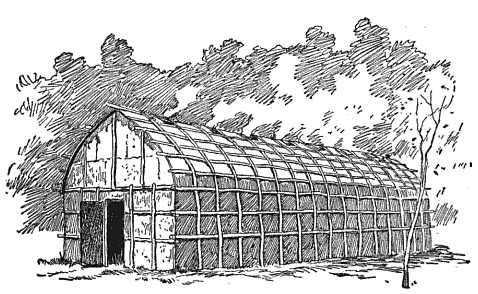 |
| Traditional Iroquois longhouse |
 |
Sometime before European contact, arguably around the year 1450, these tribes united under the Great Law of Peace to form the Haudenosaunee, or The People of the Longhouse.
Due to war, disease, settlement, and broken treaties, the 18th century and the early 19th saw the removal of these tribes from most of their traditional land. Many were resettled in Canada. Some in Wisconsin, some in Oklahoma. Some still live in New York.
As part of the research for my debut novel I studied the history of the the Mohawk, or Kanyen'kehake, nation. Their name translates to People of the Flint.
 |
| Joseph Brant, Mohawk chief |
Titles I found helpful in my research:
~ The Ordeal of the Longhouse: The Peoples of the Iroquois League in the Era of European Colonization by Daniel K. Richter
~ Joseph Brant 1740-1807, Man of Two Worlds by Isabel Thompson Kelsay
~ Turtles, Wolves, and Bears, A Mohawk Family History by Barbara J. Sivertsen
~ Kanyen'keha Tewatati (Let’s Speak Mohawk) and One Thousand Useful Mohawk Words by David Kanatawakhon Maracle
~ The Iroquois by Evelyn Wolfson
~ Joseph Brant, Mohawk Chief by Jonathan Bolton and Claire Wilson
~ Realm of the Iroquois by The Editors of Time-Life Books
~ The Iroquois in the American Revolution by Barbara Graymont
~ The Tribes of the Iroquois Confederacy by Michael Johnson
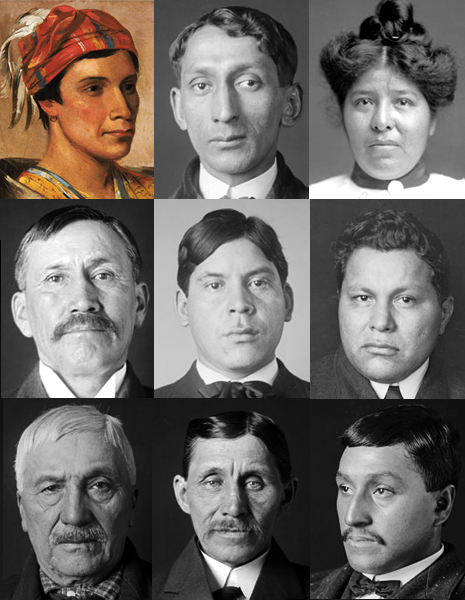 |
Though no nation of the League was unanimously pro-British or pro-Patriot during the Revolutionary War, most of the nations fought on the side of the British--except for the Oneida Nation, who sided with the colonists.
This was due in large part to the influence of New Englander and Patriot Samuel Kirkland, a Protestant missionary who had lived and ministered among them since the mid 1760s. While not all Oneidas welcomed Kirkland and the Gospel he preached, many considered him a friend to their people. Kirkland lived among them and shared their hardships, alleviating them as best he could through pleas for aid from wealthy seaboard acquaintances and missionary societies. Through him the Oneida people formed stronger links with the colonials than did the other Iroquois nations. Some Oneida warriors served during the Revolutionary War as scouts. Some fought with the colonial militia at the Battle of Oriskany, near Fort Stanwix in western New York.
Finding resources for Oneida-related subjects has proven harder than for those pertaining to the Mohawk. For the benefit of anyone else researching along this same path, here's what I've found thus far:
~ The People of the Standing Stone, The Oneida Nation from the Revolution through the Era of Removal, by Karim M. Tiro.
~ The Oneida Indian Experience, Two Perspectives, Edited by Jack Campisi and Laurence M. Hauptman.
~ Forgotten Allies, The Oneida Indians and the American Revolution, by Joseph T. Glatthaar and James Kirby Martin.
~ The Divided Ground, Indians, Settlers, and the Northern Borderland of The American Revolution, by Alan Taylor
~ Life of Samuel Kirkland, missionary to the Indians, by Samuel Kirkland Lothrop (can be found online as an ebook through Google).
~ Oneida Iroquois Folklore, Myth, And History, New York Oral Narrative from the Notes of H.E. Allen and Others, by Anthony Wonderley
Do you have any titles or other resources to add? Please mention them in the comment section.
