Announcements

10 Year Anniverary & New Releases Winners: Carrie Fancett Pagels' Butterfly Cottage - Melanie B, Dogwood Plantation - Patty H R, Janet Grunst's winner is Connie S., Denise Weimer's Winner is Kay M., Naomi Musch's winner is Chappy Debbie, Angela Couch - Kathleen Maher, Pegg Thomas Beverly D. M. & Gracie Y., Christy Distler - Kailey B., Shannon McNear - Marilyn R.
Showing posts with label American Explorers. Show all posts

Friday, July 2, 2021

The Ship You Probably Haven’t Heard of That Had the Impact of the Mayflower

I’m going to share with you a tich of history that some Canadians are probably more familiar with than most Americans are, but given what it led to, the impact was felt across the North American continent—and in Europe as a whole.

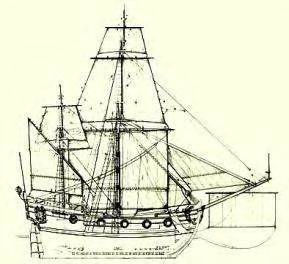
In 1650, in Wivenhoe in Essex England, a small ship was built christened Nonsuch (Other such battle ships were given the name later on.) The original Nonsuch, a ketch, which is a two-masted ship carrying square sails, was commissioned by the Navy as HMS Nonsuch, meaning “unequaled”. During it's time in the navy, the ship was captured by the Dutch, but eventually it was put on the market and sold to Sir William Warren in 1667 for 298 Pounds (that’s 71,000 British Pounds today, or $98,000 USD). This is when its story takes an interesting turn.

Sketch of a replica of the Nonsuch. Photo credit: Alchetron, the Free Social Encyclopedia

Sir William purchased the ship on behalf of a group of men, including England's Prince Rupert, who were interested in exploring Hudson’s Bay for the possibility of establishing trade. They specifically selected the Nonsuch because of its small size, capable of traversing the Atlantic while also being easier to navigate on Hudson Bay and James Bay. It's size also made it possible to be removed from the water in winter to avoid being crushed by ice.

The ship was captained by Zachariah Gillam, a man from Virginia who belonged to a family of New England sea captains. He later became infamously involved in trade in a number of ways, both legally and illegally. He was probably involved in the incident known as Culpeper’s Rebellion, though it was unable to be proven in court, and he was in Virginia at the time of Bacon’s Rebellion and reported the burning of Jamestown. But I digress.

The Nonsuch began its new epoch at a critical moment in history. Two storied explorers I’ve written about before, Pierre Esprit-Radisson and his brother-in-law Medard Chouart, Sieur Des Groseilliers, had already scoured the best routes to get into the region. In the process, they hauled back a profitable cache of furs for France. Though they had probably saved the infant French colony from financial ruin, they were fined, and Des Groseilliers was tossed into jail. Go figure. Upon his release, the pair decided to abandon France and head to England for support of their discoveries instead.

King George II was intrigued by their proposition to outfox France to delve deeper into the area for trade via the Hudson Bay route. This, at the very moment when the financiers of the Nonsuch, who included the king’s cousin Prince Rupert, were preparing their plans. 

The ship was captained by Zachariah Gillam, a man from Virginia who belonged to a family of New England sea captains. He later became infamously involved in trade in a number of ways, both legally and illegally. He was probably involved in the incident known as Culpeper’s Rebellion, though it was unable to be proven in court, and he was in Virginia at the time of Bacon’s Rebellion and reported the burning of Jamestown. But I digress.

Captain Gillam was given orders by Prince Rupert to follow the succinct instruction of Radisson and Groseillier for the journey, and the ship set sail from Gravesend on June 3, 1668. 118 days later, September 29th, Captain Gillam dropped anchor in the southern end of James Bay near the mouth of the river he promptly named for Rupert. There, the crew built a cabin and weathered a long Canadian winter, but during that time they were discovered by Cree Indians who came to trade. By the following year, they returned to England with enough beaver pelts to prompt the formation of the Hudson Bay Company—which has been in operation ever since—and which led to the formation of other competing companies such as the Northwest Company, the XY Company, and John Jacob Astor’s American Fur Company.

The battle for conquest of the New World's resources was heavily underway, and it all began with the Nonsuch and men who envisioned an empire.
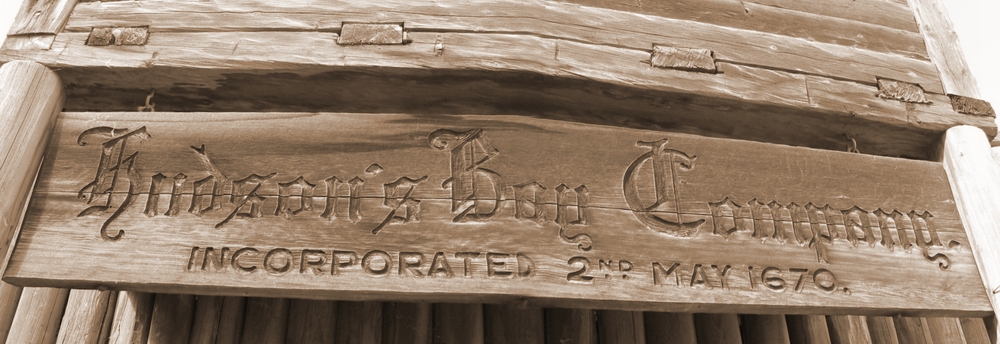



To reflect the history and heroic efforts of the fur traders, the Hudson's Bay Company commemorated those events in 1970 by building a replica of the Nonsuch. To tour the rebuild and see it's contribution to the Manitoba History, and to get a glimpse of replica Nonsuch in action, watch the video.

P.S. If you'd like to know even more history about the Nonsuch, here's an even more in-depth video: https://www.youtube.com/watch?v=2n_83JqlgI4

Friday, June 4, 2021

Those Intrepid Travelers Who Traversed the Vast American Wilderness

Whenever driving across sections of the country, I've always been fascinated to think of how the early settlers, explorers, adventurers, and armies traversed the rugged distances of the wilderness. Nowadays, we can hop aboard a plane and barely have time to finish reading a novella before we land a thousand miles away. Or we can get into a car and not quite finish a novel before driving the hours across a couple of states. We look at the hills and valleys, we imagine the vastness of the tangled forests that were riddled with narrow Indian trails at best. In a flash, we drive over rivers that took hours to ford.

Yet, the remarkable thing of it all, to me, is that the colonists and fur traders and who-not seemed to go back and forth across this land with great frequency. It seems, in reading historical accounts, that Daniel Boone tramped back and forth with great regularity, and the voyageurs paddled many thousands of miles across the great lakes and up and down the mighty rivers.


I recently read of a British attempt, during the latter part of the Revolutionary War, to thwart the spread of America's hold on the western lands--particularly hoping to stop the advancement of American General George Rogers Clark and decimate his army--by planning a 3-prong attack on St. Louis in the center of the continent. Now, consider the vastness of this three-prong approach:

1. One force was to march northward from the Gulf of Mexico.

2. The second force was to march from Fort Detroit to Cahokia (across from St. Louis).

3. The third force was to trek from Lake Superior to the Mississippi River, and then follow the river to St. Louis.

Each of these would be a momentous tour for anyone nowadays with modern equipment at their disposal. Can you imagine such an attack, with each prong thousands of miles distant from each other, working its way through unsettled wilderness territory? Incidentally, it failed. But only incidentally. The fact that such a task was attempted simply blows my mind.

While I've often thought about the difficulty faced by pioneers moving into the west, knowing they'd likely never see their families "back home" again, these men who trekked back and forth over mountains and rivers seemed little daunted by the magnitude.

These are the things I think about when I travel. Do you think about them too?

In Song for the Hunter, my new novel available for pre-order, I deal largely with the travels of the voyageurs and fur traders across the great lakes, the area known as the "Upper Country", and the western Lake Superior region, especially along the south shore lands of Ouisconsin (Wisconsin).


Endorsements for Song for the Hunter

"A few pages into Song for the Hunter, Naomi Musch earned a spot on my list of favorite Christian historical fiction authors. What a joy to find another writer who shares my heart for telling cross-cultural stories in a frontier/wilderness setting—and discovering that writer's gorgeous, evocative prose brought the setting to such vivid life that I found myself often lingering over the imagery conjured. Characters Camilla and Bemidii (and a large supporting cast) came leaping off the pages straight into my heart. I couldn't turn those pages fast enough to discover how they charted a course through desperately entangled paths to find a clear way forward. Hope triumphs in this latest offering from gifted wordsmith and lover of history, Naomi Musch."

Lori Benton, Christy-Award winning author of Burning Sky and the Kindred duology, Mountain Laurel and Shiloh

"This beautifully written and immersive story will transport you back in time and keep you turning the pages! Naomi Musch's voice and style is the perfect balance of lyrical combined with cadence and word choice appropriate for the time and setting. Fans of Lori Benton and Laura Frantz will find this story a perfect addition to their libraries! Highly recommend."

Carrie Fancett Pagels, Award-winning and bestselling author, Behind Love's Wall

"In Song of the Hunter, the long-awaited sequel to Mist O’er the Voyageur, Naomi Musch transports us back to the waters of Lake Superior during the height of the fur trade. Cultures clash as an evil man sends ripples across the waters that will touch the hearts of many. It took strong people to survive the wild and unpredictable environment, and it would take strong people to find the truth and reconcile with it. The story is beautifully presented in a setting rich in the heritage of the people and the grandeur of nature. A must read for those who enjoy the rugged landscapes and rich cultures of America’s northern shores."

Pegg Thomas, Award-winning author of Sarah’s Choice


Naomi Musch

www.naomimusch.com