Announcements

10 Year Anniverary & New Releases Winners: Carrie Fancett Pagels' Butterfly Cottage - Melanie B, Dogwood Plantation - Patty H R, Janet Grunst's winner is Connie S., Denise Weimer's Winner is Kay M., Naomi Musch's winner is Chappy Debbie, Angela Couch - Kathleen Maher, Pegg Thomas Beverly D. M. & Gracie Y., Christy Distler - Kailey B., Shannon McNear - Marilyn R.
Showing posts with label kitchen and hearth. Show all posts

Friday, March 17, 2017

The Colonial Kitchen

by Tamera Lynn Kraft


I googled Colonial kitchens to research this article, and when I saw the results, I laughed. An HGTV or home decor site's colonial kitchen is nothing like what the well stocked kitchen of the 1700s looked like.There were no stoves, and the kitchens were smaller than many apartment size kitchens today.

The fireplace was the central part of the colonial kitchen. Sometimes they would be as wide as ten feet and cover an entire wall. The larger fireplaces would have a bench built into them. In the late 1700s, when wood became scarce in populated areas, the fireplaces became smaller, but they were still a central part of the colonial home. Many of these fireplaces had cast iron back to protect them from the heat. Sometimes there would be many small fires instead of one large fire to regulate the heat of each dish being cooked.

Originally all cooking was done over the open fire, but eventually bee shaped brick or stone ovens with domed roofs were built into the fireplace to do baking. Some fireplaces had small opening beneath the ovens that served as warming ovens. A fire would be started in the oven, then as it died down, the ashes would be swept out and the food would be placed in the oven.

Some homes had spits to skewer meat on. A hand crank would turn the spit. Most homes had an iron crane over the fireplace to hang pots and kettles on. Sometimes wooden lugs made out of green wood would be used instead. Pots hung on the cranes with pot hooks, trammels, or chains with large links. The crane would swing from side to side, and the pot could be hung on various spots on the crane.

Fires were never allowed to go out. At nights, a curfew made of brass or copper would be placed over the embers. In the morning, wood would be laid on the embers, and they would be poked with fireplace forks and shovels. A blow tube would be used as a bellow to fan the flame.

The kitchen usually had a variety of pots, pans, kettles, and skillets. Most homes had tin plates and wooden utensils that they shared at meal time. The wooden table in the center of the room would serve as the only seating area other than the floor.

Very few colonial homes had parlor. Some consisted of on room which was the kitchen. Even if a colonial home had bedrooms, the family would spend most of their time in the kitchen. When someone was sick, a bed or mattress in the kitchen served as a sick bed where the sick person could stay warm close to the fire and the rest of the family could see to his needs. The kitchen was the center of colonial life.

Monday, March 14, 2016

Tallow and Lard: Staples of a Colonial Household


1883 ad in the Hawai'i newspaper The Daily Bulletin
In the modern world, we've been taught that fat is a bad thing. Always. But throughout history? Fat in various forms is a staple of life. Science knows now that the human body needs fats in order to properly utilize certain nutrients, that fat itself contains elements crucial to brain development and immunity. In survival settings, limiting the diet to certain kinds of meat actually leads to starvation because they aren't fatty enough.

Not only were fats a crucial part of the historical diet, but they were also day-to-day staples for the colonial household. Tallow, the product of rendered beef or sheep fat, was used to make candles and soap, or rubbed into leather items such as shoes to make them more durable. (It was also a key ingredient in pemmican, a food developed by North American native peoples.)

Rendered pork fat is known as lard, and has a host of similar uses, including as a substitute for butter when milkfats were scarce. It's most famous in our time for being the favored shortening in pie crust, where it produces that lovely, tender flake we all love so much.

What is rendering, and why is it important? Well, raw fats (straight from the animal) will spoil, like any other animal product, and rendering is the process of separating water content from the pure fat, and making it shelf stable. Wet rendering is done by boiling or steaming the raw fat and skimming off the liquid as it rises to the top, and produces a more mild-tasting lard, with a higher smoke point. Dry rendering is done by heating the fat directly over the heat, without water, and resulting lard is more strongly flavored, with a lower smoke point.

When a friend offered me 20 or so pounds of frozen pork fat, which she'd thawed with the intent of making her own lard then was hit with a family crisis, of course I said yes. I love making my own pie crust with "real" ingredients, and more than that, I was curious about the process and the end result.

My friend also gave me instructions for rendering the lard in a crock pot, which sounded so easy I had to try it. And I managed to remember to stop and take photos along the way, which I rarely do, so I decided to share them here.

First was cutting the sections of hog fat into chunks and putting them in my crock pot. If those look like intestines, it's because that's exactly where they were located--the sections of fat along the intestinal tract. Everything was very clean, though. I started to trim away the bits of tissue and blood vessels, then decided that our pioneer foremothers probably weren't as choosy about that as we would be, and wound up tossing most of it in the pot.

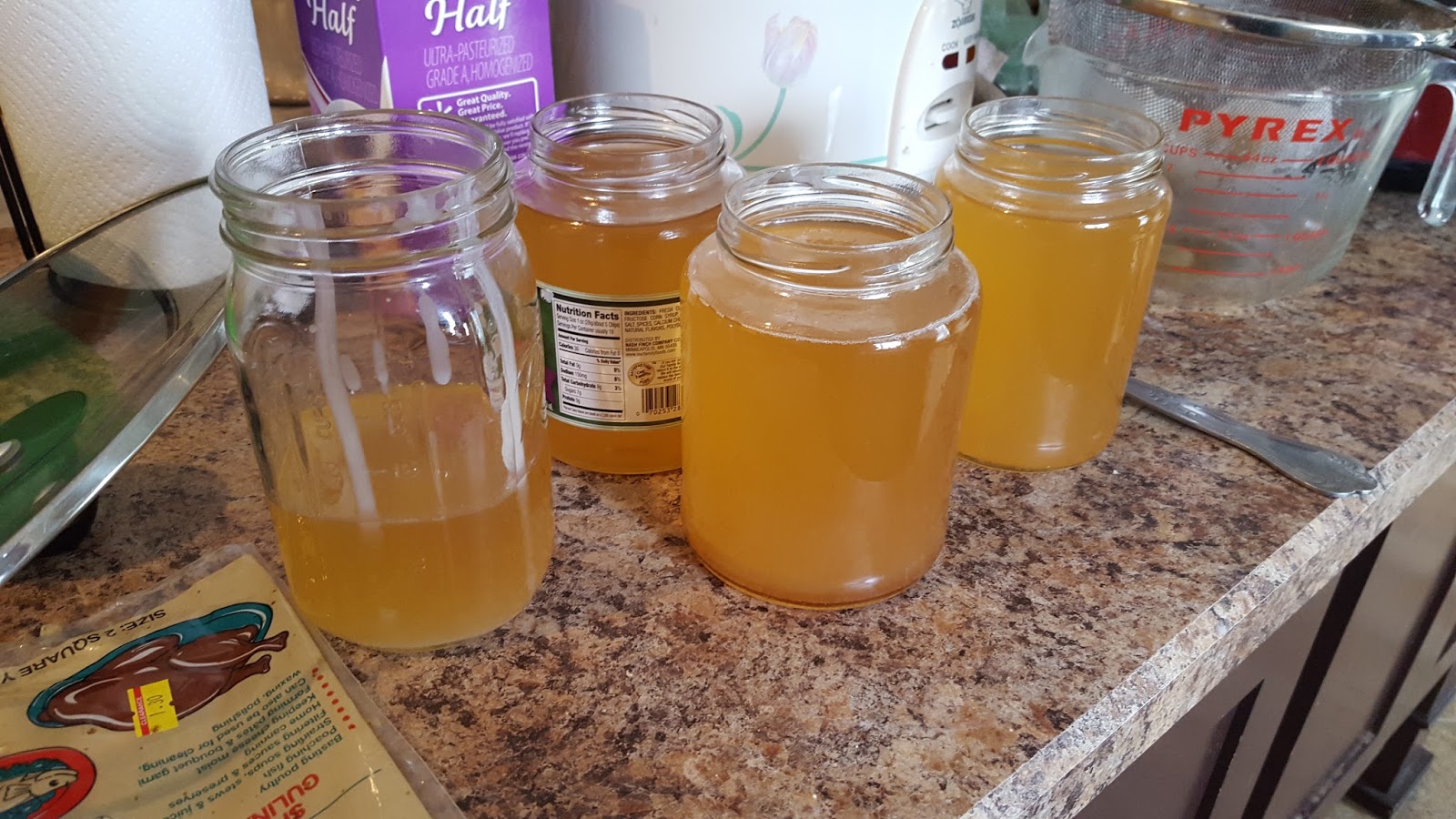
After leaving the crock pot to simmer overnight and deciding I wanted to speed up the finished product, I poured off the liquid into various jars (yes, those are mostly salvaged pickle jars, but lard keeps just fine in a dark, cool place), then moved the cracklings (all the bits of meat and tissue left from the rendering) over to my cast iron skillet to make them more, well, crackly.


If you've ever read about the rendering process in Laura Ingalls Wilder's Little House books, you'll know that they considered the cracklings a treat. They reminded me of sausage. And oh, the flavor! I was absolutely blown away by how good they tasted. And I'm not even a huge fan of pork!

After simmering the cracklings a while and draining off as much fat as I could, I bagged the cracklings for use later in cornbread and dressings.

The freshly rendered lard has a wonderful flavor as well. I can't wait to use it in the next batch of pie crust! I'm also curious to try rendering my own tallow from the frozen beef fat hidden in the bottom of my freezer ....

For the health benefits of pure, rendered lard, be sure to check out the abovementioned link at Mommypotamus. Fascinating! I suspect our forebears were more healthy than we think, and maybe from foods that we might not always guess. :)

Monday, June 10, 2013

Summer Kitchen


August temperatures rose high enough without suffering the added heat of the baking ovens.  To spare the household unnecessary discomfort, the summer kitchen had been built—a one-room structure located to the rear and separate from the main house.  Outside its cottage door, Lorena’s flower, herb and vegetable garden grew.
            -Excerpt from Prize of My Heart


The large open fireplaces of Early American households generated an intense amount of heat that could warm an entire home. This was a serious responsibility in chilly weather but during the summer months the daylong fires required for hearth cookery could leave a dwelling oppressive.  Many dishes took hours or all day to cook—baked beans, steamed brown bread, boiled suet and meat pie, as a few examples.  Cooking odors lingered in the still, humid air, making the indoors not only unbearably warm but offensive.

For relief, it was common for colonials to build a separate building called a “Summer Kitchen.”  It would be located no more than a few hundred feet from the main house, close enough so that prepared foods could be carried to the dining room in a timely fashion.  Having a separate kitchen also reduced the risk of fire devastating an entire dwelling.

The summer kitchen would contain a large fireplace that would occupy almost an entire wall.  A bake oven was built into the side of fireplace, complete with its own flue outside the oven door.  The kitchen would include a pantry for storage and be furnished with a large work table and perhaps a smaller “breadboard table” for kneading dough.

Those without the means to build a separate kitchen, often used clay, outdoor bake ovens during the warmest months.  Many Northern homes were built upon rubblestone cellars which also served as a summer kitchens in season.


Lisa Norato is the multi-published author of Prize of My Heart, an inspirational, seafaring historical from Bethany House, set during the Federal era. A life-long New Englander, Lisa lives in a historic village with homes and churches dating as far back as the eighteenth century.