
 |
| 1883 ad in the Hawai'i newspaper The Daily Bulletin |
Not only were fats a crucial part of the historical diet, but they were also day-to-day staples for the colonial household. Tallow, the product of rendered beef or sheep fat, was used to make candles and soap, or rubbed into leather items such as shoes to make them more durable. (It was also a key ingredient in pemmican, a food developed by North American native peoples.)
Rendered pork fat is known as lard, and has a host of similar uses, including as a substitute for butter when milkfats were scarce. It's most famous in our time for being the favored shortening in pie crust, where it produces that lovely, tender flake we all love so much.
What is rendering, and why is it important? Well, raw fats (straight from the animal) will spoil, like any other animal product, and rendering is the process of separating water content from the pure fat, and making it shelf stable. Wet rendering is done by boiling or steaming the raw fat and skimming off the liquid as it rises to the top, and produces a more mild-tasting lard, with a higher smoke point. Dry rendering is done by heating the fat directly over the heat, without water, and resulting lard is more strongly flavored, with a lower smoke point.
When a friend offered me 20 or so pounds of frozen pork fat, which she'd thawed with the intent of making her own lard then was hit with a family crisis, of course I said yes. I love making my own pie crust with "real" ingredients, and more than that, I was curious about the process and the end result.
 First was cutting the sections of hog fat into chunks and putting them in my crock pot. If those look like intestines, it's because that's exactly where they were located--the sections of fat along the intestinal tract. Everything was very clean, though. I started to trim away the bits of tissue and blood vessels, then decided that our pioneer foremothers probably weren't as choosy about that as we would be, and wound up tossing most of it in the pot.
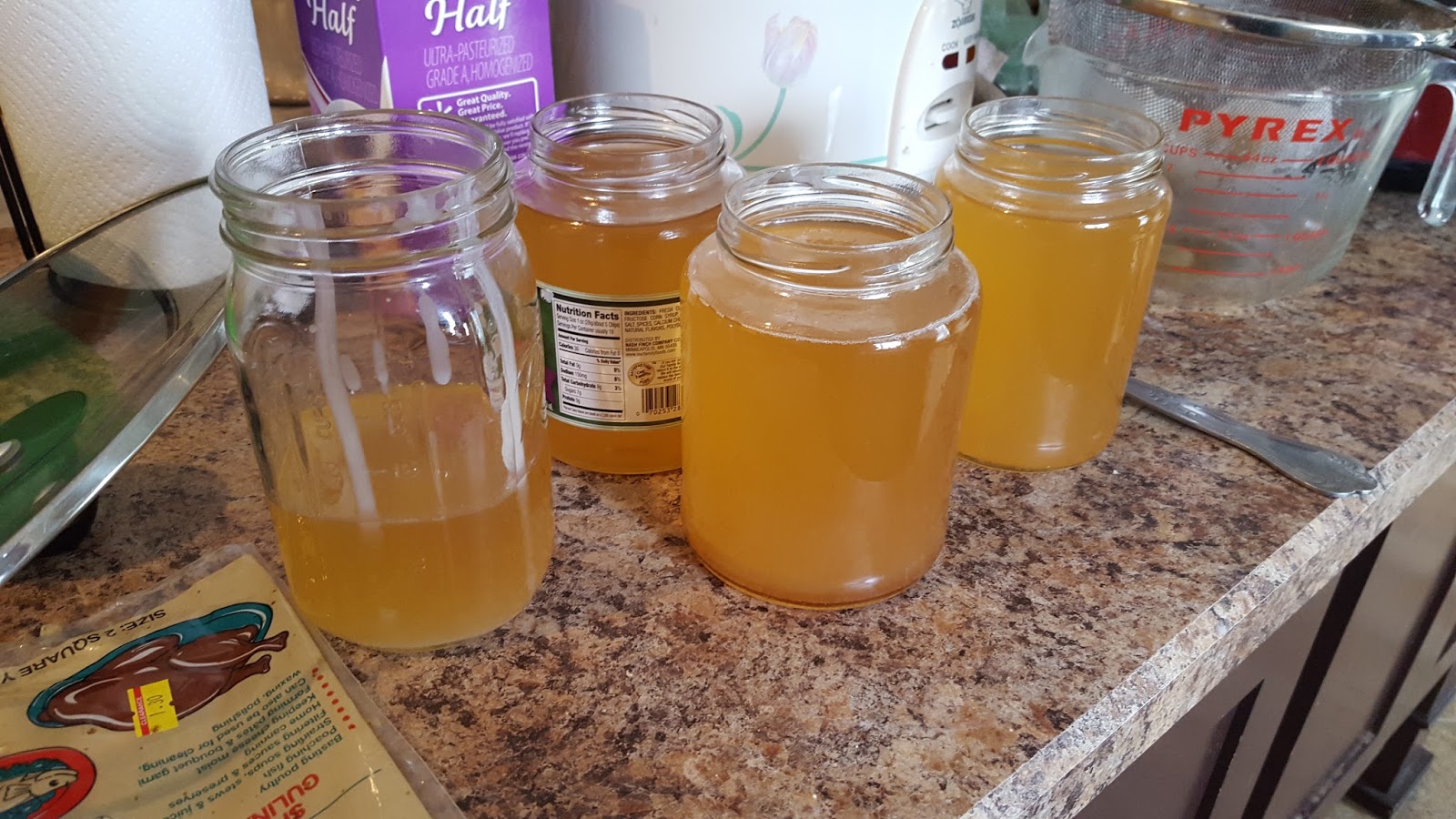 After leaving the crock pot to simmer overnight and deciding I wanted to speed up the finished product, I poured off the liquid into various jars (yes, those are mostly salvaged pickle jars, but lard keeps just fine in a dark, cool place), then moved the cracklings (all the bits of meat and tissue left from the rendering) over to my cast iron skillet to make them more, well, crackly.
If you've ever read about the rendering process in Laura Ingalls Wilder's Little House books, you'll know that they considered the cracklings a treat. They reminded me of sausage. And oh, the flavor! I was absolutely blown away by how good they tasted. And I'm not even a huge fan of pork!
After simmering the cracklings a while and draining off as much fat as I could, I bagged the cracklings for use later in cornbread and dressings.
The freshly rendered lard has a wonderful flavor as well. I can't wait to use it in the next batch of pie crust! I'm also curious to try rendering my own tallow from the frozen beef fat hidden in the bottom of my freezer ....
For the health benefits of pure, rendered lard, be sure to check out the abovementioned link at Mommypotamus. Fascinating! I suspect our forebears were more healthy than we think, and maybe from foods that we might not always guess. :)


