Announcements

10 Year Anniverary & New Releases Winners: Carrie Fancett Pagels' Butterfly Cottage - Melanie B, Dogwood Plantation - Patty H R, Janet Grunst's winner is Connie S., Denise Weimer's Winner is Kay M., Naomi Musch's winner is Chappy Debbie, Angela Couch - Kathleen Maher, Pegg Thomas Beverly D. M. & Gracie Y., Christy Distler - Kailey B., Shannon McNear - Marilyn R.
Showing posts with label Williamsburg. Show all posts

Friday, November 14, 2014

COLONIAL COFFEE HOUSES IN WILLIAMSBURG, VIRGINIA

With around 12,000 Starbucks, plus countless other coffee shops in the United States, it’s evident that Americans like their coffee. While coffee, tea, and chocolate all arrived in the colonies in the 17th century, it wasn’t until the mid 18th century when the British decided to tax tea that coffee drinking took off in a big way.

Tea was very popular in the American colonies in the 18th century. When the British imposed taxes on tea, some feisty Bostonians revolted and dumped tea in the harbor. Citizens from all the colonies showed support and began boycotting tea, and coffee quickly became a new favorite beverage.

Coffee establishments began appearing in England in the 17th century and differed from taverns that offered liquor, food, lodging, and gambling. Coffee houses became a popular opportunity for gentlemen of all ranks and stations in life to gather and enjoy coffee, tea, and chocolate while discussing the news of the day. Women were not allowed in these male bastions. By the 1800’s there were said to be 3000 coffee houses in London alone, often with their own particular character.

Virginia, being the most English of the colonies, was not far behind in making coffee houses a popular destination for men to gather and discuss the events of the day. Williamsburg, then the capitol of Virginia, was the home to four known coffee houses, although not at the same time. With a population of 2,000, of which half were slaves, the city could only support one coffee house at a time. Fortunately there has been extensive research done to locate and identify the periods each of these establishments existed.

William Byrd II of Westover, a member of the Royal Governor's
Shield's Tavern
Council kept extensive journals. He identifies a coffee house from 1709 at the east end of Duke of Gloucester Street near the Capitol where he ate, drank, read newspapers and enjoyed cards.

The same gentleman noted another coffee house in the 1740’s. Later, in the early 1750’s a coffee house was located at what is now Shield’s Tavern. Another coffee house believed to be R. Charlton's
R. Charlton's Coffeehouse

Coffeehouse was established in the 1760’s a few steps from the colonial Capitol. In 1765, this coffee house was the site of a hostile crowd confronting the Stamp Act tax collector, George Mercer. Fortunately Mr. Mercer was protected by the Royal Governor Francis Fauquier who
A View of the Capitol from
Charlton's Coffeehouse
happened to be seated with his council on the porch.

That is the last known Colonial Williamsburg coffee house as the Capitol was moved to Richmond in 1780.

Colonial Williamsburg, with an endowment from the Mars family, did extensive research and archaeological work to locate and rebuild the R. Charlton's Coffeehouse. The Armistead house, a Victorian home, rested on the original site of the coffee house. It was moved to a new location on nearby Henry Street. The 35’ by 35’ square two story coffee house was
Excavation of Charlton's Coffeehouse Foundation
reconstructed on the original foundation. By 2009 it had been restored to what it looked like at the time of the Revolution. 

When originally built, the kitchen was located downstairs. Two rooms were available to rent for private dinners or occasions, and one room was the room where citizens, whether they were the Burgesses or a local merchant or farmer, could gather and discuss current events over coffee or chocolate drinks.


Discussing politics with Patrick Henry
Like many other fascinating sites in Williamsburg, tours are available of the R. Charlton's Coffeehouse. You’ll be treated to a complimentary coffee, tea, or chocolate drink and you will be engaged in a spirited discussion of the news of the day. Just like our predecessors in the 1700’s.

For more information about coffee in Colonial America, see Elaine Marie Cooper's earlier post.   http://colonialquills.blogspot.com/2013/03/coffee-in-colonies.html


Wednesday, November 27, 2013

Colonial Roots Cross Cultures


by Dina Sleiman

My newest novel, Dance from Deep Within, is not Colonial...or even Federalist. So you might wonder why I'm here today. This contemporary style book takes a look at the lives of three young women today: a veiled Muslim, a bi-racial hippie chick of the post modern persuasion, and a blond ballerina. Not exactly the classic colonial subject matter.

But isn't that so typical of America. Even in colonial days we were a melting pot of religions and ethnicities. At some point each of our families began as strangers in a strange land. With Thanksgiving coming, we can't help but remember how the Pilgrims drew from the strengths of the Native Americans to survive in this strange new land.

Gina Welborn, Dina Sleiman, C.J. Chase, Deb Marvin, and Carrie Pagels in Williamsburg
Diversity is a hallmark of American culture. Yet when we think of Colonial Days it is easy to focus on the white, Anglo-Saxon side of the story. Last year when I visited Jamestown with my son's class, they presented a very different portrait. A picture that included American Indians and African slaves as very important parts of the Early-American tapestry. The Europeans never would have survived here on their own. If any of you read my last novel, Love in Three-Quarter Time, you got a glimpse at how these groups all worked together in 1817 Virginia.

But in my new novel, it is Layla Al-Rai, the Muslim-American character, who is still in many ways a stranger in a strange land. Although she was born in America and holds an American passport, she has spent most of her life in a little Muslim bubble in the area of Detroit. She is much more connected to her Lebanese roots and history than to her American roots. Yet she longs to discover the land of her birth and typical American culture.

Part of Layla's journey in the story is learning about the individuality and freedom that are as much a part of the American culture as diversity. Her love interest Mo, a recent convert to Christianity, whisks her away to visit Colonial Williamsburg. There she takes off her veil and lets the breeze flow free through her hair for the first time in many years. Walking its streets alongside horses, carriages, and workers in historical garb, she begins to truly contemplate her American roots. She recalls a novel she read as a child about a young girl, Constance Chambers (roughly inspired by the American Girl novel Felicity), who walked those same streets. She had admired Constance's spirit and her willingness to stand up for a mistreated slave. Suddenly Layla gets it. She wants that sort individuality in her own life. She wants her own relationship with God, not just the religion her parents have dictated. And she wants to stand up for women who are being oppressed by radical Islam.
She wants to experience freedom in the truest sense.

In that moment, a waving flag of red, white, and blue comes to represent everything she is searching for. And later in the story Layla gets to enjoy her first real Thanksgiving among a colorful cast of multi-ethnic characters. It really doesn't get any more American than that.

So if you'd like to explore your American roots through new eyes over this holiday season, check out Dance from Deep Within. And be sure to come back next week for the tea party when we will be celebrating this book at Williamsburg's Shield Tavern.
~~~~~~~~~~~~~~~~~~~~~~~~
Despite her conservative Muslim heritage, Layla Al-Rai longs for a chance to earn her degree in engineering and perhaps even...dare she dream...to choose her own husband. But young women from her background rarely enjoy such freedoms. When she finally talks her parents into letting her attend college, she is drawn to fellow twenty-something students, Allie and Rain, over a class project. Allie, the blonde ballerina, faces her own struggles as she deals with an ex-fiancé and a church she had hoped to leave behind. Rain, the bi-racial hippie chick, longs for something to believe in, but her questioning could cost her the love of her life. When Layla s childhood sweetheart reenters her world, it seems her dreams might become real. Until everything falls apart. When she meets truth face to face, will she find the courage to accept it even if it requires the ultimate sacrifice? Order here

Monday, June 17, 2013

THE FIRST MENTAL HEALTH FACILITY IN AMERICA

THE FIRST MENTAL HEALTH FACILITY IN AMERICA


Did you ever wonder who took responsibility for, or treated, the mentally ill during the Colonial era?

At that time, either family members or the parish church oversaw their care. However, if the individual could not be controlled, and if they were thought to be harmful to themselves or a menace to others, they were often jailed or sent to a poorhouse.

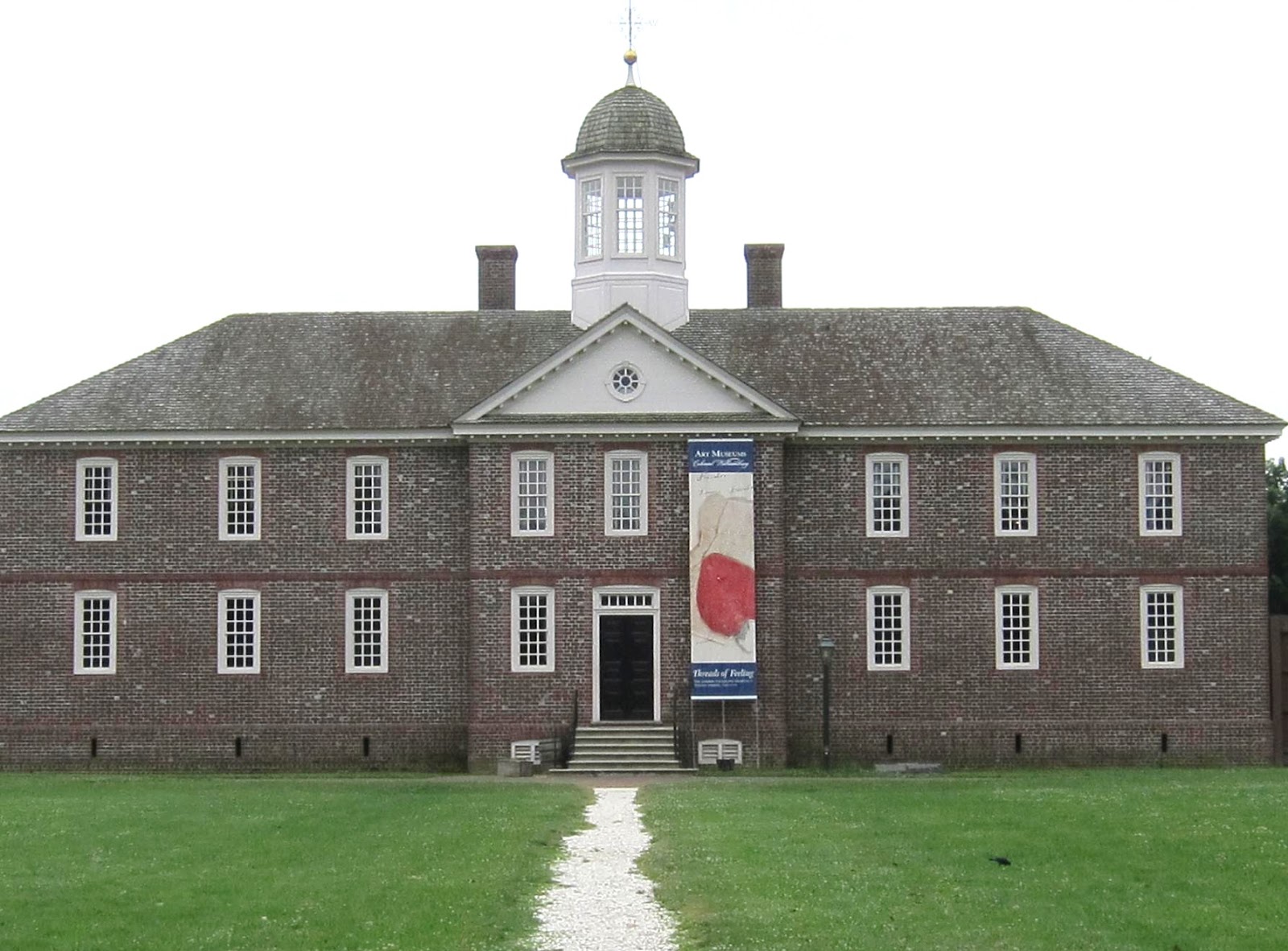
While there was a hospital in Philadelphia run by the Quakers that established a wing for the treatment of the mentally ill, Eastern State Hospital in Williamsburg, Virginia was the first public facility in the colonies that was built solely for the care and treatment of individuals suffering from mental illness.

In 1766, Francis Fauquier, the Royal Governor of Virginia, first proposed to the House of Burgesses that provisions for a legal confinement should be made available for the mentally ill where they could be cared for and attended by physicians. Apparently the proposition was not acted upon, and it continued to weigh heavily on him since he brought it up again at the next House of Burgesses in 1767. His continuing compassion for those suffering from mental disorders eventually led to the establishment of the Eastern State Hospital. The House of Burgesses passed a law to establish the hospital in 1770, and the following years, Benjamin Powell was contracted to begin the construction.

Prior to the creation of the hospital, a person who was mentally ill was judged by twelve citizens as to whether they were criminal, insane or mentally defective. Rather than being diagnosed and treated by a physician, these individuals were either cared for by family members, the local parish, or put in the Public Goal in Williamsburg.

The mission of the Eastern State Hospital was to treat and discharge patients considered curable and to incarcerate those individuals considered dangerous. When the hospital first opened in October of 1773, a Court of Directors, selected from the gentry, oversaw admissions and discharges, and made the policy decisions for running the facility. James Galt, who had no medical training, was appointed keeper and head administrator of the hospital. His wife, Mary, was assigned to be the matron for the women. Dutch Physician John de Sequeyra attended the patients when they were admitted and on a weekly basis. Additionally, several slaves provided the labor required to care for the inmates.

Patient's cell
Patients were kept alone in a prison-like-cells with only a mattress, shackles and a chamber pot. The windows were barred to prevent patients from escaping. However, since it was believed they could be cured, patients would often be released after only a few weeks or months being assessed as being fit enough to return to their families or society

Straight Jacket
invented in the late 18th century
From 1781-1786, the hospital fell into disrepair as a result of the Revolutionary War. In the following decade the hospital was refurbished and grew in size, and fences were added at each end to provide exercise yards for female and male patients. An electrostatic machine, used to shock patients out of their illness and tranquilizing chairs were added. Over the years the hospital began utilizing new techniques in the care of the mentally ill.


Tranquilizing Chair
The hospital’s expansion was interrupted during the Civil War, but by 1875 The Eastern State Hospital owned 225 acres of land, including a 170-acre farm and had an inmate population nearing 500.

In June of 1885, the original 1773 hospital was destroyed by a fire, judged to have started from recently added electrical wiring.  A hospital was rebuilt on this site, but by the 1930’s its patient population had grown to almost 2,000 and there was no more land to expand on the present site. This is the same period when Colonial Williamsburg was being restored so a move in location on the outskirts of the city became necessary. By the late 1960’s all of Eastern State’s patients were moved to a new facility only a few miles away from its original site in Williamsburg, Virginia, and it continues to operate today.
 

In 1985, the Colonial Williamsburg Foundation rebuilt a replica of the original hospital on its excavated foundations and it currently operates as a museum.