Announcements

10 Year Anniverary & New Releases Winners: Carrie Fancett Pagels' Butterfly Cottage - Melanie B, Dogwood Plantation - Patty H R, Janet Grunst's winner is Connie S., Denise Weimer's Winner is Kay M., Naomi Musch's winner is Chappy Debbie, Angela Couch - Kathleen Maher, Pegg Thomas Beverly D. M. & Gracie Y., Christy Distler - Kailey B., Shannon McNear - Marilyn R.
Showing posts with label First Thanksgiving. Show all posts

Wednesday, November 25, 2015

Let Us Give Thanks


When you ask people what they're thankful for at this time of year, you're going to get a variety of answers. But for most us, they'll center around a few things:

Our families
 
Our homes
 
Having enough to provide

Last year as I was learning more about the first few Thanksgiving celebrations the Pilgrims held in Plymouth, my husband shared some information that I hadn't considered before...and which shed new light on those things we're most thankful for.

That first terrible winter the Pilgrims endured saw nearly 50% of them dying from disease, starvation, and exposure. In exact numbers, it was 45 out of 102. I had never paused to consider which of the 102 died...but it certainly wasn't in whole family groups.

Children lost parents.

Parents lost children.

Husbands lost wives.

Wives lost husbands.

There was no family left intact. No homes to speak of. They didn't have enough to provide.

The first Thanksgiving came less than a year after these terrible tragedies. So what were the Pilgrims thankful for, I wonder? Just a bountiful harvest?

No.

These settlers knew that family, that covenants and bonds were the most important things. They knew that to survive, they had to work together. And so, children who lost their parents were taken in by parents who had lost their children. Widowers marries the widows. New families were created. New homes built. New futures forged.

This year as we sit down to our bountiful tables and look at the loved ones around us, it is, as always, important to thank the Lord for them. For the food. For the homes. For having enough.

But it's also important to remember that even during those years when we don't have family, don't have homes, don't have enough...He is still worthy of our gratitude. He is still deserving of our praise. This is yet another lesson we can learn from the Pilgrims. That we aren't just thankful for the bounty...we're thankful for opportunity. For His guidance. For His salvation. We're thankful for freedom. For Jesus. For the yesterday that may have been ugly, and for the tomorrow that could be beautiful.

George Muller, a missionary who served in England during the 1800s, once thanked the Lord for empty plates--because they were an opportunity for Him to fill them in ways beyond human understanding.

This Thanksgiving, let's try to remember not just to thank Him for the full places...but also for the empty ones.

Friday, November 20, 2015

The Real History of the Pilgrims


by Tamera Lynn Kraft

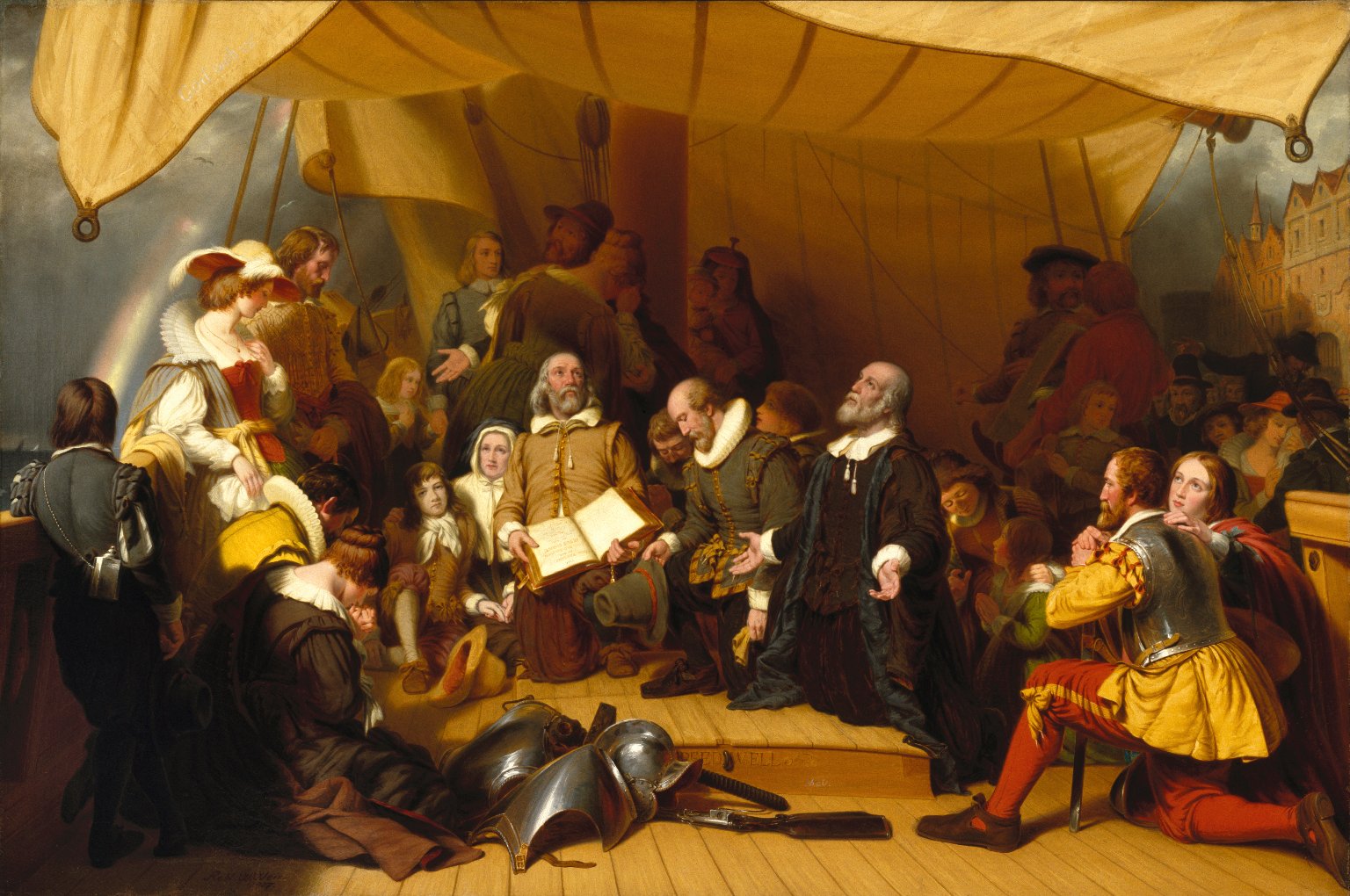
Since next week is Thanksgiving, I thought you might be interested in the history of the pilgrims that isn’t taught in school. Most of us were taught that pilgrims came to America to flee religious persecution. That’s not exactly true. Puritans were persecuted for believing that Christians could have a personal relationship with Jesus separate from the Church of England. But they traveled to Holland to flee the persecution, not America. Pilgrims applied for immigration to Holland in 1607. Holland allow religious freedom that England did not. Although England didn't allow people to flee, Holland approved the immigration. Bands of Pilgrims moved to Holland in 1607 through 1608.

So why did they travel to America? There were many reasons, but the main reason is they felt compelled by God to come to America and establish a colony of people that honored God. Many called this colony, New Jerusalem, believing that God had established this new land to spread the gospel to the world. William Bradford wrote in his journal that the motivation came from “a great hope for advancing the kingdom of Christ.”

Pilgrims and Puritans were not the same. Pilgrims were Puritans who were also separatists. They believed they should separate themselves for the Church of England and the world systems and set up their own churches. Puritans believed in working within the system. Pilgrims are the ones who came to America on the Mayflower to set up a government that honored God. Puritans soon followed Pilgrims on the journey to America. Once they came to America, Puritans wanted to set up a theocracy according to their beliefs. Pilgrims were more democratic and created a covenant that everyone signed and agreed to live by called the Mayflower Compact. Because of this, Pilgrims were more likely to extend the freedom of religion they wanted to others. Pilgrims wanted freedom of religion to protect the church from the government, not to protect the government from the church.

Many schools teach that Thanksgiving was a secular celebration, but letters written by the Pilgrims tell a different story. God was such a part of their everyday life that they included God in everything. One such letter states that Thanksgiving was a celebration called so that “God be praised” for what He had brought them through. They invite the Patuxet tribe of Native Americans to join them because they had a good relationship with this tribe. The tribe helped them plant their crops and defend themselves from other more hostile tribes.

John Winthrop called New England a City on a Hill in one of his sermon. He, as well as many other Puritans and Pilgrims, believed they had made a covenant with God to be a new nation that was a model of Christianity to the world. William Bradford believed that America was called to spread the gospel to the world. Since the Pilgrims and Puritans came to America, the United States of America has sent missionaries to more nations and more remote places in the world than any other nation on Earth. Could it be they were right?

Wednesday, November 26, 2014

Our Five Kernels of Thanksgiving

by Roseanna M. White

We all know the story of the first Thanksgiving, and it's one I've enjoyed reading to my kids again this year. All those old familiar tales of Squanto and the Pilgrims, of neighborliness and sharing.

But even more stirring was when I read about the Second Thanksgiving the Pilgrims celebrated.

After that first harvest we've all read about, the Pilgrims wisely stored food to see them through the winter. And they had plenty. Certain that it wouldn't be a repeat of the previous winter, where so many had died of hunger and illness, they settled in to their settlement to await spring.

But another ship came, bearing more settlers...and with no food supplies. Suddenly they had far more mouths to feed than they had stores with which to feed them. But it wasn't their way to turn anyone away. Instead, they accepted these newcomers and divided their rations again. They adjusted as best they could.

And they grew hungry. At one point, each person's daily ration was five kernels of corn a day. Five kernels!

The Pilgrims knew they couldn't survive on this meager allotment. But they had nothing to trade for food, no other ships were due with supplies. And they, unlike those in the Virginia Colony to the south, weren't about to steal and kill for it. Instead, they prayed. They humbled themselves. They searched their hearts for any sin and appealed to God for salvation.

He provided it. A ship unexpectedly entered Plymouth harbor, on its way from the southern colonies to England. Though they didn't have extra food, they did have goods that they traded for the Pilgrims' beaver pelts. And with those goods, the Plymouth colony could trade with the Native Americans for more food.

They survived the winter without one death. When spring came, they planted. In summer, they tended. In the fall, they reaped in an admirable harvest.

Again, they declared a feast of Thanksgiving. Again, they invited the natives that played such a vital role in their survival. But there was something different at this feast.

This time, around each plate, they put five kernels of dried corn. A reminder of all they had been through...and of all the Lord had done to save them.

As we reflect on Thanksgiving this year, let's put our kernels before the Lord. They don't just represent the blessings He heaps on us...they represent the hardships He sees us through. They represent His faithfulness.

What are your kernels this year?

Monday, November 24, 2014

What's for Dinner, Pilgrim?


The First Thanksgiving 1621, oil on canvas by Jean Leon Gerome Ferris (1899). The painting shows common misconceptions about the event that persist to modern times: Pilgrims did not wear such outfits, and the Wampanoag are dressed in the style of Native Americans from the Great Plains
        The Thanksgiving food we know today is nothing like what the 53 Pilgrims and 90 Native Americans hunted, harvested, prepared, and served at the famous meal 391 years ago.
        No one knows the complete dinner menu, but historians are certain that the participants enjoyed the following:

• Wildfowl (goose, duck, swan, passenger pigeons)
• Wild turkey
• Venison
• Porridge
• Corn bread
       
        Instead of turkey, goose or duck was the main course. Historians suspect that some birds were boiled first, and then roasted, and others were roasted first, and then boiled. Also, the birds were stuffed with shelled chestnuts or onions and herbs.
        Historians, although uncertain, believe that the following was also served:

• Eels
• Lobster
• Clams
• Mussels
• Chestnuts
• Walnuts
• Beechnuts
• Hickory nuts
• Multi-colored Indian corn
• Pumpkins
• Squashes
• Onions
• Dried beans and peas
• Lettuces
• Spinach
• Radishes
       
        Seasonings included salt, pepper, cinnamon, ginger, liverwort, leeks, and nutmeg.

        Here are some recipes adapted from Plimoth Plantation’s recipe page featuring original colonial recipes www.plimoth.org

Onion Sauce for Roast Turkey
        In the 17th century “gravy” was the drippings from the meat that were often transformed into a sauce.
6 medium onions, sliced thinly
2 cups of water
2 teaspoons of coarsely ground pepper
1 teaspoon salt
1 tablespoon sugar
¼ cup red wine vinegar
¼ cup bread crumbs (optional)
        Follow your favorite recipe for roast turkey. Remove the turkey to a platter reserving the pan juices. Place thinly sliced onions in a pot with water and salt. Bring to a boil over medium high heat and cook until the onions are tender but not mushy. A good deal of the water should have boiled away. Set aside for a moment. Place the roasting pan over medium heat and stir to loosen any brown bits. Stir in the onion sauce, sugar, vinegar and bread crumbs if desired. Add pepper to taste and adjust seasonings. To serve, pour over sliced turkey or serve alongside in a separate dish.

Hasty Pudding
        This pudding recipe was originally brought over from England and was called Indian Pudding or supawn when it was made in Colonial America, since cornmeal was cheaper and more readily available.
        As a British dish, it was a quick pudding to make using a sweetened porridge made from flour, tapioca or oatmeal and milk.
        Here the recipe was transformed to use local ingredients -- cornmeal, molasses or maple syrup and milk.
       It’s anything but “hasty,” since it requires 2 hours to bake. If you want to be truly authentic, serve as an appetizer.
2 cups milk
2 cups light cream
3 tablespoons stone ground yellow cornmeal
½ cup brown sugar
½ cup maple syrup
1 tablespoon butter
1 teaspoon cinnamon
1 teaspoon ginger
½ teaspoon salt
1/8 teaspoon nutmeg
Pinch ground cloves
1/8 teaspoon baking soda
2 eggs, beaten
         In a heavy pan scald milk and cream. Gradually sprinkle with yellow cornmeal and bring to a boil, stirring briskly. Stir in sugar, maple syrup, butter and all the other dry ingredients. Let the mixture cool slightly. In a small bowl beat the eggs with the milk/cream mixture. Pour the batter into a buttered 1 ½ quart baking dish and bake in a moderately slow oven (325 degrees F) for 2 hours. Serve hot or warm with whipped cream or ice cream if desired.

Susan F. Craft is the author of the award-winning Revolutionary War romantic suspence, The Chamomile. She is represented by Linda S. Glaz, Hartline Literary Agency.

Friday, July 20, 2012

BERKELEY PLANTATION by Janet Grunst


BERKELEY PLANTATION

A visit to Berkeley Plantation in Virginia will take you on a journey back to one of the earliest English settlements in America; however its fascinating story doesn’t end in the seventeenth century. In fact, so much took place at Berkeley plantation I’ll cover it over two blog posts, so come back next month for Part Two.

Berkeley Plantation is twenty-nine miles from the first English settlement at Jamestown that was established in 1607. It is one of many plantations situated along the James River in southeastern Virginia. Traveling by land, it is located twenty-three miles southeast of Richmond along historic Rte 5 where one will see farmland, some modest commercial ventures, and exits to many other plantations.

There were a variety of reasons people emigrated from England to the colonies in the 1600’s. Some came for religious freedom, others to escape poverty, over population, and failing industries. Some immigrants were pursuing financial opportunities. Profit was the motive in 1618 when four English gentlemen met in London to establish a company to start the “Berkeley Hundred and Plantation” on the 8,000 acres and three miles of waterfront granted them by King James I.  Their expedition sailed on the “Good Ship Margaret” in August of 1619 from Bristol, England to settle, grow crops, and establish commercial ventures. One of the men, John Smyth of Nibley, was the historian of the Berkeley family and Berkeley castle in England. He also chronicled the “Berkeley expedition” and settlement of Virginia from 1609-1622.

The First Official Thanksgiving in America

Shrine at the location of the first Thanksgiving  1619
Most of us associate the first Thanksgiving with the Pilgrims in Plymouth, Massachusetts in 1621. Actually, the first official Thanksgiving occurred 590 miles south of Plymouth and almost two years before the Pilgrims and Indians shared a harvest feast. The “Margaret” dropped anchor at the Berkeley site December 4, 1619, and upon going ashore the Captain John Woodlief and the company of men dropped to their knees and prayed:

“We ordaine that this day of our ships arrival,
at the place assigned for plantacon (plantation) in the land of Virginia,
shall be yearly and perpetually kept holy
as a day of Thanksgiving to Almighty God.”

Plaque commemorating the First Thanksgiving
  
Where the Massachusetts celebration was primarily a social occasion with the Indians, the Berkeley event was strictly a religious one. The London Company gave specific instructions that this religious ceremony was to be repeated annually, and it was . . . for a time. The Virginia settlers and the Indians initially enjoyed friendly relations; however on March 22, 1622, in a calculated plan, Chief Opechancanough led a massive attack at many of the settlements for 140 miles on either side of the James River and Berkeley was among those that perished. Jamestown prepared for the attack as they were warned of the intended massacre by an Indian named Chanco, so were able to defend themselves. The Massacre of 1622 ended the settlement of Berkeley and the annual celebration of Thanksgiving until 1958 when it was reinstated.


Another distinction Berkeley Plantation holds is that it is the site where the first bourbon whisky in America was distilled 1621-1622.

Benjamin Harrison V
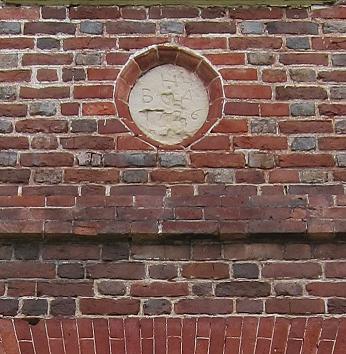
The Harrison family acquired the Berkeley Plantation when Benjamin Harrison III received a charter from the King to build ships at Harrison’s Landing in the early eighteenth century. Years later, Benjamin Harrison IV married Anne Carter, daughter of Robert King Carter, another prominent Virginia family and set about to build a home. He sought out Rob Wilson, a builder and shipbuilder of some repute. However, he learned Wilson was in debtor’s prison in England. Harrison paid off the debts in exchange for Wilson’s indenture to come to Virginia and build the mansion. Only materials from the property were used, loblolly pine for lumber and bricks that came from the clay and were fired on the site. The Georgian mansion, the oldest three story brick house in Virginia, was completed in 1726. The initials of its owners Benjamin & Anne Harrison appear in a datestone on the side of the house. Their son, Benjamin V, attended nearby William & Mary, but returned to manage the plantation when his father and two sisters were killed in a lightening strike. He would go on to be a Delegate to the Continental Congress and one of the signers of the Declaration of Independence, as well as the fifth Governor of Virginia.
1726 Datestone on side of mansion

There is much more to tell about Berkeley Plantation, and it will require me to escape the boundaries of the colonial period, but it is far too interesting to depart without telling. . . “the rest of the story”.