

by Roseanna M. White
One of the first lessons students are taught at St. John's College (a.k.a The Great Books School) is that there's nothing like an original text--and that we ought not refer to anything but the texts we've read together when in class. And so begins an education steeped in all things classic--an education that works its way not only into my writing, but into my outlook on how to research.
One of the first lessons students are taught at St. John's College (a.k.a The Great Books School) is that there's nothing like an original text--and that we ought not refer to anything but the texts we've read together when in class. And so begins an education steeped in all things classic--an education that works its way not only into my writing, but into my outlook on how to research.
 I've been thinking about this in recent weeks because each review I've gotten lately on Love Finds You in Annapolis, Maryland mentions my use of language and how it feels historical--something I achieved solely through reading texts from my time period. And a fellow St. John's graduate who'd just finished it emailed me the other day to say "I have to say, when you pulled out Pascal, I thought, 'Roseanna is such a Johnnie!'" 'Tis true, 'tis true. =) And in my next book, Ring of Secrets, I draw even more on my classical education thanks to a hero who's a professor at Yale (in 1780) in the subjects of philosophy and chemistry.
What I love about the Colonial, Revolutionary, and early Federalist periods is the rich literary culture. They not only had the ancient texts to draw on, they had more modern philosophers, political theorists, and some oh-so-fun scientific discovery happening under their very noses.
And yet, I confess, whenever I have a character reaching for a book, I have to stop and think, "What would she be reading?" I often have to do some searches to remind myself of when certain books were published, or which authors were more popular at a given time. And though I often use ones I've read, occasionally my characters' literary taste diverges from my experience. No matter what I write, my characters will always find an occasion to delve into the classics--and since most people don't have a shelf full of the books from St. John's reading list (ahem--I know I wouldn't had I not gone there, LOL!) I figured it would be fun to draw together a small smackerel for anyone interested. =)
Fiction Popular in the 18th Century
Don Quixote by Cervantes - a bit of a parody of the chivalric tales popular way-back-when
Gulliver's Travels by Jonathan Swift - another parody, of course
Iliad by Homer (especially the Alexander Pope translation)
Odyssey by Homer (also the Pope translation)
Gargantua and Pantagruel by Rabelais (not for ladies of delicate sensibilities! Far too much talk of cod-pieces for the gentler sex)
Anything Shakespeare, of course
The Aeneid by Virgil - did you know Caesar Augustus ordered the writing of The Aeneid solely to give the Greek version (Iliad) some competition?
Ovid's Metamorphosis (not to be confused with Kafka's)
The Misanthrope and other works by Moliere
Paradise Lost etc. by Milton
Dante's Divine Comedy - most of us found the Inferno to be far more interesting than Paradisio, LOL
Non-Fiction Popular in the 18th Century
(Since most of these fellows wrote a number of treatises, I'll list authors and subject matter rather than particular titles.)
Pascal - this guy was a certifiable genius whose salvation led him to turn his considerable brain-power to convincing others of the logic and reason behind Christianity. Fun stuff!
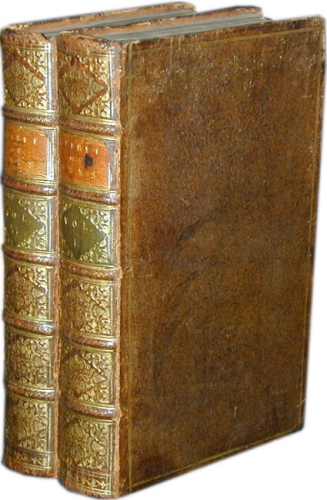 Descartes - though best known for his philosophical works (such as the one with the famous "I think, therefore I am") he also wrote scientific works that are, um, less credible when one actually experiments upon the objects he discusses.
Hobbes - a political theorist whose works played a major role in the shaping of America's political system
Adam Smith - an economic theorist who may put you to sleep but who, again, greatly shaped America's early systems
Montesquieu - a political theorist who first devised the separation of powers now taken for granted.
Francis Bacon - political and scientific theorist most remembered for creating the scientific method
Locke - political theorist
Hume - political theorist and skeptic
Spinoza - essays laid the foundation for the Enlightenment; a biblical critic
Rousseau - political theorist
Newton - scientific and mathematical genius
Huygens - scientist who made breakthroughs especially in the behavior of light
Lavoisier - scientist of the 1770-90s who introduced the idea of elements into chemistry which led to the periodic table
There are many more, but for those curious about where the Founding Fathers got their ideas, that'll give you a great starting place!
**
**
Roseanna M. White
grew up in the mountains of West Virginia, the beauty of which
inspired her to begin writing as soon as she learned to pair subjects
with verbs. She spent her middle and high school days penning novels
in class, and her love of books took her to a school renowned for
them. After graduating from St. John’s College in Annapolis,
Maryland, she and her husband moved back to the Maryland side of the
same mountains they equate with home.
Roseanna is the
author of two biblical novels, A Stray Drop of Blood
and Jewel of Persia,
both from WhiteFire Publishing (www.WhiteFire-Publishing.com),
Love Finds You in Annapolis, Maryland from
Summerside Press, and the upcoming Culper Ring Series from Harvest
House beginning in January 2013 with Ring of Secrets.
She
is the senior reviewer at the Christian Review of Books, which
she and her husband founded, the senior editor at WhiteFire
Publishing, and a member of ACFW, Christian Authors Network,
HisWriters, and Colonial American Christian Writers.
