Announcements

10 Year Anniverary & New Releases Winners: Carrie Fancett Pagels' Butterfly Cottage - Melanie B, Dogwood Plantation - Patty H R, Janet Grunst's winner is Connie S., Denise Weimer's Winner is Kay M., Naomi Musch's winner is Chappy Debbie, Angela Couch - Kathleen Maher, Pegg Thomas Beverly D. M. & Gracie Y., Christy Distler - Kailey B., Shannon McNear - Marilyn R.
Showing posts with label colonial teas. Show all posts

Monday, January 10, 2022

Yaupon tea: another small adventure in historical research


Some time back I wrote about my quest to find and try hyson tea, a variety popular during the colonial and Federal eras of our country's history (apparently Thomas Jefferson was a fan) and mentioned in the material accounts surrounding the Harpes. (It's good! Very much like other modern green teas.)

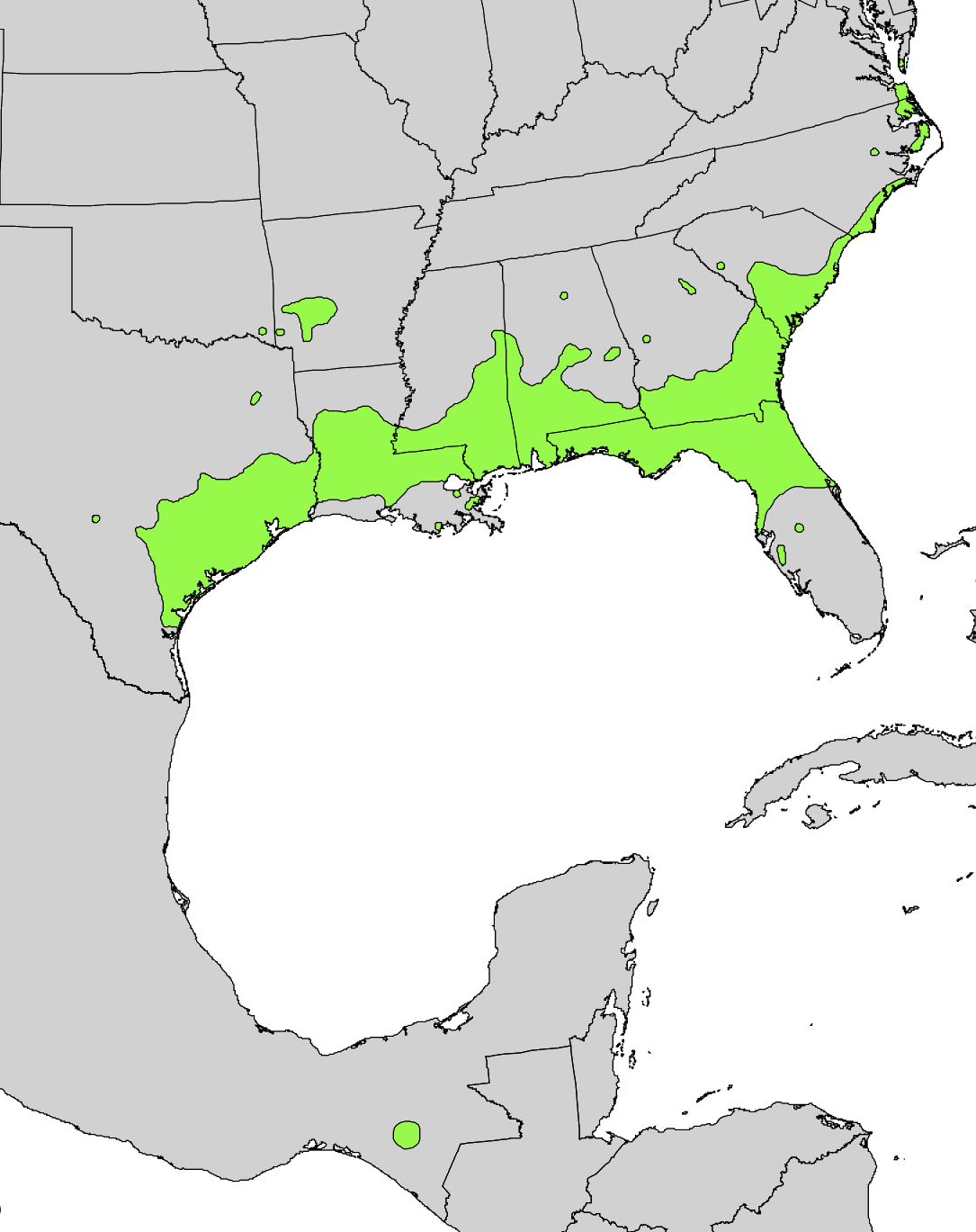
My latest research nerdiness led me to yaupon (YO-pahn), a type of holly which grows wild across the southern United States and the only known source of caffeine native to North America. The berries are poisonous (although by some accounts the native peoples would eat them after boiling for 8-9 hours) but the leaves were steeped and drunk for both social and ceremonial occasions.

(Photo credit: Wikipedia ... range distribution for yaupon)
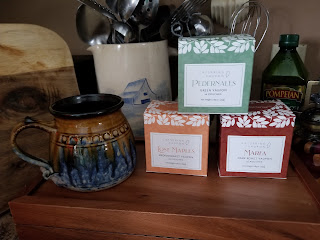
Gift teas!
The plant would later be categorized Ilex vomitoria for its reputation as an emetic--native peoples would brew it for hours and drink it by the gallon as a stimulant and purgative. But prepared as a "normal" tea and consumed in smaller quantities, it's said to be packed with antioxidants, even more than traditional green teas. It's even rumored to help with high blood sugars and other health issues. At some point in my research months ago, I added a sampler pack to my Amazon gift list and then--forgot about it.

One of my dear daughters-in-law gifted me with the tea for Christmas, though, and so I was beyond excited to try it:  Yaupon by Catspring Tea in three varieties:  green, medium roast, and dark roast.

(Photo credit: mine)

Surprise! It really is as smooth as they claim. Because it doesn't contain tannins, it never develops that puckery taste and feeling black teas get from steeping too long. But warning--this is not a bedtime tea! A week or two ago I needed a cuppa to shake off an after-nap groggy feeling, and opted for the green tea (so far it's my favorite). Well, it was so efficient at banishing my sleepiness that I wound up being wide awake until well after midnight!

Yaupon may not be as high in caffeine as coffee (or so the websites say) but contains theobromine, a substance in chocolate. It's also one of those rare brews which tastes better as it ages!

So that's my experience with a now-obscure tea which was likely offered to English explorers and the Lost Colonists by their native hosts. It was almost certainly used as well in preparation for wartime and coming-of-age rites.

If you're interested in reading more about this staple beverage that once threatened the global tea trade, try any of these articles:


(Photo credit: Wikipedia ... Eastern bluebird feeding on yaupon berries)

Monday, May 11, 2020

Hyson Tea: A Small Adventure in Historical Research

Hyson tea was even a favorite of Thomas Jefferson
"February 8," the jail receipt read, "1/4 lb. Hyson tea, 3s. 9d., 1 lb. sugar, 1s. 6d. for Betsey Walker
she being brought to bed by a son the previous night, 5s. 3d."

The receipt goes on to list ginger and more sugar two days later and the cost of the midwife. Later notations document tea and sugar and midwife expenses for Susanna Harpe, and then tea, sugar, and whiskey for Sally Harpe, after each of them gave birth in the Danville Jail, Kentucky, in February, March, and April 1799 respectively.

I've covered the saga of the Harpes and their unfortunate women elsewhere--and give a full fictionalized treatment in my most recent book The Blue Cloak--but while researching their story I ran across this notation and immediately wondered, just what is Hyson tea?

Well. Turns out Hyson was a well-known and much-loved variety of green tea, dating at least to the 18th century, sometimes considered a mediocre variety but valued enough by the British to carry a higher tax rate than others. It reportedly accounts for 70 of the 300+ cases of tea destroyed during the Boston Tea Party.

Tea instead of coffee for the sake of research is no hardship
Further investigation revealed that part of the tea's charm comes from the slow unfurling of entire leaves, twisted and dried whole, and the light, delicate green tea flavor. (See this short but informative article at The Right Tea, explaining its origin and extolling its virtues.) To my surprise, the variety of tea is still available, and though more of a coffee drinker than tea, I caved to my curiosity and bought some. I also found a sampler offering all the tea varieties dumped into Boston Harbor, but sadly waited too long before purchasing and now it's no longer available. At any rate, Hyson tea does indeed have a pleasing taste, even without milk or sweetener, but especially when not forgotten and oversteeped. :-)

It's curious that the tea, with sugar, was considered part of the care and courtesy extended a postpartum woman, even one forced by the nefarious deeds of her "family" to give birth in jail. Maybe not surprising, given the reported benefits modern-day science has found of green tea in general. Regardless, the notation from jail and court records of the time provides a fascinating glimpse of the material culture of the past. And it's been just plain fun to taste a tea that just may have been very similar to that enjoyed by our colonial and Federal foremothers ... and even offered comfort and sustenance to three hapless new mothers in a Kentucky jail in 1799.