Announcements

10 Year Anniverary & New Releases Winners: Carrie Fancett Pagels' Butterfly Cottage - Melanie B, Dogwood Plantation - Patty H R, Janet Grunst's winner is Connie S., Denise Weimer's Winner is Kay M., Naomi Musch's winner is Chappy Debbie, Angela Couch - Kathleen Maher, Pegg Thomas Beverly D. M. & Gracie Y., Christy Distler - Kailey B., Shannon McNear - Marilyn R.
Showing posts with label Colonial. Show all posts

Friday, August 23, 2019

Long Live Colonial Books!

When I first started writing - seriously writing for publication - I started in the Colonial era. One of the first things I was told was "You can't sell a Colonial story, those books are dead on the shelf."

It wasn't just one person who told me that, and my Colonial trilogy has never found a publishing home.

BUT! Then I was introduced to the Barbour historical romance collections. The first one I sold was not Colonial, but the second two were. And just last month:

My first Colonial-era novella, In Sheep's Clothing, won the Romance Writers of America - Faith, Hope, & Love Chapter - Reader's Choice Award.

Reader's choice. That means it was judged and chosen by ... readers. Readers who enjoyed a Colonial story.

To add to my unofficial and unscientific refute of the "Colonial is Dead" advice I'd received, both In Sheep's Clothing and my second Colonial-era story, Her Redcoat, are finalists in the American Christian Fiction Writers Carol Awards, the winners to be announced at the ACFW conference the last weekend in September. 

The moral of this post? Don't let what "they say" turn you away from writing - or reading! - the stories you love. You'll never please every reader. Nobody can. But if you write a compelling story, there are readers out there who will enjoy it. And may even give it an award.


Pegg Thomas writes History with a Touch of Humor

Monday, April 30, 2018

A Memorable Trip to Old Fort Niagara


Fort Niagara (in present day New York state) is the setting for my Backcountry Brides novella, A Heart So Tender. With their first event of the 2018 season, “Patriot’s Day”, I decided to take my two eight year-old grandsons along for some fun. They are great fans of costumes, history and weapons. Blessed by some amazing spring weather, we visited on April 21.

Dressed up in makeshift costumes and some fancy tricorns, the boys were awed by the site of the fort. They didn’t know what to expect. With a light crowd throughout the day, re-enactors and visitors made much of a sunny warm day where the Niagara River flows into Lake Ontario.
The view from the South Redoubt (Block house) toward the French Castle
With muskets in hand, my grandsons were easily conscripted into the colonial army and learned how to load their muskets, follow commands, and march—even learning how to pivot in formation!

Across all that water? Fort York, or as we know it, Toronto, Ontario. And, yes, we could see the skyline!
The muskets had quite a work out. Can you imagine how much fun it was to run all over the fort, over berms, lurk around stockade fences, and spy on the enemy from the walls of the fort and the two redoubts (block houses)?

Here they are along the berms/ramparts where centuries of soldiers fought against enemies approaching by land. Behind is the north Blockhouse and in the distance, the French Castle sitting on the corner overlooking both the Niagara River and Lake Ontario.
These young men surprised me with how much they knew, but the experience made for an unforgettable look into our history. Fourth graders in New York have a ‘colonial history’ day and these costumes will come in handy! They learned about the parts of the uniforms of both armies worn during the Revolutionary War, and demonstrations of musket loading and firing, and how British regiments fought in formation. 


Watching a demonstration of Revolutionary War era uniforms and clothing. Fort Niagara hosts an amazing French and Indian War encampment, as well as War of 1812 and Revolutionary War events, among others. (Ignore the hooded sweatshirts on my soldiers! It had snowed the day before.)
Before we left, we witnessed a skirmish meant to simulate "The shot heard round the world", the battle at Lexington and Concord. 


Indoor corridor on the second floor. The French Castle was built in the 1700s and has seen three nations' armies in the nearly 300 year history. It's always exciting to see the places my characters walked. 
Please stop back tomorrow when the authors of Backcountry Brides host a day long tea party and an afternoon facebook party with prizes and treats and lots of fun!


Friday, April 27, 2018

In Sheep's Clothing - a Book Review by Tina Rice

In Sheep’s Clothing by Pegg Thomas
1702, Milford, Connecticut...
Yarrow Fenn (I find the name “Yarrow” very interesting) is a weaver of wool and makes unique cloth with her own designs. As she waits in line at the fulling mill she hears rumors of a new journeyman fuller … a young handsome journeyman. Well, she is not there for a handsome young man, she wants her wool-cloth to be prepared as quickly as possible so she can sew garments for her family. 

Yarrow has a secret that she holds close that could very well put her in danger … as well as being "illegal.” Illegal, really?  The “illegal” part was a surprise to me, I had not heard of that until I read this novella. Besides, she ponders, what if this Peter guy is not really who he says he is but someone in disguise? She must be on her guard, especially with her heart. Can Yarrow learn to trust God in guiding her in all areas of her life or will she continue to second guess even His plans for her?

The new journeyman, Peter Maltby, has a goal ... becoming a Master Fuller as quickly as possible while he is in Milford. Then he has other plans that do not include Milford, but rather a “settling of scores”... of a sort, from his painful past. He soon finds that among the wool-cloth coming into the fulling mill, he is most impressed with the quality of wool-cloth Yarrow brings in. However, he did not plan on being impressed with Yarrow herself.  No, getting involved with any young lady would only complicate things ... yet, there is something special about Yarrow that drawls Peter to her. Will he continue down a path allowing his bitterness of past hurts to overshadow anything good that may come from knowing Yarrow? Or will he be forever blinded by his past to see God’s blessings and love?


This is my favorite story in this collection. I learned a lot of interesting information regarding caring for sheep, shearing them, carding the wool, spinning the yarn, weaving and making your own cloth, and then having to make your own clothes with that cloth. I enjoyed the descriptions of the colonial woolen fulling mill and what was involved in fulling wool. What really took me by surprise was learning of the laws limiting trade of that wool/cloth. I did not know that. I like the author's notes at the end of this story regarding some of the historical elements of the era Pegg Thomas wrote about.

This is one reason I love reading Christian historical fiction, not only are the stories fiction and entertaining but there are bits of our history woven within that fiction ... an enjoyable “history lesson”.  :-) I really enjoyed Yarrow and Peter’s story. It is a fun story filled with humor, love, hardships, learning to trust and faith, and a tense few moments with that bear - not telling any more! - a heartwarming story.


Pegg Thomas lives on a hobby farm in Northern Michigan with Michael, her husband of *mumble* years. A life-long history geek, she writes “History with a Touch of Humor.” When not working or writing, Pegg can be found in her barn, her garden, her kitchen, or sitting at her spinning wheel creating yarn to turn into her signature wool shawls.
Follow me on Facebook or visit my webpage at PeggThomas.com.

Monday, January 30, 2017

Who Had Time To Quilt?


This 'tavern check' design is traditional but available now from American Heritage Fabric
Depending on how you look at it, quilting has been around for thousands of years. Quilting is the process of sewing layers together, after all. Fabrics are one of my obsessions and I find playing with it very relaxing. I always have. Recently, I went on a virtual research run into the history of quilting because I was curious what kind of filling or batting was used in the colonial era, if any. From what  I could find, batting was generally another layer of patched fabric, often wool or cotton. When it came to practicality, it was likely an old quilt in need of a new cover!

I was surprised to find that many historians wanted to clear up the misconception of ‘colonial quilts’.

Let me explain. While women—and men—have long used skins and fabrics for clothing and bedding, pretty quilts were in the realm of the wealthy. Incredible pieces of fabric work such as tapestries were found in homes where women were paid (or forced) to do the intricate work. If we jump to the colonial era, we find that women responsible for bedding in their own homes were far more likely to be spinning wool or flax after completing the work of ‘raising’ it. Add in weaving and keeping up with the darning and repairs. And that didn't include cooking, cleaning and raising a family.  They were lucky to get to bed at a decent hour without adding an aesthetic hobby.

Here is where the tradition of applique quilting comes in. Applique is the addition of a secondary piece of fabric, generally cut into a shape, and stitched on over the top layer of fabric.  An excellent way to hide holes and stains!

And who in the world has the eyesight to make those tiny itches by firelight? Not me!
From the Williamsburg Collection.  A "Baltimore Quilt" requiring hundreds of hours of labor.
Bedding made of layers was a great way to increase warmth and incorporate smaller pieces of fabrics. Especially scraps. Scrap quilts will always be loved for their link to frugality!

If a woman had a nice quilt, or counterpane, for her bed, it was often something she made as a young woman in preparation for her wedding. That work of love would have to last. Once marriage and childbearing came about… well, you know the rest. Colonial era quilts that have survived were probably created and never used. Perhaps by a woman who died early, or had the luxury of keeping it tucked away.

In the early decades of the 19th century, ready-made cotton fabric became available and the boom in quilting ensued. Even so, only the middle class bought new fabric for bedding. It is believed by many scholars that fabric by the bolt also brought about the ‘retro’ interest in colonial quilts, or at least the notion of what a colonial quilt would look like because few pieces survived.  Few families had the luxury of caring for a quilt and not actually using it! Hand scrubbing, lye soaps, boiling water and families of ten or twelve were not friendly to fancy quilts!
This is from the Williamsburg line of fabric from  Peach Tree Fabrics.  I love it!
If you too are a fabric fanatic, let’s commiserate.  I’d love to hear from readers, and find out your links to old quilts in your family or those you’ve seen in museums.  What kind of hand crafts would you be mostly like to do if you were a colonial wife?

I'm currently promoting a novella collection for Valentine's Day. While not Colonial by any means, this collection has both contemporary and traditional stories that are sweet, clean romances.
Stop in Friday, February 3rd, for our tea party where I'll be giving away a quilted Valentine table topper I've named "Chocolate Covered Cherries!"

the NINE novella collection is only 99cents. BUY now for Amazon Kindle

Debra E. Marvin tries not to run too far from real life but the imagination born out of being an only child has a powerful draw. Besides, the voices in her head tend to agree with all the sensible things she says. She is a member of American Christian Fiction Writers, Sisters in Crime, and serves on the board of Bridges Ministry in Seneca Falls, NY. Her published novellas include, “Alarmingly Charming” in Austen in Austen Vol 1 from WhiteFire Publishing, “Desert Duet”, "Starlight Serenade" and "Why Not" from Forget Me Not Romances, after many unpublished contest successes including two finals for the Daphne DuMaurier award. Debra works as a program assistant at Cornell University, and enjoys her family and grandchildren, obsessively buying fabric, watching British programming and traveling with her childhood friends

For a limited time, I'm offering a $25.00 Amazon gift card as a drawing for the next fifty new subscribers to my newsletter. If you're interested in hearing about my new releases, sign up here.

Monday, May 30, 2016

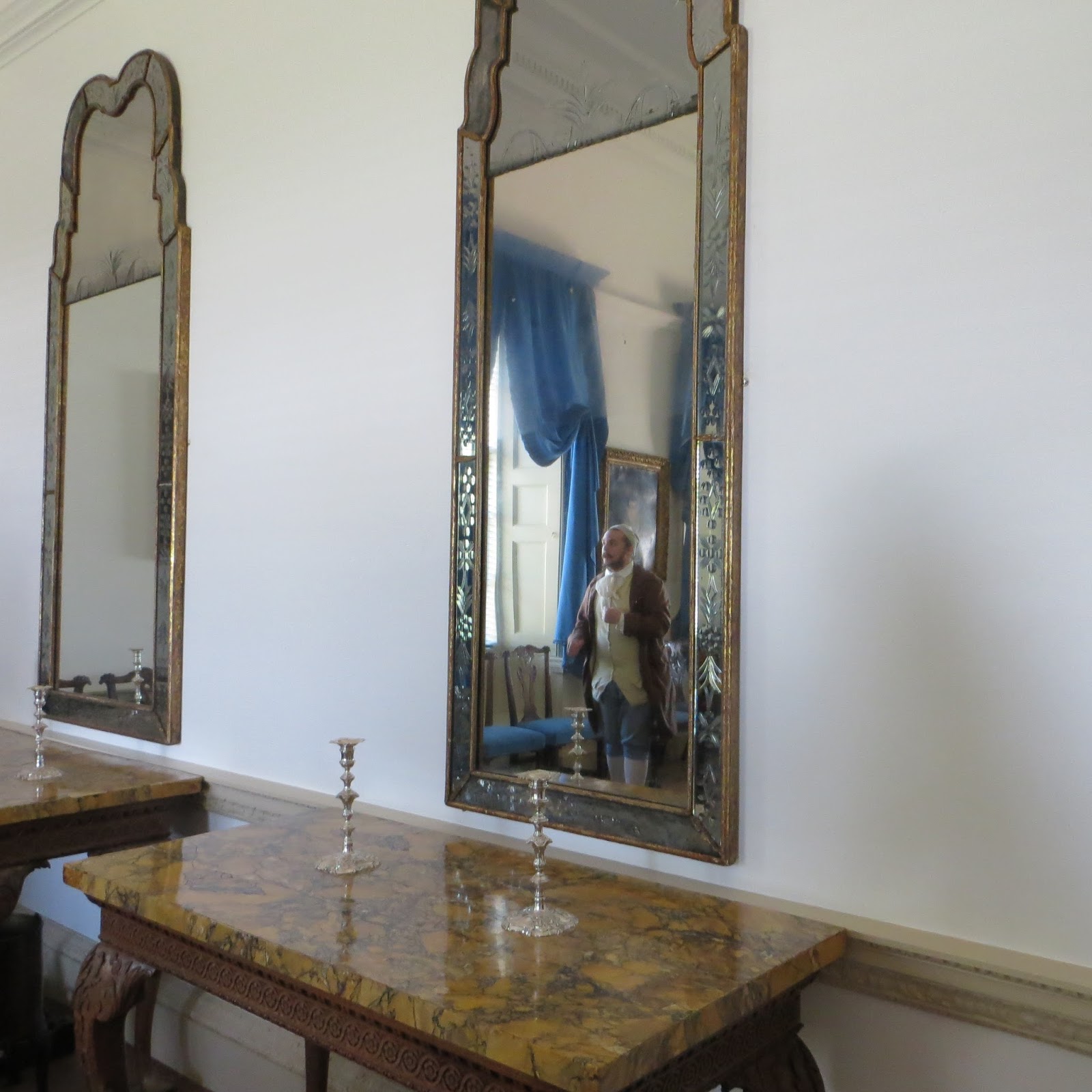
Tryon Palace and the Women Who Wouldn't Say No.


Appointed by the King, Lt. Governor Wiliam Tryon came to North Carolina in 1764 and traveled the colony for almost a year until he became Governor. New Bern was a busy, sheltered port town and the center of the area’s naval supply business. If you’ve ever wondered why North Carolina is the Tar Heel state, this is why---the abundant pine forests supplied tar and turpentine which are fundamental for shipbuilding and upkeep. When, in 1766, the North Carolina colony Tryon chose New Bern as its capital, Tryon decided it needed a governor’s mansion worthy of the king himself. A year later, master builder John Hawks came from England to begin the building of an impressive red brick and white marbled trimmed home that would serve as political meeting place and family home.

Small farmers in the west, and the heavily Scottish population, weren’t keen on the taxes taken to build a grand English home. Fifteen thousand pounds at the time! (about fifteen million now). Many just weren’t happy to have English rule, and things culminated in The Regulators’ War in 1771.
By this time, Tryon had left to become Governor in New York, and Josiah Martin took residence. With revolution the talk of the colonies, Governor Martin asked for arms to equip his loyalist citizens. The arrival of cannon rankled the revolutionaries and Martin had to slip out of town under the cover of night.

During the war, North Carolina moved its capital to Raleigh and Tryon Palace fell to ruin in later decades. Parts of it were used by the locals, occasionally for dances, or as a hospital, but in 1798 a good portion of the building burned leaving only the stable intact. Torn down and forgotten, the grounds of the palace eventually became U.S. Rt 70.

Then the Colonial Dames stepped in. If you didn't know, The Colonial Dames is a national society with thousands of members. But I'm referring to some mighty fierce ladies on a mission.
Mrs. Reynolds of Winston-Salem, a president of the DAR began a fund for restoration. In 1935, the federal government created protection for such sites by declaring them National Historic Sites.

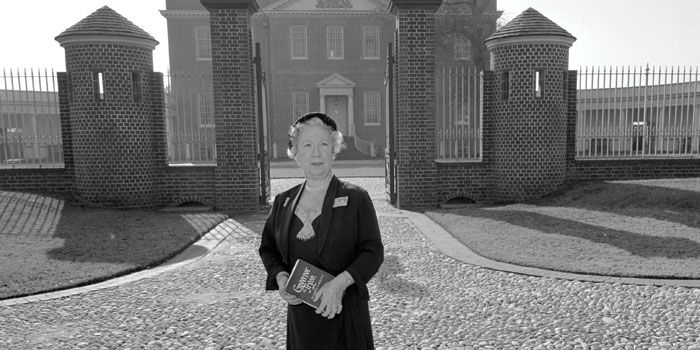
Another go-getter, journalist Gertrude Carraway, also in the DAR and a New Bern native fought to have Tryon Palace named a National Historic Site. The National Park Service agreed but offered no funding for the restoration. The Garden Club of North Carolina joined in with a heavy state-wide lobby to restore the palace and its gardens.

And another… Mrs. Maude Latham was a major financial supporter. Together with Mrs. Carraway and a Mr. and Mrs. Kellenberger, the Tryon Palace Commission was born. Mrs. Carraway hunted down the original plans of the palace used by the architect John Hawks. Mrs. Latham created a trust fund with $100,000 of her money.

Just as things were about to start, Pearl Harbor brought the country in to war. Mrs. Latham didn’t give up. She added another 150,000 to the pot and then bequeathed her entire estate worth one million dollars.  In 1952, almost twenty years after the project began, work began.  The comission stayed busy as well, purchasing back lots that were originally part of the property, and the Kellenbergers and Mrs. Carraway hunted down every piece of Tryon’s or Martin’s furniture they could find (Martin had made a detailed inventory of every piece of furniture and other belongings!). Rather than use reproductions, they traveled the country and Europe to purchase pieces matching the inventory—an estimated 3 million of them purchased entirely by private funding of nearly seventy thousand dollars.

Tryon Park was rebuilt as an exact reproduction of the original building and its grounds are fully restored. On the day in 1958, when it reopened, the Tryon Palace committee turned it over to the state of North Carolina. Mrs. Carraway personally trained all the staff. By then, she knew more about each piece of furniture, each brick and each person to live in or visit the mansion than anyone else. In 1962, she was declared her The North Carolinian of the Year — describing her as “a woman who refused to compromise with anything short of perfection.” Today the North Carolina History Museum is built next door, and Tryon Palace received 249,000 visitors in 2015. Volunteers are the bulk of the staff—a whopping 800 people who spend time caring for the collections, doing tours, and hosting events.

I recently visited this incredible place and was as much in awe of these women as of the palace and gardens. And New Bern is a lovely, small city. Have you visited? If not, I hope you get a chance to!

TRYON PALACE WEBSITE


Mrs. Gertrude Carraway


Debra E. Marvin tries not to run too far from real life but the imagination born out of being an only child has a powerful draw. Besides, the voices in her head tend to agree with all the sensible things she says. She is a member of American Christian Fiction Writers, Sisters in Crime, and serves on the board of Bridges Ministry in Seneca Falls, NY. In 2015, she released her first two novellas, “Alarmingly Charming” in Austen in Austen Vol 1 from WhiteFire Publishing, and “Desert Duet” from Forget Me Not Romances, after many unpublished contest successes including two finals for the Daphne DuMaurier award. Debra works as a program assistant at Cornell University, and enjoys her family and grandchildren, obsessively buying fabric, watching British programming and traveling with her childhood friends.
Coming soon - Starlight Serenade set in 1930, Flagstaff Arizona


Friday, March 25, 2016

Happy Colonial New Year!

Did you know that for the first 130 years of Colonial America we celebrated New Year's Day on March 25th? It's true.
Britain at that time reckoned March 25th as the beginning of the new year. On this day rents were due, contracts began, and obligations were renewed. They based this on the Julian calendar - authored by Julius Caesar in 46 B.C. That calendar had 12 months and 365 days, but had one flaw. There was no allowance for leap years, so it didn't quite match up with the solar year.
Many European countries had already adopted the use of the Gregorian calendar - authored by Pope Gregory XIII. Britain, not wanting to follow a Pope's lead, clung to the Julian calendar until 1752.
Colonial America was part of the British Empire, but it was also already culturally diverse. Immigrants from across Europe made the colonists familiar with both calendars. When the official switch came in 1752, the colonists took it all in stride, avoiding the upheaval that happened across the pond, and showing once again the colonists unique ability to adapt and prosper.
A nice tidbit of history to think about when writing - or reading - books set in Colonial America.
Trooper and Pegg cropped


Monday, February 1, 2016

Do you dance, Mr. Darcy?

"What a charming amusement for young people this is, Mr. Darcy! There is nothing like dancing, after all. I consider it as one of the first refinements of polished societies."
"Certainly, sir; and it has the advantage also of being in vogue amongst the less polished societies of the world; every savage can dance.”

That is taken, as most can guess, from Jane Austen's Pride and Prejudice. And, as aptly stated, every "savage" can dance. And colonist, too, for that matter.

So what were the colonial's kicking their heels to as they settled the Americas?

Hornpipes—sprightly, free-form solo dance pieces—it seems. At least at the very beginning. But, as the colonists sought to emulate the culture in England, where dancing was very popular, homes, taverns, and official buildings hosted balls. Soon, good dancing became associated with good breeding. If you really wanted to impress someone, a dance like the minuet, with its more complicated moves requiring balance and coordination, would be important to master.

Besides the minuets, other "fancy dances" consisted of allemandes, hornpipes, and such.

Then there were "country dances." They often included jigs and reels—more loosely structured dances derived from the traditions of Africans and Scots. Some of these were later formalized for the upper class, as well.

In America, more than just maneuvering around one's partner was seen on the dance floor. In the time leading up to and during the American Revolution, dancers used the ballroom to make political statements. Their dress, choice of partners, and selection of dances were all employed. Wearing a homespun gown or suit to a ball demonstrated an alliance to the patriot cause, as did refusing to dance with Tories. The ballroom sometimes gave colonial women an unusual amount of power, since they were encouraged to make conversation with men. They could thereby voice their opinions without stepping outside the bounds of acceptable female behavior.

But even the men had statements to make. Unlike in England where aristocracy was entrenched and well defined, Colonial society was far more fluid. The nouveau riche were everywhere, and a hefty pocketbook could buy your way into the upper class provided you fit in socially...or, in other words, you could dance. A difficult task for many newly rich who hadn't received the same training as those born to wealth. The dance master became a gatekeeper into "polite society."


While dancing was definitely an enjoyable activity for many in America, with all the pressure to perform to meet society's expectation, I do not doubt that some shared a certain Englishman’s sentiment:

“Do you dance, Mr. Darcy?" 
"Not if I can help it!"


Excited to announce this month's release of Dancing Up a Storm, an anthology with my short story, "When I'm Gone.

Summer 1942. Just before the competition that could launch their careers as professional ballroom dancers, Elaine Mathews’s partner, James Larson, gets drafted into the army. Now, with her dreams and the man she loves hanging in the balance, Elaine must acknowledge what she’s most afraid to lose.


Angela K Couch is an award-winning author for her short stories, and a semi-finalist in ACFW’s2015 Genesis Contest for her Revolutionary War novel that will be published by Pelican Book Group. As a passionate believer in Christ, her faith permeates the stories she tells. Her martial arts training, experience with horses, and appreciation for good romance sneak in there, as well. Angela lives in Alberta, Canada with her “hero” and three munchkins.

www.angelakcouch.com     Facebook     Twitter    Amazon

Wednesday, July 23, 2014

Early American Reading for Kids

by Roseanna M. White

I'm a homeschooling mom. That means that, while we're still basking in the joys of summer, I'm also planning out the next school year (less than a month until it begins!). While my family is planning vacations purely for fun, I'm trying to figure out how to turn them into field trips. And I admit it--I'm excited about next year. Why? Because we're starting 2 years of American History. =D

With the curriculum program I use, we've been going chronologically through world history for those first four years (my older is 8, entering 4th grade, my younger 6, entering 1st). I've enjoyed all we've been studying together, from the Ancient Egyptians up through the Renaissance, but I got a wee bit giddy when my box of books for next year arrived. These are books I know. Books I've read. Books I love. These are the stories that make America what it is--and I'm so, so excited to be sharing this with my kids.

I thought it would be fun to take a look at the early American books we'll be reading this year, and also some of the field trips we'll be taking. I know not everyone homeschools, but I've gotten a number of questions over the years about great reading material for the younger crowd, and you just can't beat most of these!

I know I'm going to be bursting with stories to share on the CQ this coming year--stories of natives and immigrants, of founding fathers and the courageous citizens who fought for freedom. And I'm also hoping to get the family to Philadelphia to see Ben Franklin's house, to Virginia to visit Mt. Vernon and Monticello, and to some of the battlefields and historic landmarks littering the east coast, where I'm lucky enough to live.

I'd love to know east coast sites you recommend, 
or supplementary reading for kids!

This is my shelf of readers--some my daughter (the 8-yr-old) will read on her own, and others we'll read aloud, together, with my son.


I know it's a little hard to see all the titles. But here's the list--these are all recommended for 8-11, but I'm confident my 6/7 yr-old will be able to follow along too, so long as we have conversations about all we study (which we always do). It's a long list, but they all look great! (All the links are to Sonlight, from whom I got them; they're also all available elsewhere.)

And Then What Happened, Paul Revere?
The background and story of Paul Revere's famous ride, told by a master story-teller.

If You Were There When They Signed the Constitution
A detailed study of the United States Constitution.

Winter at Valley Forge
A first-person journal account of what it was like at Valley Forge in the winter of 1777-78.

Incans, Aztecs & Mayans
Fascinating account of three major civilizations that existed in the "New World" before Europeans arrived.

Pedro's Journal
A fictional account of Christopher Columbus' first voyage.

The Landmark History of the American People: From Plymouth to the West, Volume I
A fascinating introduction to American culture as it has shaped and been shaped by events from the Pilgrims to the mid-1800s. Written by the former Librarian of Congress.

North American Indians
Profusely illustrated introduction to a broad range of North American Indian peoples.

The Light and the Glory for Young Readers
A history of how God worked through the founders of America to establish this nation. From European explorers' first sighting of land to the devout Pilgrims and Puritans to the Revolutionary War, it would seem God had a plan. Meet the evangelists of the First Great Awakening, founding fathers who desired to obey God, and other men and women who risked much to follow what they believed God had for them.

The Very First Americans
Long before Columbus landed in America, hundreds of groups of people had already made their homes here. But where did they live? What did they eat? How did they have fun? And where are they today? From coast to coast, learn about these first Americans!


Tells America's story during its first fifty years as a nation. These were the days of Benjamin Franklin and Daniel Boone, Francis Asbury and Charles Finney, Andrew Jackson and Sam Houston. During these years Conestoga wagons and circuit riders became famous, the Second Great Awakening sparked revival across the nation, Indian wars and slavery were major concerns, and the Louisiana Purchase and the Oregon Trail expanded American boundaries from sea to shining sea. God was also at work in the young nation, giving its settlers opportunities to shape its history and to be His people.
A groundbreaking guide to American history, this reference book explains events, moments, trends, patterns and people in concise articles designed to appeal to children ages 8 and up.


The Sign of the Beaver
A white boy in the Maine wilderness is rescued by an Indian chief.

The Witch of Blackbird Pond
A girl raised in luxury in the Caribbean struggles to adjust to Puritan New England.

Johnny Tremain
A young apprentice silversmith is caught up in the Boston Tea Party and the American Revolution.

Carry On, Mr. Bowditch
Fascinating true story of the poor apprentice who, shortly after the American Revolution, transformed navigation from an art to a precise science.

Walk the World's Rim
A 14-year old Indian joins Cabeza de Vaca's 16th-century expedition through the Southwest.

Justin Morgan Had a Horse
The true story of a young boy who trained the first all-American (but now world-famous) Morgan horse.

Calico Bush
Left an orphan shortly after her family arrives in the New World, young Marguerite is "Bound-out" for six years to serve the Sargent family in exchange for food, shelter and clothing.

The Journeyman
Touching story about a boy, despised by his father because of his artistic bent, who leaves home to find his place in the world.

Swift Rivers
Eighteen-year-old Chris spends a winter with his grandfather in a cabin in Minnesota.


Tree in the Trail
See the history of the Sante Fe trail through the eyes of a great Cottonwood tree. Starting with the first Spaniards in the 1500s, follow three centuries of Indian tribes, wagon trains, buffalo herds, New Mexican settlements and changing times.

The Secret of the Sealed Room
Young Patience Martin works as an indentured servant in 1721 Boston. When her mistress dies of a mysterious poisoning, Patience runs away and meets an inventive, adventurous young printer's apprentice named Ben Franklin. Can the new friends crack the case and save Patience's life?

Toliver's Secret
Ten-year old Ellen Toliver must conquer her timidity to take a secret message through enemy lines during the Revolutionary War.

What's the Big Idea, Ben Franklin?
Breezy biography by award-winning author gives insights into Franklin's intriguing life and personality.

The Lewis & Clark Expedition
A highly readable account of the quintessentially American adventure of discovery and hardship as Meriwether Lewis and William Clark led their men on an exploration of "the interior parts of North America."

Pocahontas and the Strangers
Familiar story of a young Indian girl who saved the life of John Smith, an early American frontiersman.

The Matchlock Gun
A ten-year-old boy saves his family from raiding Indians during the French and Indian war.

Meet Thomas Jefferson
An easy-reading introduction to the third president of the United States from boyhood on.

Phoebe the Spy
Dramatic true story of a little black girl who foiled a plan to kill George Washington.

Meet George Washington
George Washington's life from boyhood to presidency in a large, boldface type.

Robert Fulton, Boy Craftsman
The true story of the famous steamboat builder by an award-winning author.

Sarah, Plain and Tall
Award-winning story of a frontier American widower who advertises for a wife . . . and gets Sarah.

The Courage of Sarah Noble
Eight-year old Sarah journeys into the wilderness with her father--and ends up alone!

The Cabin Faced West
Anne is lonely when her family moves to the Pennsylvania frontier . . . until a special evening when a stranger comes to dinner.

Squanto, Friend of the Pilgrims
The story of the meeting of two cultures--and the young man who helped bridge the gap between them.

The Bears on Hemlock Mountain
Jonathan goes to get "the biggest pot you ever laid eyes on" — on the other side of Hemlock Mountain.

Sarah Whitcher's Story
The true story of a little girl who is lost in New Hampshire woods back in pioneer days.

A Lion to Guard Us
Award-winning author tells a true story about three children left alone in London in 1609 who make their way to the Virginia colony.

The Skippack School
Simple but insightful story about a German boy who immigrated to America about the year 1750.

The Thanksgiving Story
Caldecott Honor Book recounts the story of the Pilgrims from the time they left England on the Mayflower through the first Thanksgiving celebration.

Om-kas-toe
Om-kas-toe is a member of the Blackfeet Indian tribe in the early 1700s--before
horses.

~*~

Roseanna M. White pens her novels under the Betsy Ross flag hanging above her desk, with her Jane Austen action figure watching over her. When she isn’t homeschooling her small kids and writing fiction, she’s editing it for WhiteFire Publishing or reviewing it for the Christian Review of Books, both of which she co-founded with her husband.