Announcements

10 Year Anniverary & New Releases Winners: Carrie Fancett Pagels' Butterfly Cottage - Melanie B, Dogwood Plantation - Patty H R, Janet Grunst's winner is Connie S., Denise Weimer's Winner is Kay M., Naomi Musch's winner is Chappy Debbie, Angela Couch - Kathleen Maher, Pegg Thomas Beverly D. M. & Gracie Y., Christy Distler - Kailey B., Shannon McNear - Marilyn R.
Showing posts with label Cherokee. Show all posts

Monday, February 11, 2019

Slavery in Colonial America: the Impact on Native Tribes

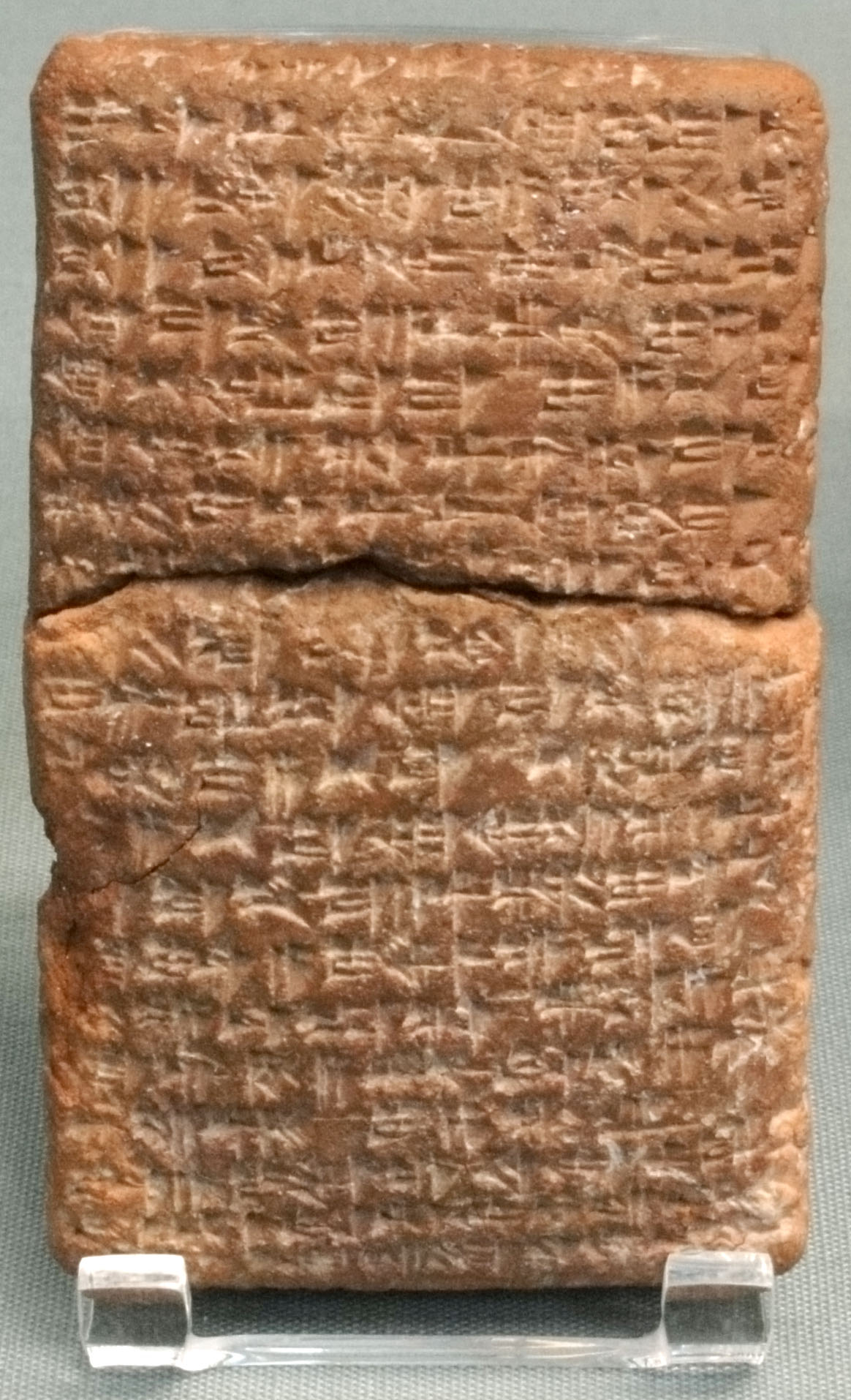
Fugitive slave treaty from 1480 BC
In my last post, I discussed the very difficult topic of slavery, an institution one cannot avoid in any study of our country’s history—indeed, of serious study of nearly any civilization. Though modern, reductionist history would blame the evils of chattel slavery (i.e., treating human beings as moveable property) solely on European colonization, beginning with Christopher Columbus, the institution existed as a fixture in Sumerian, Babylonian, and Egyptian cultures, as well as early South American and African societies.

So how does the practice of slavery touch the native peoples of North America, beyond the obvious influence of Columbus?

First, slavery was definitely practiced between native tribes, but not so much as an official institution as we understand from, say, the Civil War era. This excellent summary by author Christina Snyder explains it better than I could:

The history of American slavery began long before the first Africans arrived at Jamestown in 1619. Evidence from archaeology and oral tradition indicates that for hundreds, perhaps thousands, of years prior, Native Americans had developed their own forms of bondage. This fact should not be surprising, for most societies throughout history have practiced slavery. In her cross-cultural and historical research on comparative captivity, Catherine Cameron found that bondspeople composed 10 percent to 70 percent of the population of most societies, lending credence to Seymour Drescher’s assertion that “freedom, not slavery, was the peculiar institution.” If slavery is ubiquitous, however, it is also highly variable. Indigenous American slavery, rooted in warfare and diplomacy, was flexible, often offering its victims escape through adoption or intermarriage, and it was divorced from racial ideology, deeming all foreigners—men, women, and children, of whatever color or nation—potential slaves. Thus, Europeans did not introduce slavery to North America. Rather, colonialism brought distinct and evolving notions of bondage into contact with one another. At times, these slaveries clashed, but they also reinforced and influenced one another. Colonists, who had a voracious demand for labor and export commodities, exploited indigenous networks of captive exchange, producing a massive global commerce in Indian slaves. This began with the second voyage of Christopher Columbus in 1495 and extended in some parts of the Americas through the twentieth century. During this period, between 2 and 4 million Indians were enslaved. Elsewhere in the Americas, Indigenous people adapted Euro-American forms of bondage. In the Southeast, an elite class of Indians began to hold African Americans in transgenerational slavery and, by 1800, developed plantations that rivaled those of their white neighbors. The story of Native Americans and slavery is complicated: millions were victims, some were masters, and the nature of slavery changed over time and varied from one place to another. A significant and long overlooked aspect of American history, Indian slavery shaped colonialism, exacerbated Native population losses, figured prominently in warfare and politics, and influenced Native and colonial ideas about race and identity. [Indian Slavery, emphasis mine.]

Early in my study of the colonial era, I received the impression that the practice of enslaving Native Americans died out as the African slave trade gained momentum, but there is increasing evidence to the contrary.  One author’s study reveals that the slave trade among the Indians of the West was alive and well during the settlement and annexation of California. He also reveals how the Mormons found the same upon their arrival in Utah, and how attempts to “rescue” the victims of slavery only fed racial prejudice within Mormonism.

Cherokee delegation to Washington in 1866
A particularly startling aspect of the dynamics of slavery on native peoples surfaced in connection with the Cherokee and Seminoles, both of which were removed to Oklahoma Territory over the Trail of Tears. Apparently it was well known and accepted that many wealthy, landholding Cherokee owned black slaves, and took them along during the removal (see the quote above). Some Seminoles re-enslaved blacks who escaped to Florida, although it’s reported that their interpretation of slavery was more “fair” than that practiced to the north.

Time fails me to go deeply into any of these aspects, and I want to make it clear that as a historian and storyteller, I’m merely making observations, not offering a defense or pointing fingers in any way. In our own times, however, we must understand as much of the entire picture as possible. It is, after all, our mission here at Colonial Quills to educate about little-known aspects of our chosen span of history.

For more reading:
The Untold History of American Native Slavery (interesting site, with a ton of supporting and related articles)
America's Other Original Sin
... and just for fun, FACT CHECK: 9 Facts About Slavery


Monday, November 23, 2015

Cherokee Cooking

Susan F. Craft
Author of the Xanthakos Family Trilogy -
The Chamomile, Laurel, and Cassia

three sisters - corn, beans, squash
         Cherokee culture thrived for thousands of years in what is now the southeastern United States. Cherokee is a distinct culture with its own geography, language, social organization, and spiritual beliefs. There are seven Cherokee clans: Bird, Paint, Wild Potato, Wolf, Blue, Deer, and Long Hair. Historically, Cherokee women were the heads of families and households and were economically powerful. The Cherokee language is not only spoken, but also written using 86 letters developed by Sequoyah.
        The Cherokee ate mainly corn and beans and squash, called the three sisters, which they grew in their fields.
        To get the highest yield of beans possible, the vines need tall poles to grow on, which is why they were planted next to the corn. The corn's tall straight stalks were perfect for the climbing vines of the bean plants. In turn, the beans’ roots captured nitrogen from the air and enriched the soil, ideal for the corn which needs nitrogen rich soil to produce a large crop. Squash send out very long, winding vines, have large leaves, and like to stay close to the ground. Planted in between the rows of corn and beans, they acted as an edible ground cover, which not only kept the weeds away, but also provided shade for the corn's shallow roots. They helped keep the ground moist, which helped the beans grow, which helped the corn grow higher, which made for longer bean vines and yields, and so on.
        The three plants play a large part in many Native American myths and legends. The Cherokee believed that, since the plants were special when grown together, they should also be eaten together. They also believed that since they protected each other while growing, they would protect whoever ate them.
wild onions

        The Cherokee also ate deer, birds, squirrels, groundhogs, rabbits, fish, crawdads (crayfish), and turtles. They did not live entirely from farming and got much of their food from gathering foods such as: wild greens, wild onions, polk, mushrooms, ramps, nuts, green cone flower, watercress, huckleberries (blueberries), and blackberries. (Tea made from the huckleberry leaves was used for dysentery.)

Polk, dla-ya-de-i, harvested in May and late April,
required three changes of water when boiling to
reduce the acid. As polk grows older it becomes
poisonous. The berries are said to be poisonous
as well, but Cherokee basket makers used the
berries for a dye.
huckleberries


Watercress with hot bacon grease poured
over  it was served with beans and corn bread.
Before contact with the settlers, Cherokee meals were one-pot stews made over an open fire. After contact, the tribe began to grow fruit like watermelons and peaches and to eat farm animals like chicken, pigs, and cows.


        In my Revolutionary War novel, The Chamomile, my heroine travels with a group of Cherokee. One in particular, Golden Fawn, prepares a meal for them. Here’s the excerpt:
        That evening they dined on roasted squirrel and trout along with sweet bread Golden Fawn made from cornmeal mush wrapped in green corn husks and baked next to the glowing coals. Andrew could not seem to get enough of the spongy bread, eating his portion and half of Lilyan’s.


The Xanthakos Family Trilogy spans from 1780-1836 and from the Blue Ridge Mountains, to Charleston, SC, and the NC Outer Banks. (The Chamomile; Laurel; Cassia )