
by Tamera Lynn Kraft
 Most Americans have heard of Paul Revere's fateful ride to warn "the British are Coming." His ride was made famous in a poem by Henry Wadsworth Longfellow, but there were other riders who warned about the British during the Revolutionary War. One of these riders was a sixteen-year-old girl named Sybil Ludington.
Sybil, the oldest of twelve children, was born in 1761 in Dutchess County, New York. Her father, Colonel Henry Ludington, was the commander of the militia there. His farm was a receiving center for collecting information from American spies.
In April 1777, Colonel Ludington and the members of his militia were at home taking care of their farms. It was planting season. Around 9:00 in the evening on April 26, a man rode to the farm with news the British were burning down Danbury, 25 miles from Ludington's home. The man's horse was worn out from hard riding, and he didn't know the area. Ludington needed to send a rider to rally the militia, but he couldn't go himself because he needed to stay where he was to help arrange the troops as they arrived.
Sybil was recruited. She rode a total of forty miles in pouring rain to warn the militia and order them to meet at the Ludington farm. Revere only rode twenty, and it wasn't raining.
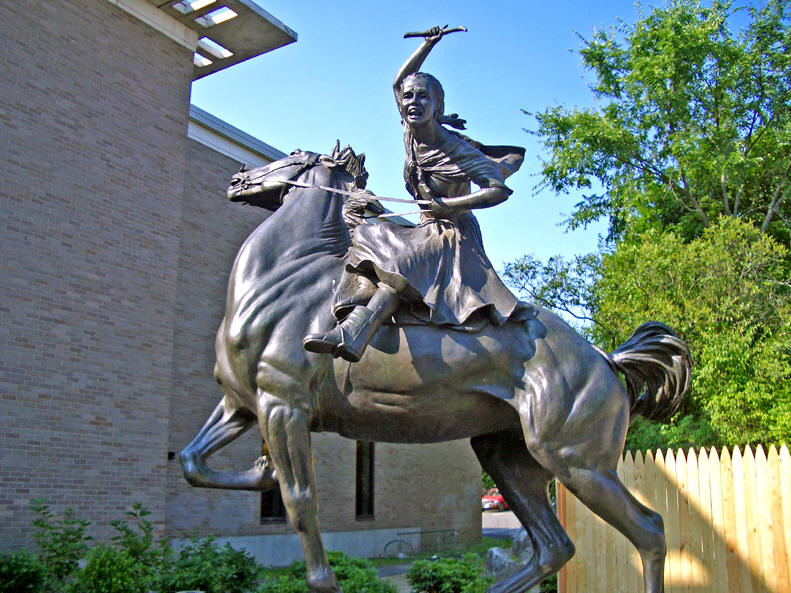 During Sybil's ride, she faced more danger than getting wet and tired. She rode along narrow roads after dark with only a stick to protect her. British loyalists were in the area, and she risked capture. There were also "skinners" around. Skinners were roadside bandits with no real loyalties either way. One account of her ride had her fighting off a skinner with a stick.
When she arrived back home, 400 men had gathered there. The British had moved to Ridgeville by then, and the militia rode seventeen miles to battle them there. It was a strategic victory for the Americans.
After the ride, Sybil was congratulated by General George Washington. She married a Revolutionary War solder, had a child, and died in 1839. Her hometown was named Lundingtonville in her honor.
She didn't have a poem written about her, but 1961 Sculptor Anna Hyatt Huntington created a statue of a statue of Sybil on her horse. In 1976, the US Post Office issued a stamp also commemorating Sybil’s ride. She is a true Revolutionary War heroine.

Sybil, the oldest of twelve children, was born in 1761 in Dutchess County, New York. Her father, Colonel Henry Ludington, was the commander of the militia there. His farm was a receiving center for collecting information from American spies.
In April 1777, Colonel Ludington and the members of his militia were at home taking care of their farms. It was planting season. Around 9:00 in the evening on April 26, a man rode to the farm with news the British were burning down Danbury, 25 miles from Ludington's home. The man's horse was worn out from hard riding, and he didn't know the area. Ludington needed to send a rider to rally the militia, but he couldn't go himself because he needed to stay where he was to help arrange the troops as they arrived.
Sybil was recruited. She rode a total of forty miles in pouring rain to warn the militia and order them to meet at the Ludington farm. Revere only rode twenty, and it wasn't raining.
When she arrived back home, 400 men had gathered there. The British had moved to Ridgeville by then, and the militia rode seventeen miles to battle them there. It was a strategic victory for the Americans.
After the ride, Sybil was congratulated by General George Washington. She married a Revolutionary War solder, had a child, and died in 1839. Her hometown was named Lundingtonville in her honor.
She didn't have a poem written about her, but 1961 Sculptor Anna Hyatt Huntington created a statue of a statue of Sybil on her horse. In 1976, the US Post Office issued a stamp also commemorating Sybil’s ride. She is a true Revolutionary War heroine.

Tamera Lynn Kraft
has always loved adventures and writes Christian historical fiction set in
America because there are so many adventures in American history. She has
received 2nd place in the NOCW contest, 3rd place TARA
writer’s contest, and was a finalist in the Frasier Writing Contest. Her Novel,
Alice’s Notions and her novellas Resurrection of Hope and A
Christmas Promise are available on Amazon and at Barnes and Noble.


